

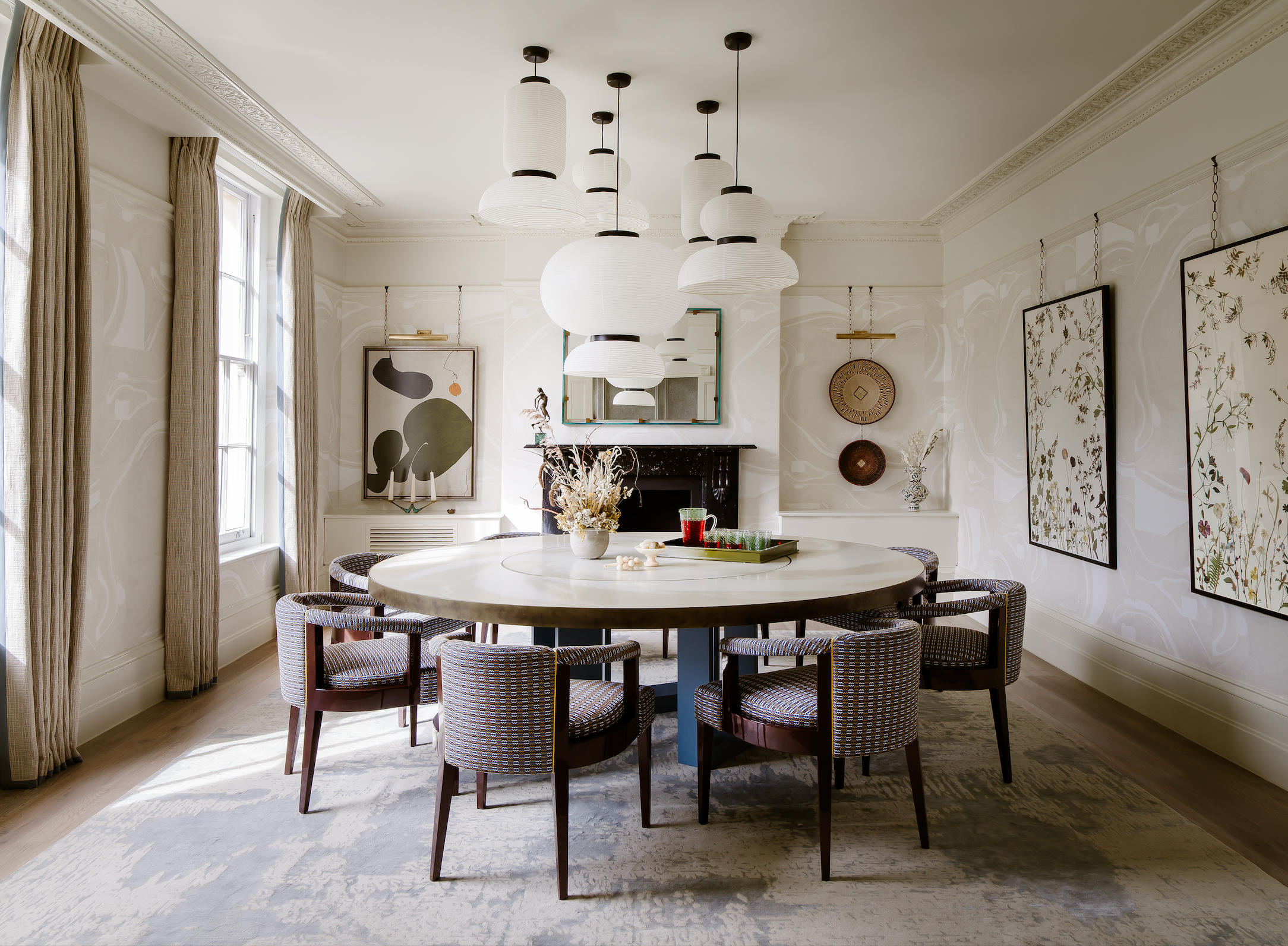
Design by Elicyon
Circles of Love
TRENDS
In interior design, few forms are as emotionally resonant as the circle. Soft, continuous, and endlessly adaptable, it speaks of harmony, protection, and intimacy. Unlike the sharp geometry that defined much of the minimalist era, circular forms do not demand attention. They invite it. They draw the eye slowly, encouraging connection rather than control. Within the New Romantic sensibility, the circle has re-emerged not as decoration, but as language. A way of shaping atmosphere, emotion, and memory.
This renewed fascination with curves reflects a wider desire for interiors that feel human, layered, and quietly expressive. In a culture driven by speed and screens, circular forms offer resistance. They slow movement. They soften transitions. They allow rooms to breathe. More than a stylistic choice, they represent a shift in values, towards comfort, tactility, and emotional intelligence.
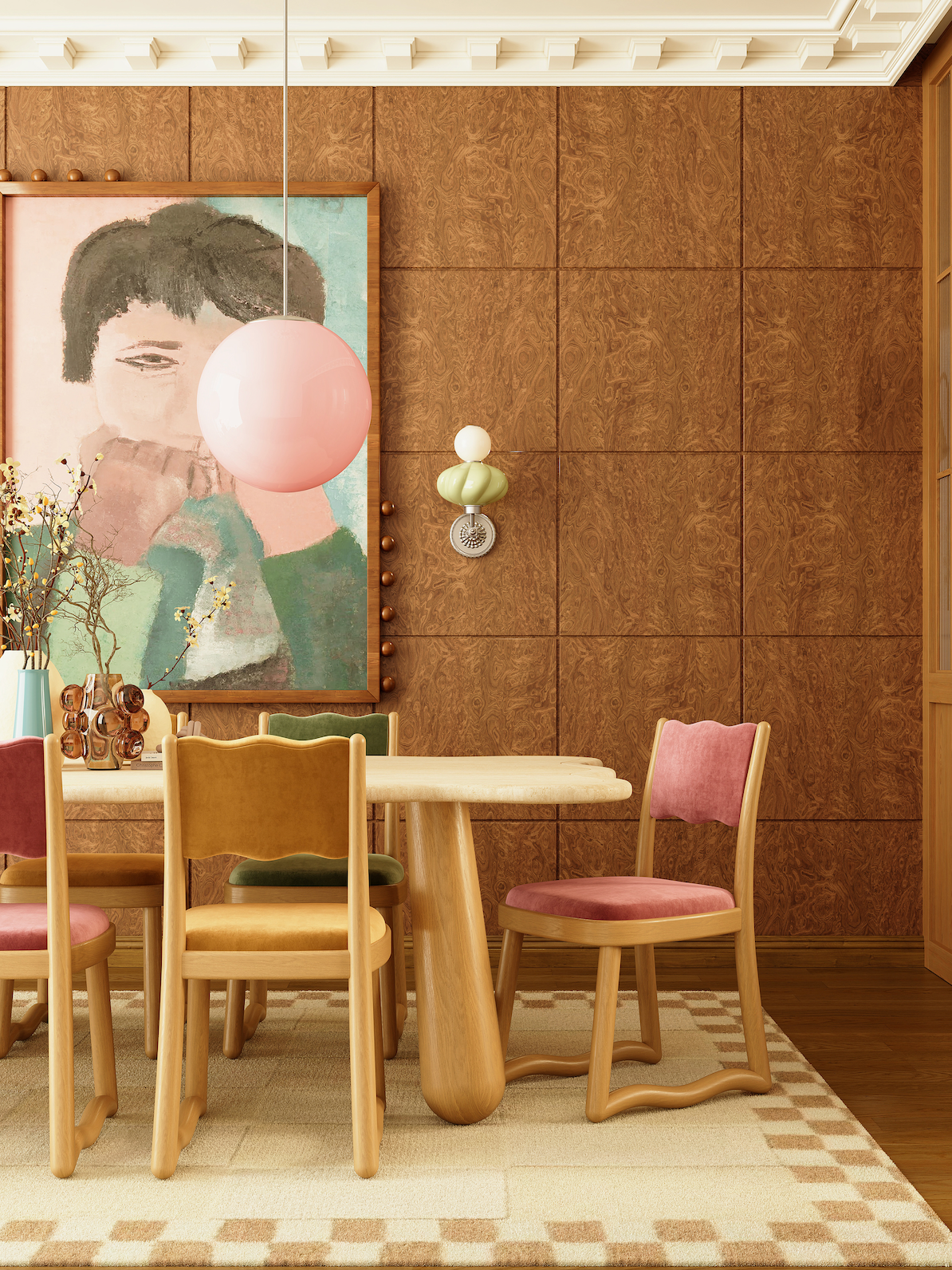
Design by Gülmen Interiors
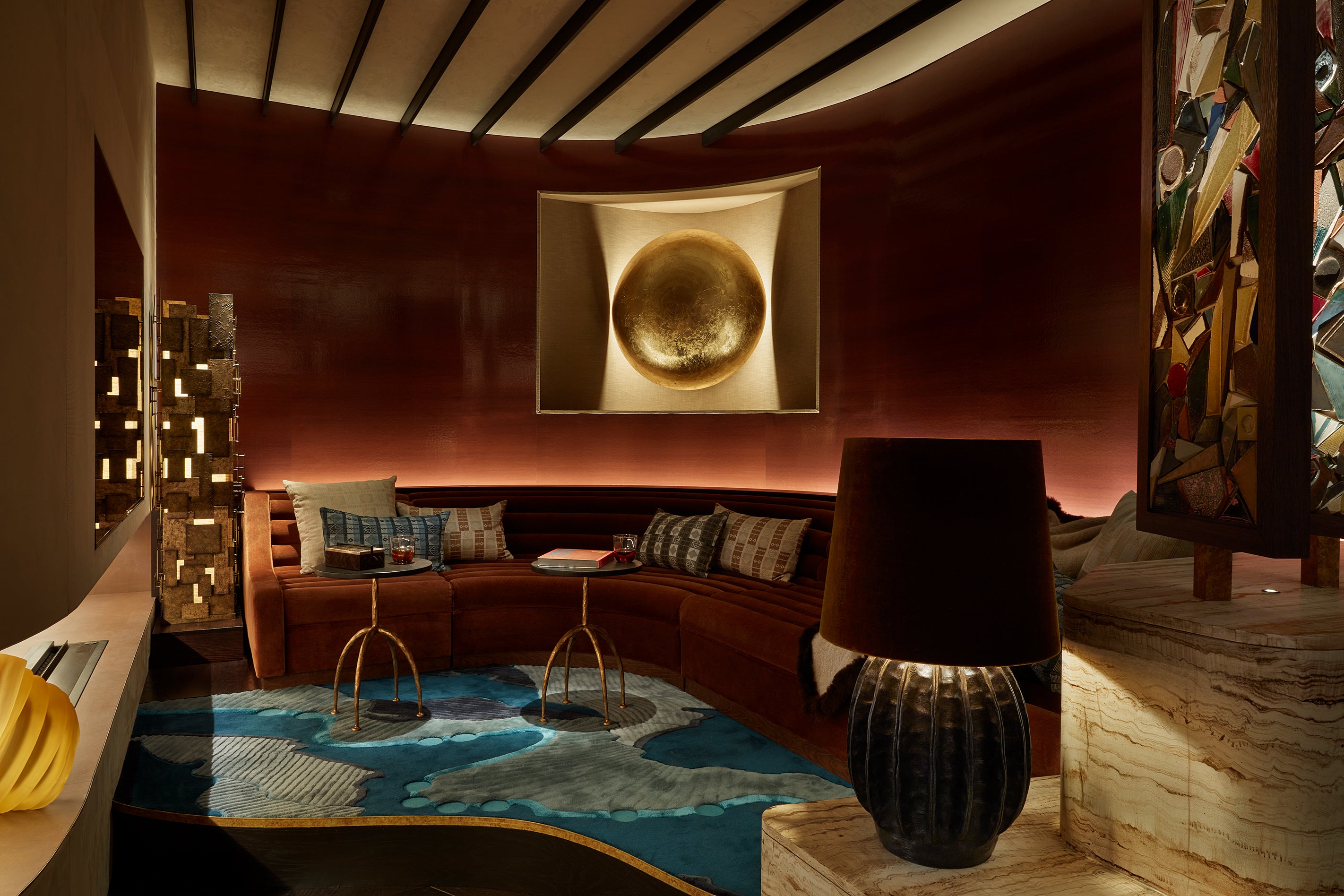
Photo by James McDonald
A more immersive interpretation appears in the Nucleus Media Room by Alex Dauley for WOW!house 2025. Here, curved walls and a bespoke sweeping sofa create a cocoon-like environment that feels both intimate and theatrical. The focal point is Romeo Design’s Scudo glass resin and golden leaf sculpture, framed within the curved architecture like a contemporary altar. Its shimmering surface catches the light, adding drama and depth.
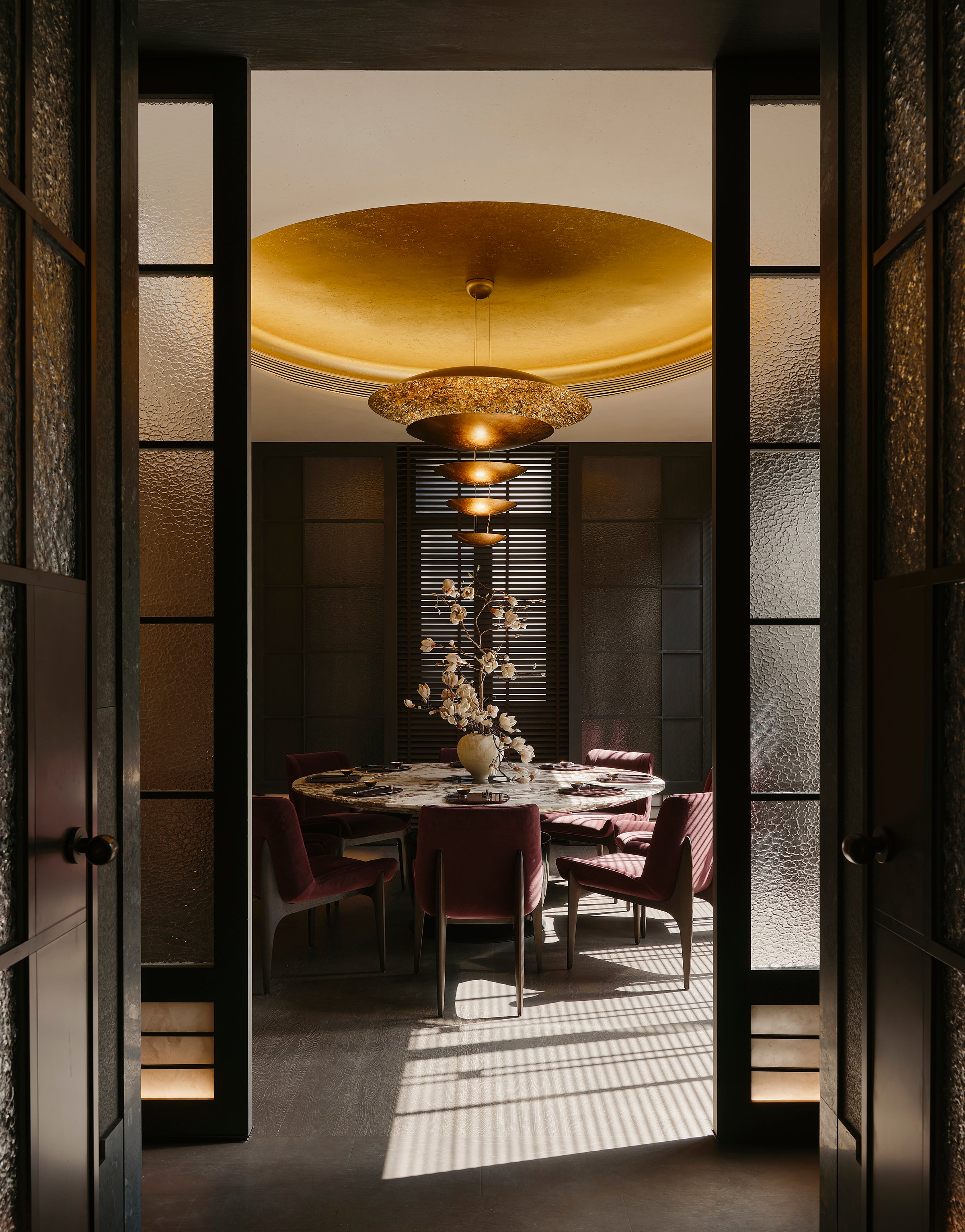
At One Sino Park, W.DESIGN interprets circular form through a lens of refinement and cultural reference. Beyond glass doors that recall old Shanghai, the dining space opens into a carefully composed setting. A gold leaf ceiling forms a perfect halo above the table, encircling the room in warm light. At its centre, a pendant floats quietly, reinforcing the sense of ceremony. The space feels contemplative and grounded, where dining becomes a ritual rather than a routine.
Photo by Howie Zheng
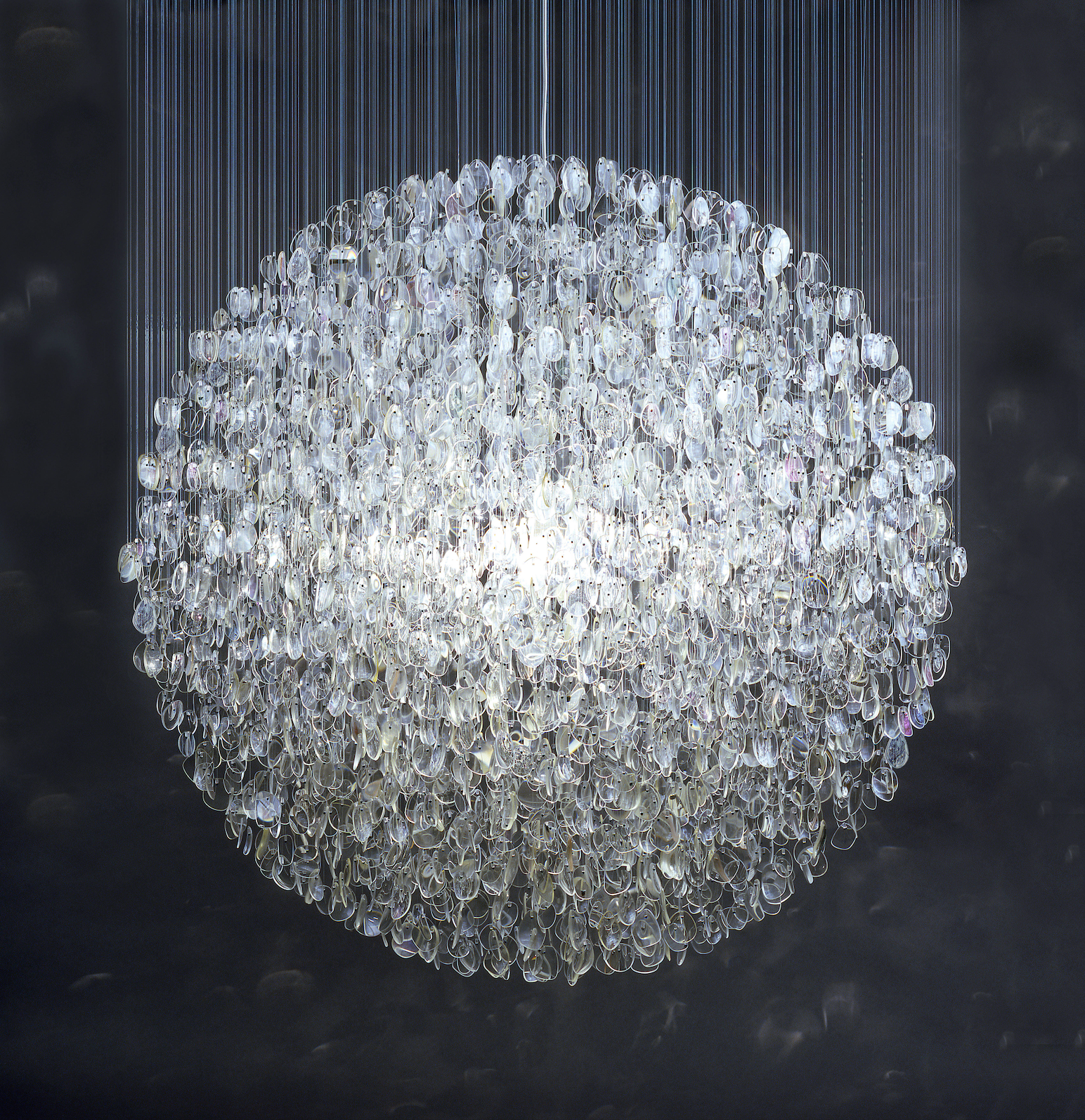
Lighting plays a central role in this narrative. Stuart Haygarth’s Optical chandelier transforms the circle into spectacle. Composed of hundreds of translucent elements, it floats like a luminous constellation, introducing movement, reflection, and romance. More than illumination, it becomes an emotional focal point, shifting with the light and animating the room throughout the day.
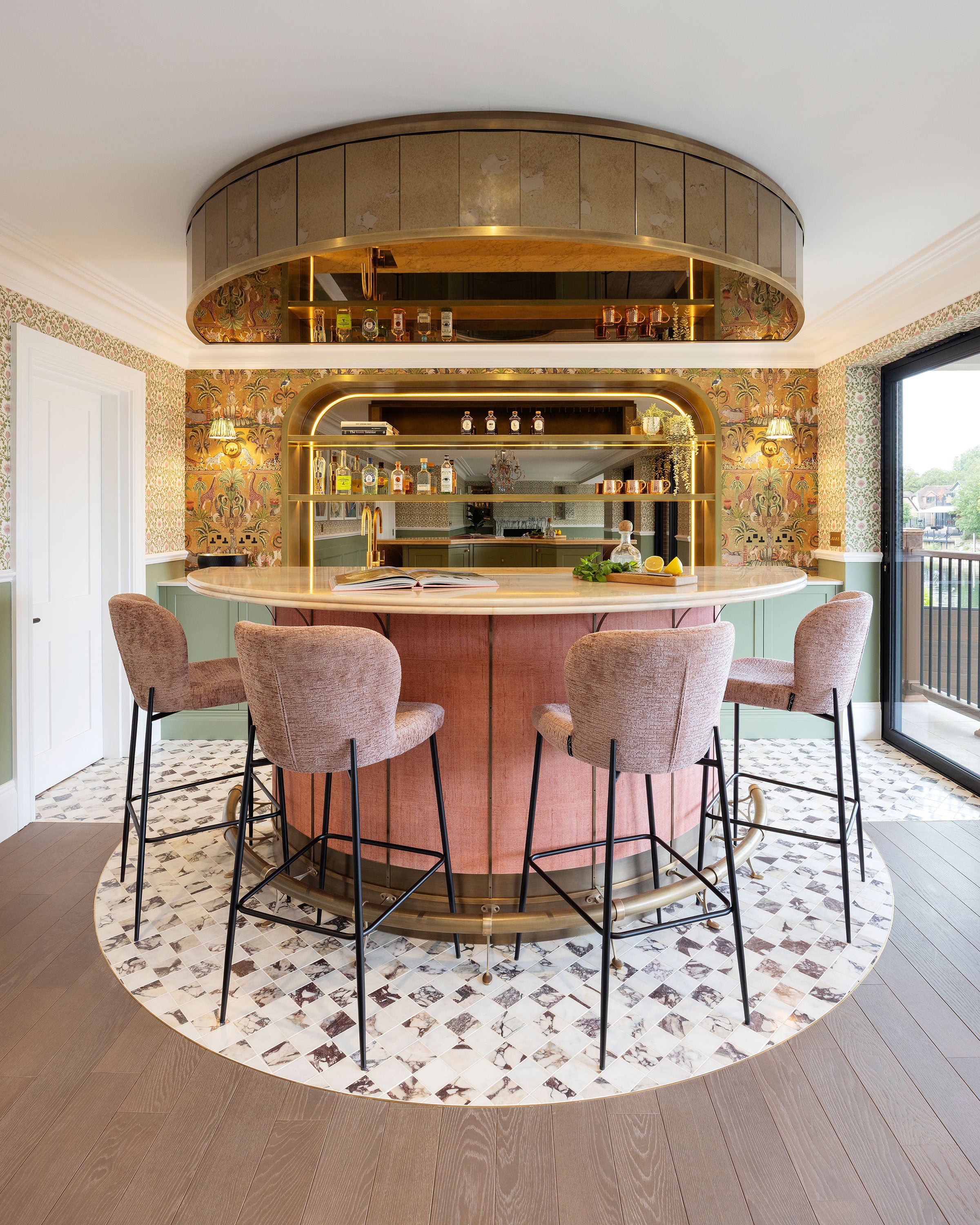
In hospitality inspired interiors, circular forms become theatrical. The curved home bar designed by Christopher David and crafted by HUX London is a standout example. Wrapped in brass and marble, anchored by blush pink seating, the bar reads almost as a stage. Its circular plan draws guests inward, transforming the act of gathering into a shared ritual. It is both glamorous and generous, blending craftsmanship with sensuality.
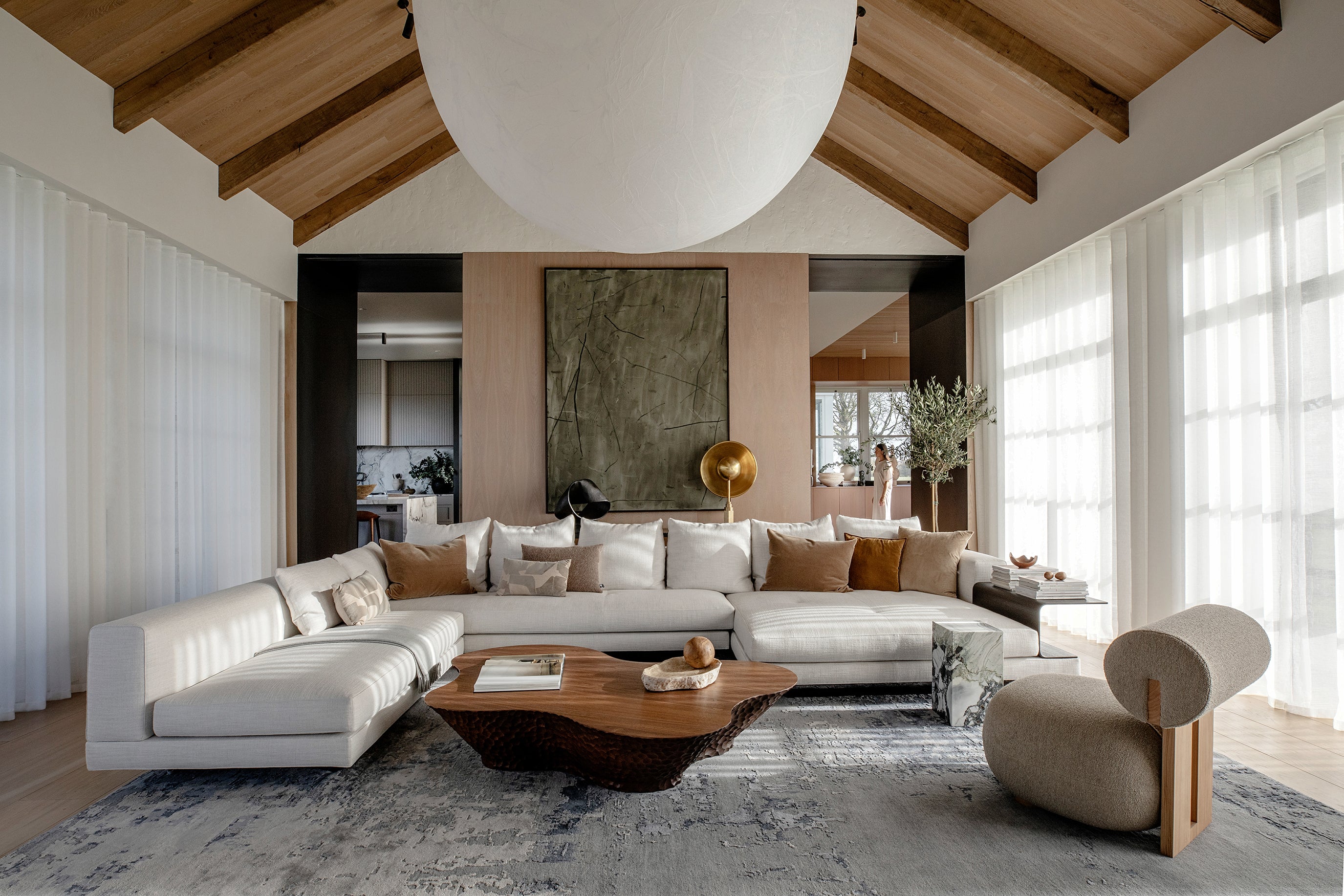
In Roisin Lafferty’s vaulted living space at The Farm, circular form is used to create emotional flow. A sweeping sectional sofa curves gently around a sculptural timber coffee table, establishing a central gathering point that feels instinctive rather than imposed. Overhead, an enormous rounded pendant echoes the geometry below, reinforcing a sense of balance. The architecture, with its exposed beams and generous volume, is softened by this choreography of curves, transforming scale into intimacy and encouraging a slower, more reflective way of inhabiting the space.

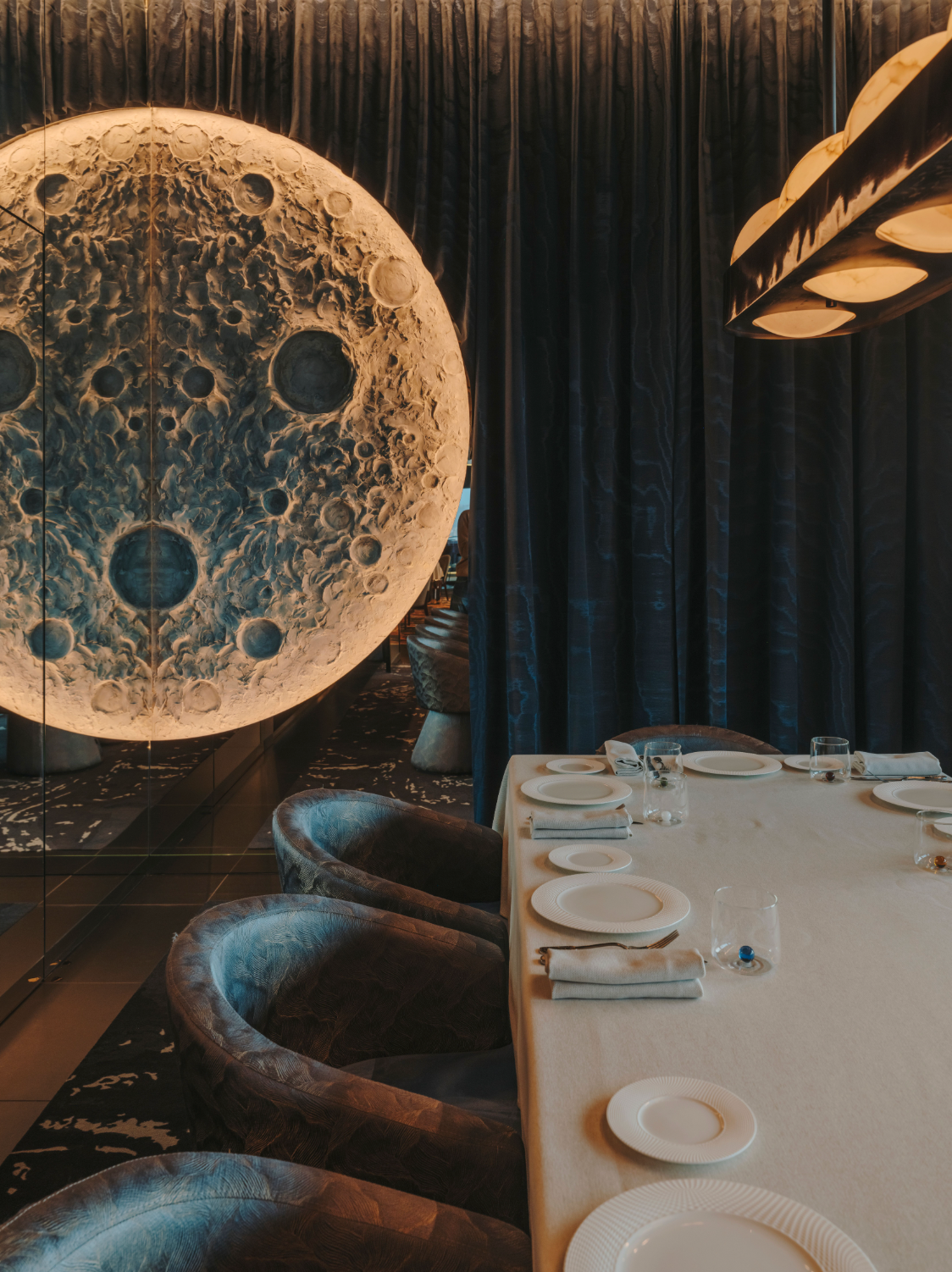
In Bibo Budapest by Astet Studio, circularity takes on a more poetic, almost surreal character. The monumental moon-like light installation dominates the space, suspended like a glowing celestial body above the dining area. Its presence is both calming and dramatic, casting soft shadows and creating an otherworldly atmosphere. Here, the circle becomes a symbol of romance in its most literal sense, evoking night skies, dreams, and escapism.
In Elicyon’s dining interior, circularity becomes an expression of quiet luxury. The generous round table is framed by suspended globe pendants and softly layered wall treatments, creating a room that feels serene and cultivated. Nothing competes for attention. Instead, form, proportion, and light work in harmony, balancing classical elegance with contemporary fluidity. It is a space designed for lingering, conversation, and understated ritual.
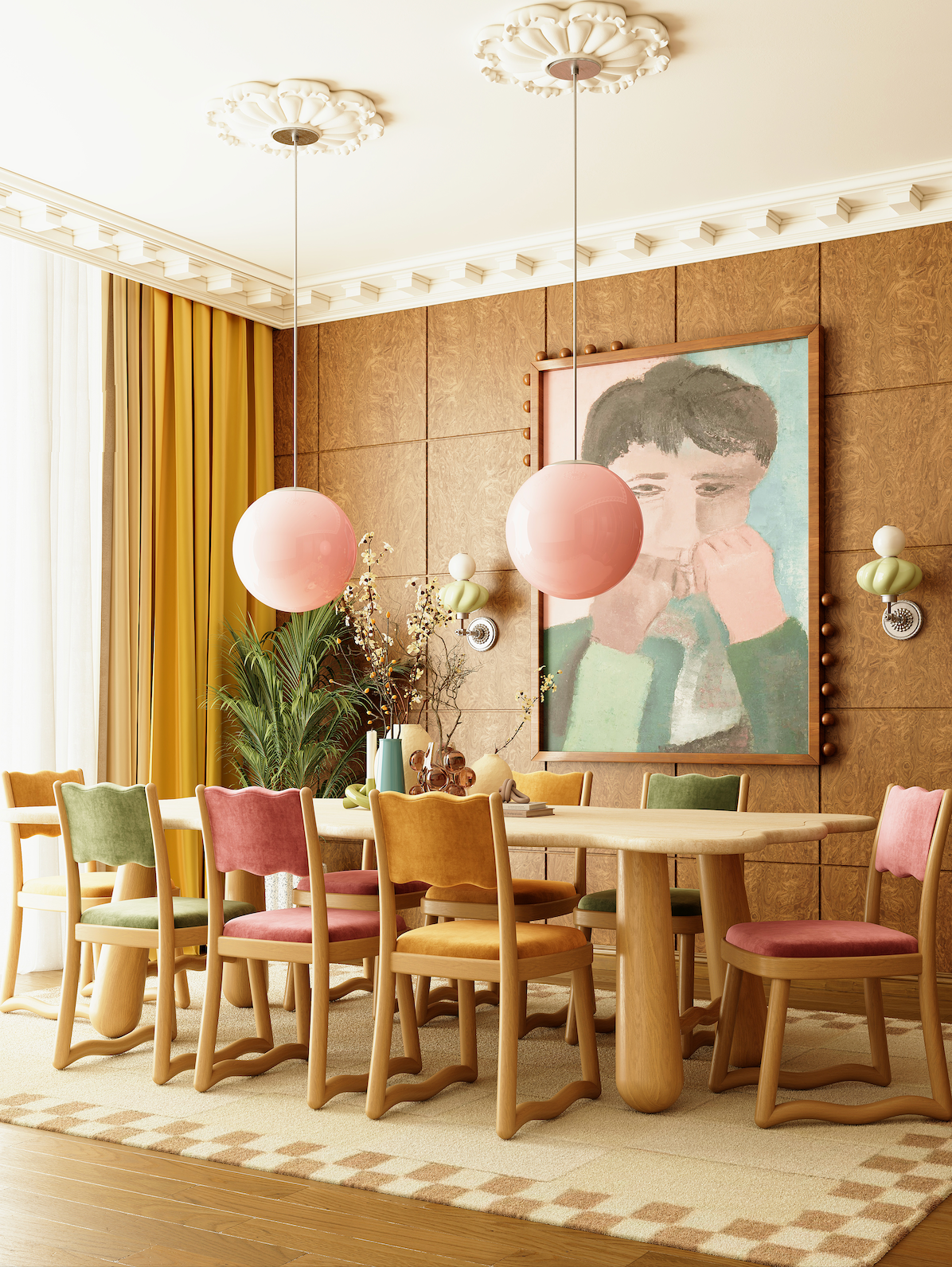
The playful dining room by Turkish studio Gülmen Interiors brings a lighter, more expressive tone to the New Romantic narrative. Soft pastel chairs surround a rounded table, while blush pink circular pendants hover gently overhead. Colour and curvature work together to create a space that feels optimistic and uplifting. The result is informal yet considered, where romance is expressed through softness, warmth, and visual harmony rather than overt decoration.
Across these interiors, the circle emerges not as a trend motif, but as an emotional tool. It shapes how people move, gather, and connect. It softens architecture, humanises luxury, and introduces rhythm into space. Whether expressed through furniture, lighting, ceiling treatments, or spatial planning, it reinforces the New Romantic commitment to atmosphere, storytelling, and sensory richness.
As designers continue to seek more emotionally intelligent ways of working, the circle remains central to this language. A form that reminds us that the most powerful interiors are those that quietly hold us.


