


Photography by Salva López
The Glow of the Moon: BiBo Budapest
HOSPITALITY PROJECTS
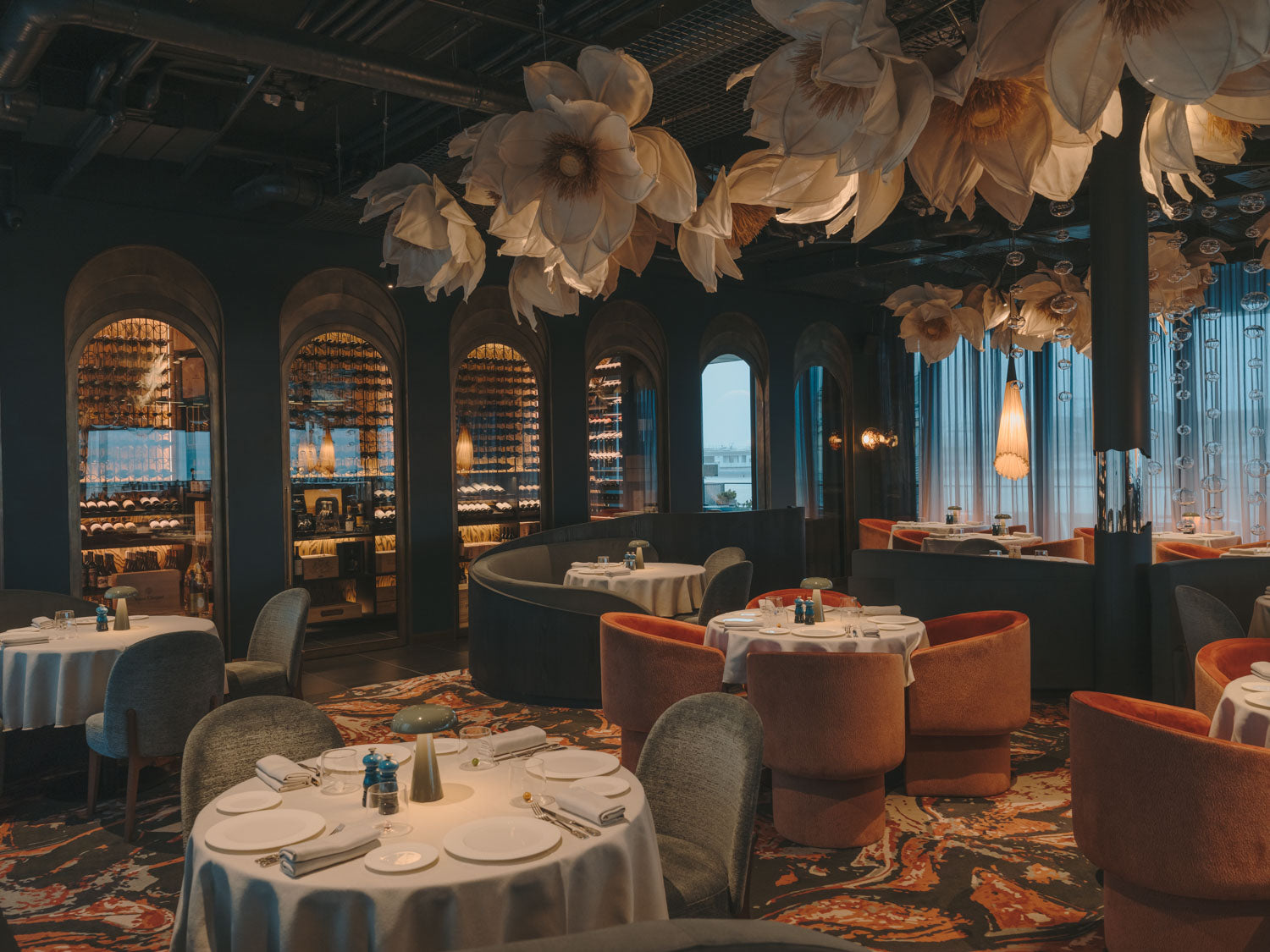
BiBo Budapest is not a restaurant that fades politely into the background. It makes its intentions clear from the outset, drawing guests into an immersive, emotionally charged interior where atmosphere takes precedence over neutrality and experience outweighs restraint. Designed by Astet Studio, the space embodies the spirit of The New Romantic, confident in expression, rich in feeling, and unapologetically theatrical.
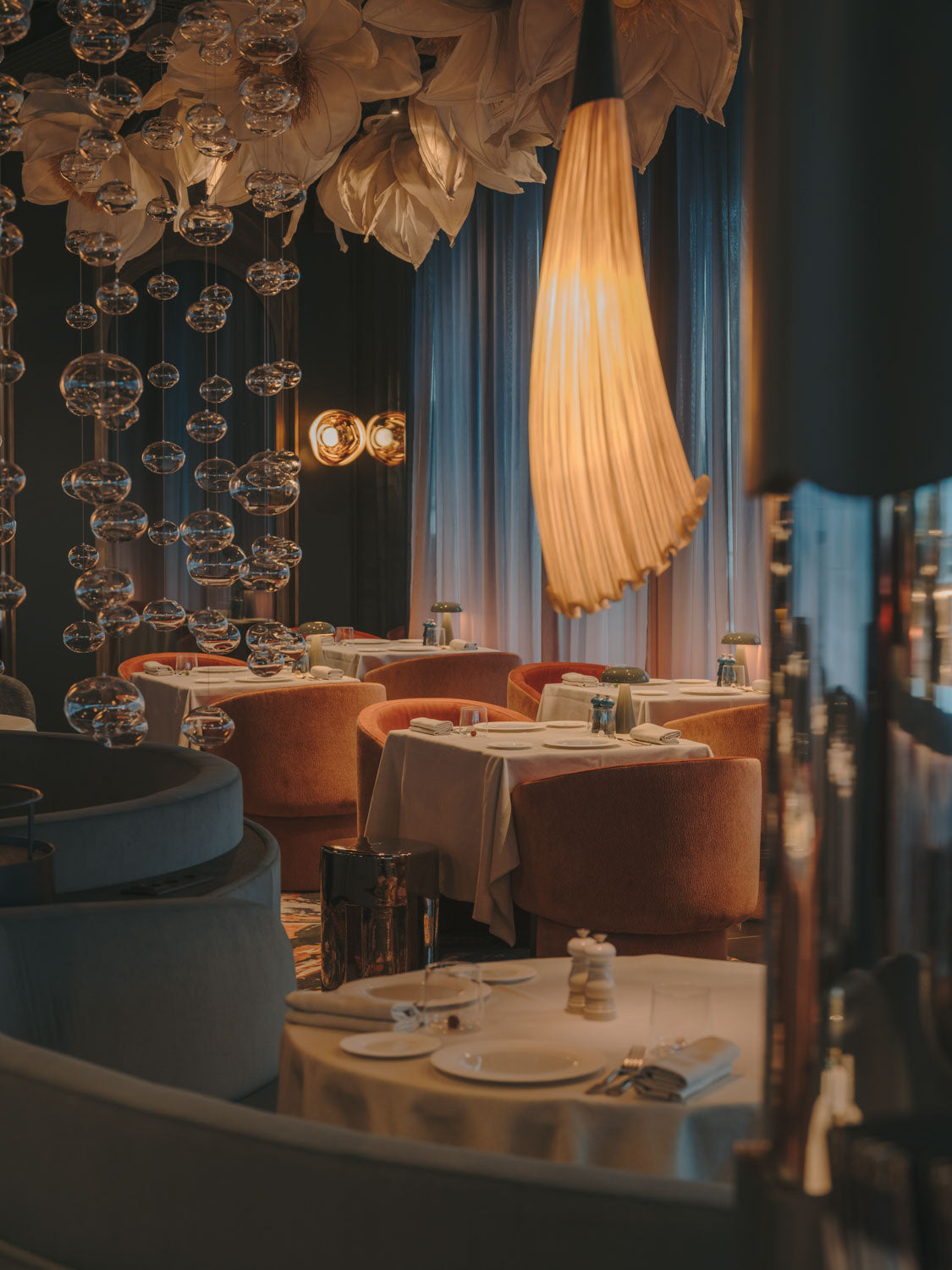
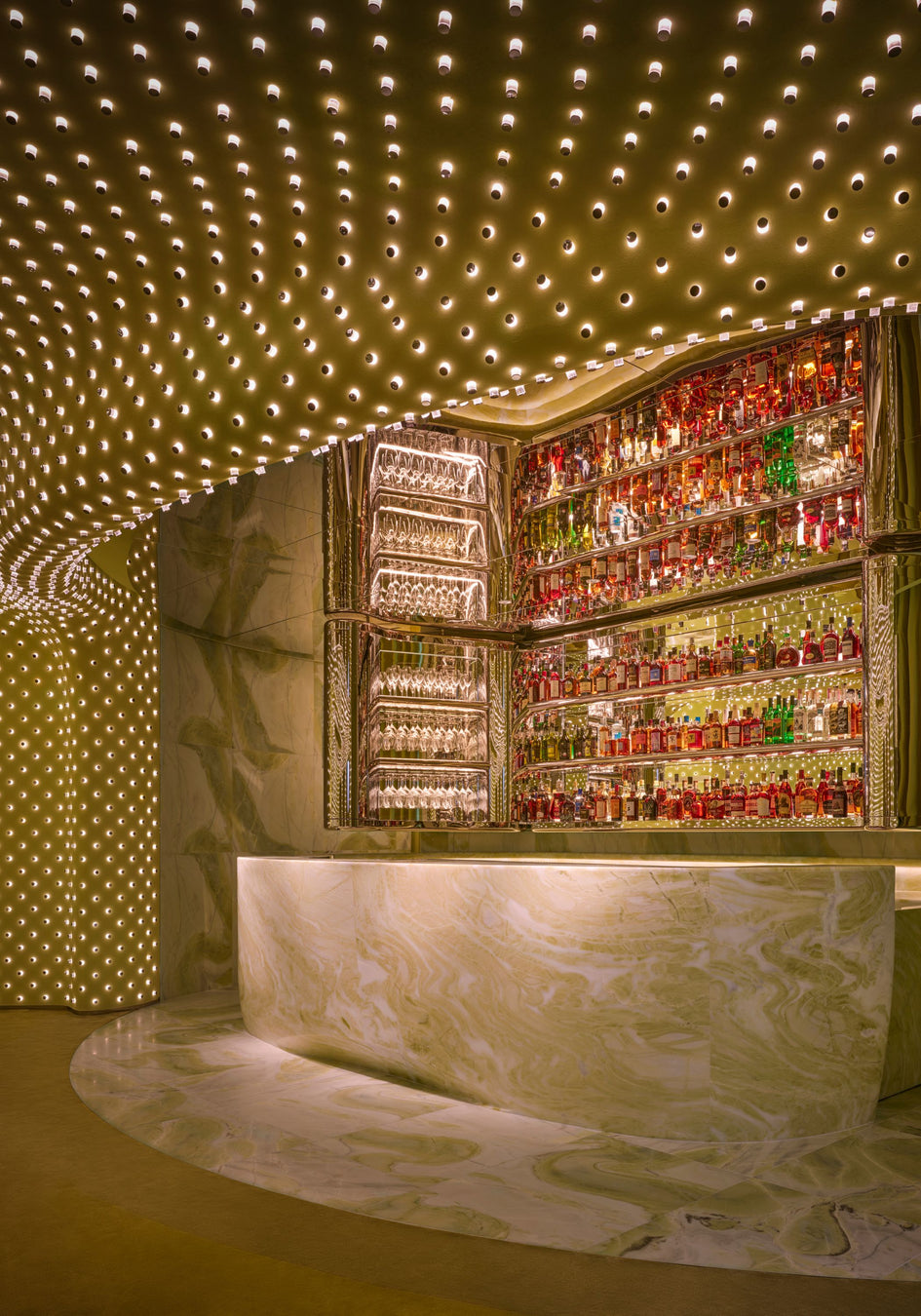
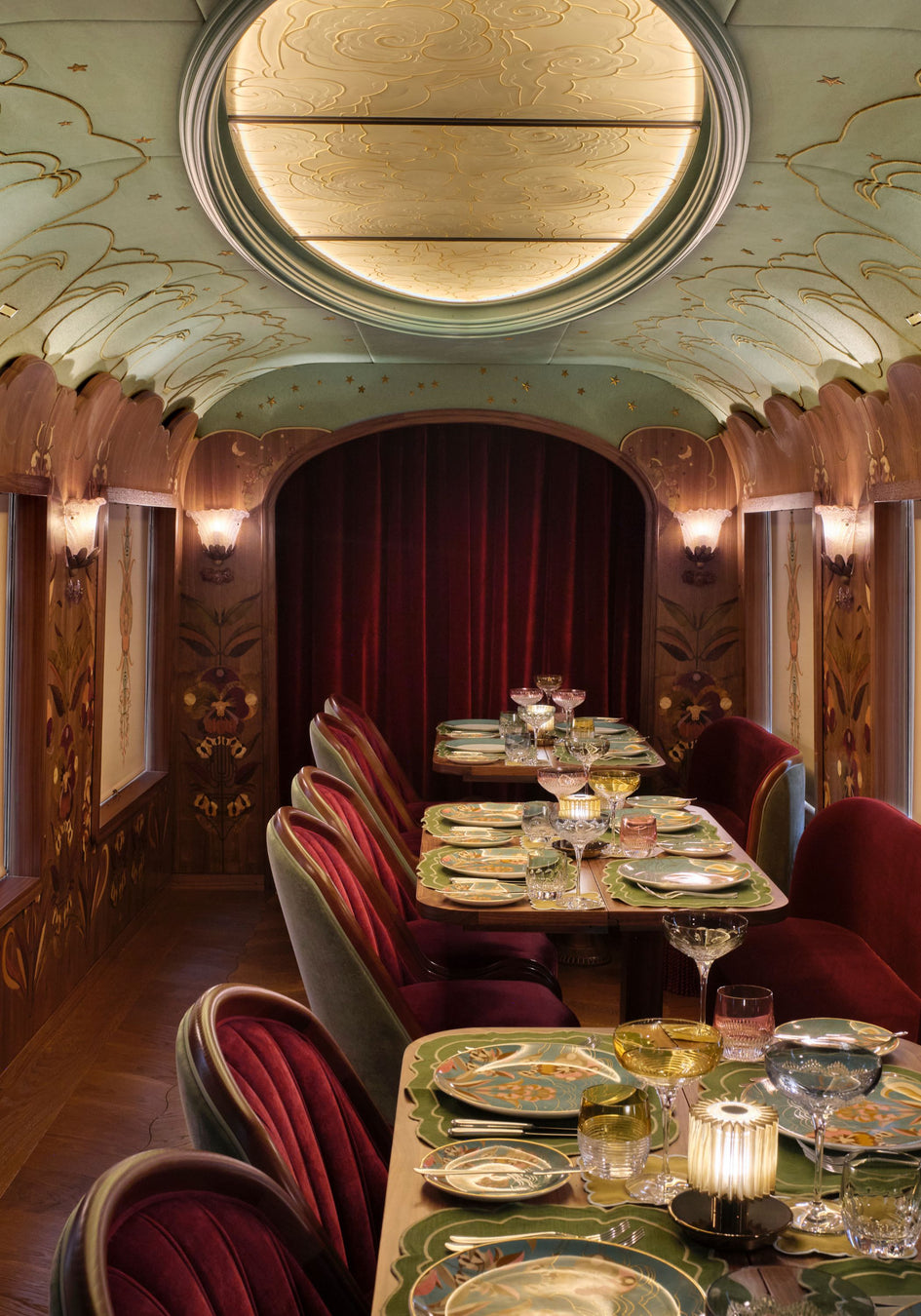
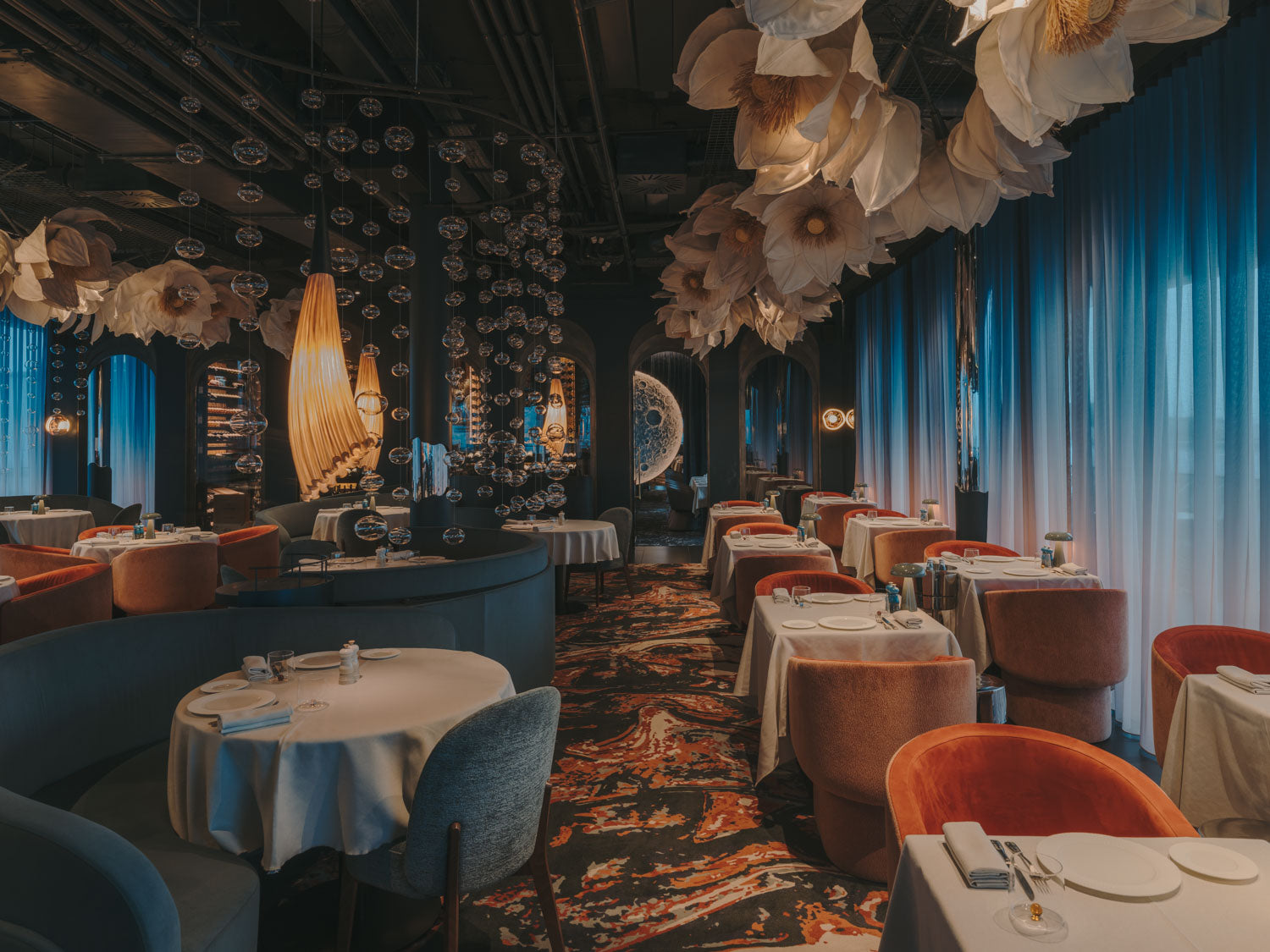
From the moment you enter, BiBo Budapest reveals a layered world of colour, light, and texture. Overscaled sculptural elements command attention, while dramatic lighting creates pockets of intimacy within the larger dining room. There is a sense of movement throughout the space, not just in the flow of guests and staff, but in the way materials, patterns, and shadows interact. This is hospitality design that understands mood as a central design tool, not a by-product.
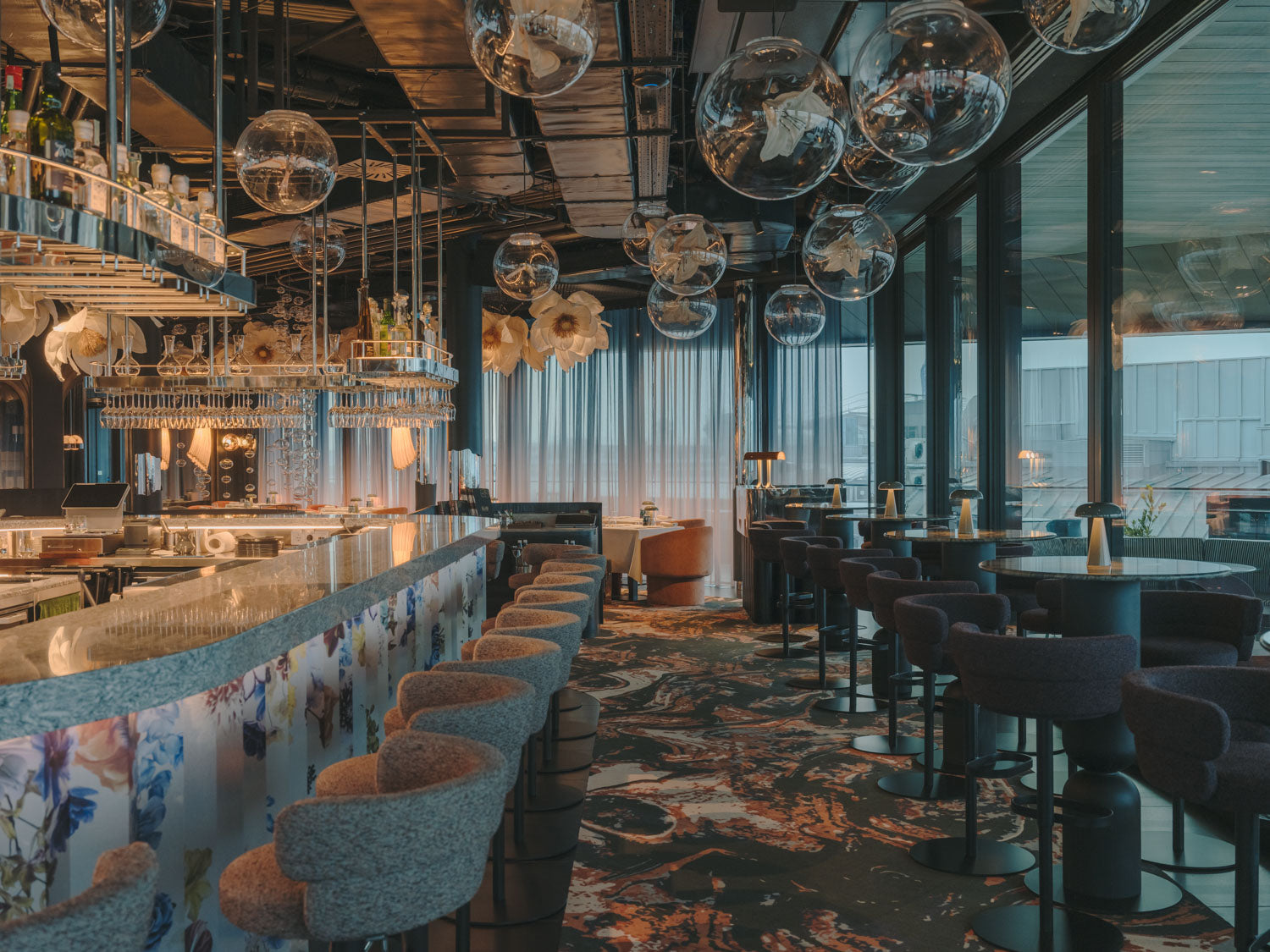
In the context of contemporary hospitality, BiBo stands apart for its emotional clarity. Rather than leaning on branded spectacle or predictable luxury cues, the interior feels narrative-led, almost cinematic. Deep, saturated tones sit alongside moments of softness and glow, creating contrast and rhythm. Colour is used emotionally rather than decoratively, shaping how the space is felt rather than simply how it is seen. The result is an interior that feels expressive without tipping into excess, layered without feeling chaotic.
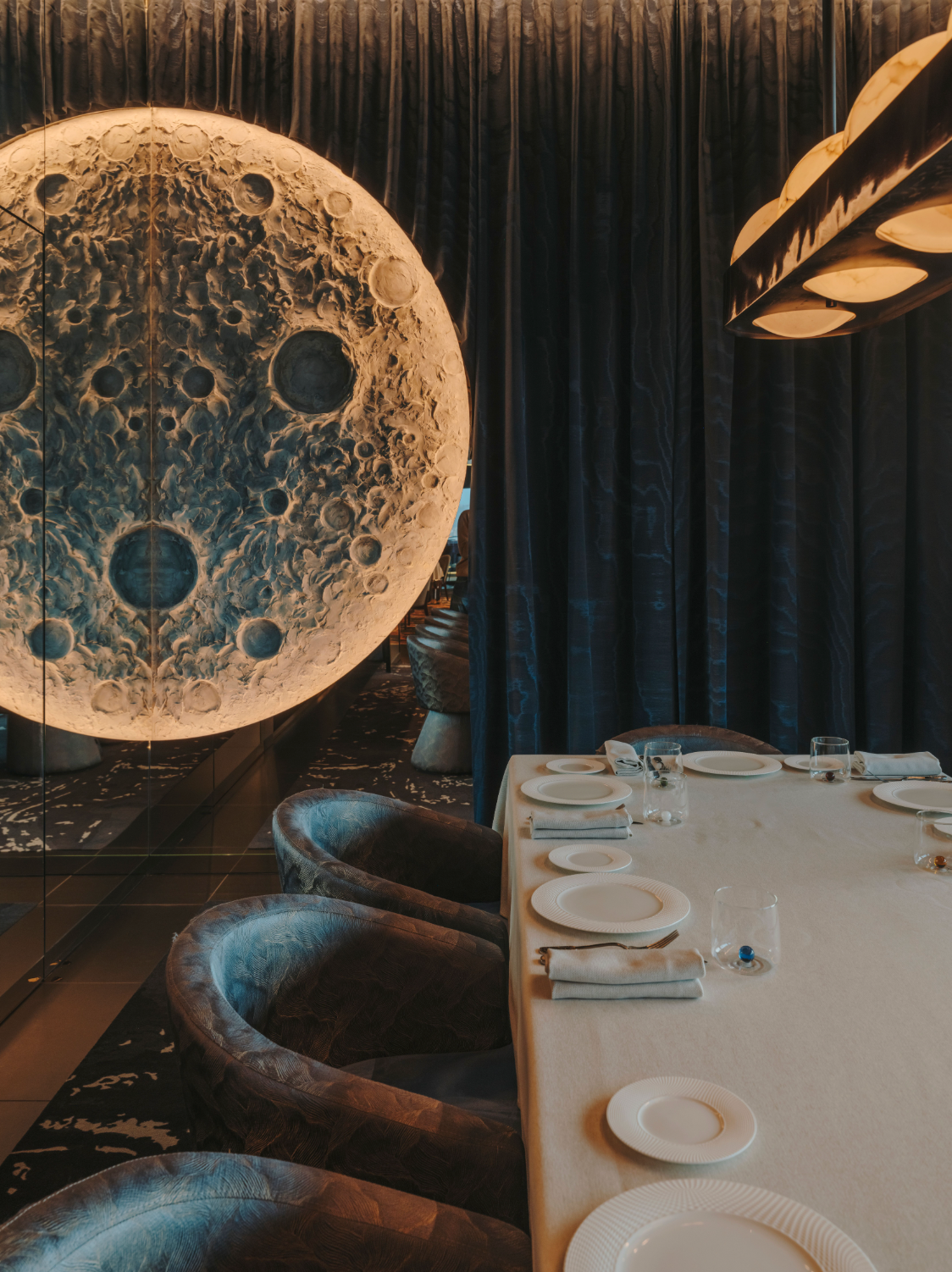
Overhead, the large moon-like installation becomes both a visual anchor and an emotional one. Glowing softly above the room, it introduces a dreamlike quality that shifts the atmosphere from grounded to almost surreal, reinforcing the sense that this is a place designed not just for dining, but for escape.
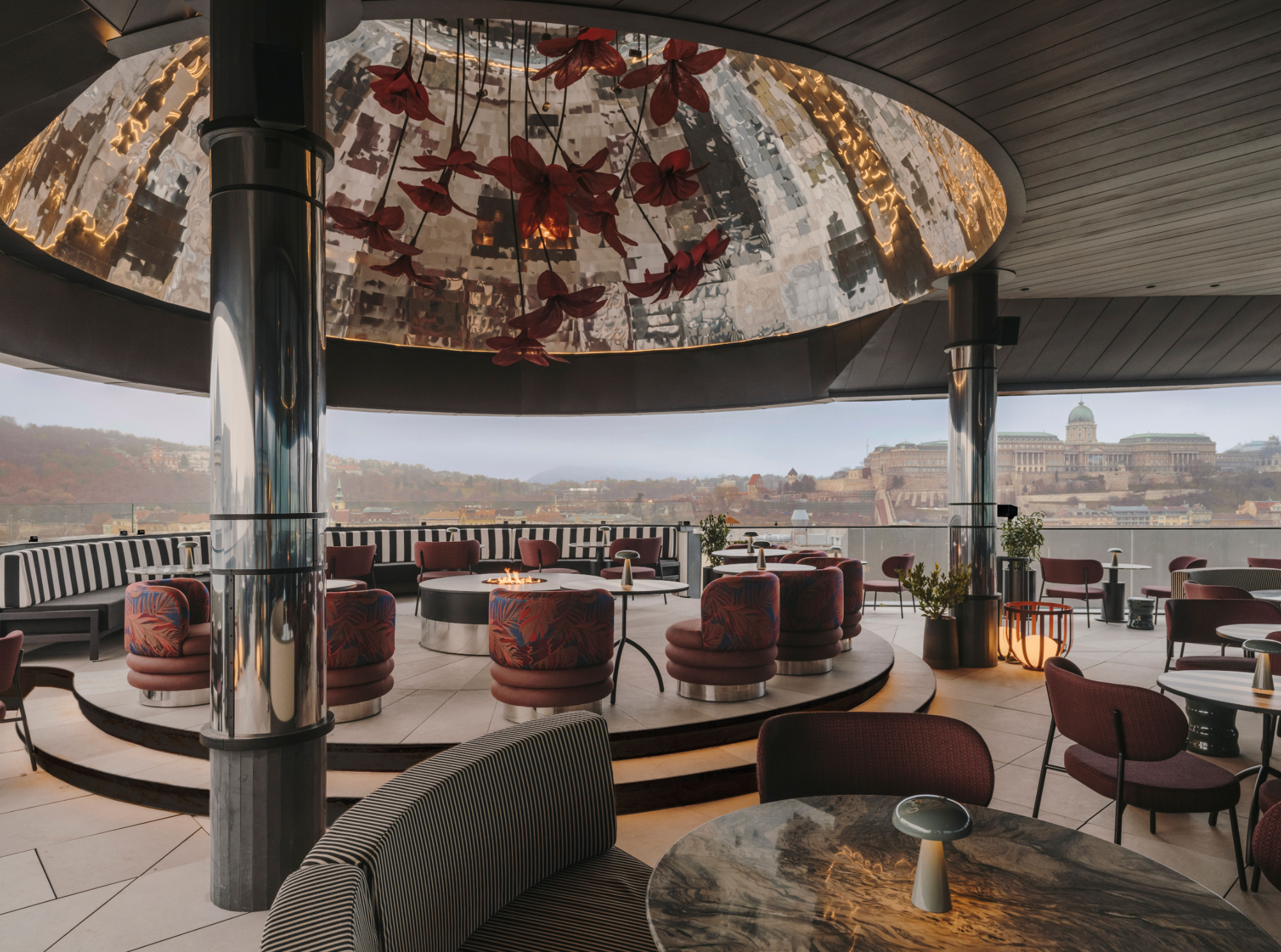
In the context of contemporary hospitality, BiBo stands apart for its emotional clarity. Rather than leaning on branded spectacle or predictable luxury cues, the interior feels narrative-led, almost cinematic. Deep, saturated tones sit alongside moments of softness and glow, creating contrast and rhythm. Colour is used emotionally rather than decoratively, shaping how the space is felt rather than simply how it is seen. The result is an interior that feels expressive without tipping into excess, layered without feeling chaotic.

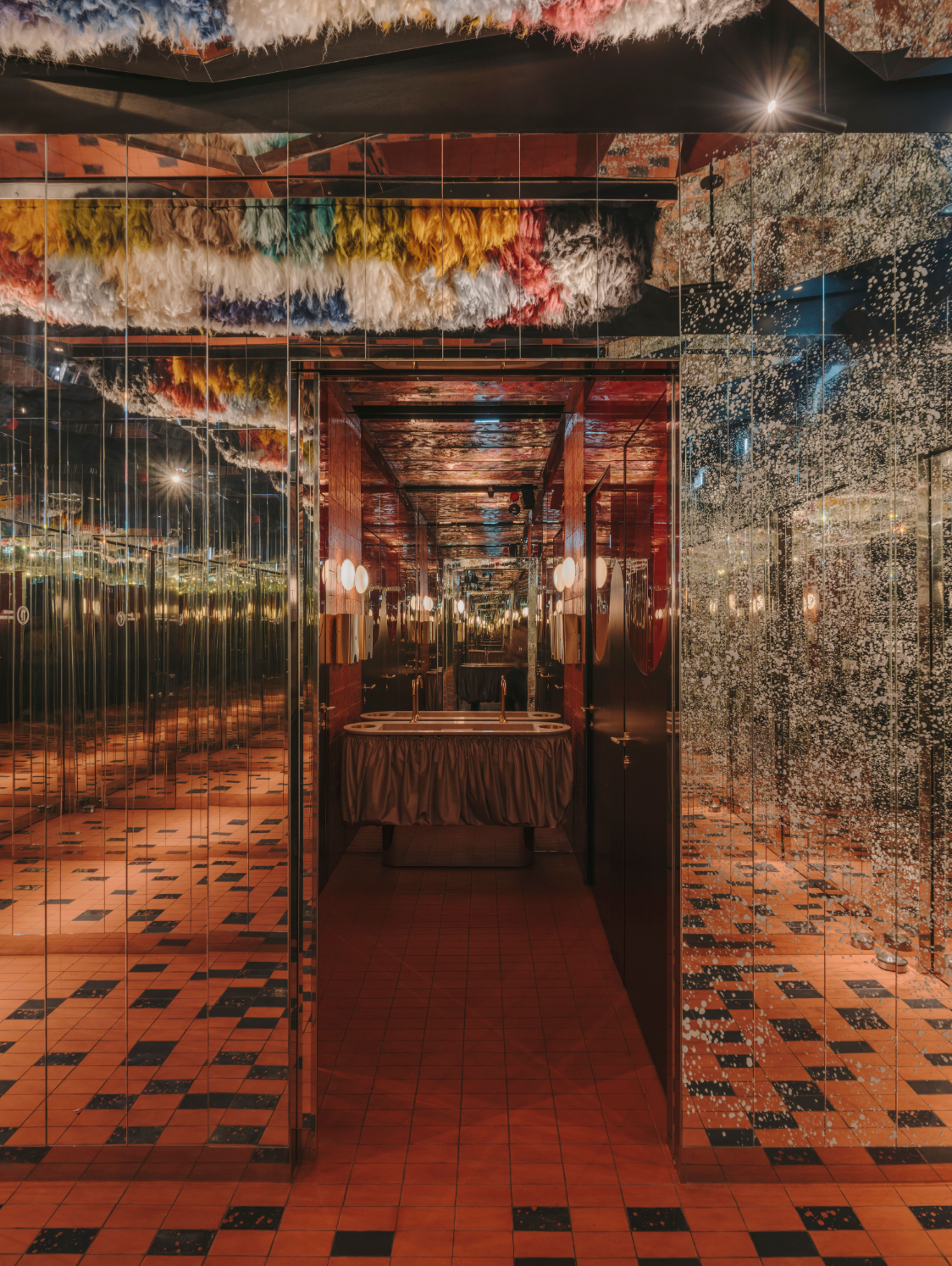
The space is not nostalgic, nor is it attempting to reference a specific era. Instead, it embraces emotion as a contemporary design value. Romance here is modern and assured, found in tactile richness, sculptural form, and a willingness to prioritise feeling over formula. It is an interior that invites guests to linger, to look up, to notice how light shifts across surfaces as the evening unfolds.