



Design by Erdem Hamza Architecture, Photography by 645 Studio
The Look Out
TRENDS
There is a quiet power in a well-framed view. A moment where architecture steps back, allowing nature to lead. In these homes, the boundary between inside and out dissolves, replaced by a more thoughtful, holistic approach to living, one that invites pause, reflection, and a deeper connection to the world beyond the glass. It is not simply about large windows or impressive outlooks, but about intention, how space is oriented, how light is welcomed, and how the outside world is carefully drawn into daily life.
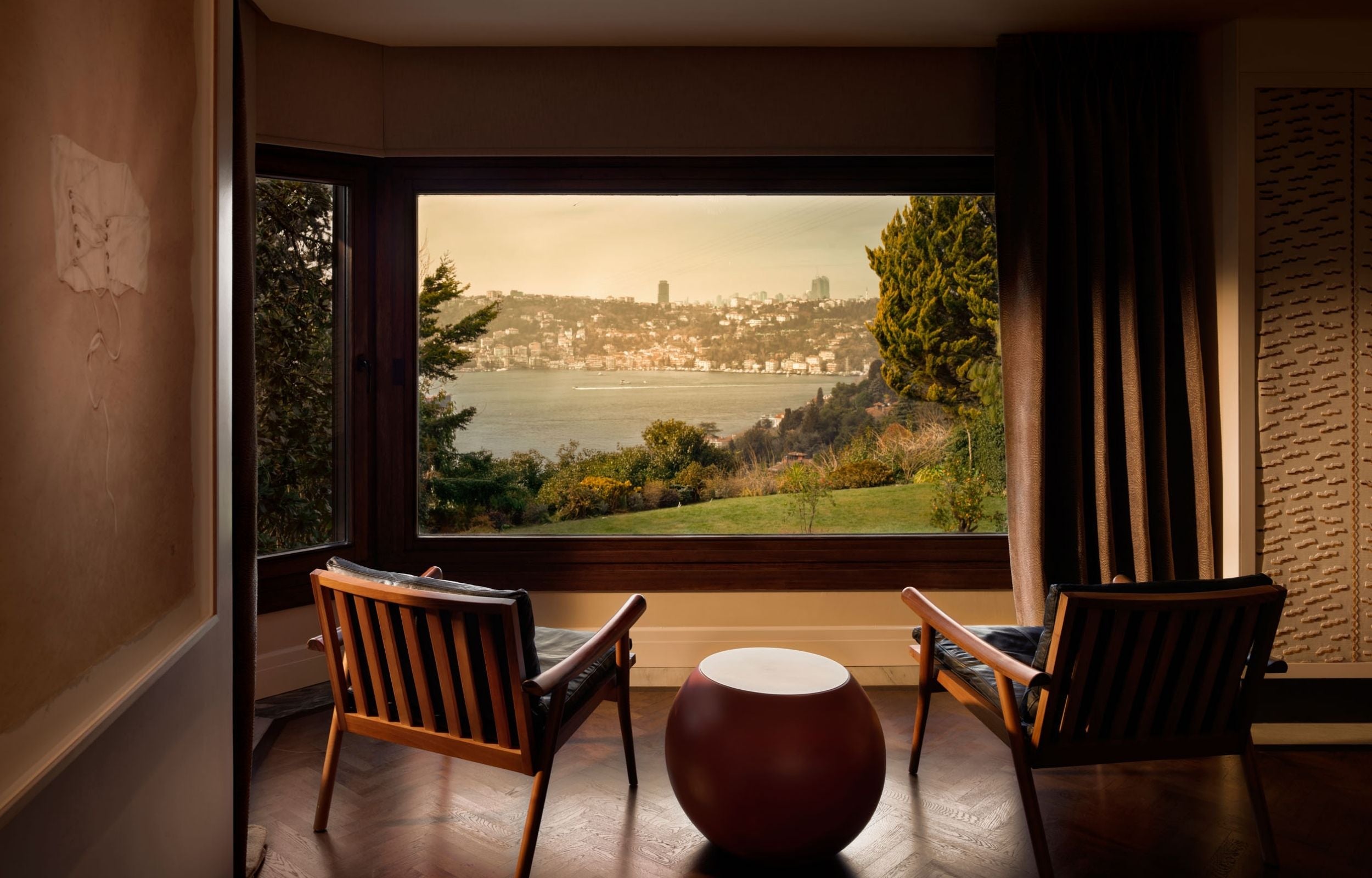
At Vaniköy House by Erdem Hamza Architecture, the view is treated almost as artwork. Framed by warm timber and pared-back furnishings, the expansive glazing captures the Bosphorus in a way that feels both monumental and calm. The interior palette is deliberately restrained, allowing the shifting tones of water and sky to take centre stage. As the light changes throughout the day, so too does the atmosphere within the room, creating a living, breathing interior that is constantly in dialogue with its surroundings.
Design by De Rosee Sa, Photography by Simon Brown
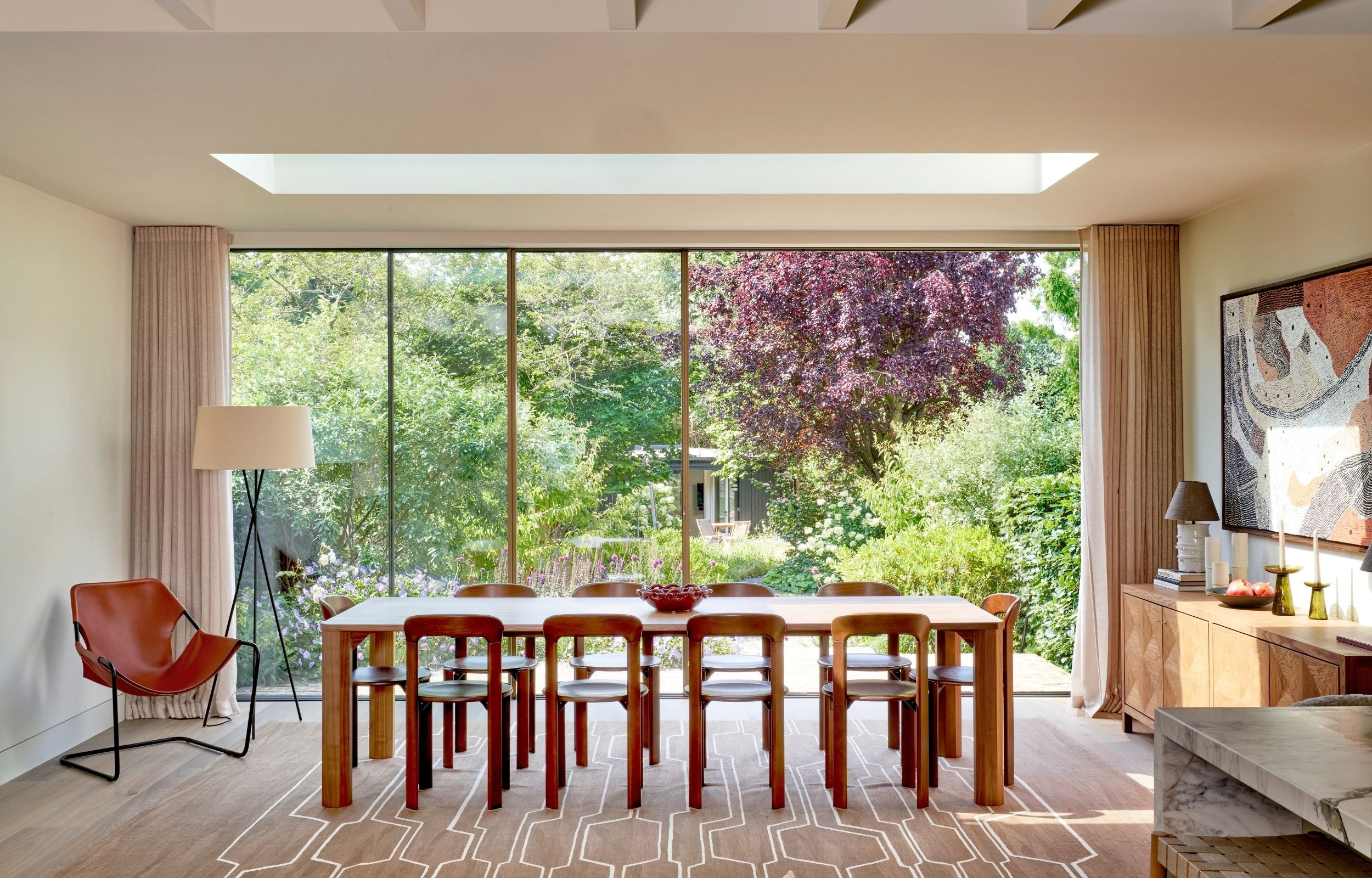
In contrast, Garden House by De Rosee Sa embraces a more immersive approach. Floor-to-ceiling glazing dissolves into dense greenery, blurring the edges of architecture entirely. The dining space feels nestled within the garden rather than adjacent to it, with planting, texture, and filtered daylight softening the experience. Here, nature is not framed, but absorbed, becoming part of the spatial language and rhythm of everyday living.
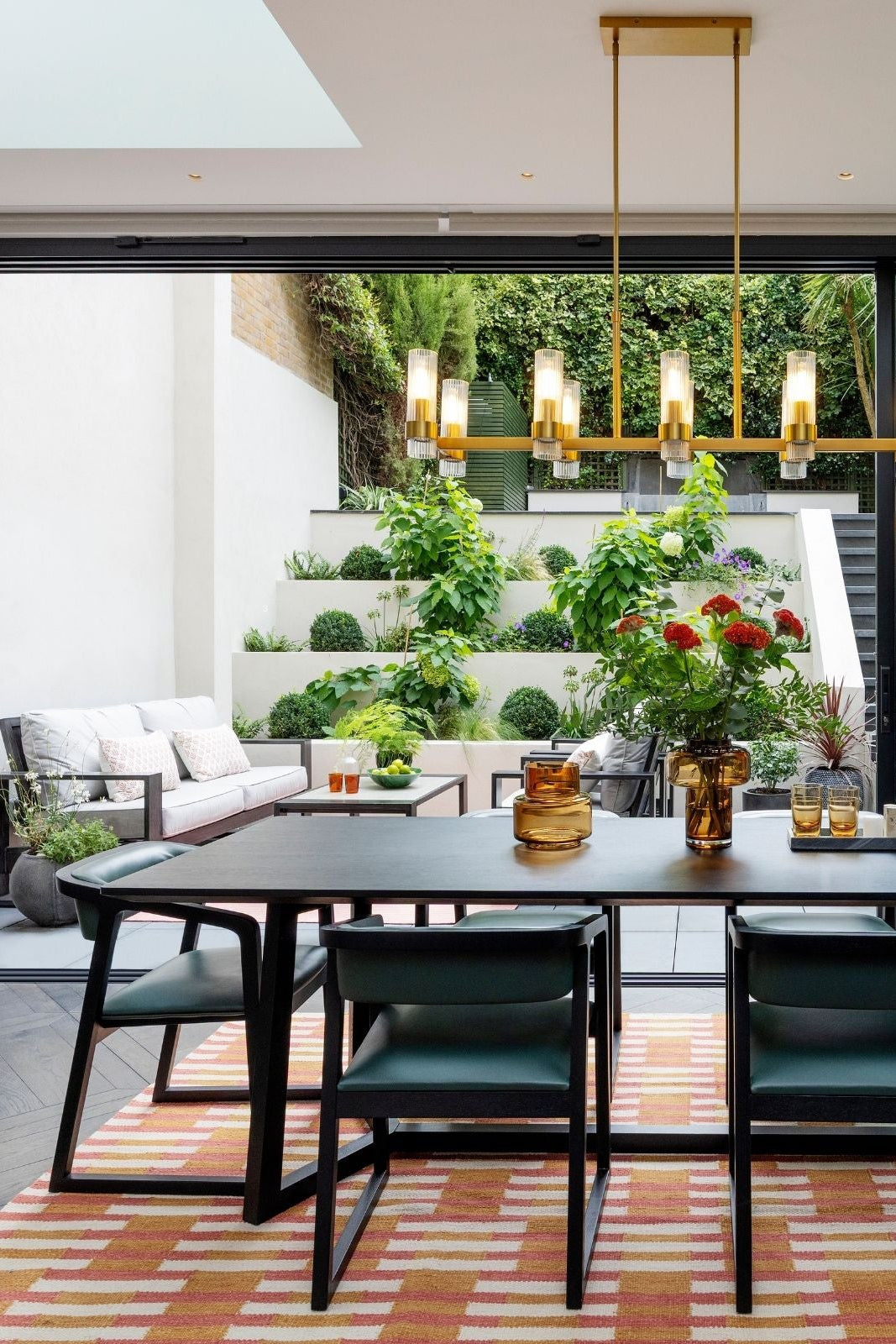
At the St John’s Wood Townhouse by Zulufish, the connection between inside and out is layered and architectural. The view unfolds across a sculpted, terraced garden, where steps, structured planting, and vertical greenery introduce depth and movement. This is not a passive outlook, but a carefully composed landscape that mirrors the considered geometry of the interior. The result is a dynamic relationship, where eye and body are drawn outward, guided by form as much as by nature itself.
Design by Zulufish, Photography by Guifre Peray
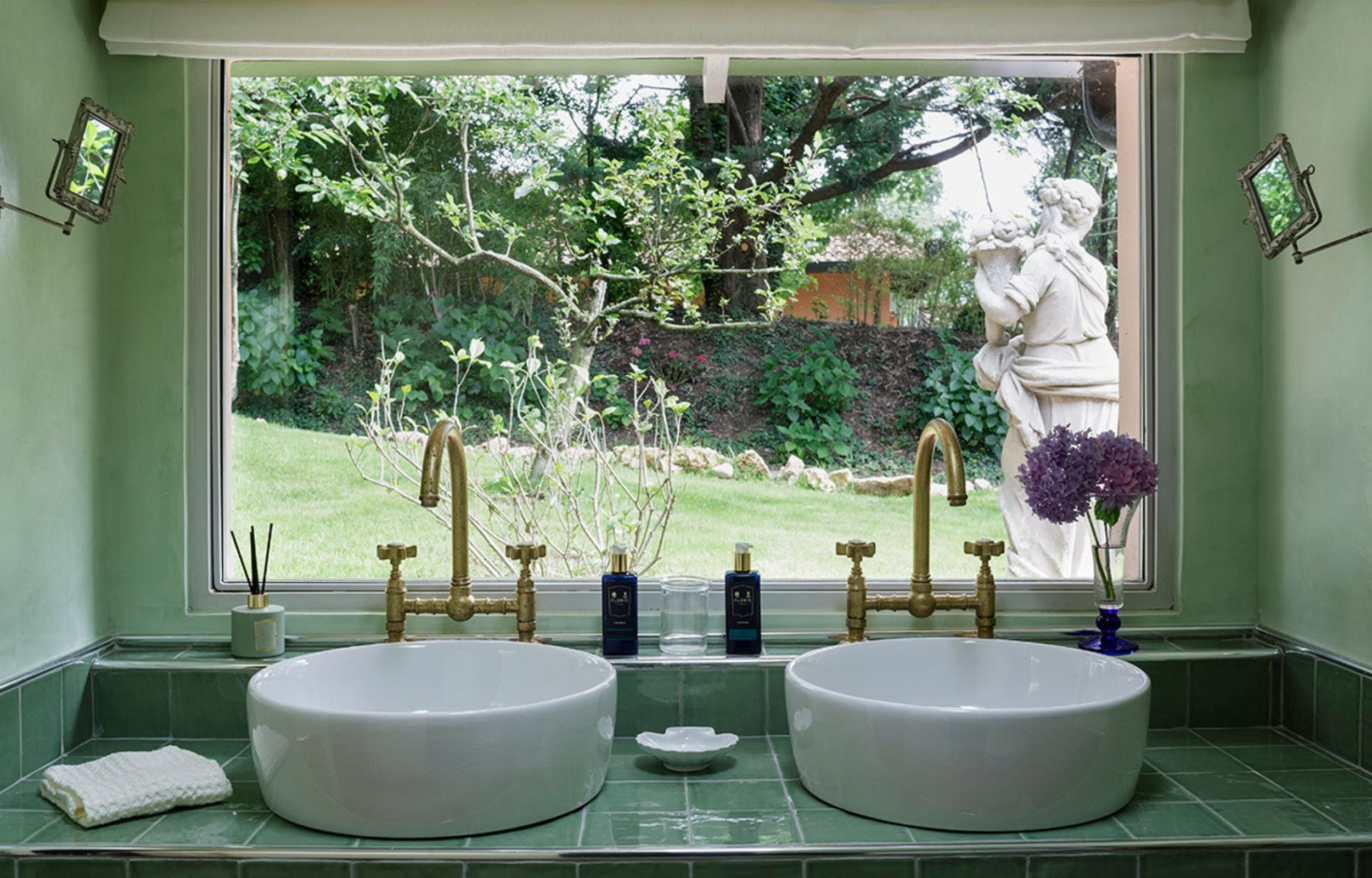
At La Foleia Villa Padiglione, the gesture is more intimate. A bathroom window frames a quiet garden vignette, where classical sculpture emerges from wild, untamed planting. The contrast between the refined interior and the organic exterior creates a moment of stillness, one that elevates the everyday ritual into something more contemplative. It is a reminder that connection to nature does not need to be grand to be meaningful.

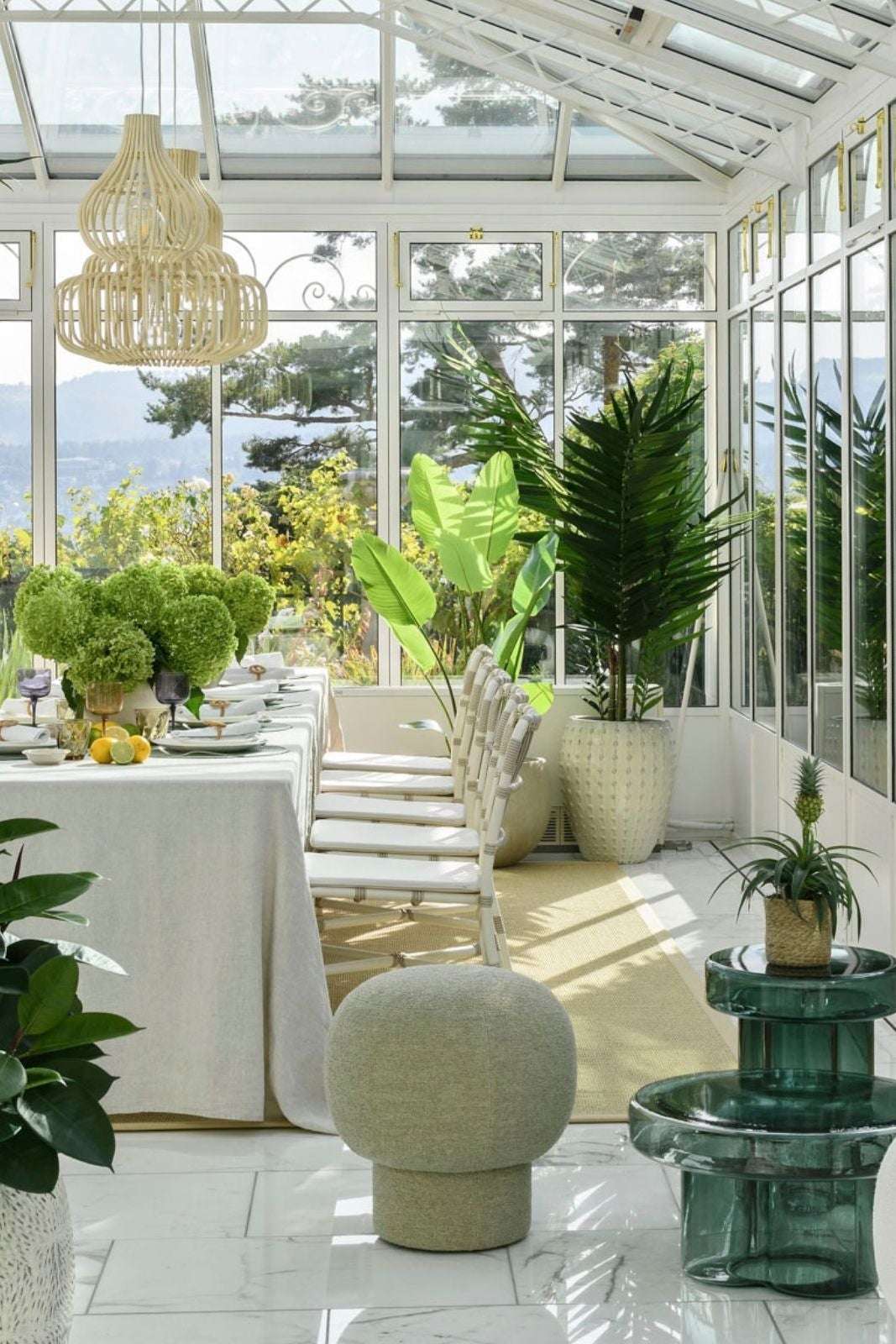
At the Villa Sophia by Ina Rinderknecht, the outlook is translated into a luminous conservatory setting where nature is both beautifully framed and sheltered. Encased in a grand, white glass pavilion, the dining and lounge space acts as a sophisticated sanctuary designed to draw alpine light deep into the interior. Rinderknecht’s characteristic precision utilizes a restrained palette of soft creams, warm yellows, and structural glass tables, allowing vibrant flora to animate the volume. Rather than competing with the landscape, the design mirrors it; tall palms and lush hydrangeas echo the wild meadows outside, while the generous glazing seamlessly merges the interior with rolling hills and distant horizons.
Design by Ina Rinderknecht, Photography by Reto Guntli & Agi Simoes
Design by Laura Hammett
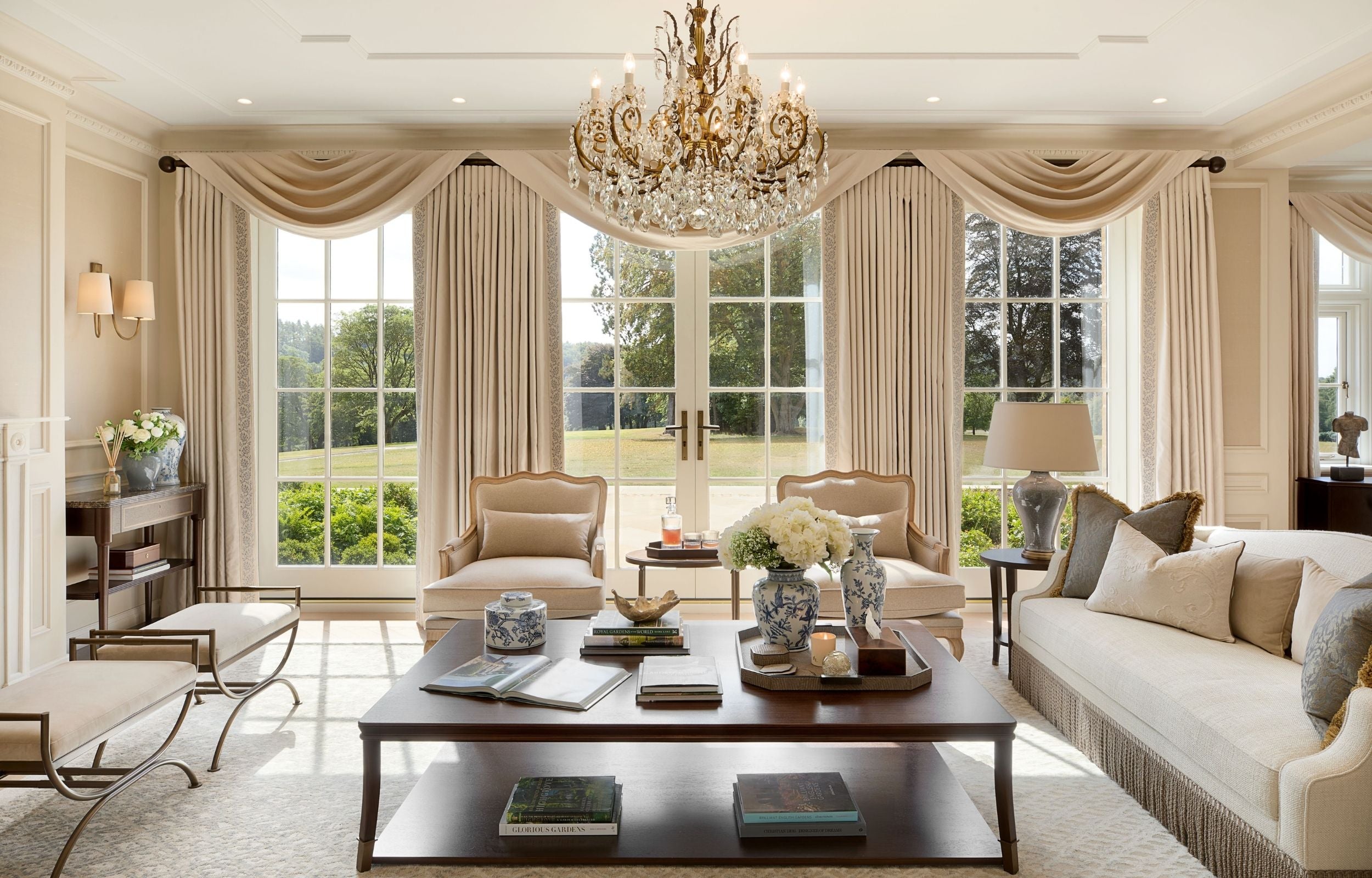
In Laura Hammett’s Yorkshire house, the relationship with nature is rooted in tradition. Classic architectural elements, generous windows, and carefully considered sightlines frame views of rolling countryside beyond. Soft drapery and layered textures enhance the sense of comfort, while allowing the landscape to remain present within the room. It is a quieter interpretation, one that balances heritage with a deep respect for its rural setting.
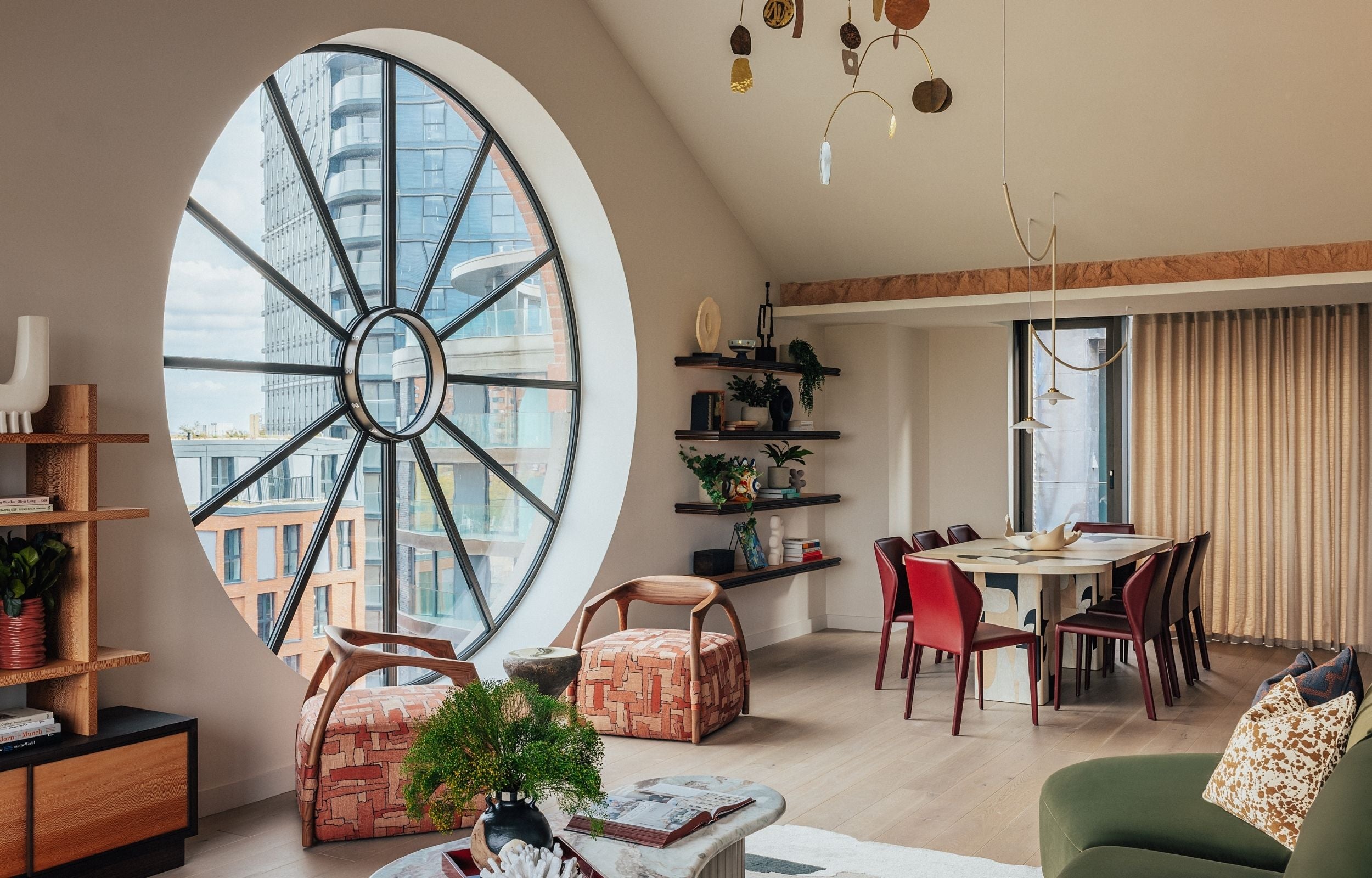
Design by Angel O’Donnell
Finally, the Angel O’Donnell duplex at Chelsea Power Station offers a distinctly urban perspective. A dramatic circular window, defined by its original ironmongery, becomes a focal point within the space, capturing the London skyline beyond. Rather than soften the industrial character, the design celebrates it, allowing the history of the building to shape the experience of the view. The city becomes part of the interior narrative, framed with confidence and clarity.
Each of these projects approaches the idea of “the look out” differently, yet they are united by a shared understanding: that the most powerful interiors are those that acknowledge their surroundings. Whether expansive or intimate, rural or urban, these spaces demonstrate that when design works in harmony with nature, or the wider environment, it creates something far more meaningful than aesthetics alone.


