


Photography by Atul Pratap Chauhan
Villa Palladio: Between Heritage and Horizon
PROJECTS
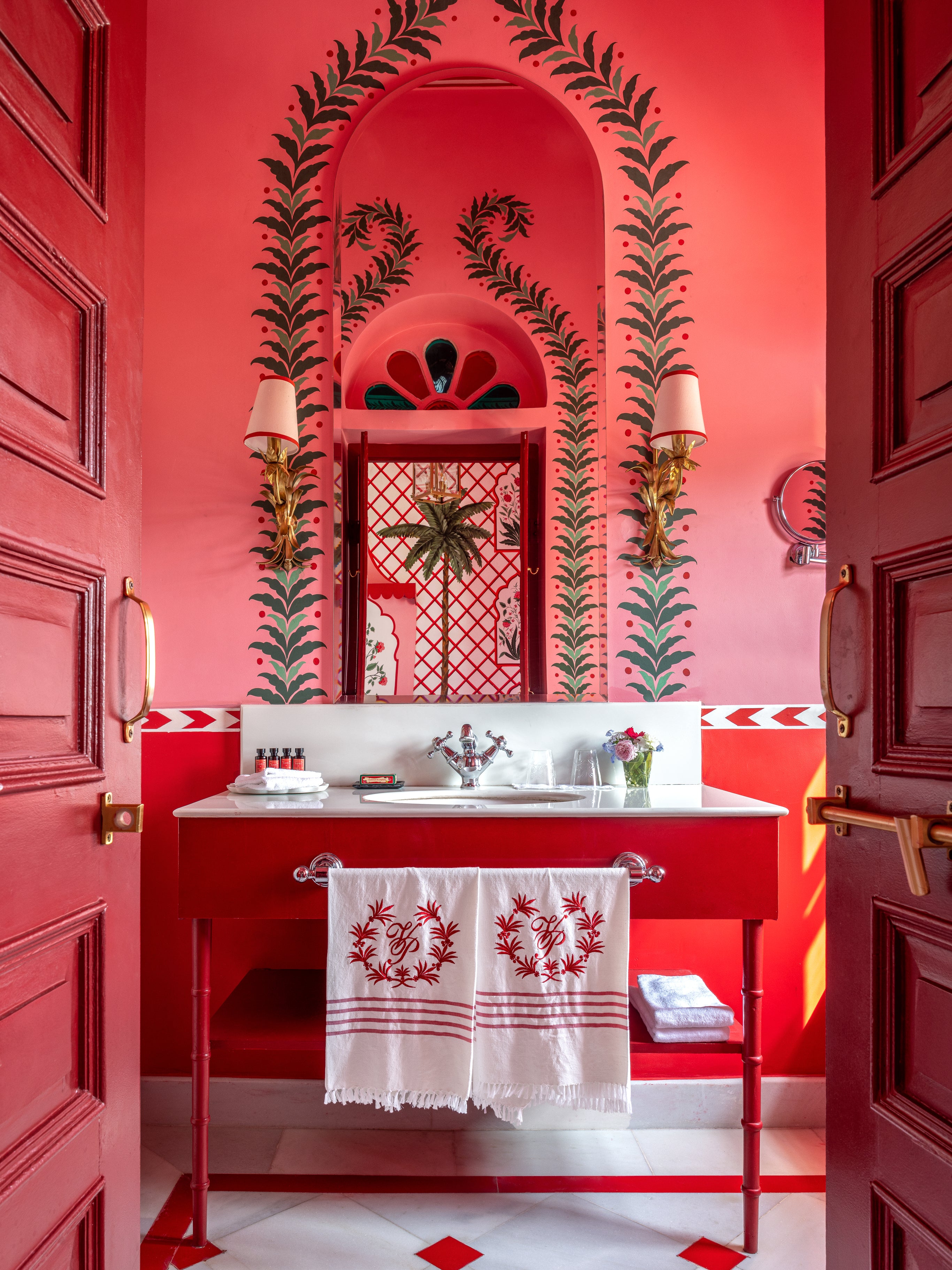
Just outside Jaipur, along the amber-dusted roads of Rajasthan, Villa Palladio emerges like a fever dream in red. Conceived by Barbara Miolini and Marie-Anne Oudejans, both long-time admirers of India’s rich cultural tapestry, the nine-room boutique hotel is more than a design destination: it’s a theatrical ode to Indo-European aesthetics, maximalism, and the meticulous artistry of local craftsmanship.
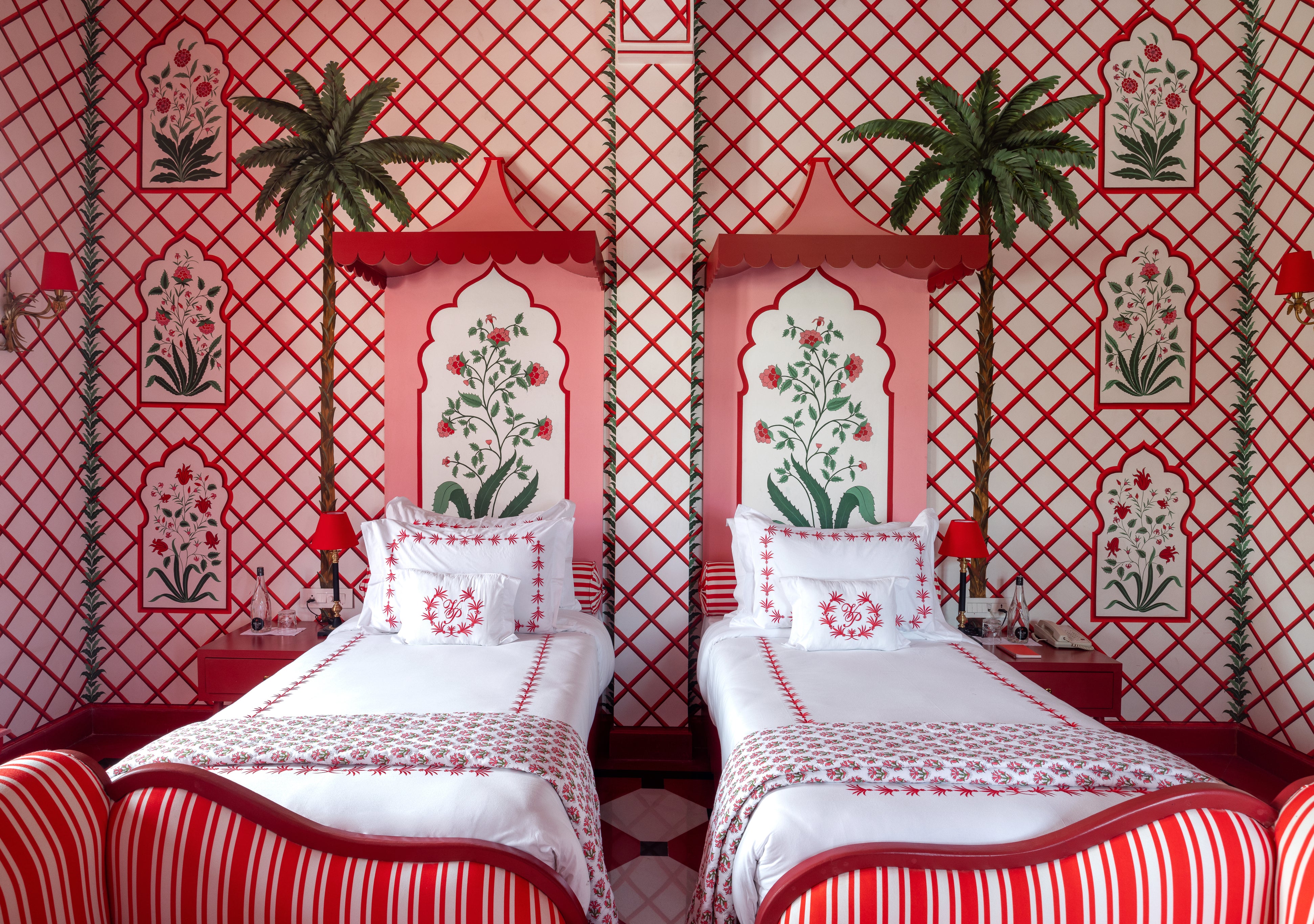
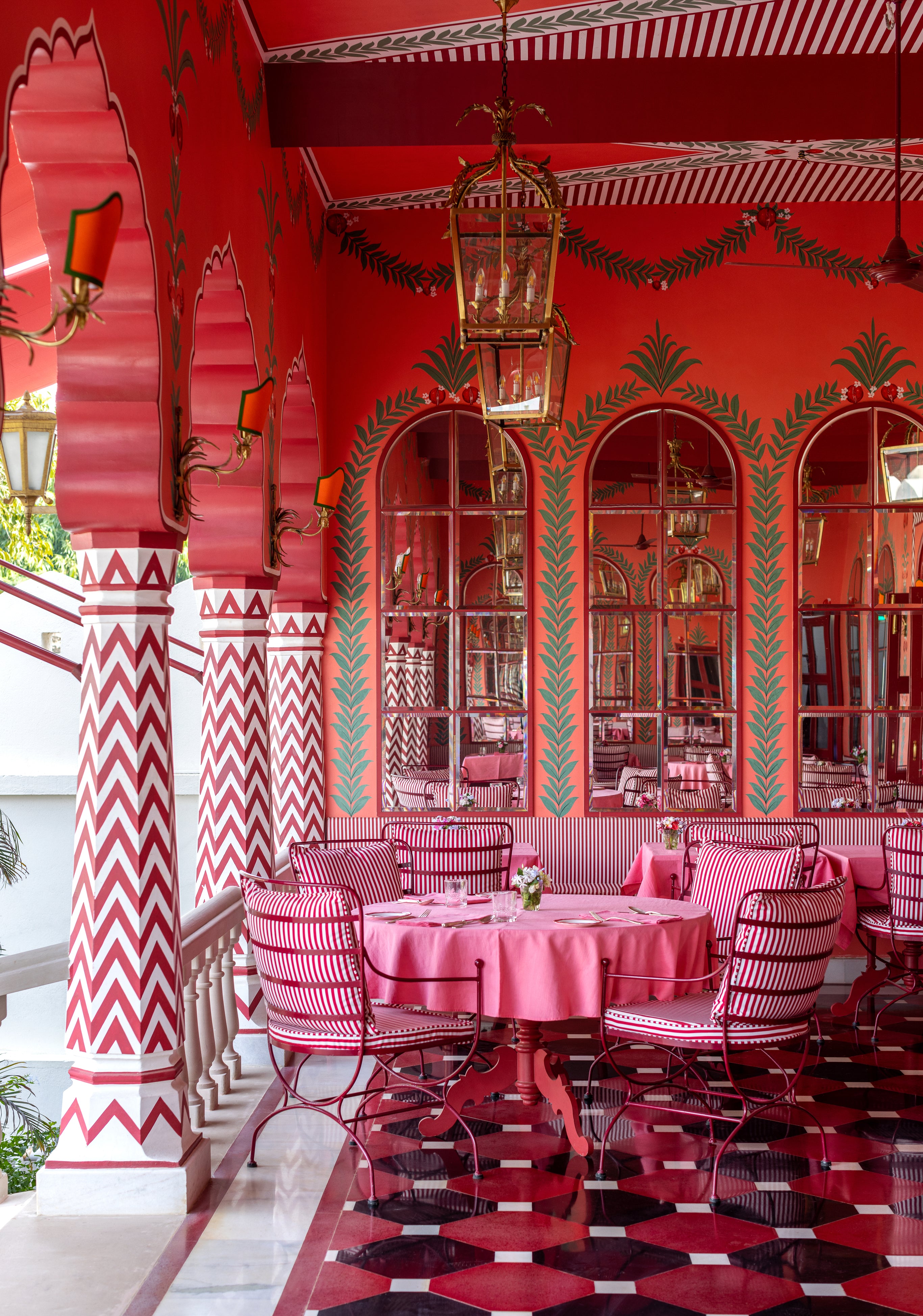
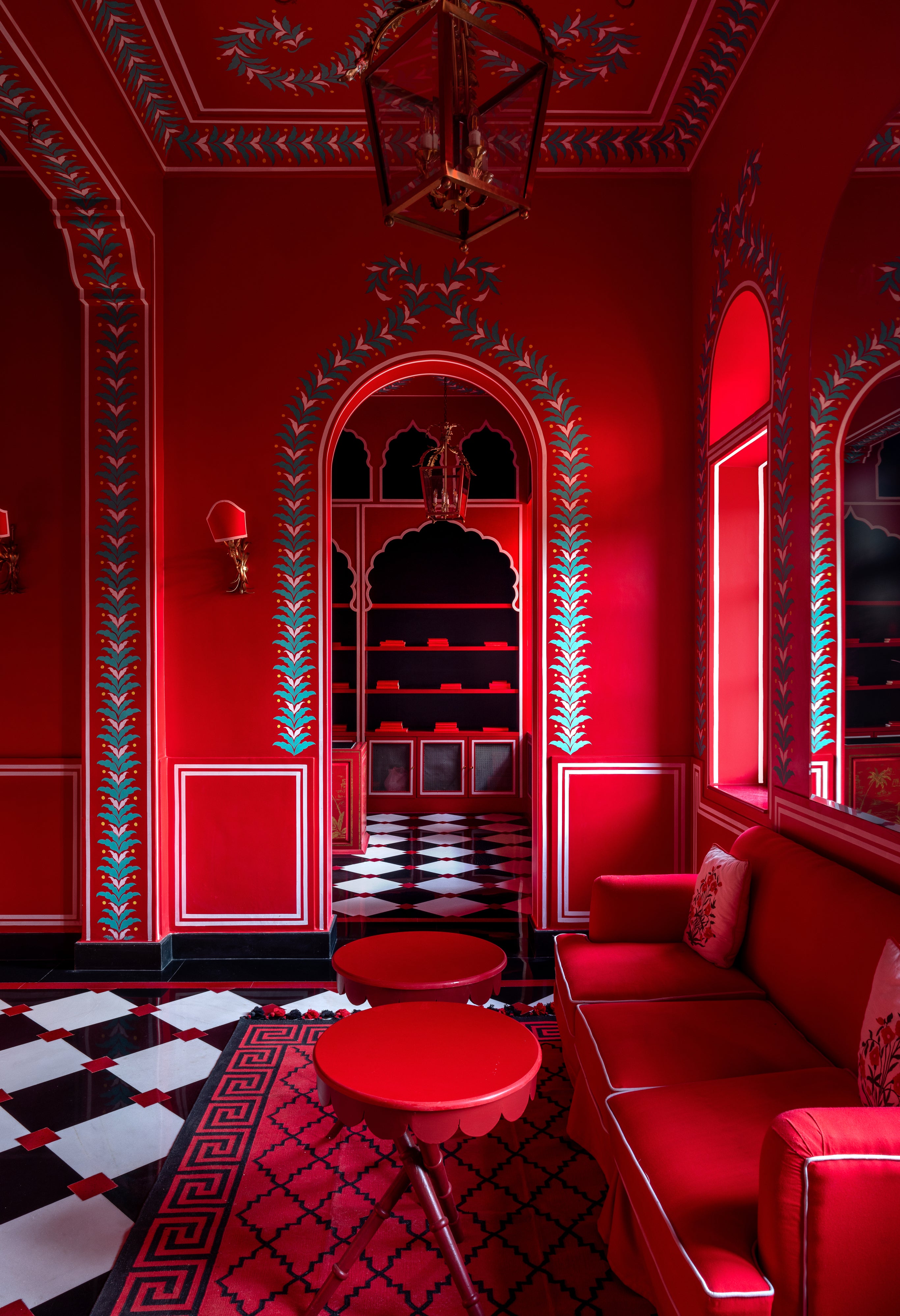
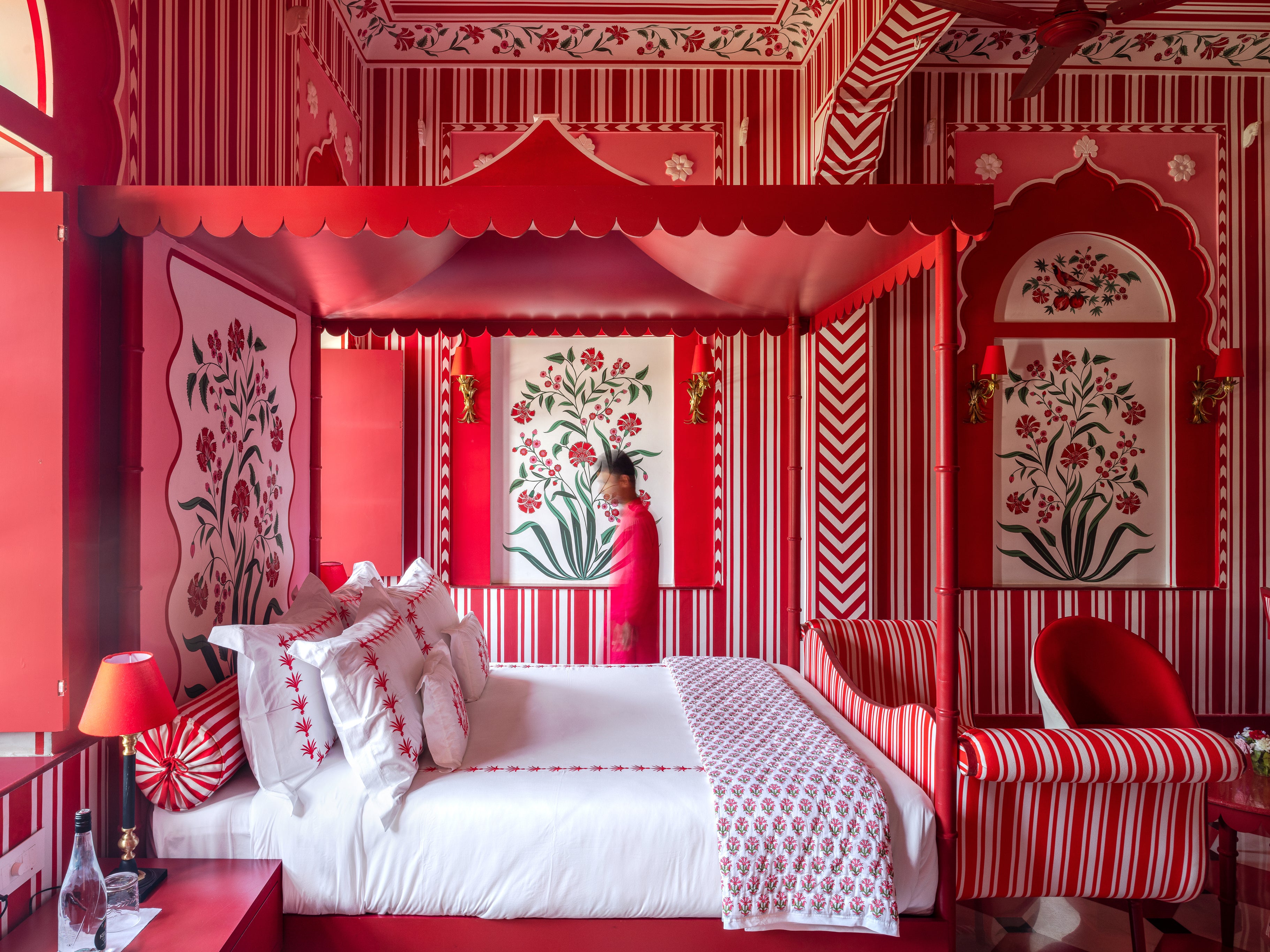
Housed in a former country estate, the villa has been utterly transformed. Every surface is painted, patterned, and pulsing with life. The designers drew from the architecture of Mughal gardens and Venetian palazzos, but the real magic lies in their palette, a riot of scarlet, vermilion, and carmine, punctuated by creamy whites and leafy greens. This intensity of colour, deeply rooted in Rajasthani symbolism, feels both regal and surreal.
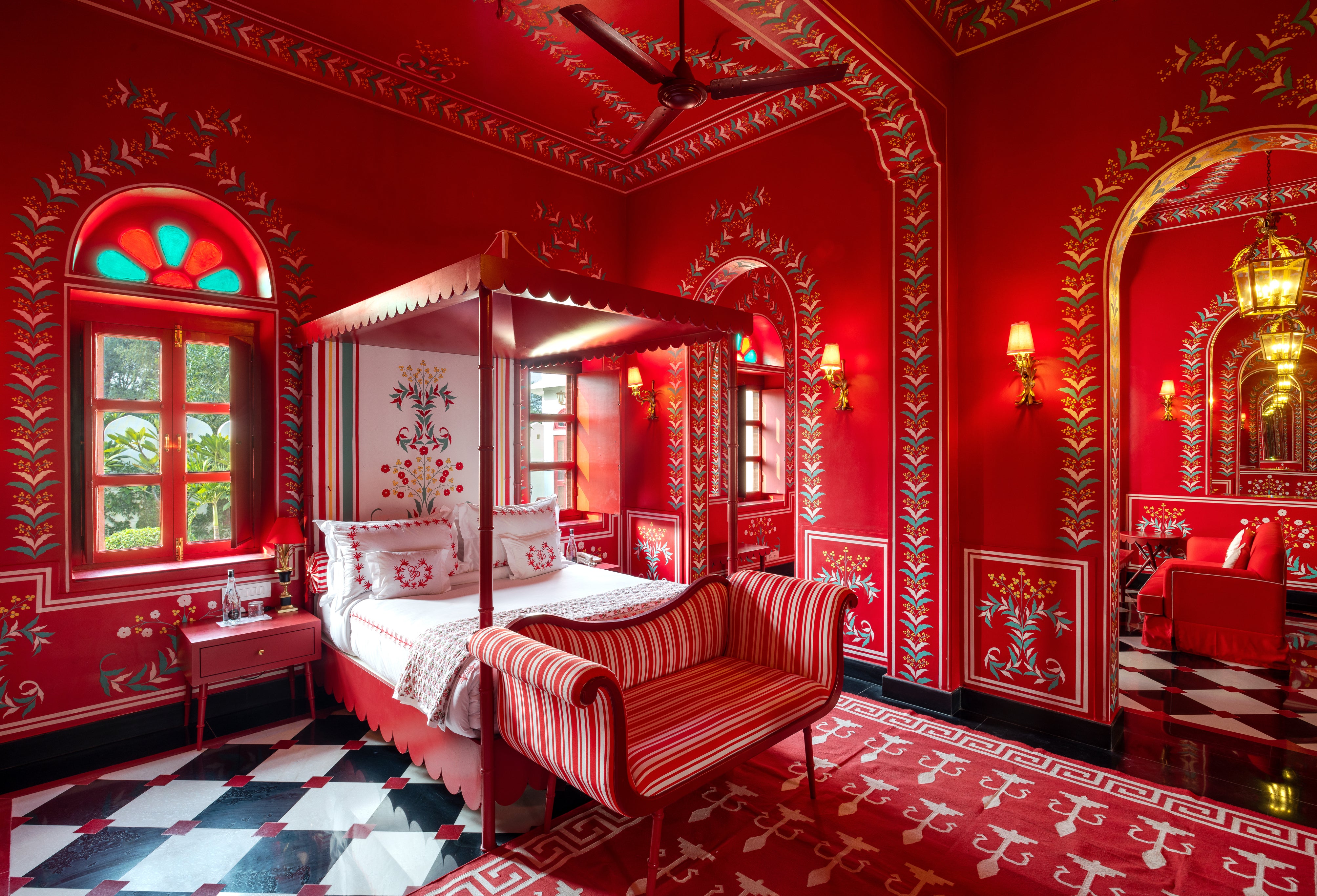
Inside, no two rooms are quite alike, but all are enveloped in narrative. Canopied beds are framed with scalloped arches; checkerboard floors ground soaring ceilings hand-painted with vines, florals, and geometric patterns. The level of detail recalls the miniature paintings of Rajasthan, where every inch of the canvas matters. In Villa Palladio, the same philosophy applies—walls, ceilings, doors, even lampshades are adorned.


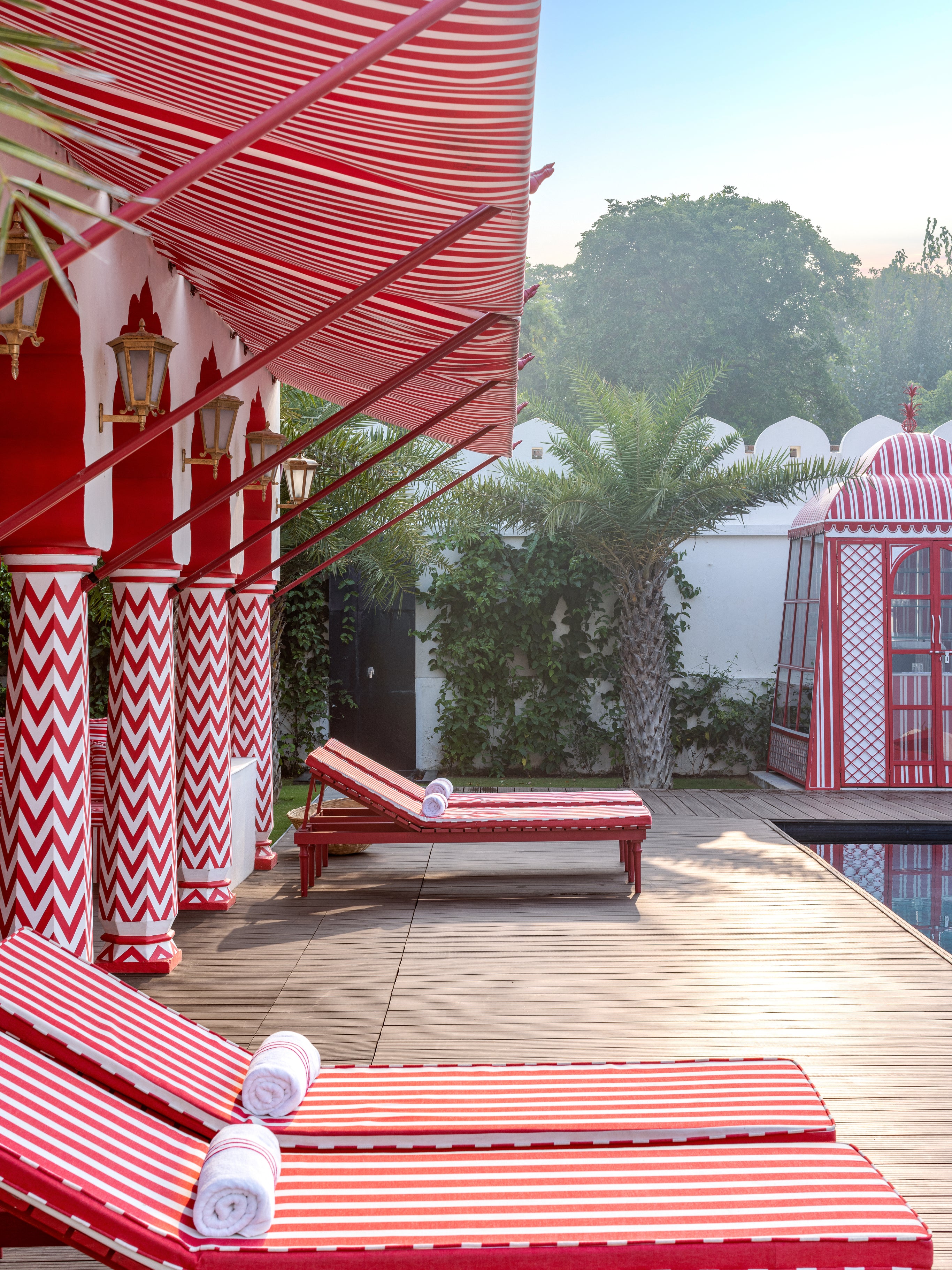
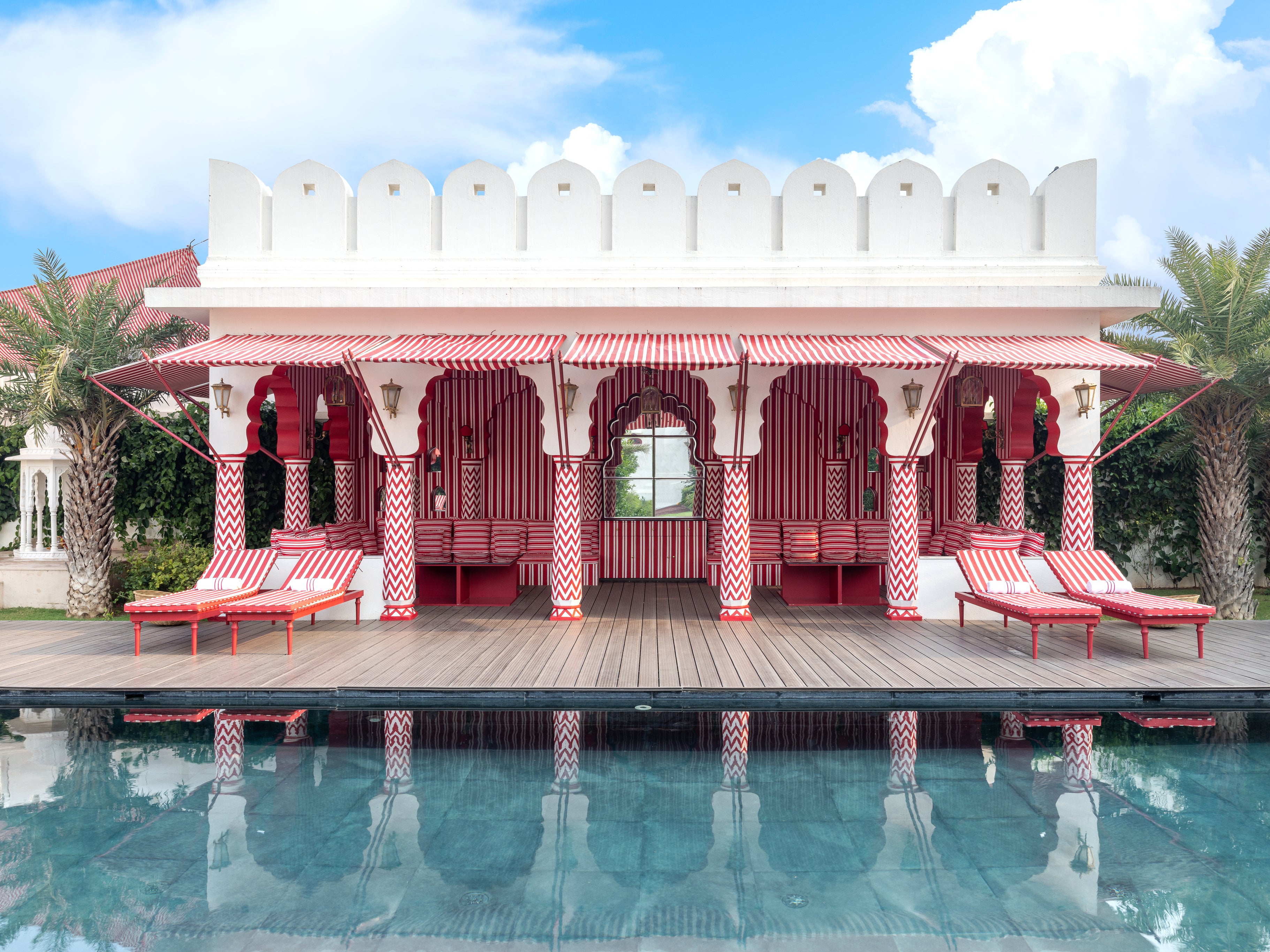
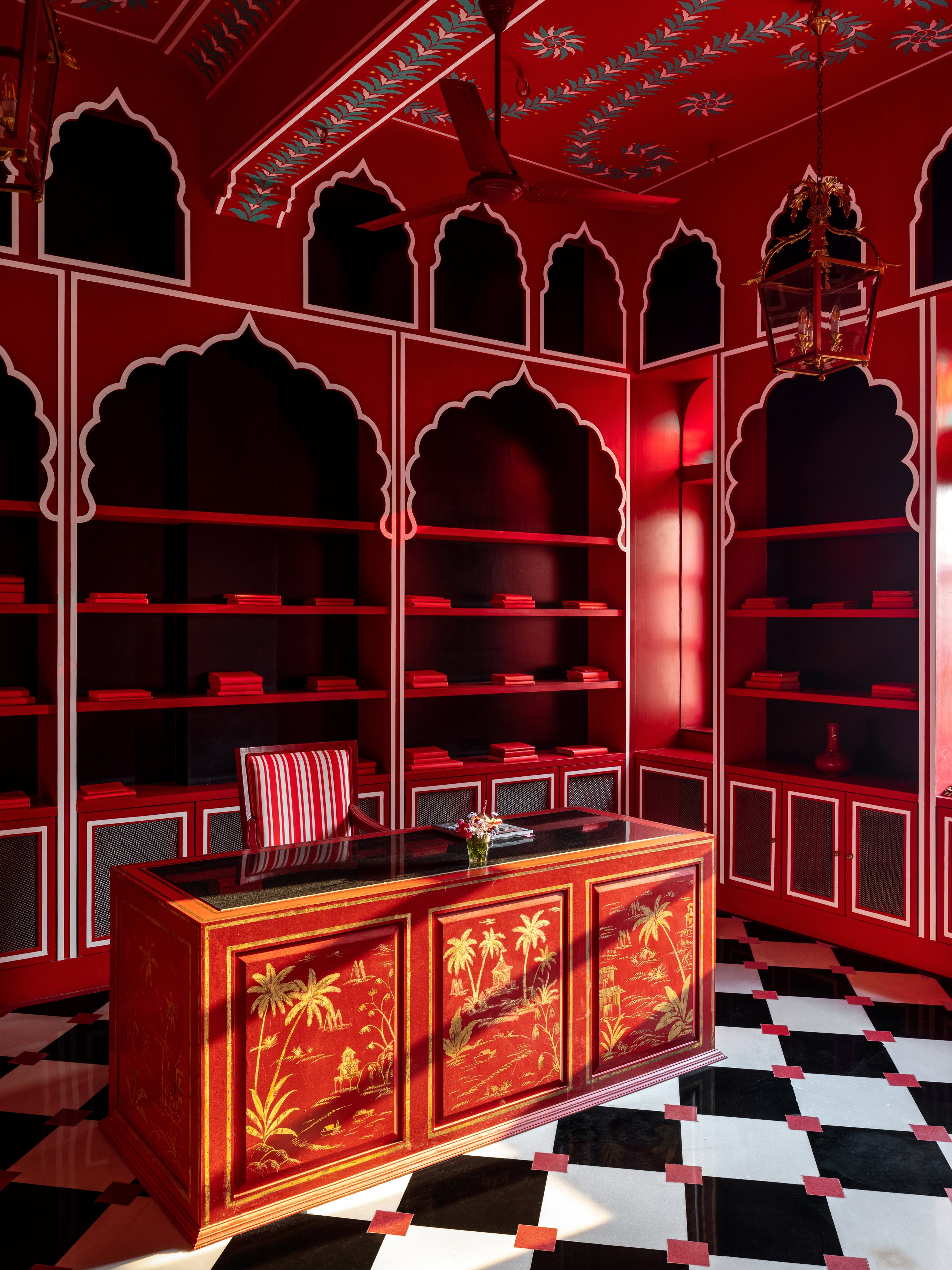
The library is a moody jewel box lacquered in deep crimson, while the dining terraces open up to scenes of pastoral calm, framed by colonnades and breezy verandas. But it’s the outdoor pavilion that truly captures the spirit of play: striped sunbeds, chevron columns, and whimsical canopies turn the pool area into a set piece straight out of a Wes Anderson film, filtered through the lens of Rajput romanticism.