



Photography by 645 Studio – İbrahim Özbunar
Vaniköy House by Erdem Hamza Architecture
RESIDENTIAL PROJECTS
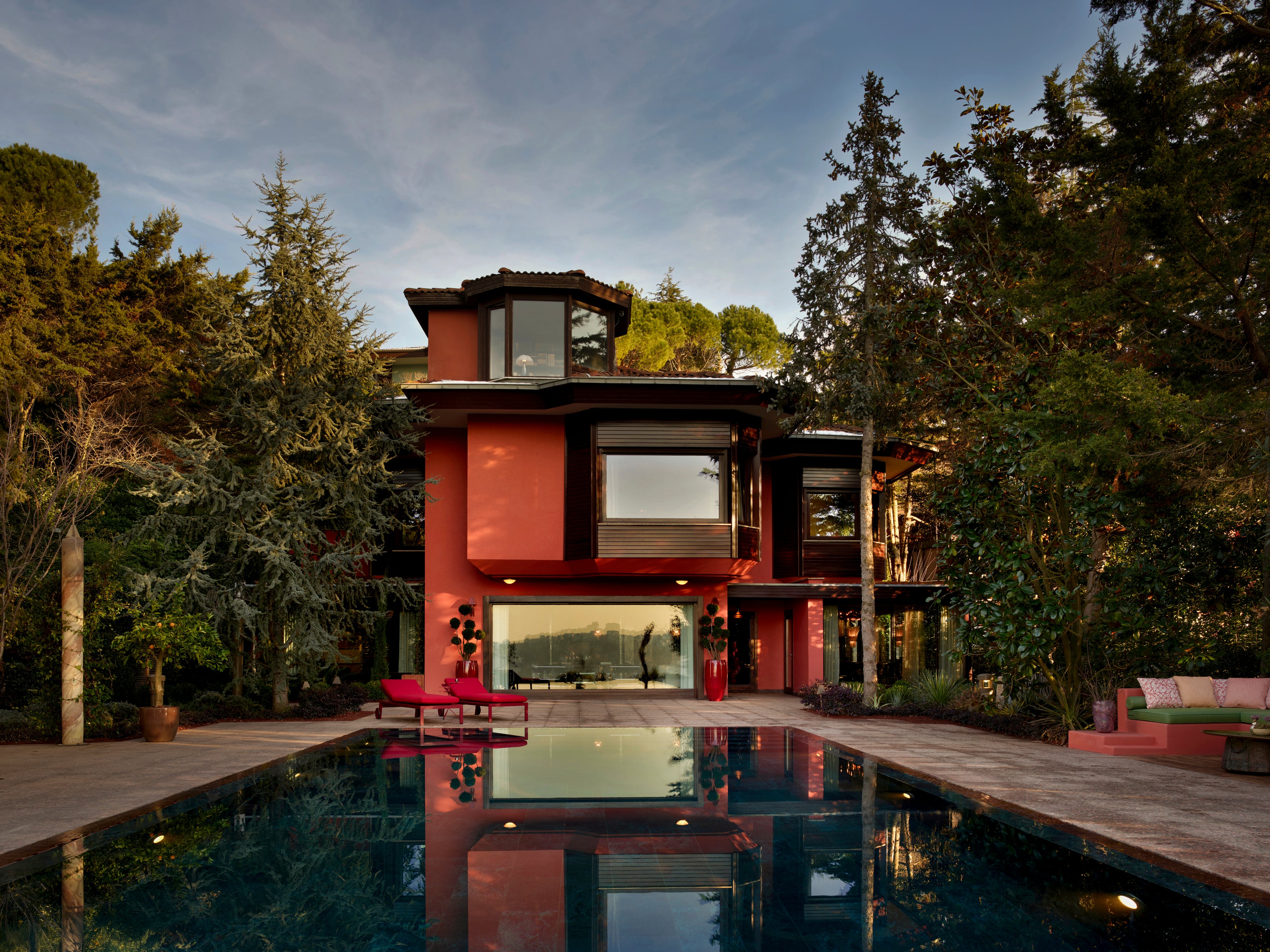
The Vaniköy House unfolds as a quiet dialogue between architecture and nature, where boundaries soften and spaces breathe. Designed by Erdem Hamza Architecture, the project is less about statement and more about atmosphere, a considered composition of material, light, and rhythm that feels deeply grounded in its surroundings.
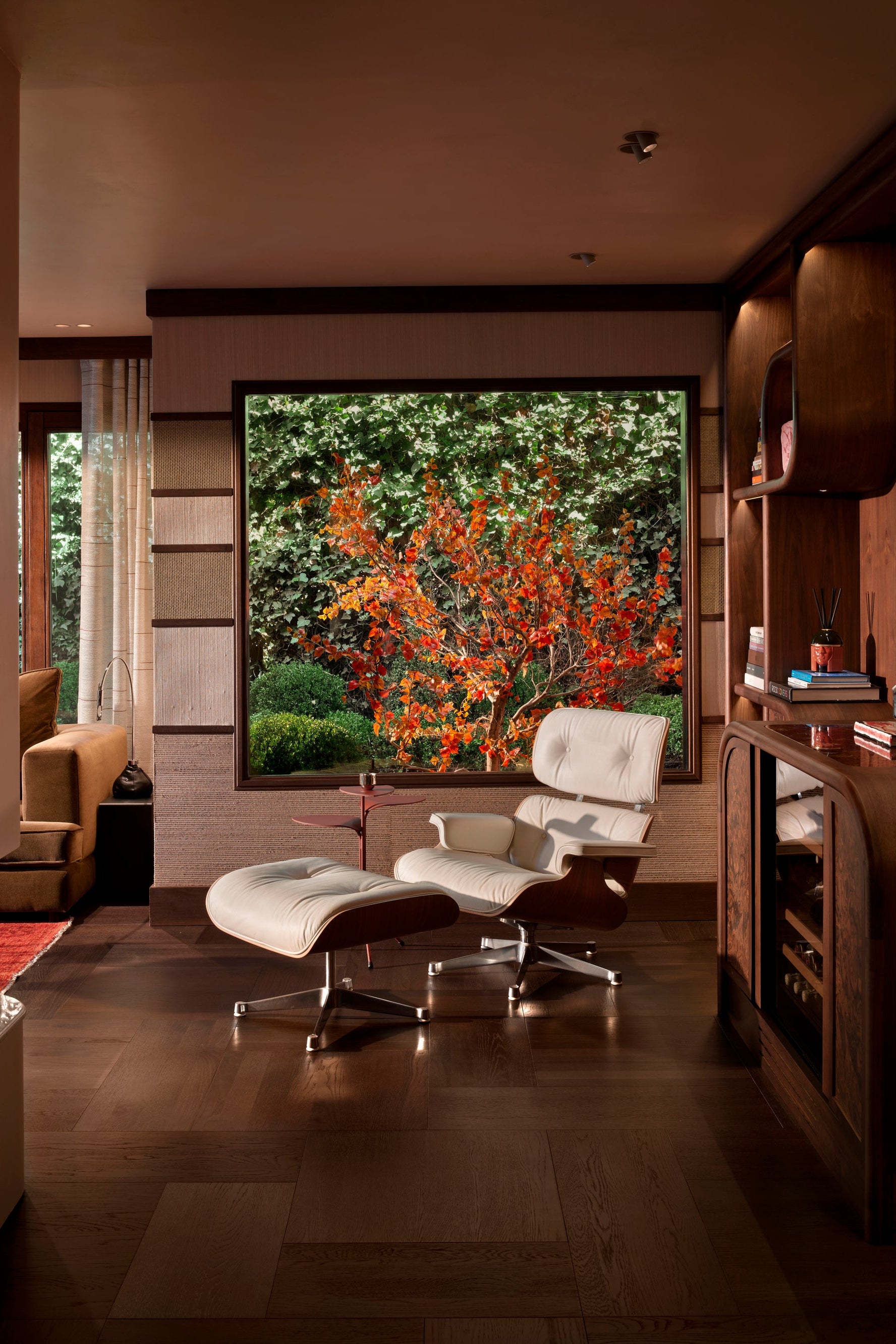
From the outset, the relationship between inside and out is deliberate. The house sits on a site that stretches from forest to water, and this gradient is felt throughout the interiors. Large openings frame greenery like living artworks, while filtered daylight moves gently across surfaces, shifting tone and mood as the day progresses. It is this constant interplay, between shadow and reflection, enclosure and openness, that defines the experience of the space.
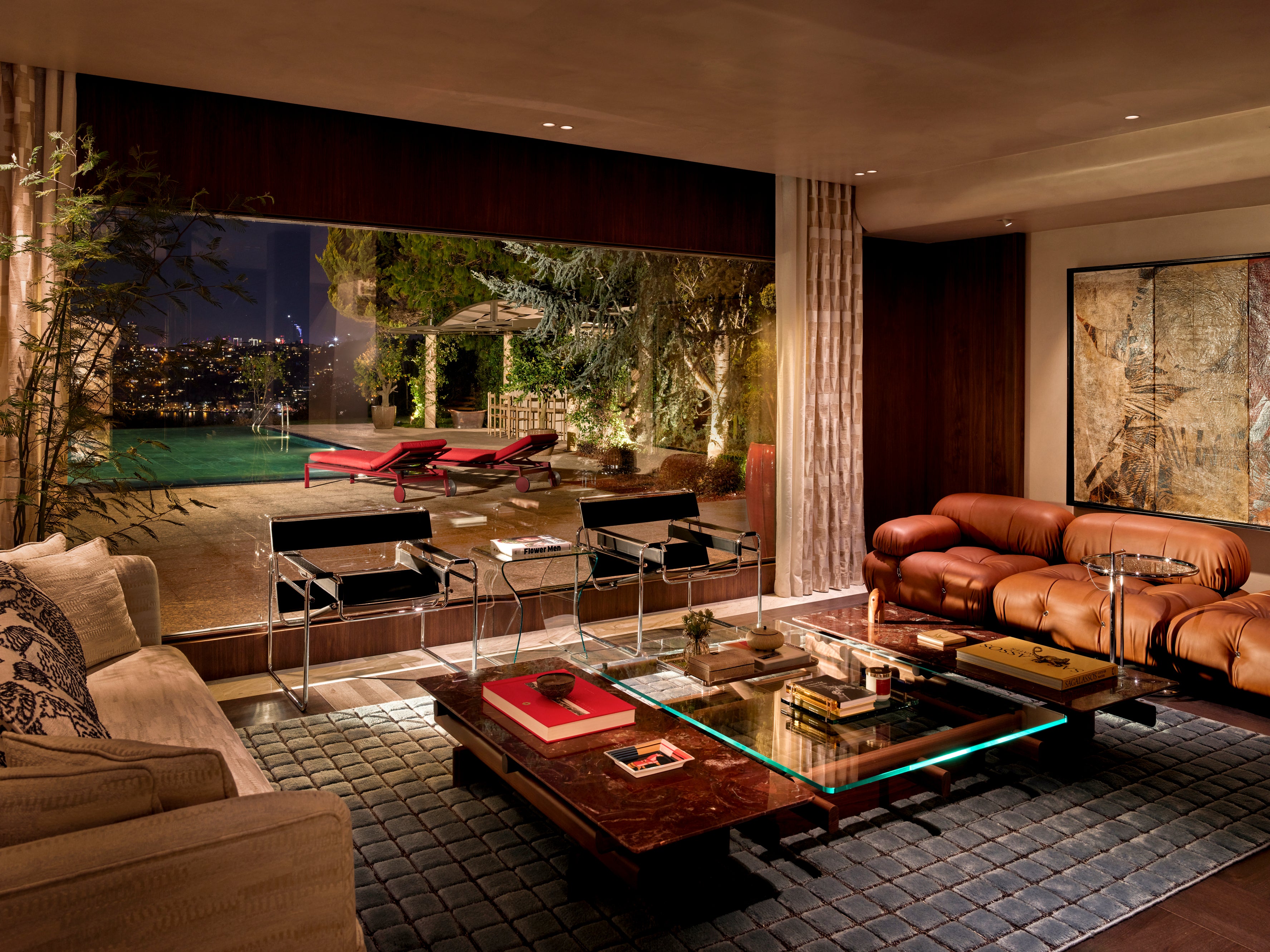
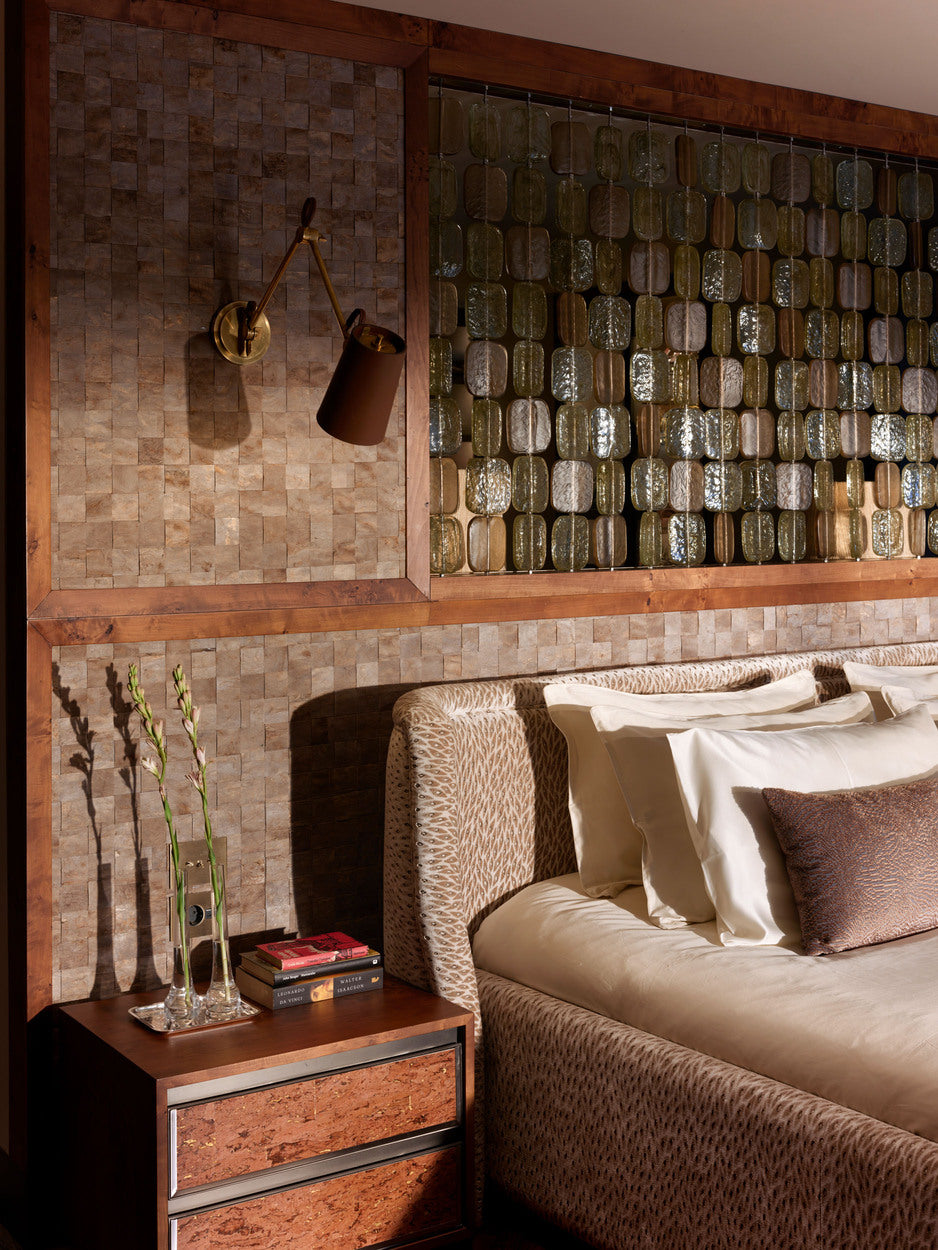
The material palette is rich but restrained. Warm walnut wraps walls and joinery, creating a sense of continuity and depth, while marble introduces a cooler counterpoint, catching light in a way that feels both subtle and precise. Stainless steel details appear sparingly, offering moments of contrast without disrupting the overall calm. Nothing feels imposed; instead, each material settles into the architecture with quiet confidence.
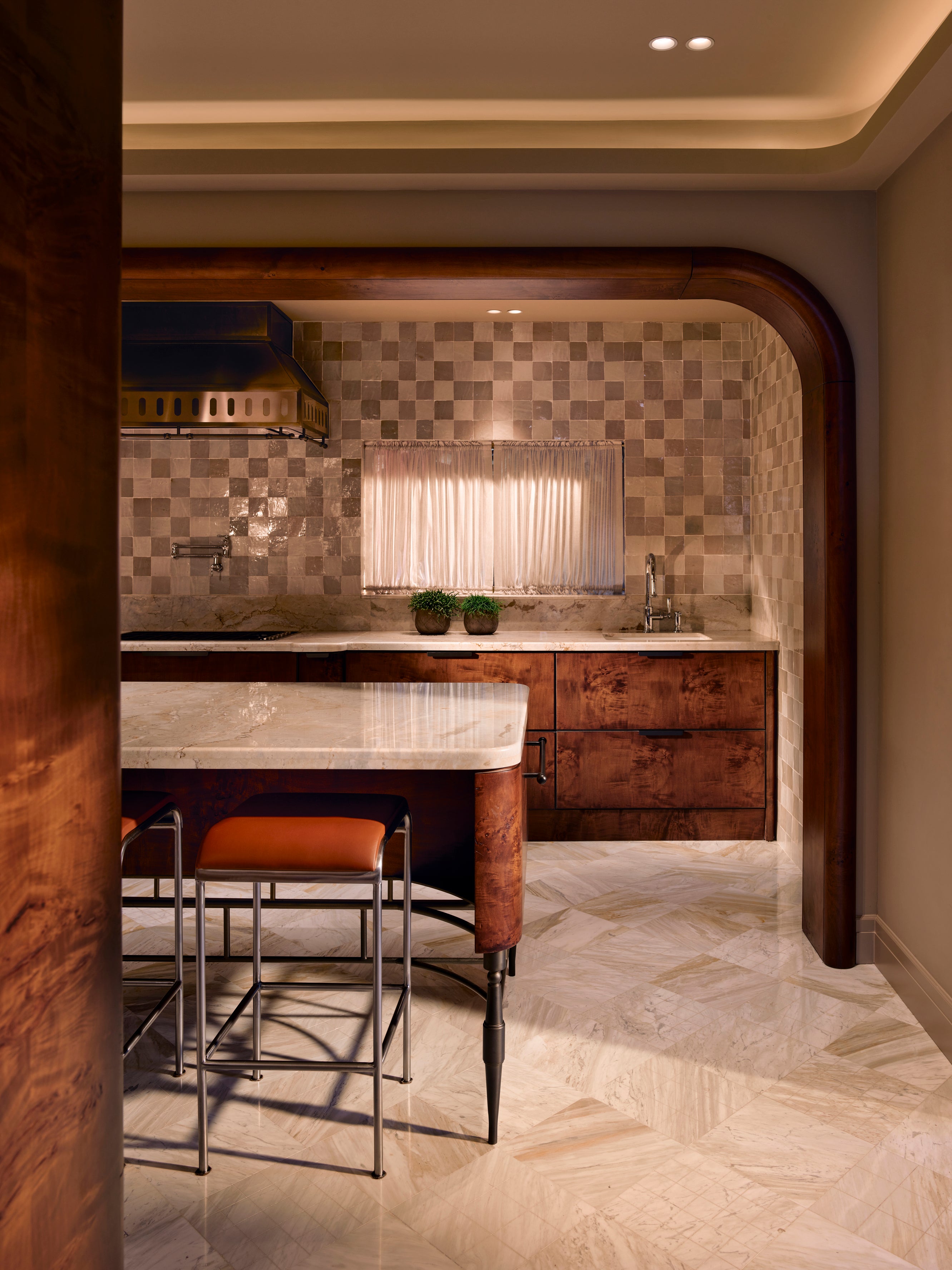
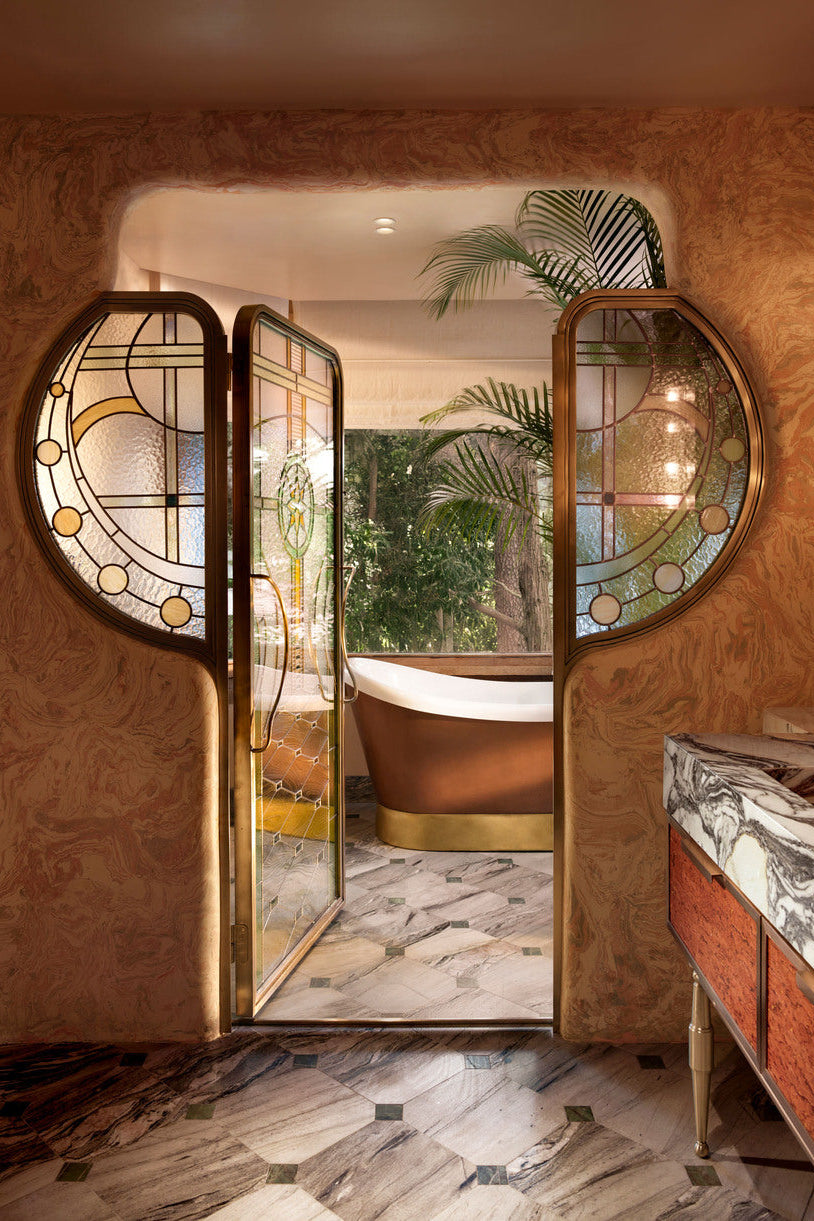
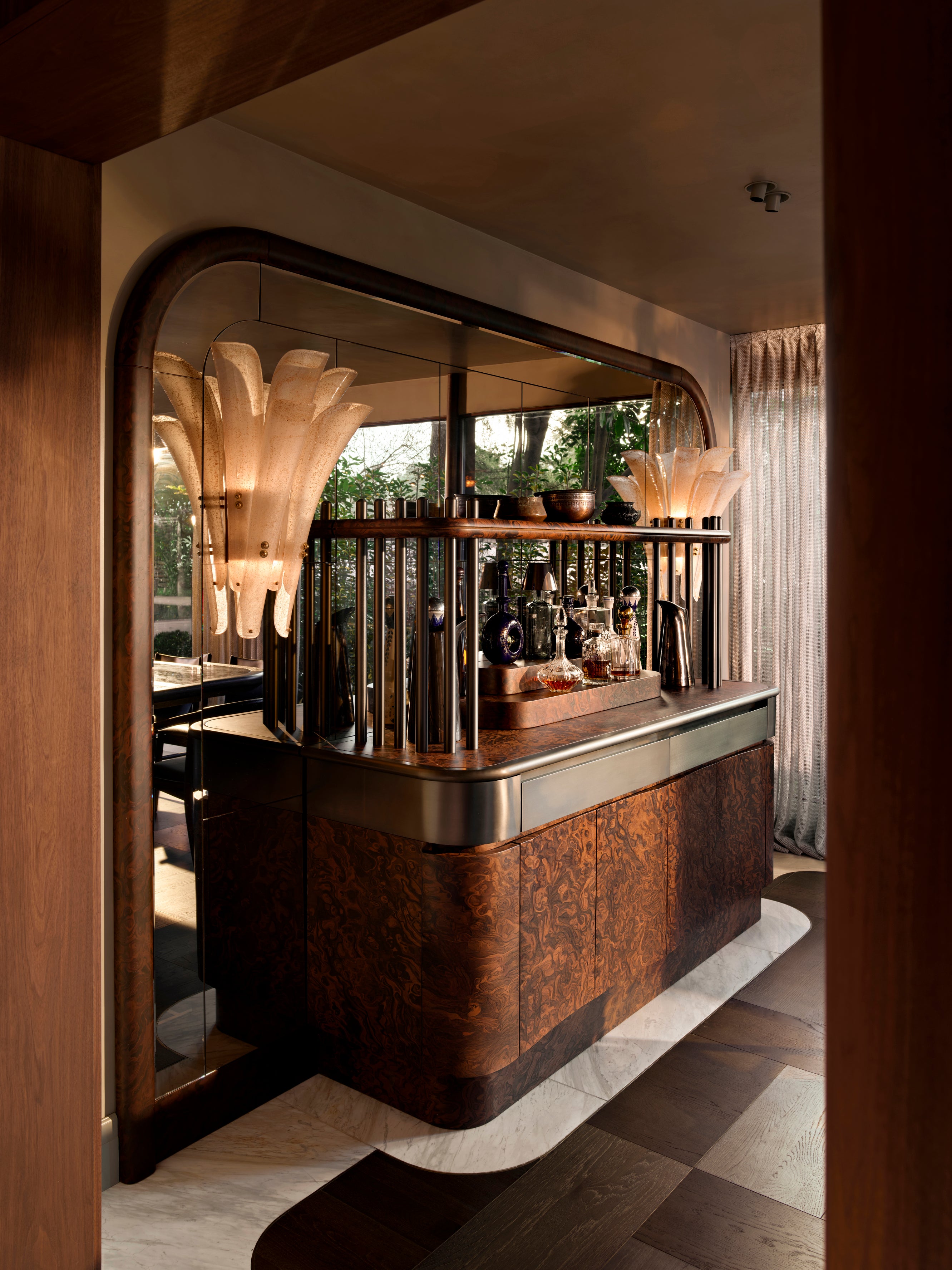
There is a strong sense of craft throughout. Bespoke elements, from the sculptural bar to the integrated shelving, are designed as part of the architecture rather than added to it. Edges are softened, corners rounded, allowing spaces to flow into one another without interruption. This is particularly evident in transitional zones, where framed openings and layered thresholds create moments of pause, guiding movement through the home in a way that feels intuitive.

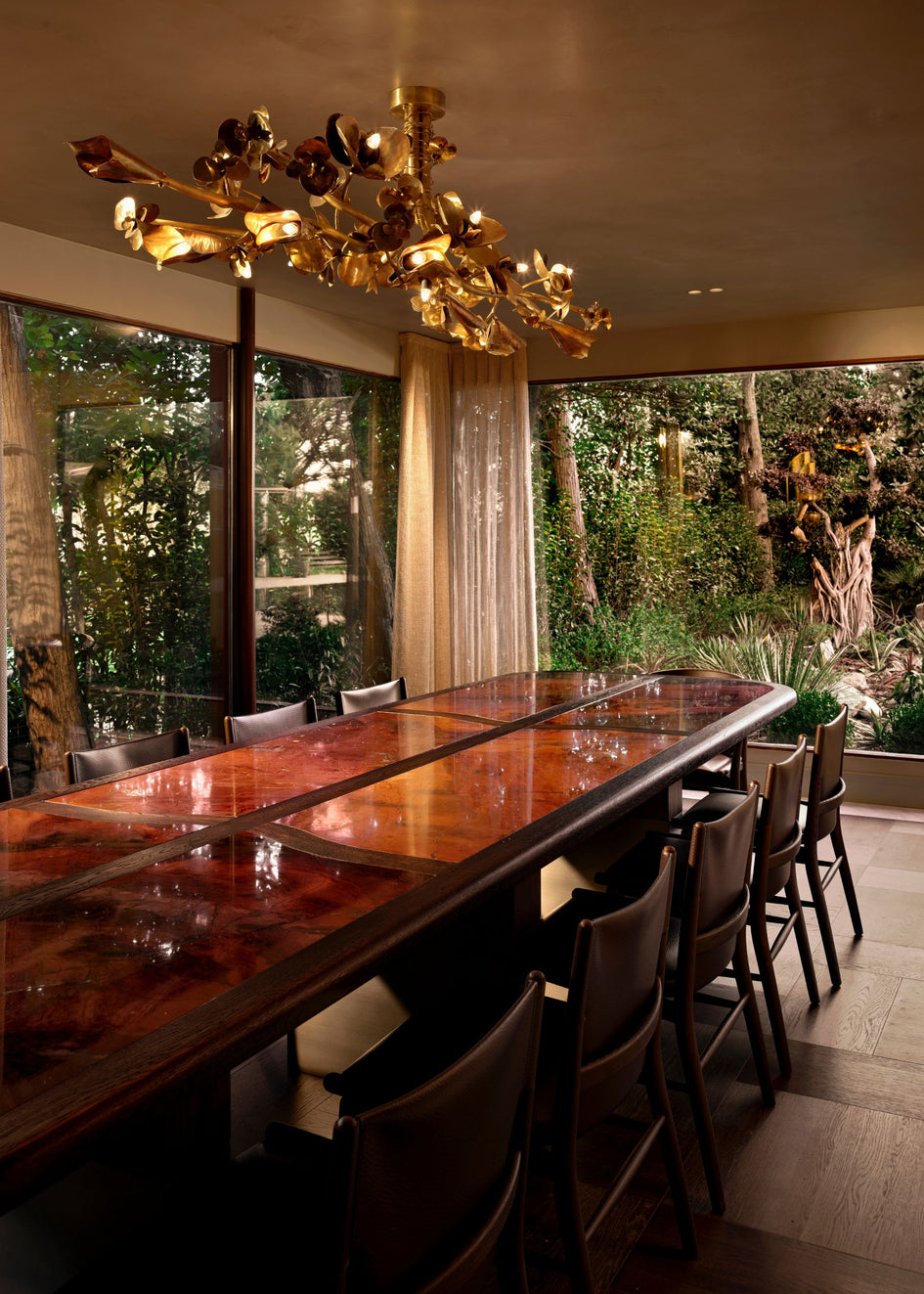
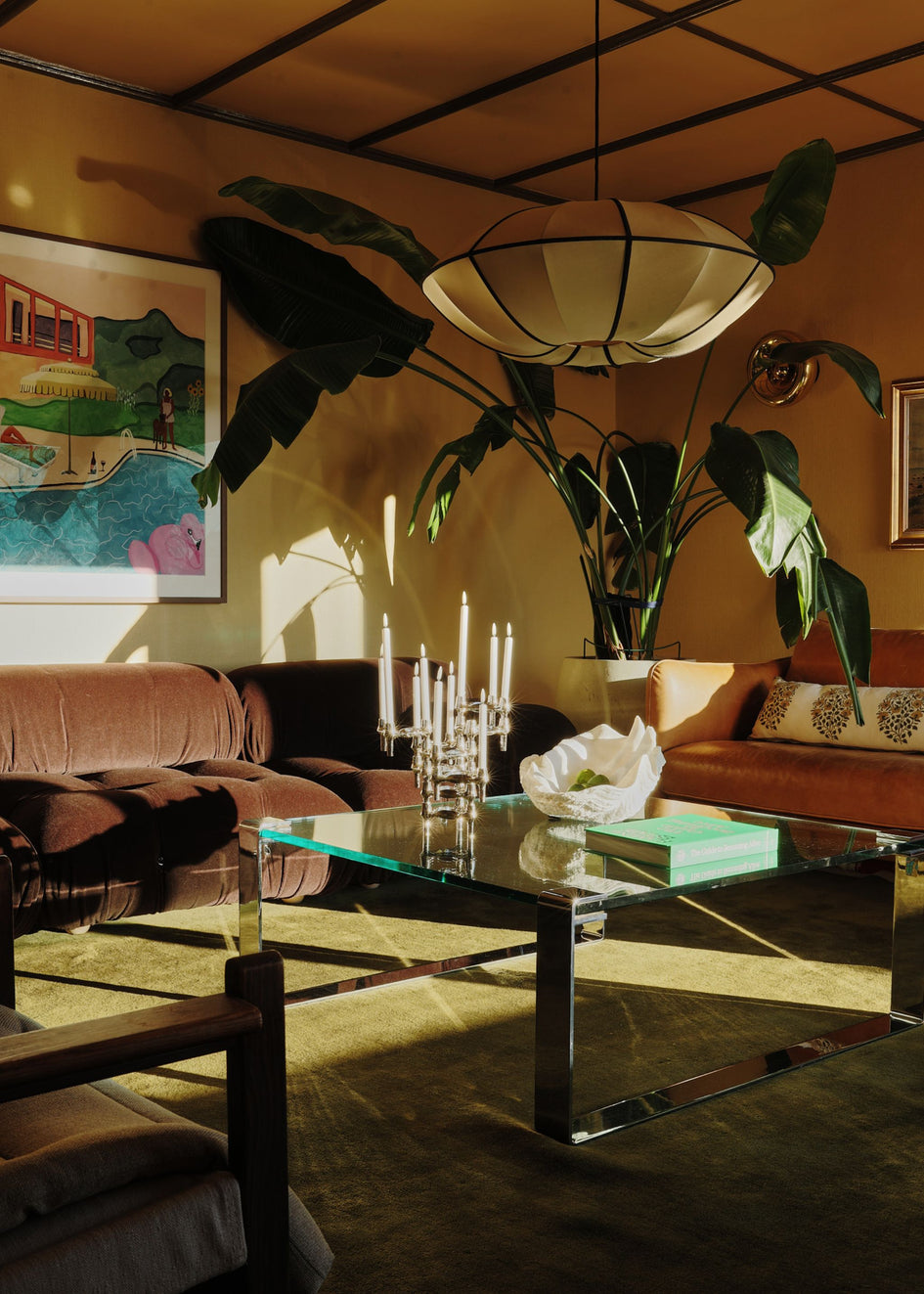
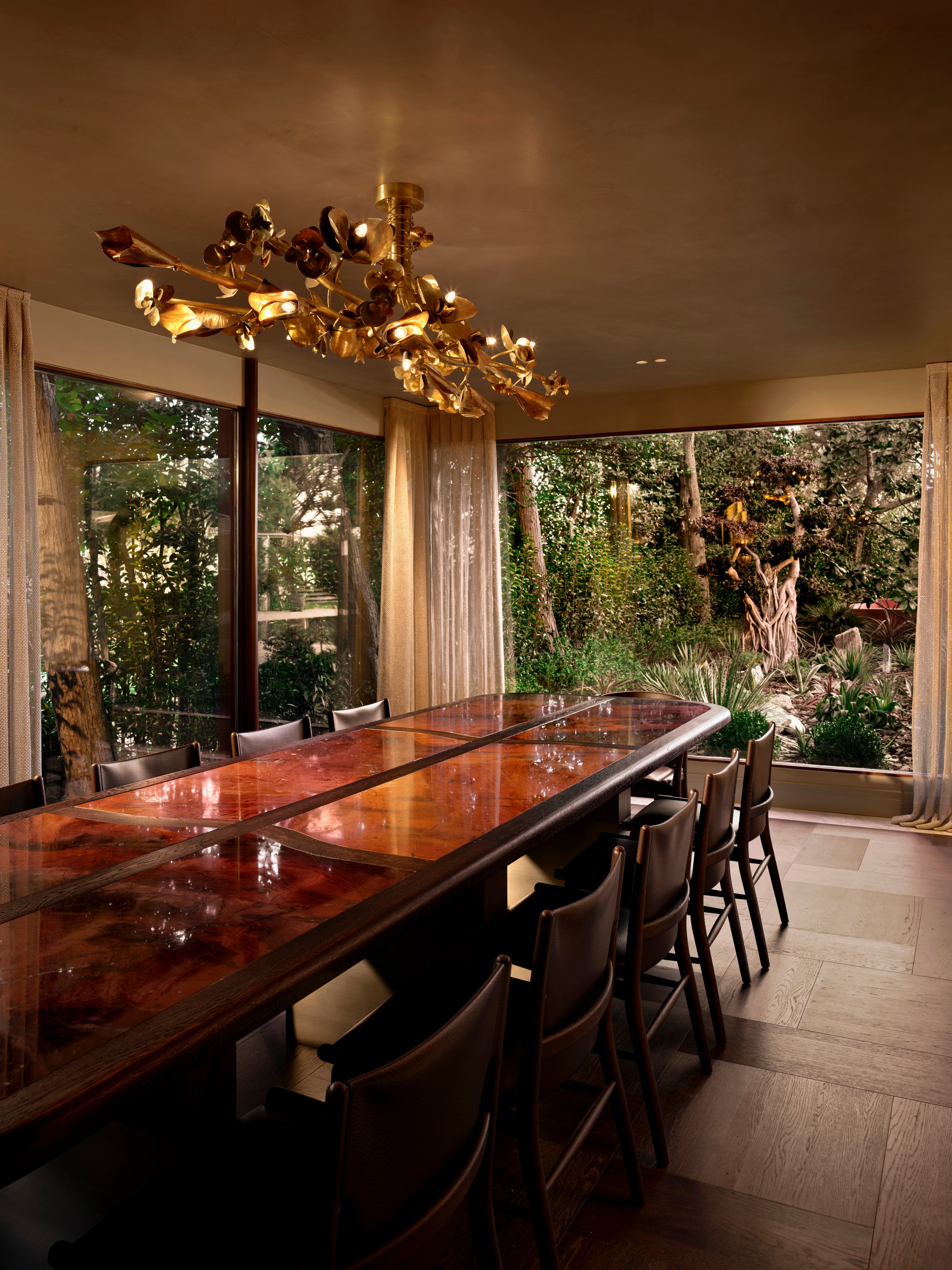
Light plays a defining role, not only through expansive glazing but in how it interacts with texture. In the dining space, a sculptural chandelier casts a warm, ambient glow that reflects off the polished surface of the table, creating a sense of intimacy against the openness of the garden beyond. In more private areas, light is softened, filtered through textiles and layered materials to create a quieter, more introspective atmosphere.
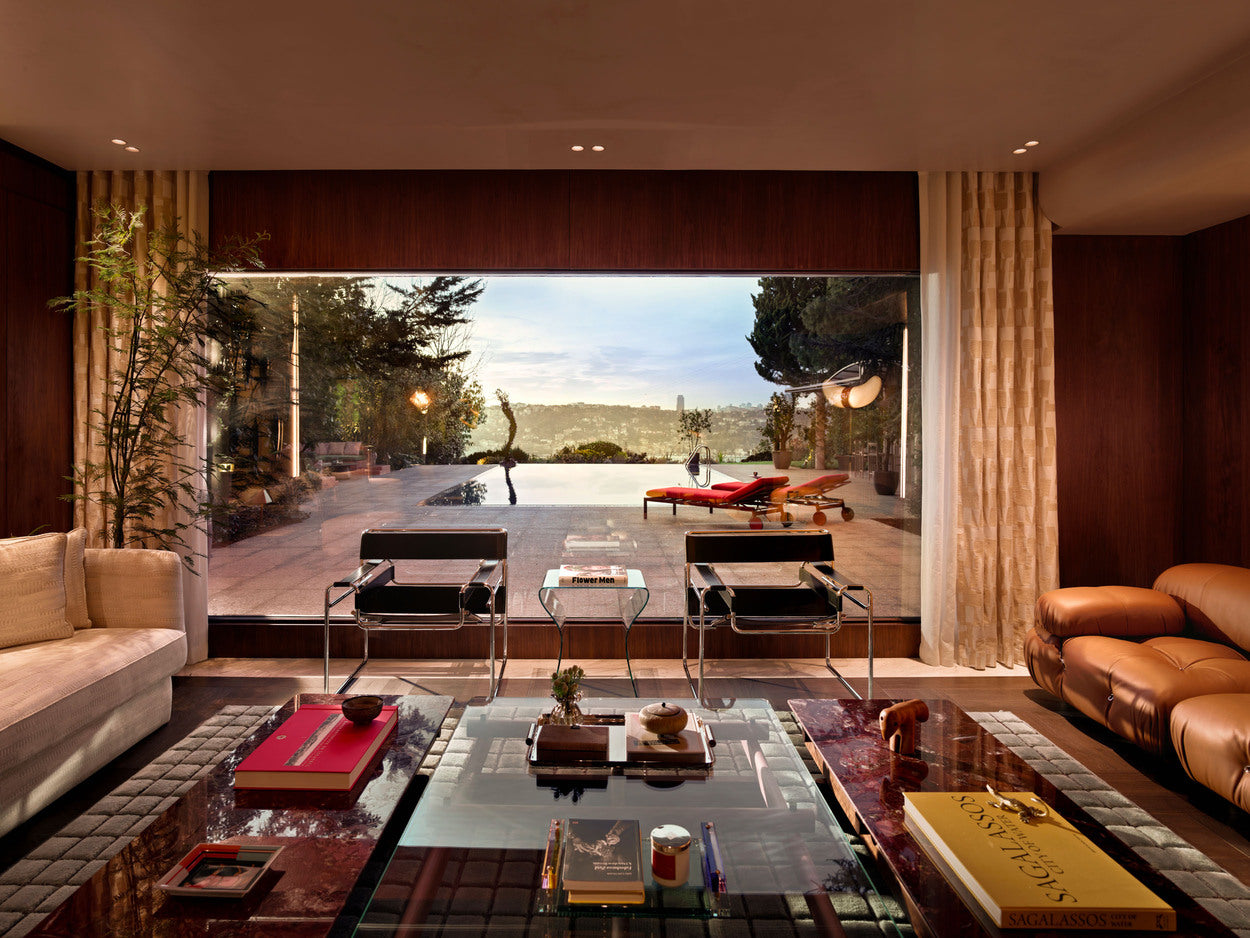
What distinguishes the project is its ability to dissolve the threshold between architecture and landscape. The garden is not simply viewed but experienced as part of the interior, extending the living spaces outward while drawing nature in. At certain moments, reflections blur this boundary entirely, glass surfaces mirroring greenery so that it becomes difficult to distinguish where one ends and the other begins.
This connection is reinforced in the spatial planning. Rooms are positioned to capture specific views, whether towards the trees, the pool, or glimpses of the distant city. Even circulation spaces are considered in relation to light and outlook, ensuring that movement through the house remains connected to its surroundings.
Despite its richness, the overall feeling is one of restraint. There is no excess, no unnecessary gesture. Instead, the design relies on proportion, material honesty, and the quiet power of well-resolved detail. Furnishings and artworks are carefully curated, adding layers of personality without overwhelming the architecture.
Ultimately, the house is defined by balance. It holds a sense of permanence while remaining responsive to change, shaped as much by time and light as by design itself. In bringing together architecture, interior, and landscape with such clarity, the project achieves something rare: a space that feels both composed and entirely at ease, where living becomes a natural extension of its setting.


