


VILLA COLLAGIO
PROJECTS
An art collector's growing wall of work by established masters became the starting brief for Villa Collagio, a 15,000 square foot house in Chandigarh designed by Aarti Dhariwal, founder of Stories with AD. If the art had been chosen with intention, the client reasoned, why not everything else in the house. The name, drawn from the Italian word for collage, sets the tone for a home built room by room around that same instinct to gather rather than furnish.
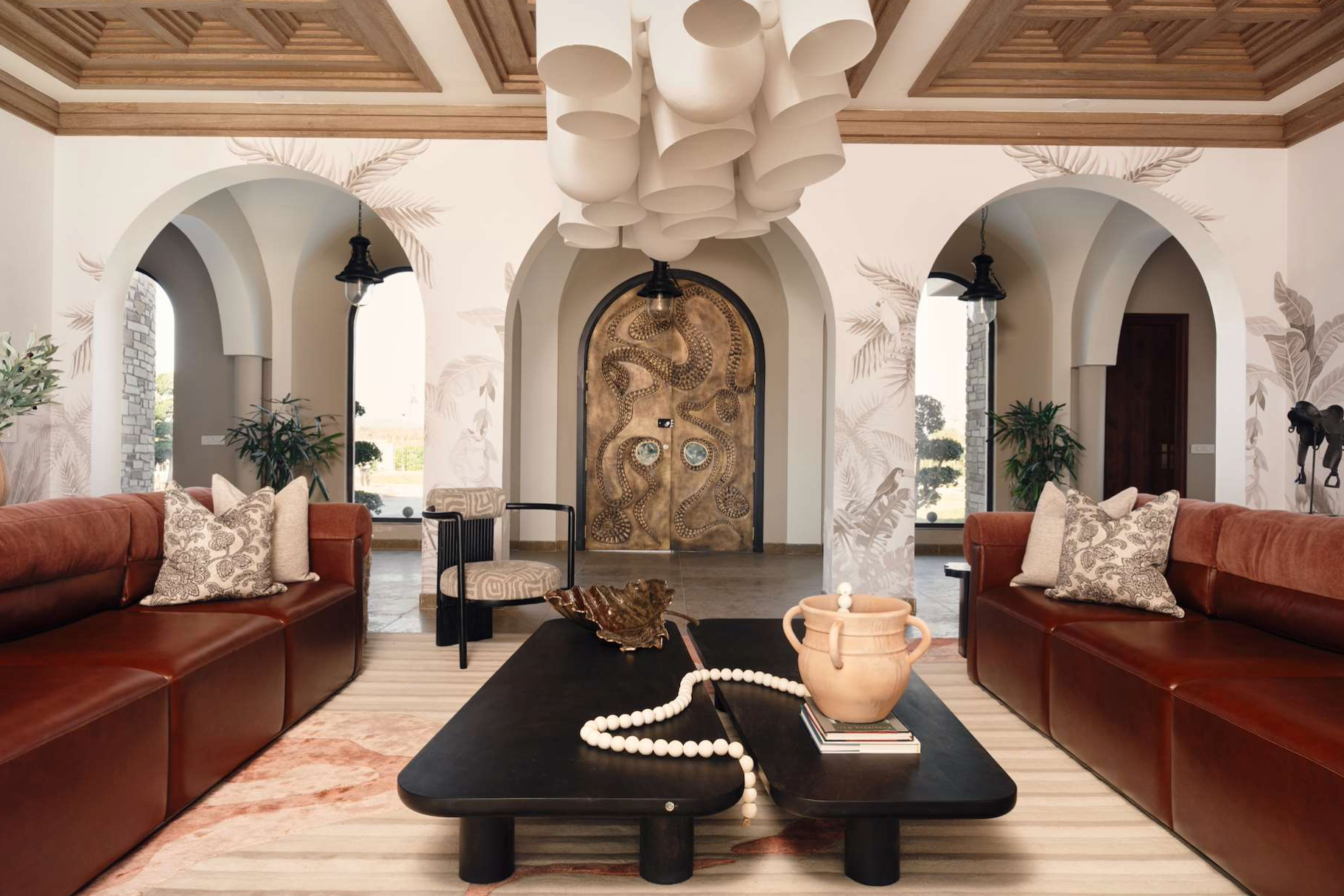
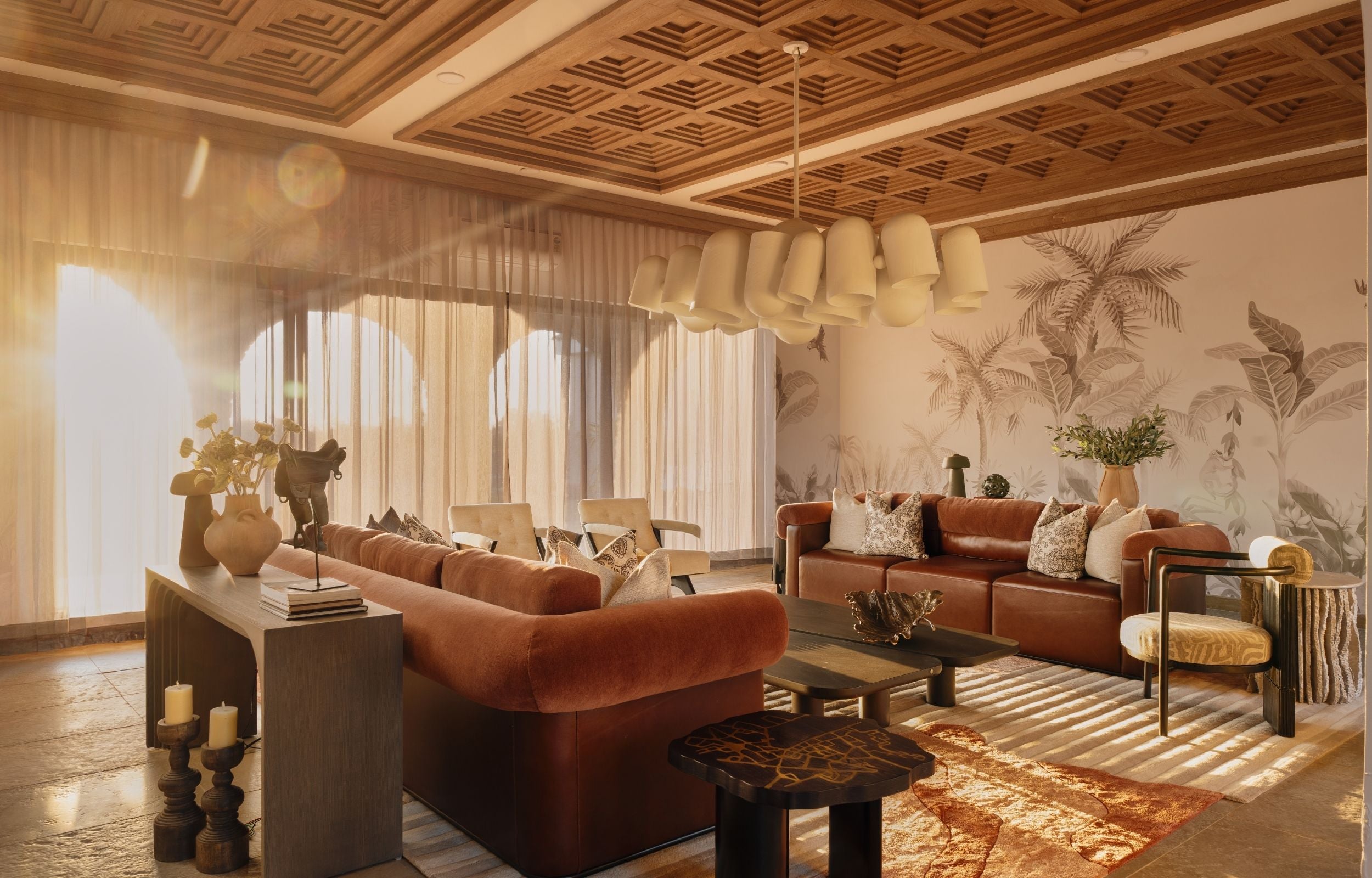
The formal living room announces it immediately. A sepia toned mural of palms and tropical birds climbs one wall, its faded tones picked up in a coffered oak ceiling worked into repeating square reveals. Below it, a rust velvet sectional and cream boucle armchairs on angular black frames sit on a rug patterned in soft terracotta, the whole room lit by a cluster of white cylindrical pendants that hang like stacked drums from the beams. Nothing here is loud on its own. Sculptural forms, tactile weaves, a scattering of stone vessels and bronze objects on the coffee table. Together they hold their calm.
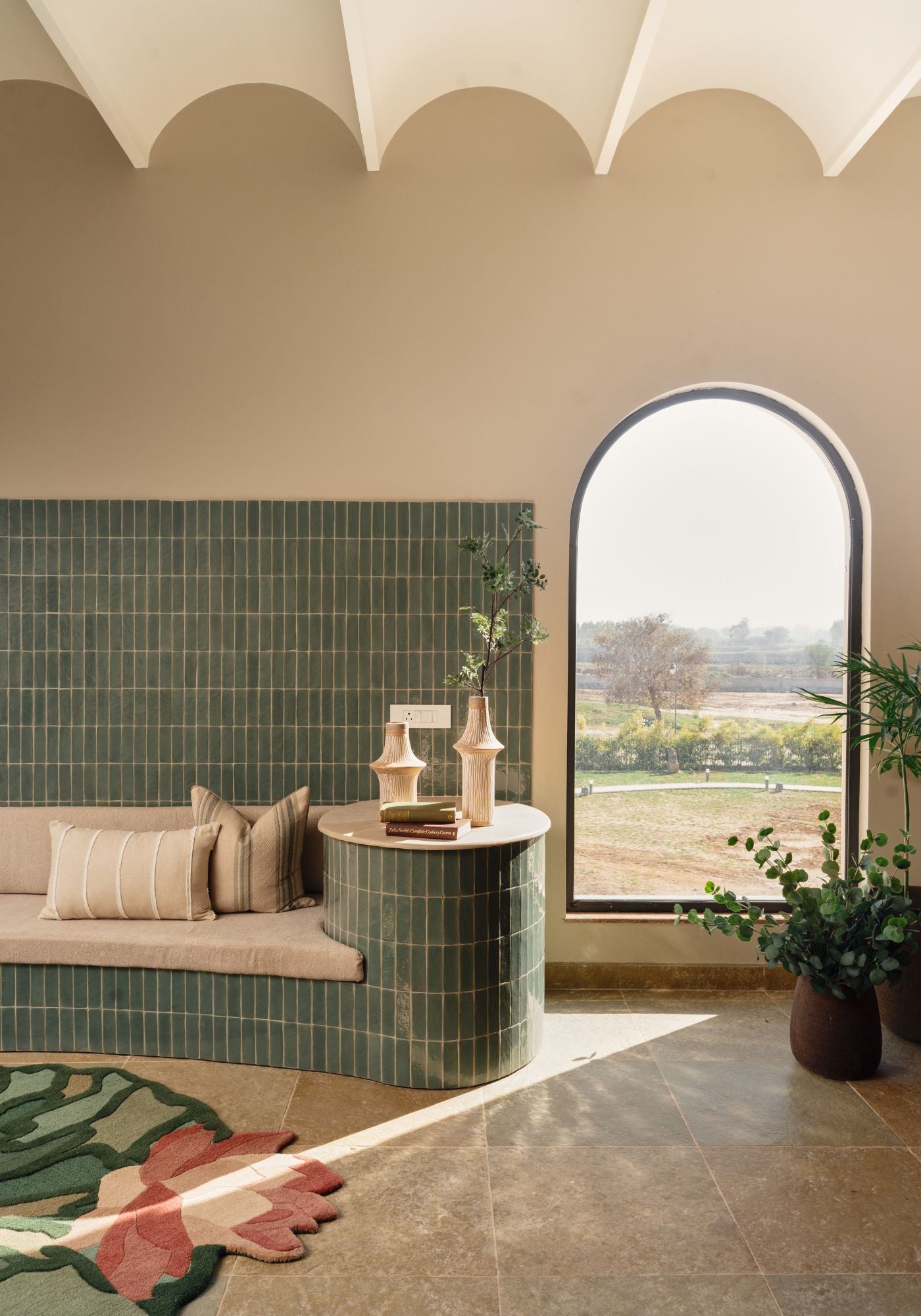
That calm carries into a quieter nook elsewhere in the house, where a built in banquette wrapped in glossy green tile curves around an arched window looking out over open land. Turned wooden vases and a trailing plant soften the tile's hard edge, and a patterned rug in blush and green anchors the seat to the floor. It is a small, deliberate pause in a house otherwise built for movement between rooms.
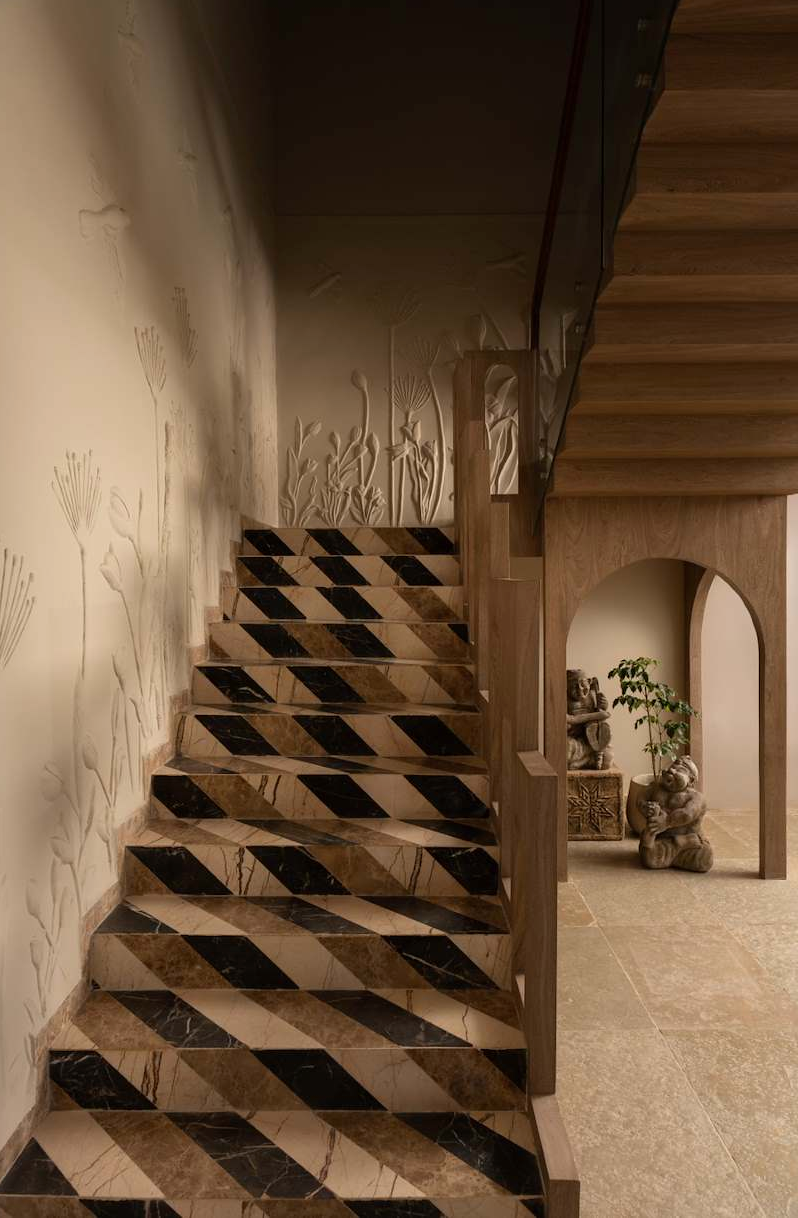
That movement finds its centrepiece in the staircase, where the design turns properly sculptural. Striped marble in cognac and black wraps each tread on the diagonal, while a wood arch railing, cut with the same shape that recurs through the house, runs alongside a glass balustrade. On the wall beside it, low relief plasterwork traces stems and seed heads across the plaster, and at the foot of the stairs a pair of carved stone figures sit tucked beneath the timber structure, watched over by a young tree in a terracotta pot.
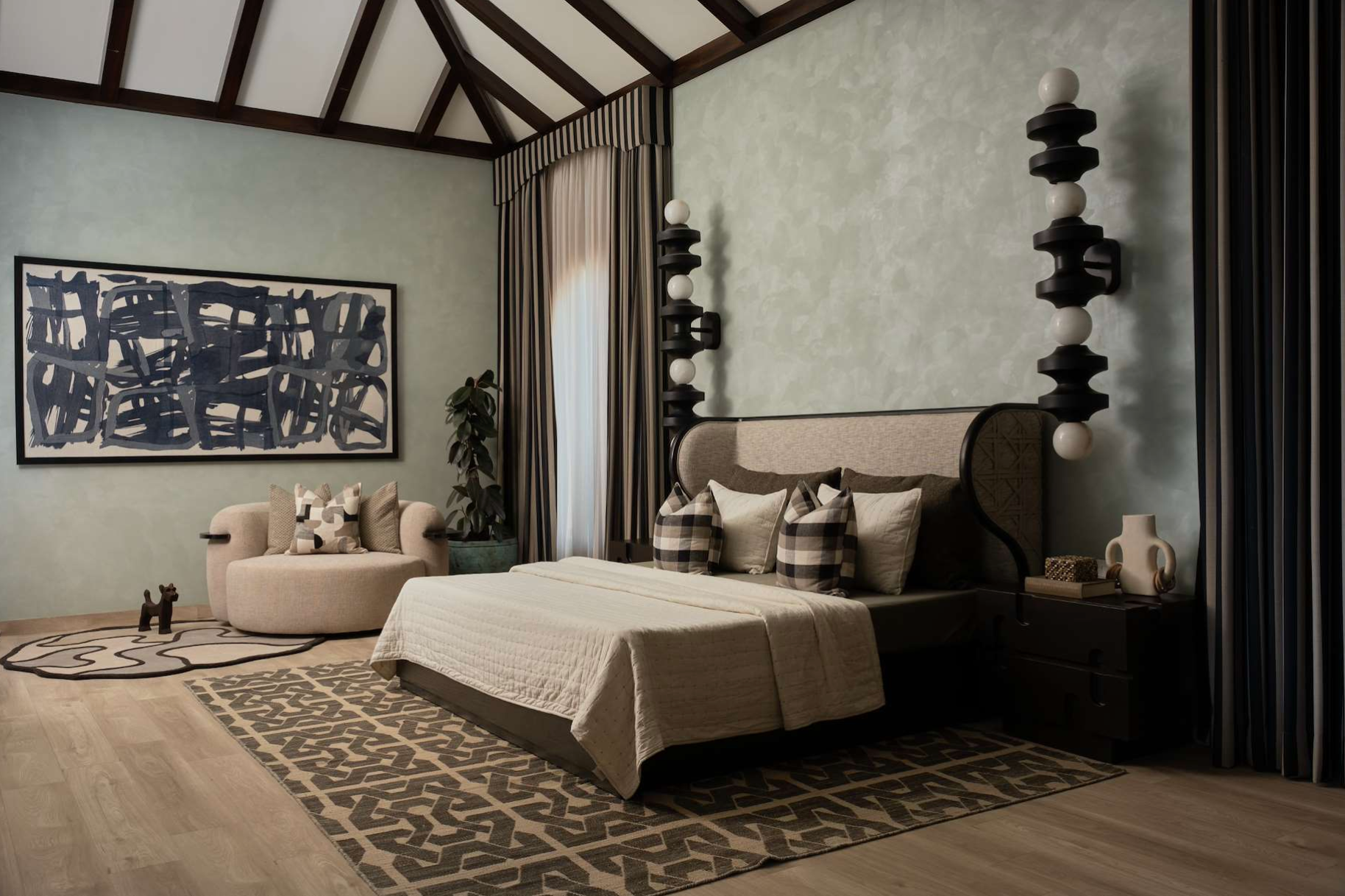
Upstairs, the master bedroom takes a cooler register. Walls washed in a cloudy sage plaster meet a vaulted ceiling of exposed dark timber trusses, and an abstract indigo canvas hangs opposite a bed dressed in checked and striped linens. Two totem like sconces, stacked from black lacquer discs and pale spheres, flank the headboard like a pair of quiet sentries, while a striped curtain valance picks up their rhythm at the window.

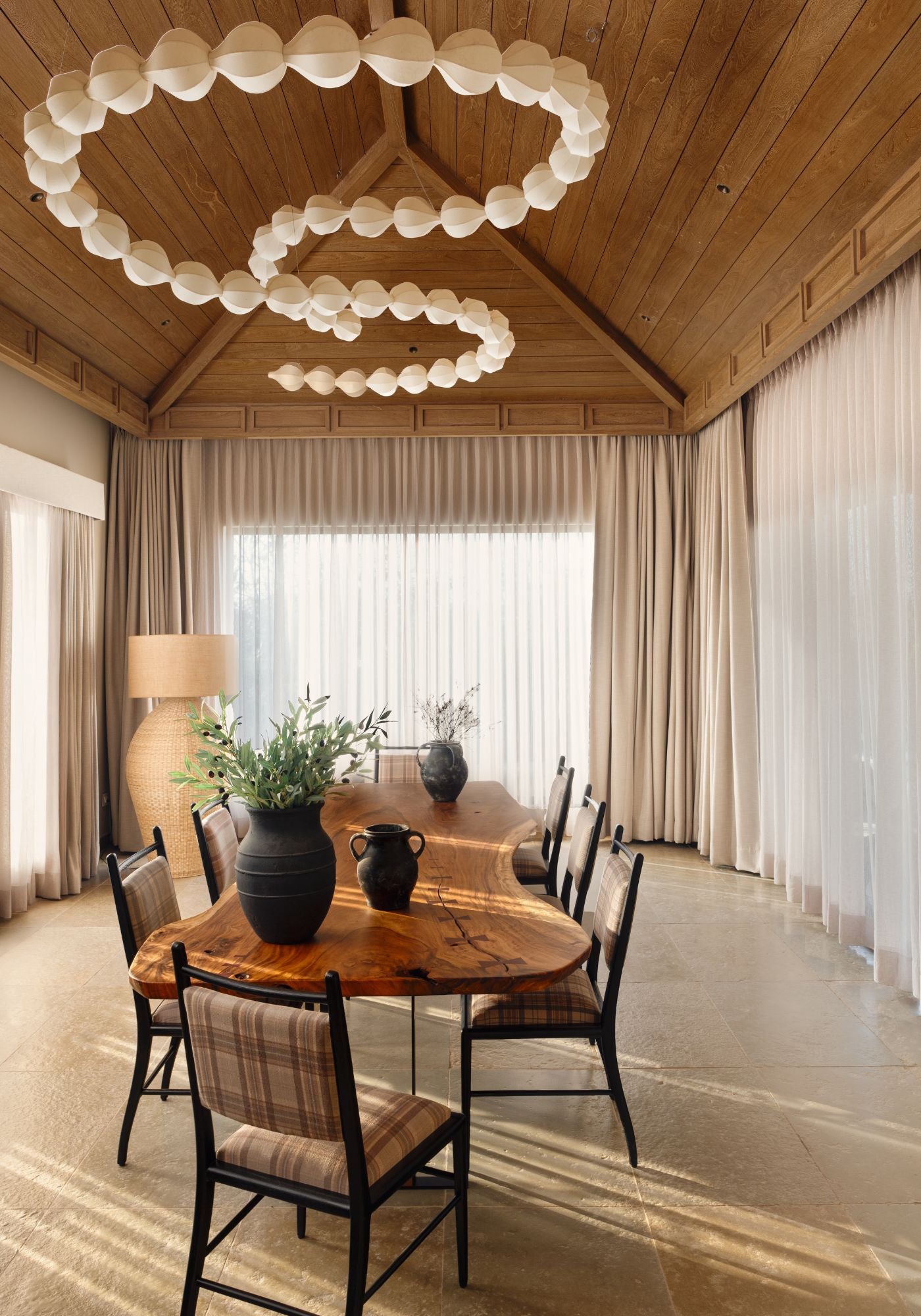
The dining room takes a different kind of drama. A live edge wood table, its grain left raw at the edges, sits beneath a pendant light strung in looping ribbons of pale fabric that trace two loose figure eights across the vaulted wood ceiling. Black metal chairs upholstered in plaid surround the table, and a scatter of dark ceramic vessels holding olive branches keeps the room grounded against the drama overhead.
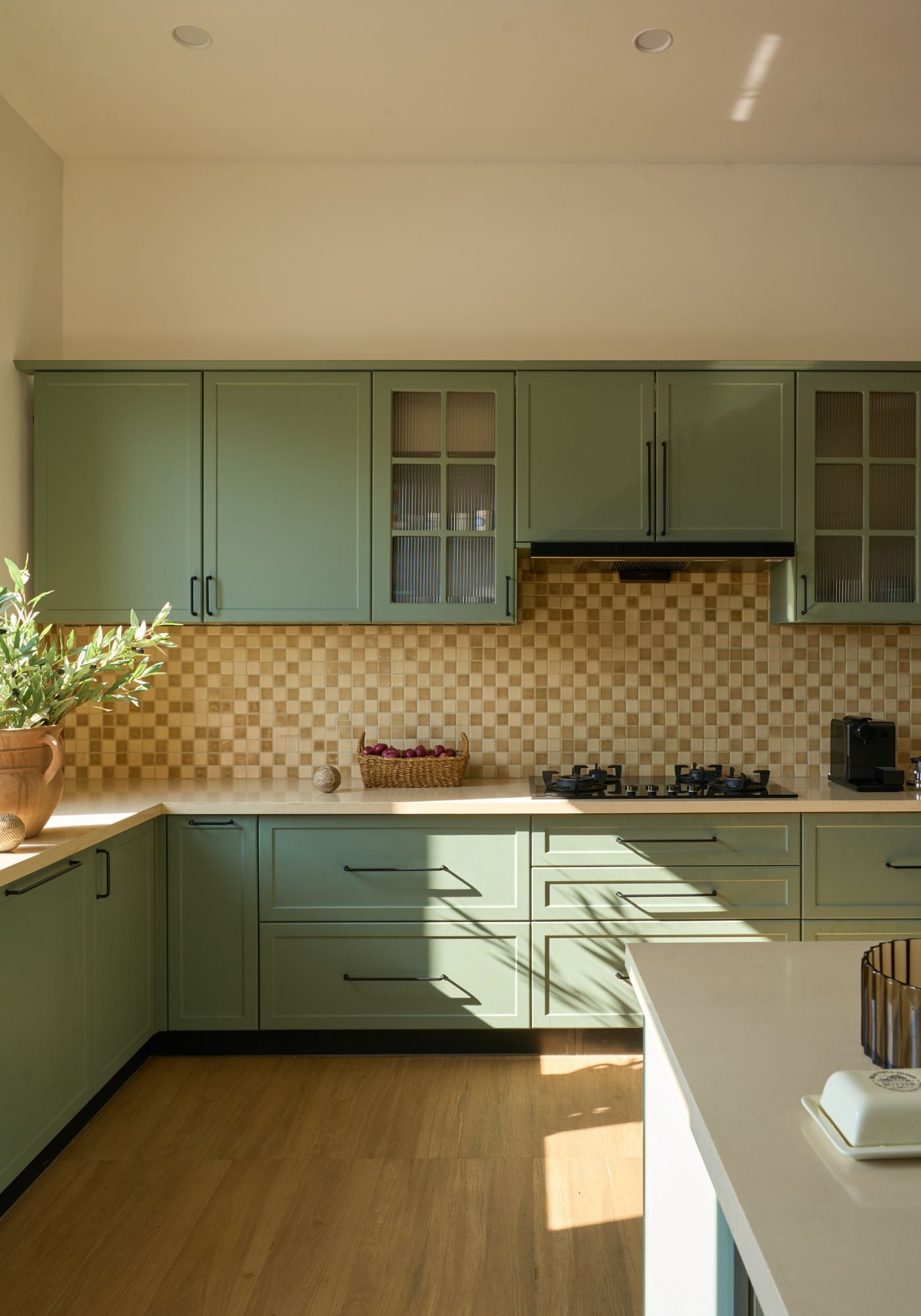
Downstairs, the kitchen returns to the palette that runs through the whole house. Sage green cabinetry with brass edged glass fronts frames a backsplash laid in a loose checkerboard of ochre and cream tile, the same warmth found in the terracotta pots and woven baskets set along the counter.
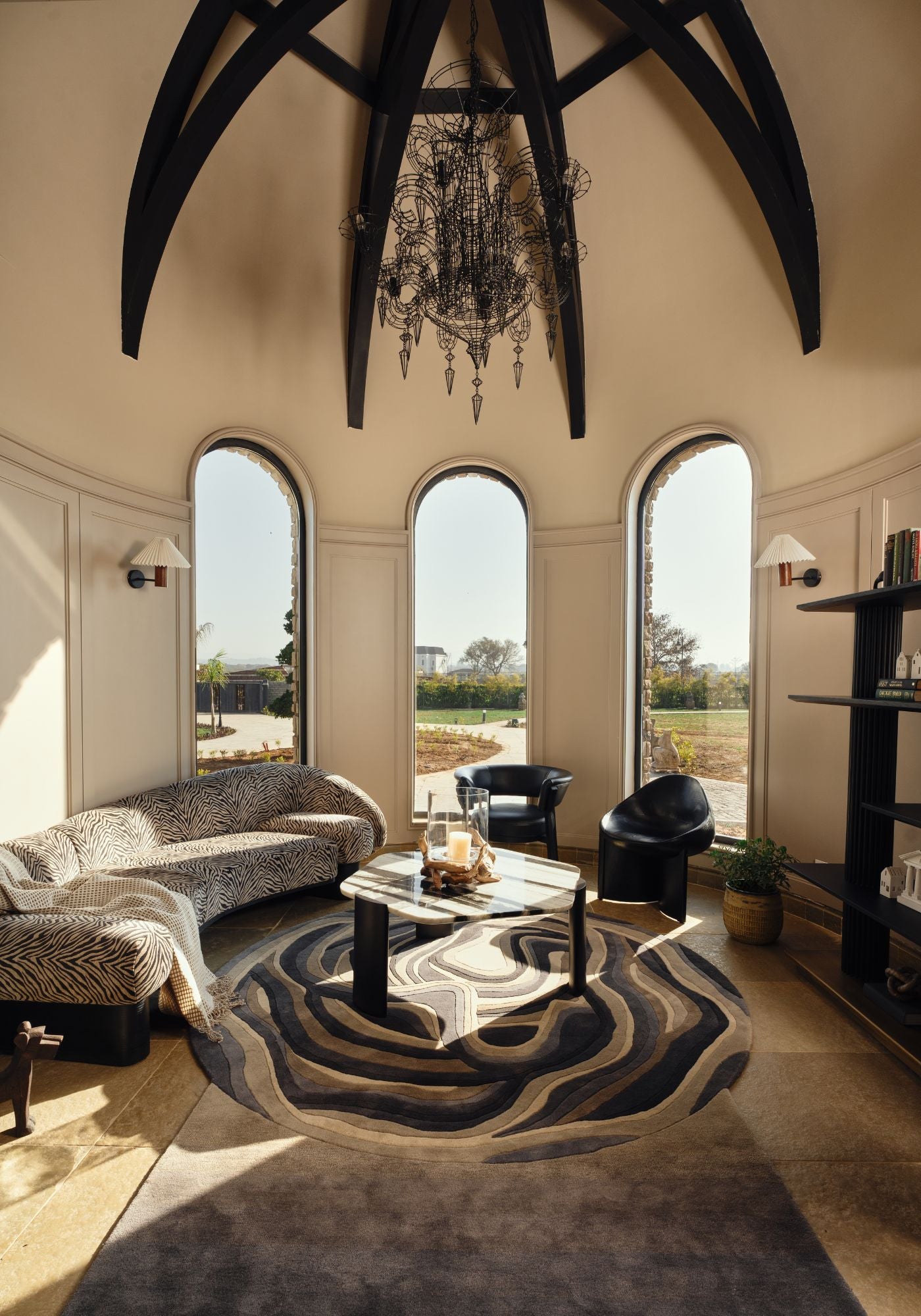
The lounge takes the arch motif to its most theatrical. Curved black timber beams sweep up from three arched windows to meet at a wrought iron chandelier, and beneath them a zebra print sofa sits opposite a pair of sculptural black leather chairs on a swirling charcoal and cream rug, a small library of black shelving completing the room's turn toward drama.