



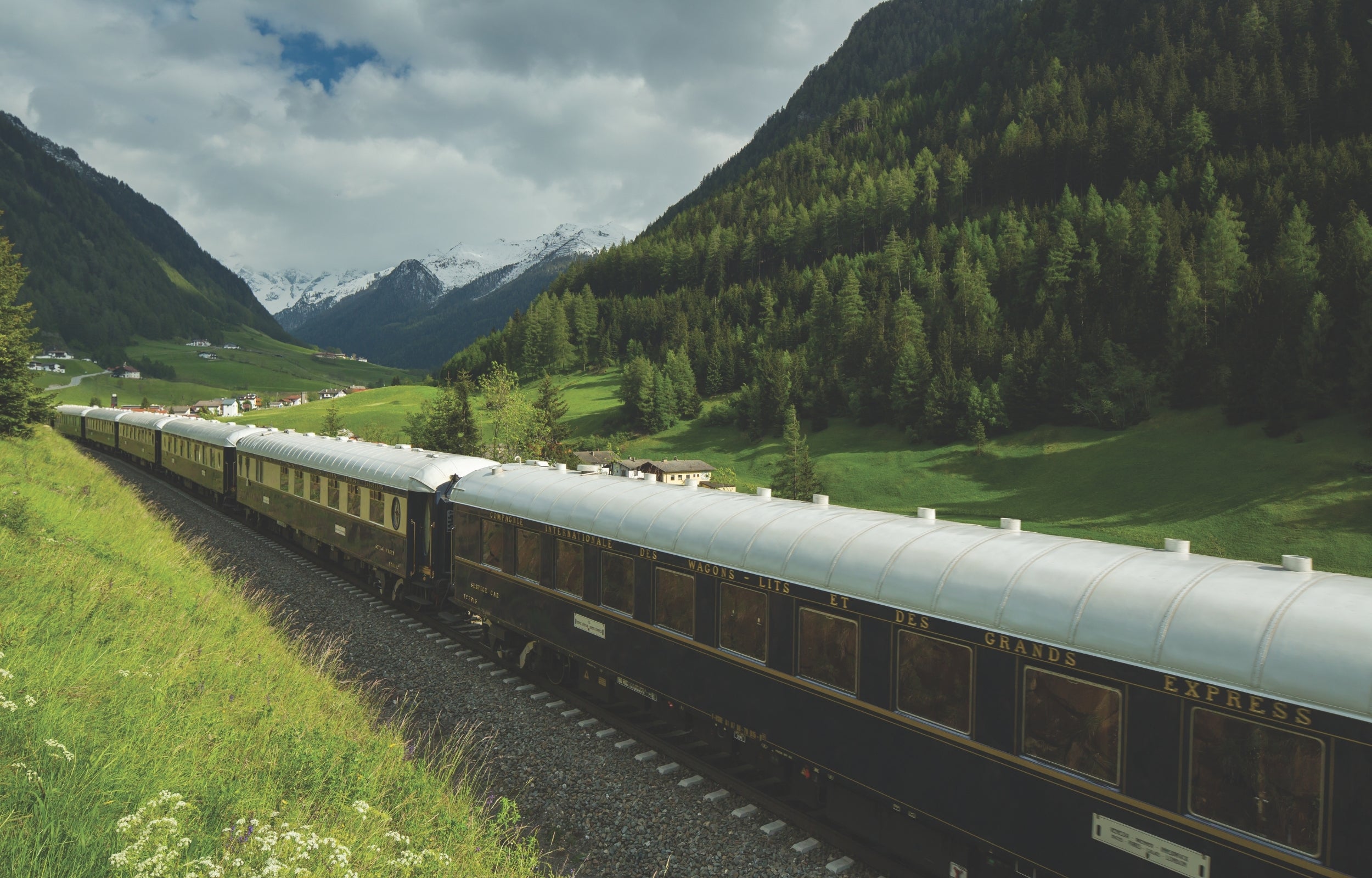
Venice Simplon-Orient-Express, a Belmond Train, Photo by David Noton
PRIVATE PASSAGE
TRENDS
Four trains, crossing Britain, South Africa, Europe and China, share the same instinct: shut the door and let the landscape do the moving instead. Each builds its privacy the same way, not through square footage but through small refusals: a key instead of a keycard, a carriage with a name and a history rather than a number, a door that seals shut rather than just closes. Wood panelling and brass fittings do the rest.
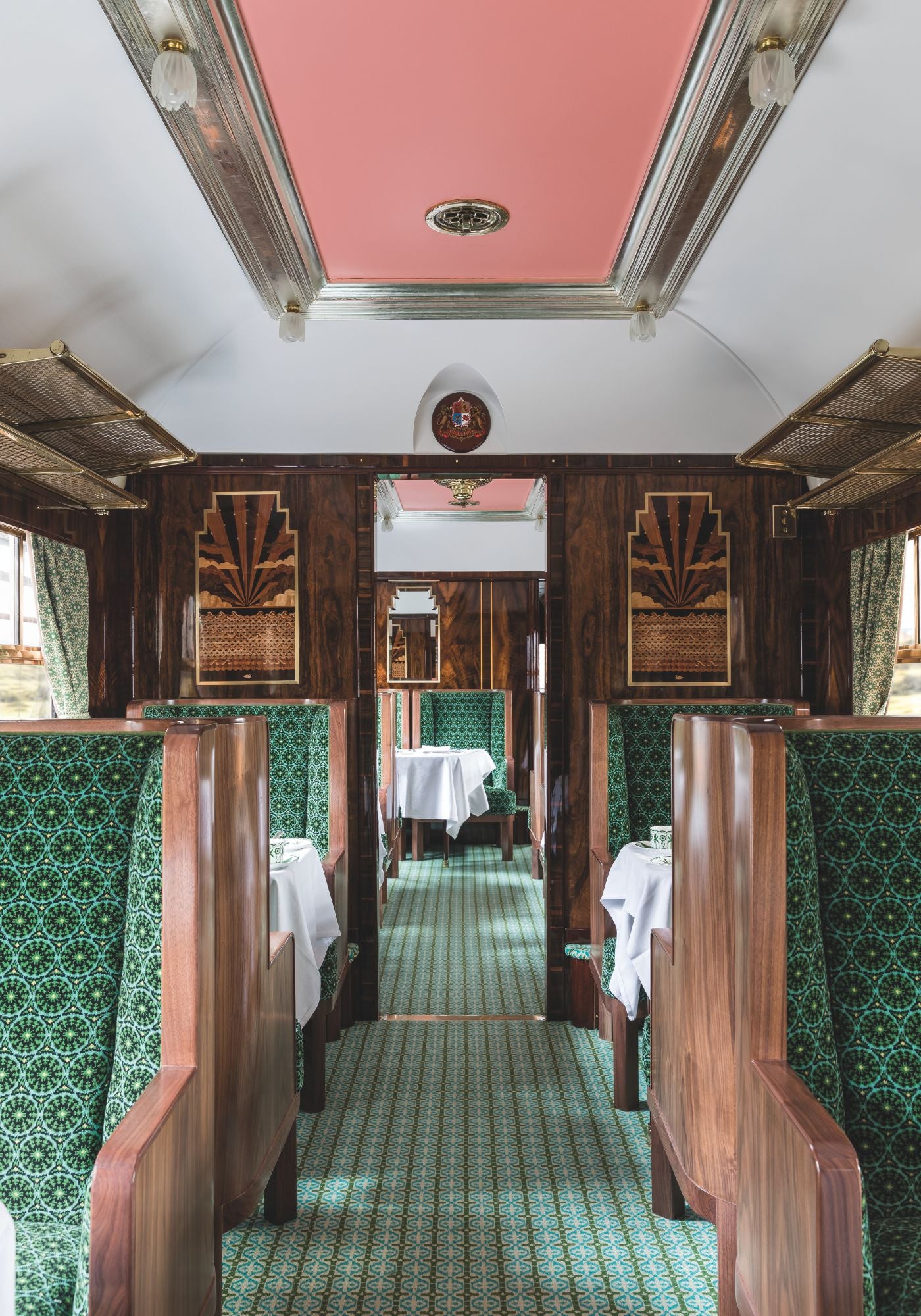
At Victoria Station, The British Pullman, a Belmond train keeps eleven historic Pullman carriages in service, several dating from the 1920s and 1930s and quietly updated with electric heating and toughened glass, but otherwise held close to their originals.
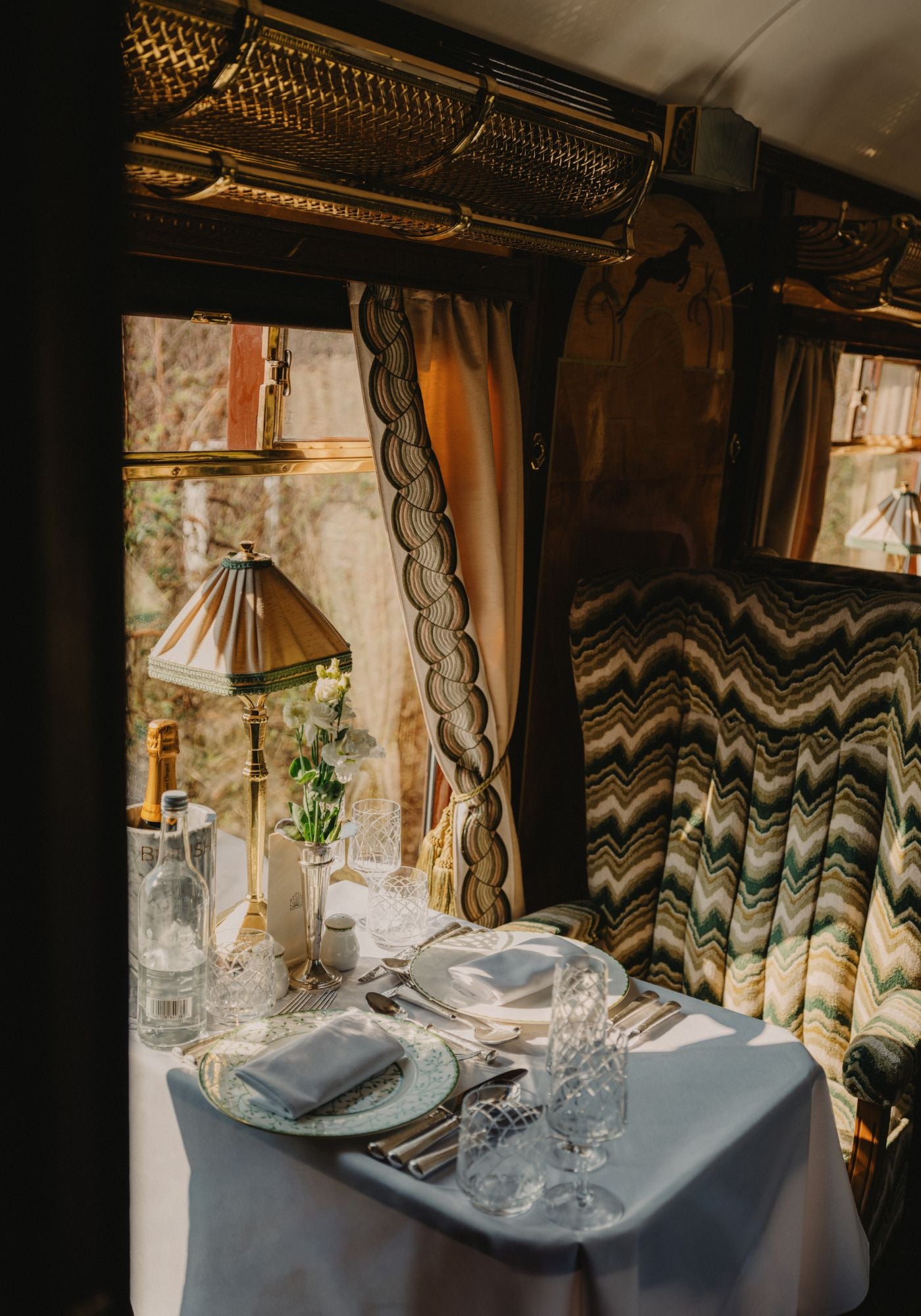
Each carriage carries its own name and its own past. Audrey once carried General de Gaulle and was Queen Elizabeth the Queen Mother's favourite; Vera took a direct hit during an air raid on Victoria Station in 1940 and was rebuilt to rejoin service seven years later. Marquetry restored by the family firm A Dunn and Son lines the walls, and armchairs upholstered to period patterns sit beneath Art Deco table lamps. The carriages do not pretend the twentieth century did not happen to them; the scars are part of the design.
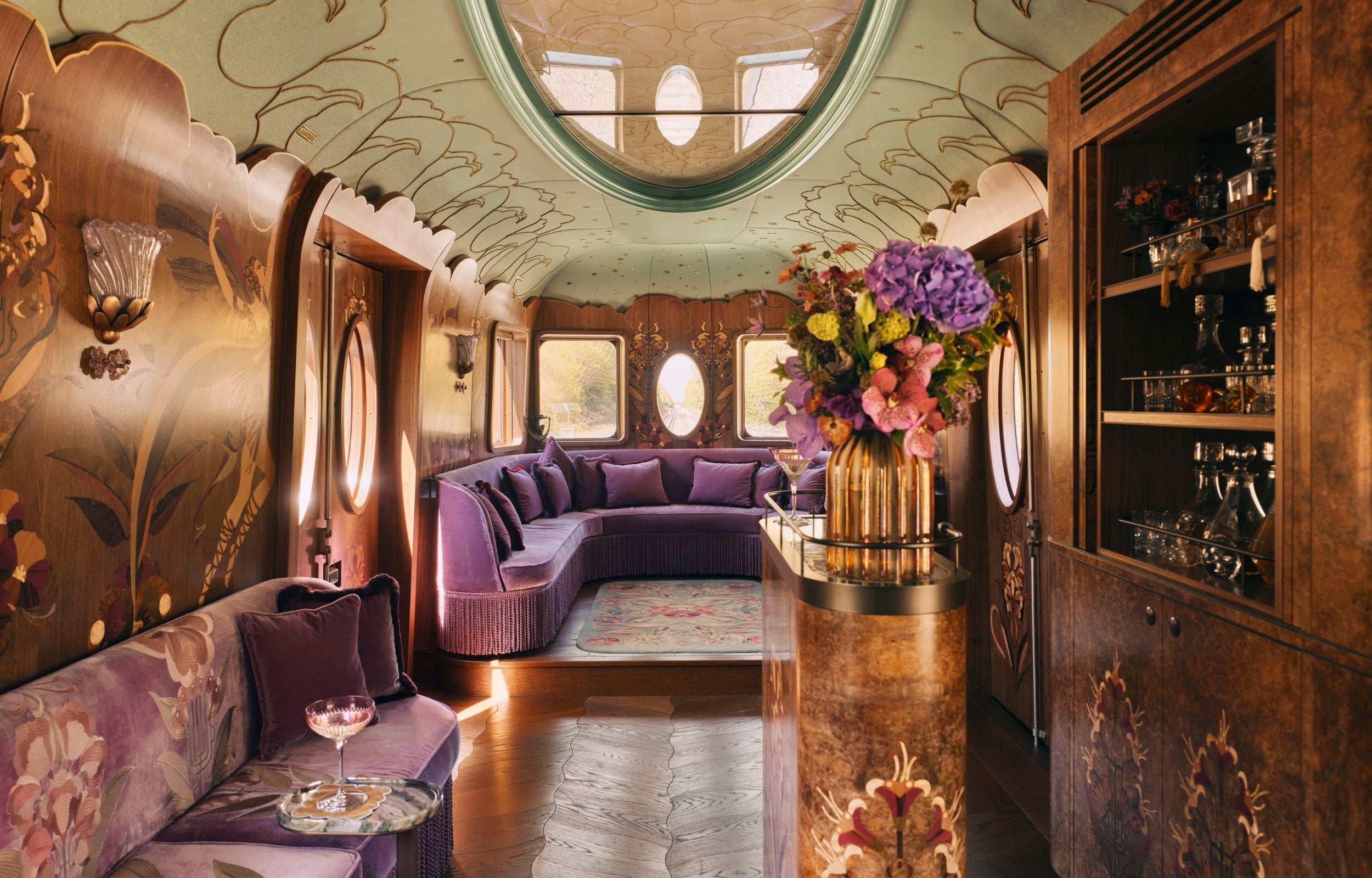
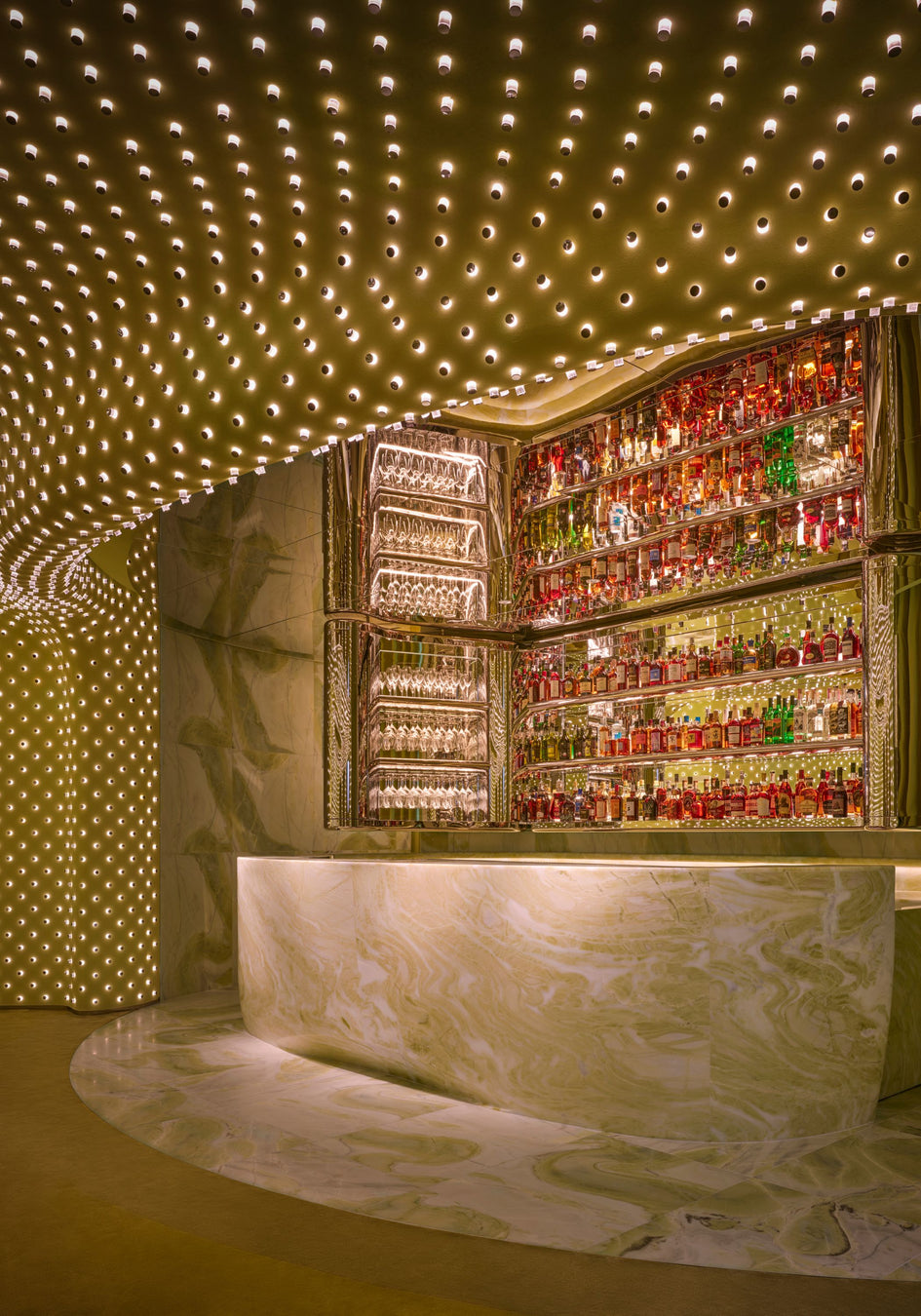
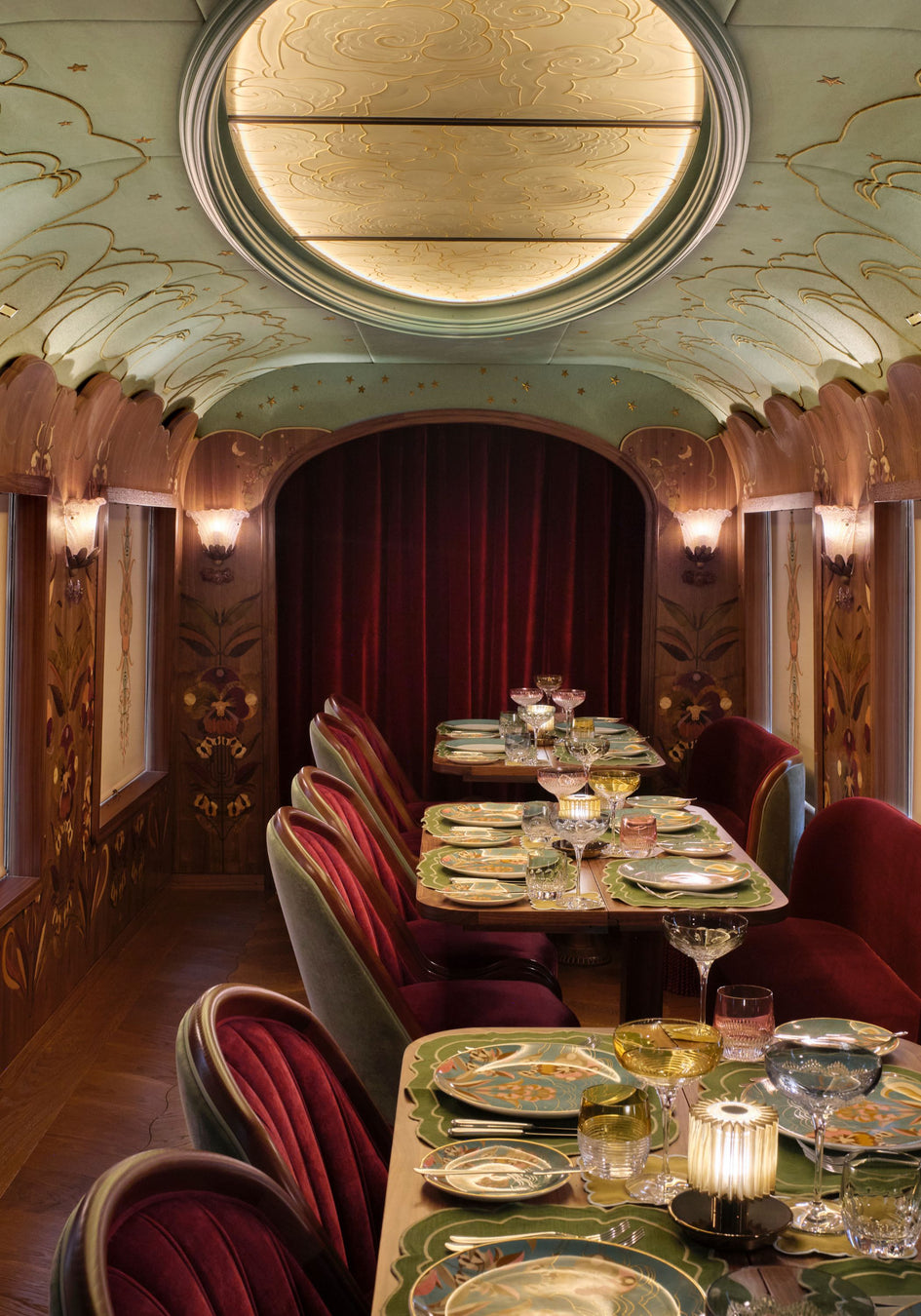
The newest carriage takes a different route to the same privacy, choosing fiction over restoration. Celia, unveiled this year and set within an original 1932 Pullman carriage, was designed by Baz Luhrmann and Catherine Martin around an invented figure: an actress performing in A Midsummer Night's Dream, showered with a carriage of her own by an American lover who spares no expense. British artisans, among them Dunn and Son, the same marquetry house behind the historic fleet, and glass maker Tony Sandles, carved the play's flora and fauna into the panelling and fitted a bar that operates as its own sealed world, staff in character included, with a dining carriage next door where a hidden panel lifts to reveal the chef mid service.
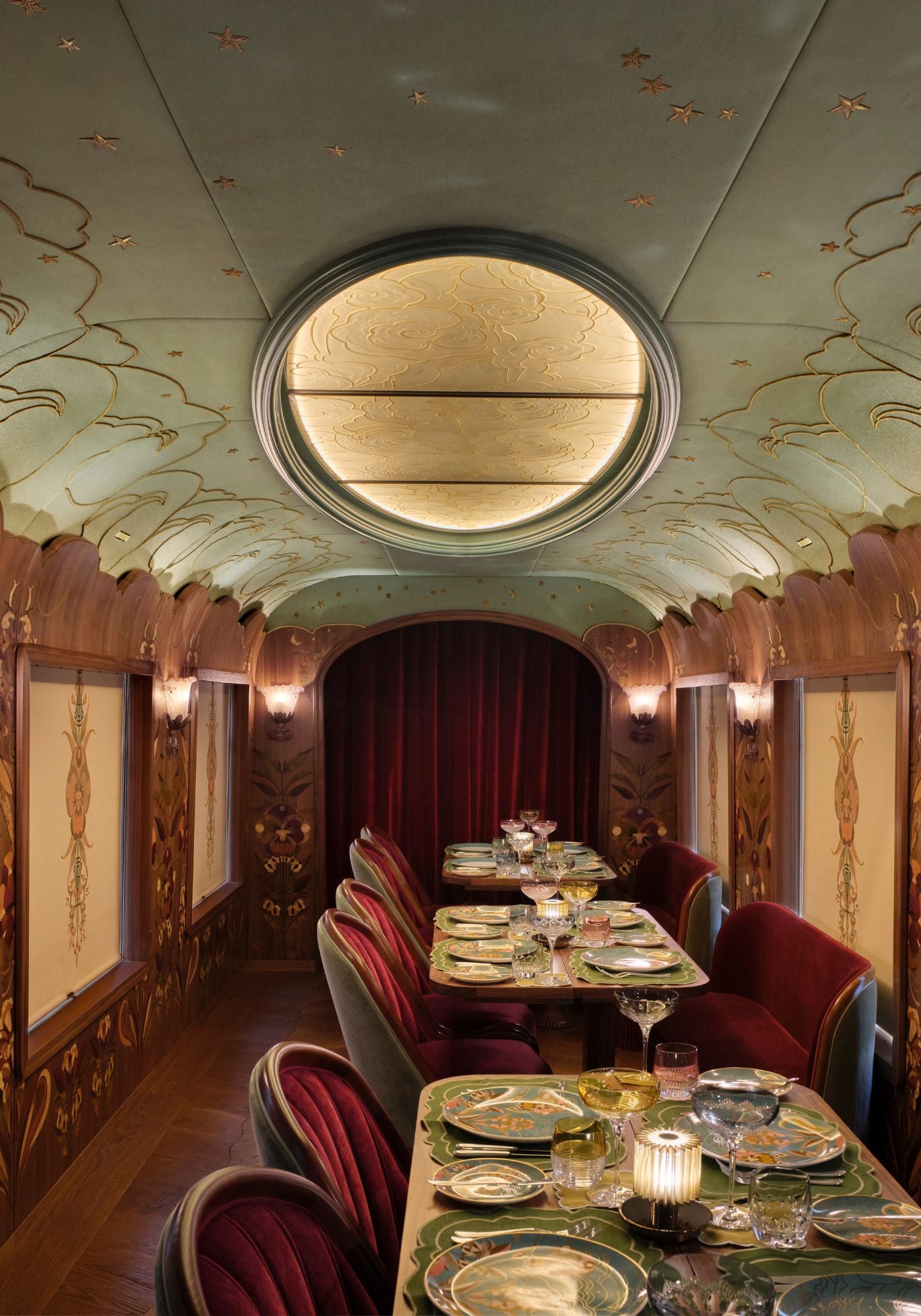
The ceiling shifts from day to night on request, and the bathroom, modelled on Titania's foliage throne room, closes around whoever is inside it like a small jewel box. Nothing here is designed to be understood from the platform. It only opens for the twelve guests it was built to hold.
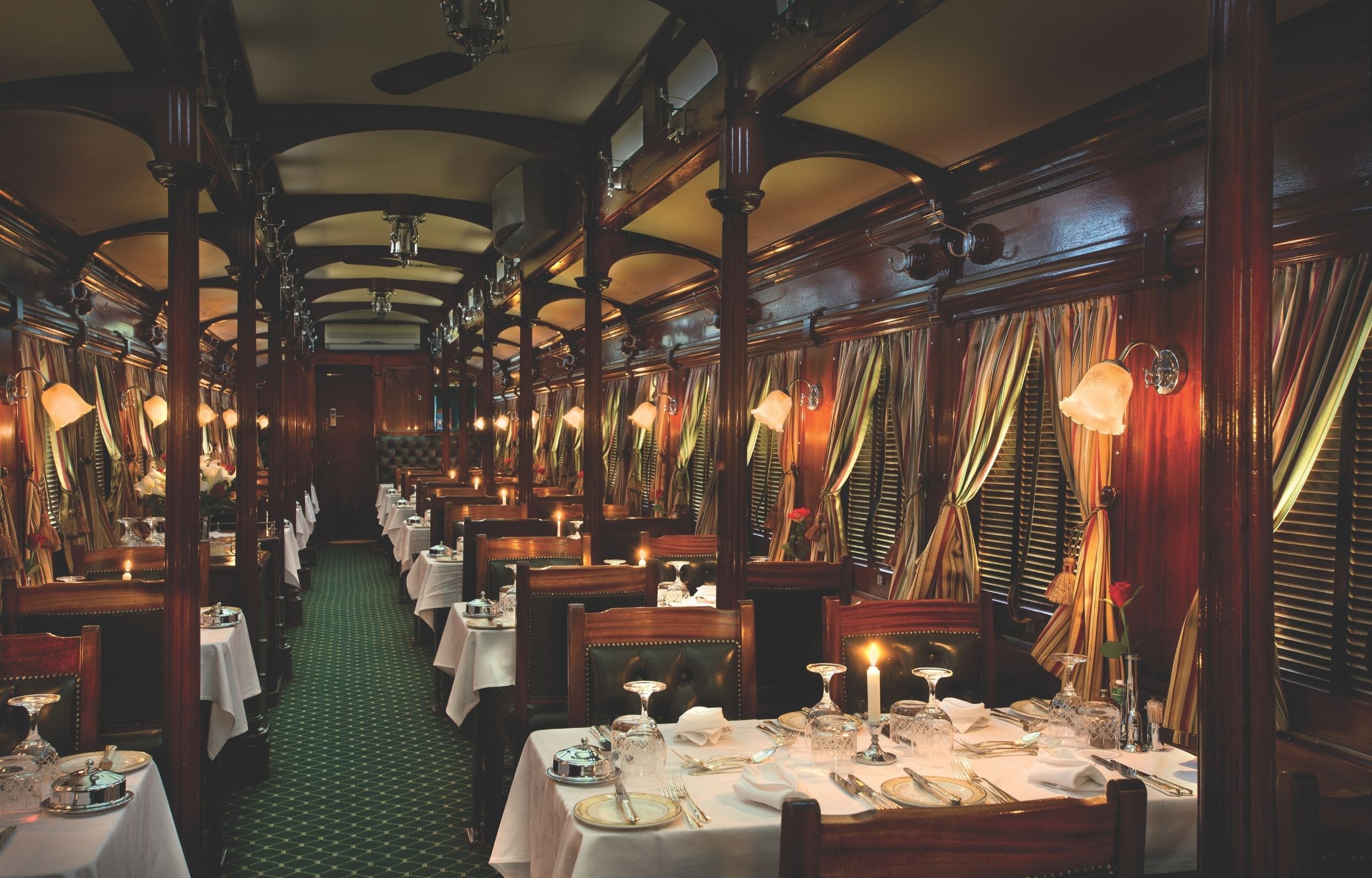
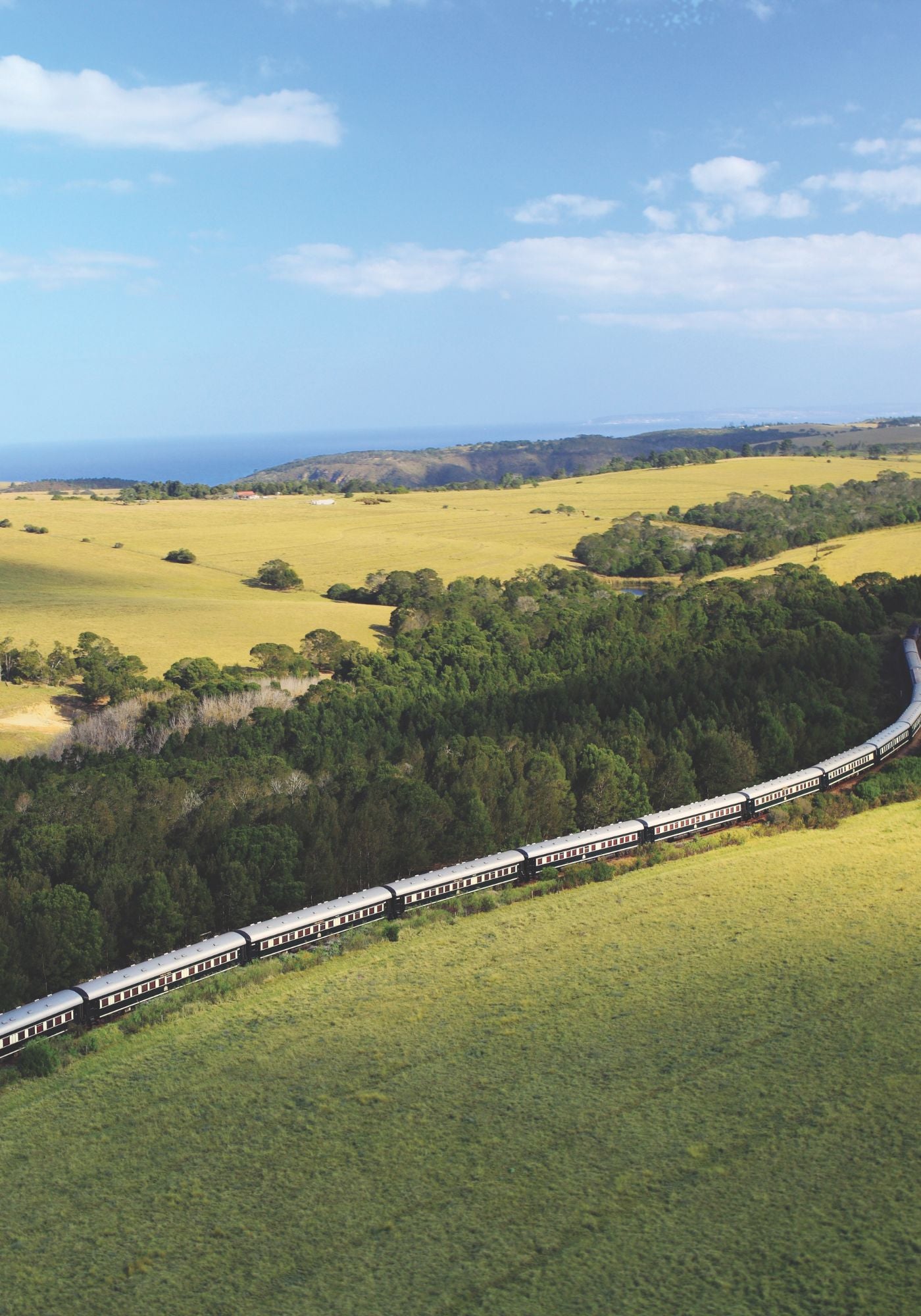
Cross to South Africa and the register shifts from wartime survival to Edwardian revival. Rohan Vos began restoring derelict railway stock into Rovos Rail's Pride of Africa in 1989, and the Royal Suite that resulted takes up half a carriage: a king bed or twin arrangement, a separate lounge with writing desk and two armchairs, and an en suite bathroom with a Victorian bath alongside a shower.
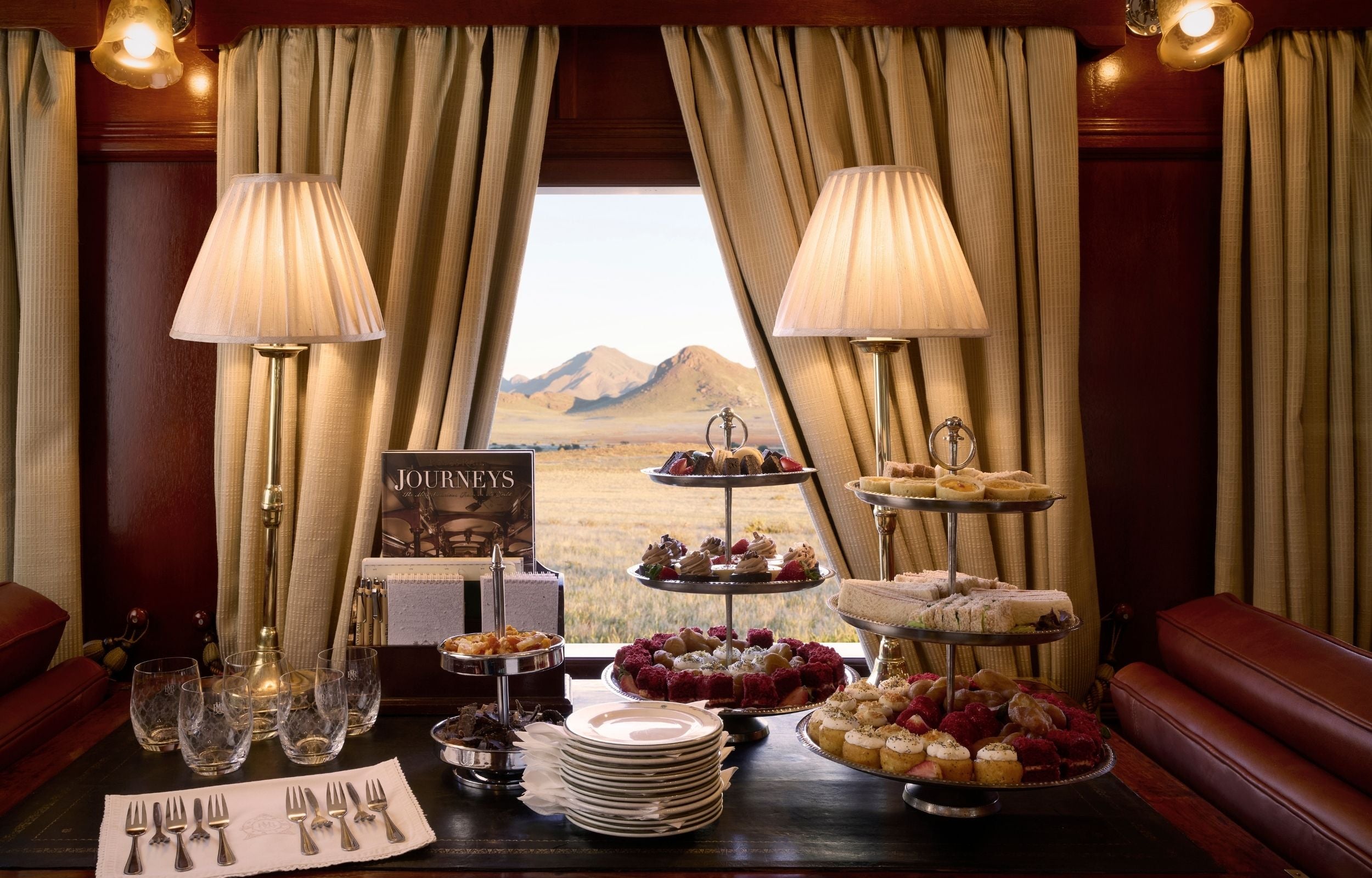
Dark wood panelling and brass fixtures throughout hold the cabin at a fixed decade even as the train crosses South Africa, Namibia, Zimbabwe and Tanzania on journeys that can run to several weeks. Nothing about the suite asks to be seen from outside; it is built to be occupied, not observed.

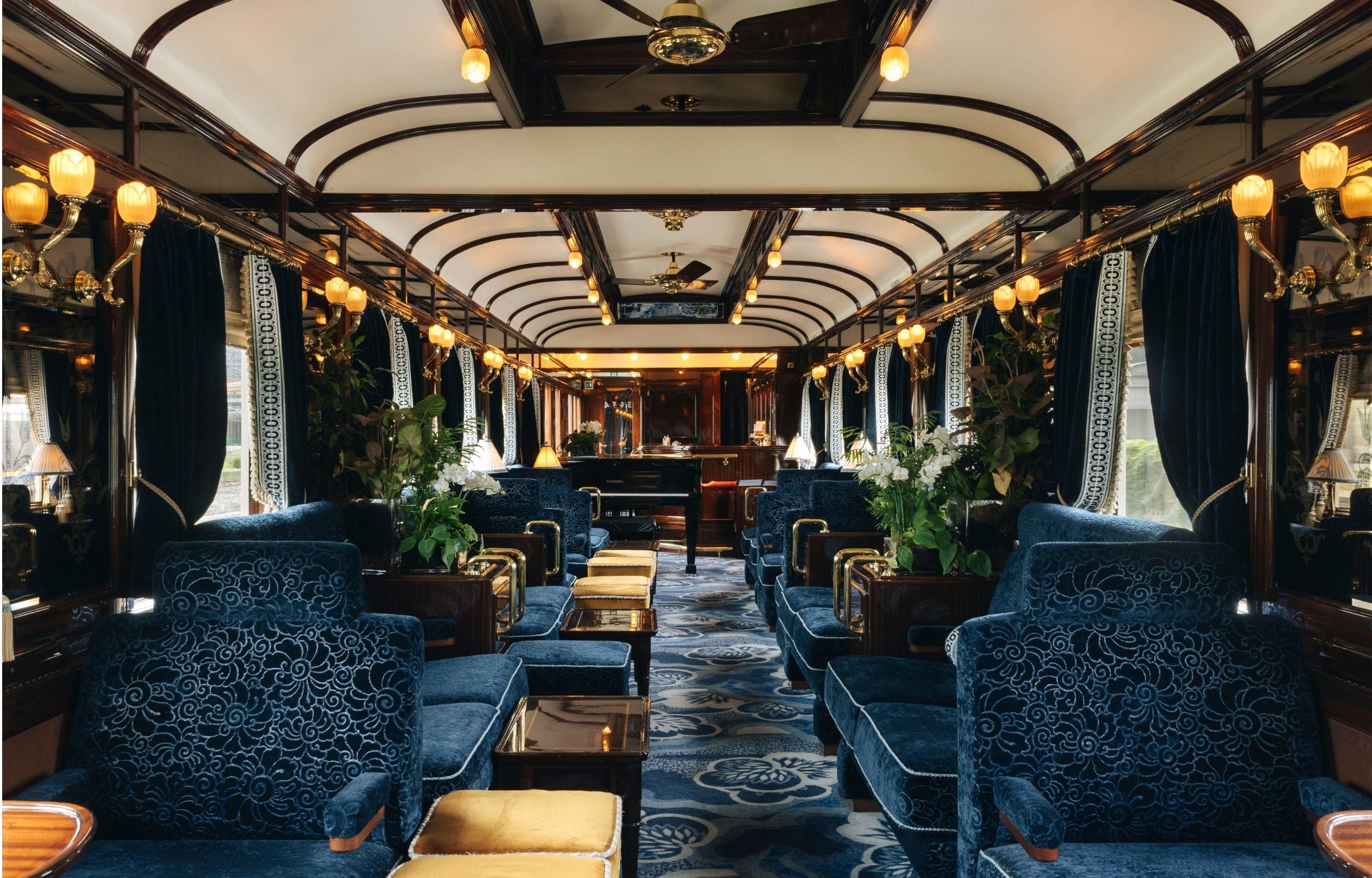
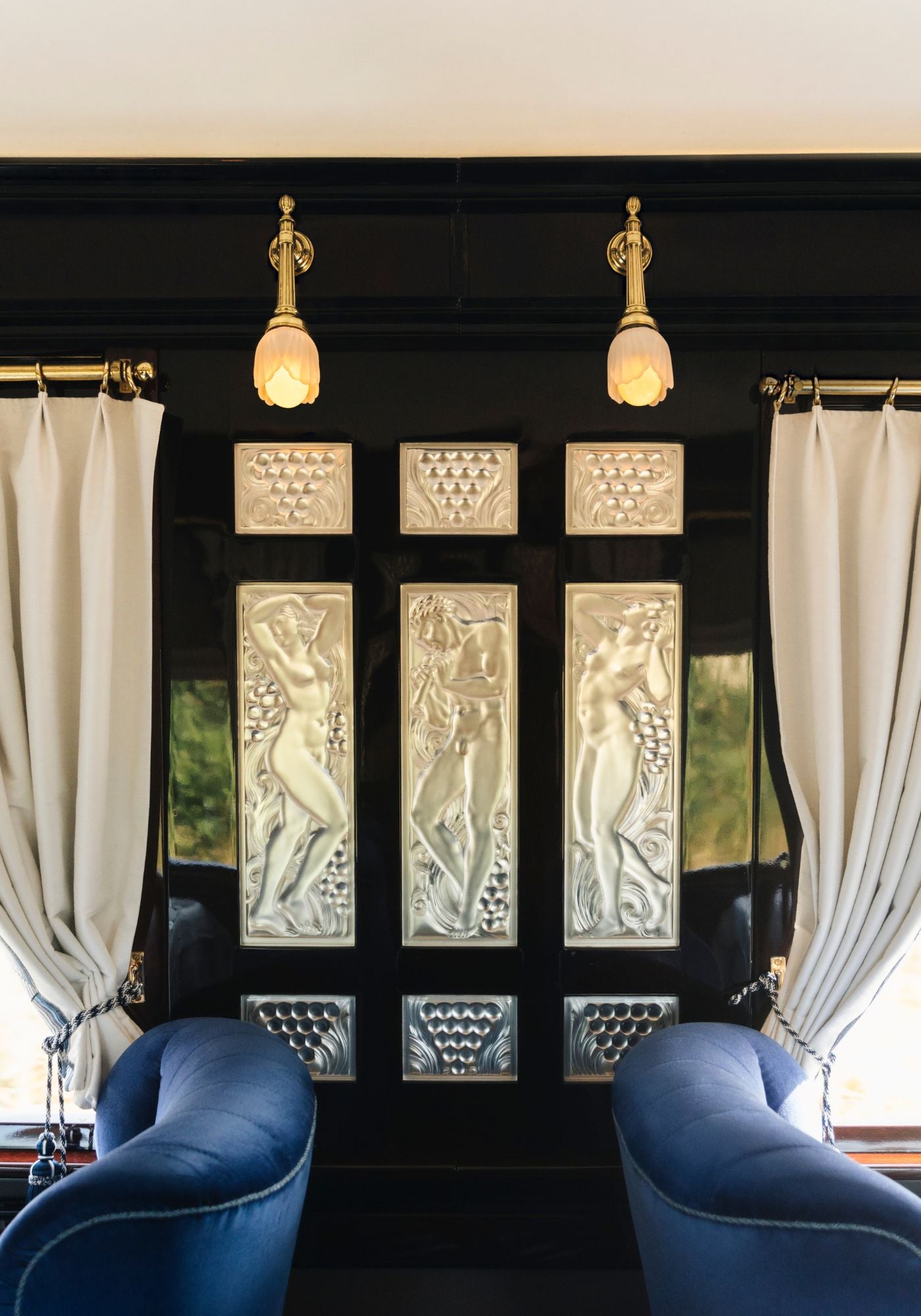
On the Venice Simplon-Orient-Express, a Belmond Train, privacy has become architecture in its own right. When James Sherwood began restoring the original Compagnie Internationale des Wagons-Lits carriages in 1977, marquetry specialist Bob Dunn, whose grandfather had worked on the originals, and the glassmakers at Lalique were brought in to rebuild what had been lost.
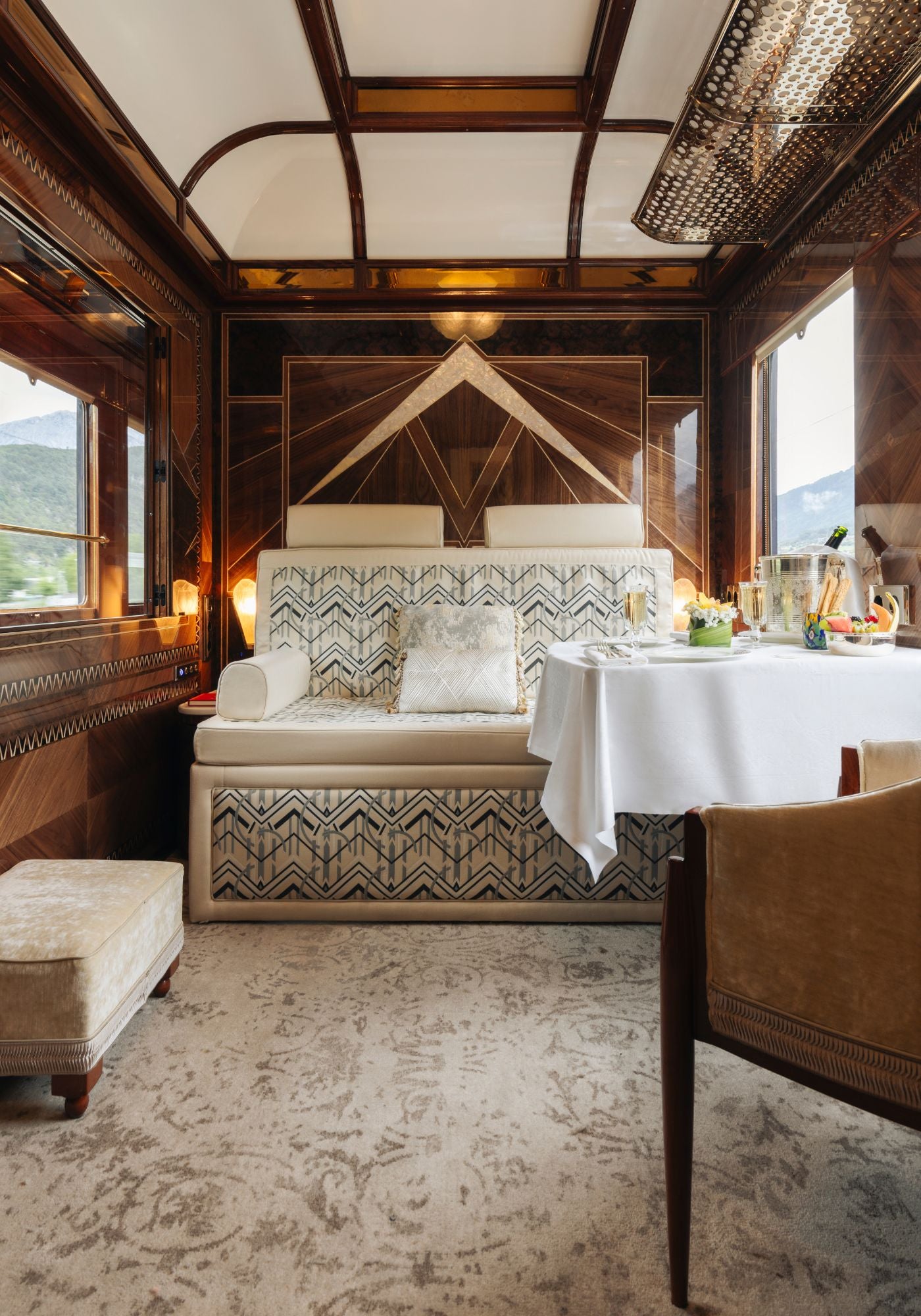
The six Grand Suites added later each take their material language from a European city the train passes through: Murano glass and Italian blues in Venice, Moorish fretwork in Istanbul, fanned Art Deco carving and lamps sourced from a Paris flea market in the Paris suite. There are no electronic keycards anywhere on board, only brass keys stamped for each suite, and no two rooms share a design. The newest addition, L'Observatoire, converts an entire carriage into accommodation for two, with a private glass observation platform and a butler attached to the suite alone rather than shared across a corridor.

The newest entrant reframes the idea for a different geography altogether. Golden Eagle Silk Road Express, launched this year to mark thirty five years of Golden Eagle Luxury Trains, traces routes between Beijing and Kashgar, threading through Xi'an, Dunhuang and the oasis towns of the Taklimakan.
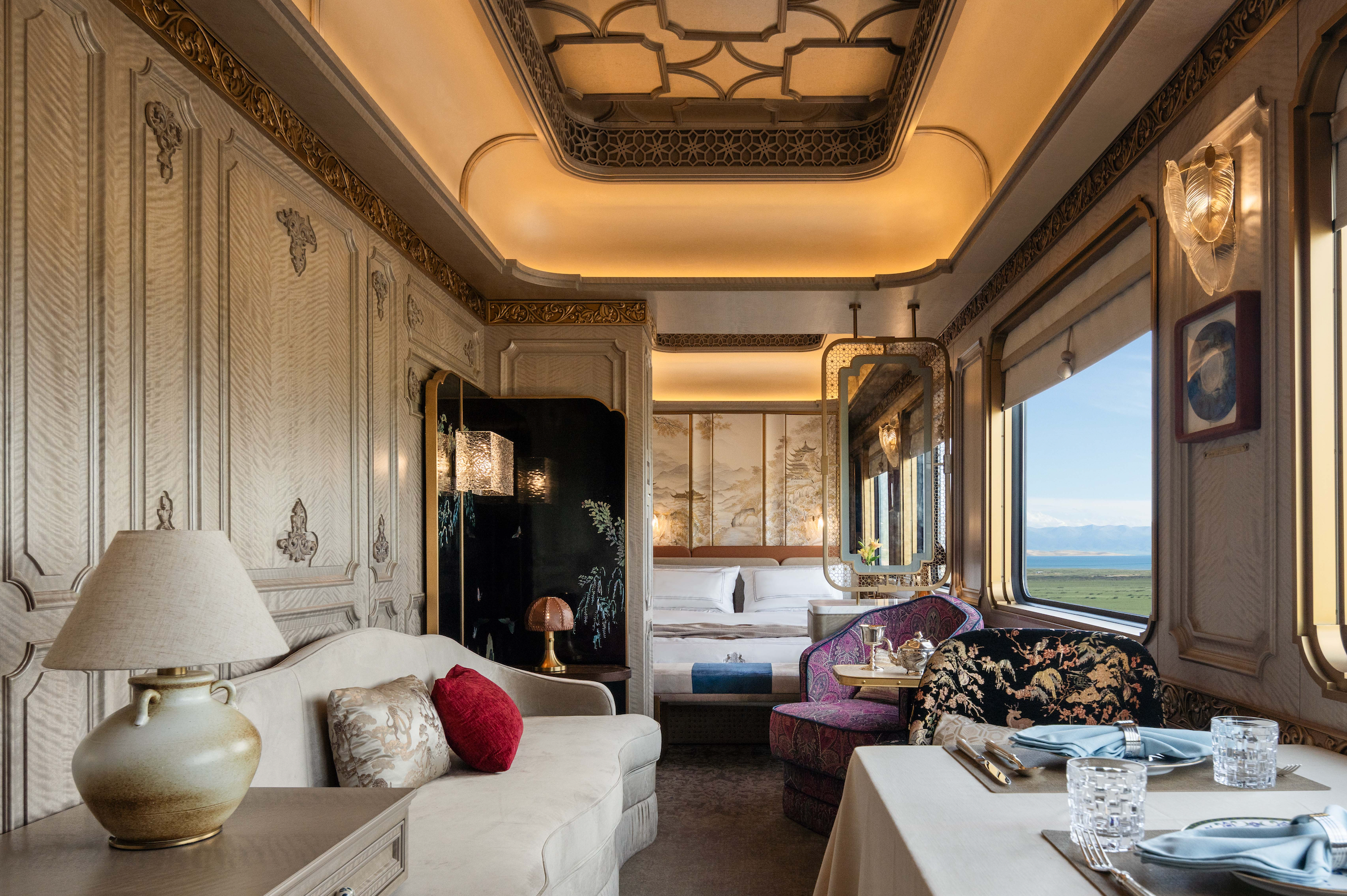
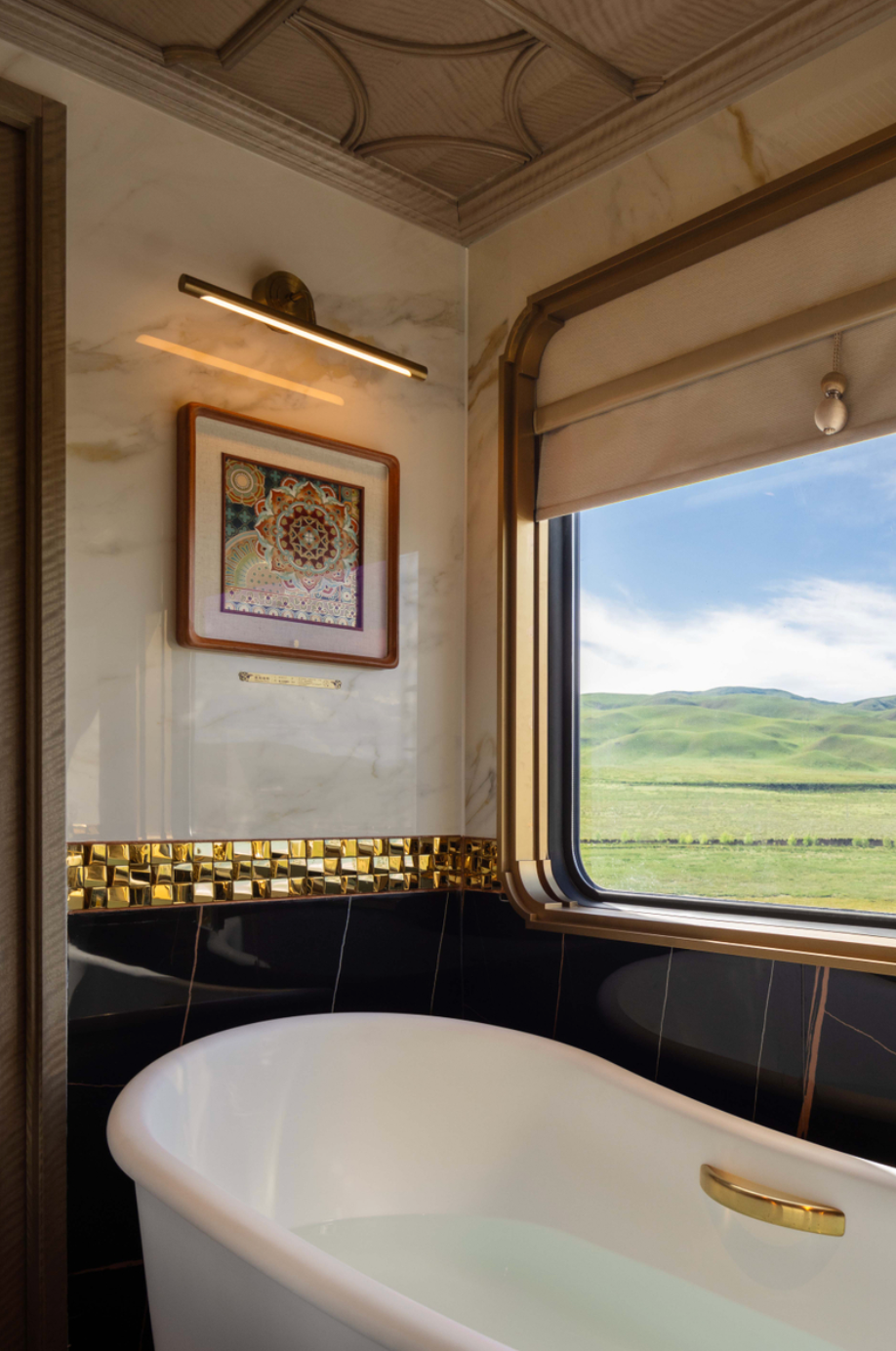
Its Han Dynasty Suite behaves less like a berth than a small private apartment, a sitting room giving way to a dressing table and a table laid for meals nobody outside the cabin will see, with a bathroom deep enough for a proper soak rather than a hurried rinse.
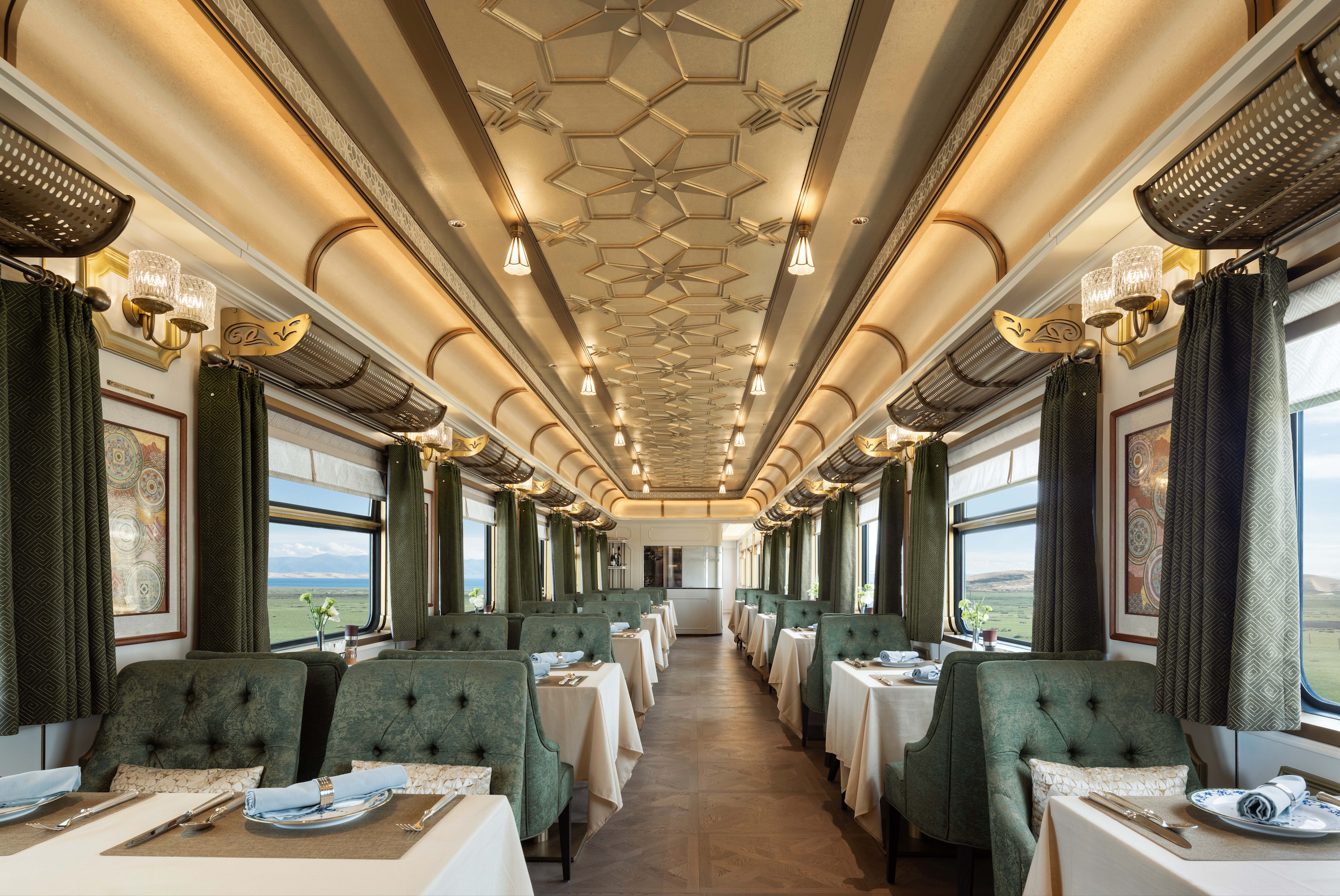
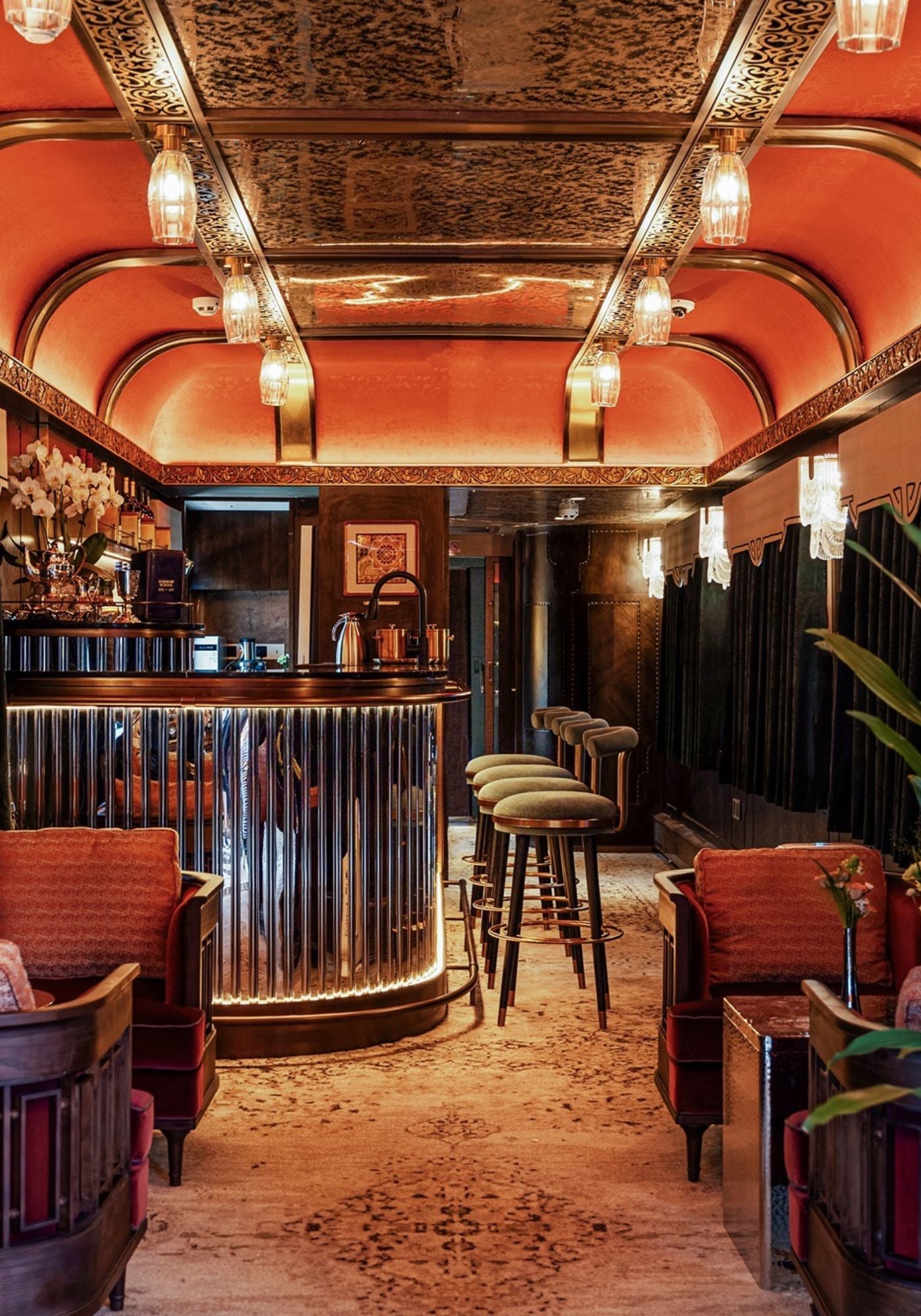
The Bar Lounge Car is entered through a pair of doors shaped after the curve of a Han Dynasty chariot, and the Observation Car wraps its windows around 270 degrees until the desert seems to sit inside the carriage rather than beyond it. On chartered journeys, the same room folds its partitions down into a private reception for four, a public space turned exclusive on request.
What unites these four trains is not luxury for its own sake but a shared conviction that movement and retreat are not opposites. A private suite that travels does not interrupt the sense of withdrawal the way a hotel checkout does; the world keeps arriving at the window while the room itself stays sealed. Expect this logic to keep pushing further, from shared carriage life toward the single occupied carriage, the entire suite, the sequence of doors set between guest and staff rather than a single one. The destination has stopped being the only thing that matters. Increasingly, it is the door between the corridor and the cabin.
Photography: Ludovic Balay, Mark Fox, Oil Douglas (British Pullman, A Belmond Train); David Noton, Ludovic Balay (Venice Simplon-Orient-Express, A Belmond Train); courtesy of Rovos Rail; courtesy of Golden Eagle Luxury Trains


