



THE SOUL OF MARRAKECH
HOSPITALITY PROJECTS
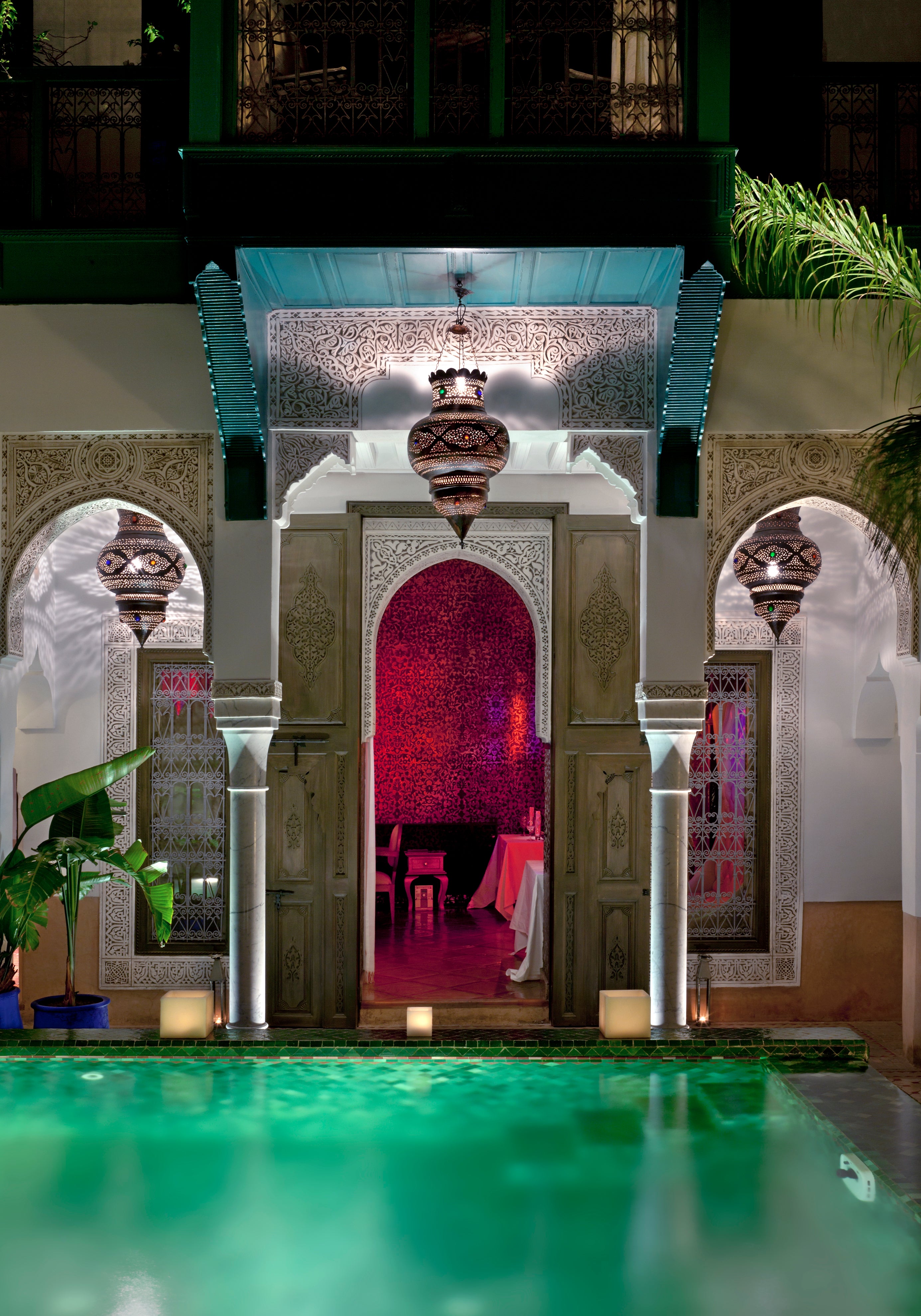
Nestled within the winding lanes of the Medina, the entrance of Le Farnatchi gives nothing away, designed for that very reason. Step through it and the noise of the street falls away almost immediately, replaced by the stillness of a house built for retreat.
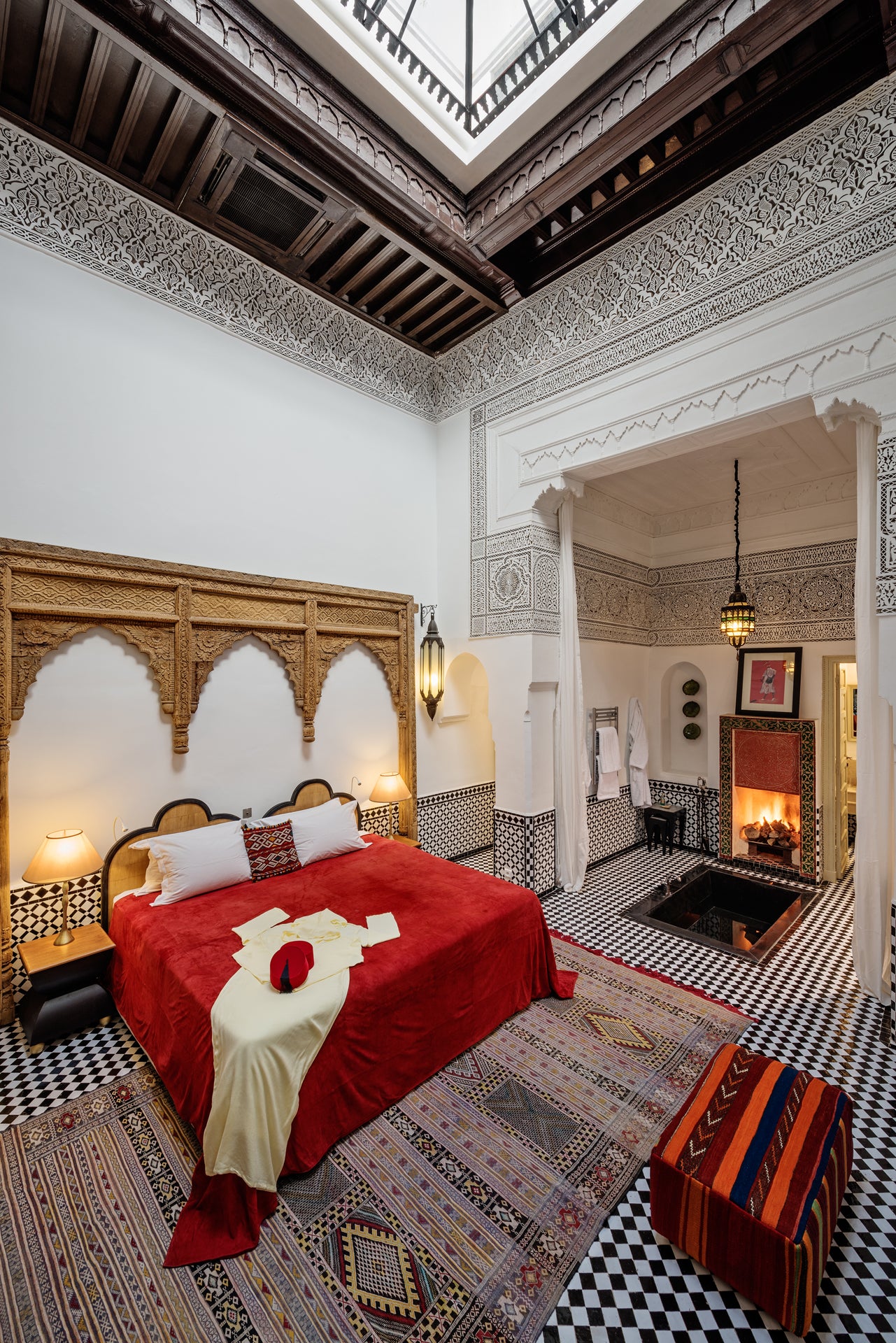
The hotel unfolds across a collection of restored riads, each one organised around its own courtyard, its own rhythm of light and shade. In one suite, a bed sits beneath a carved cedar arch, its wood left raw and honey toned against walls stencilled in fine plaster relief that runs the full height of the room up into a domed skylight.
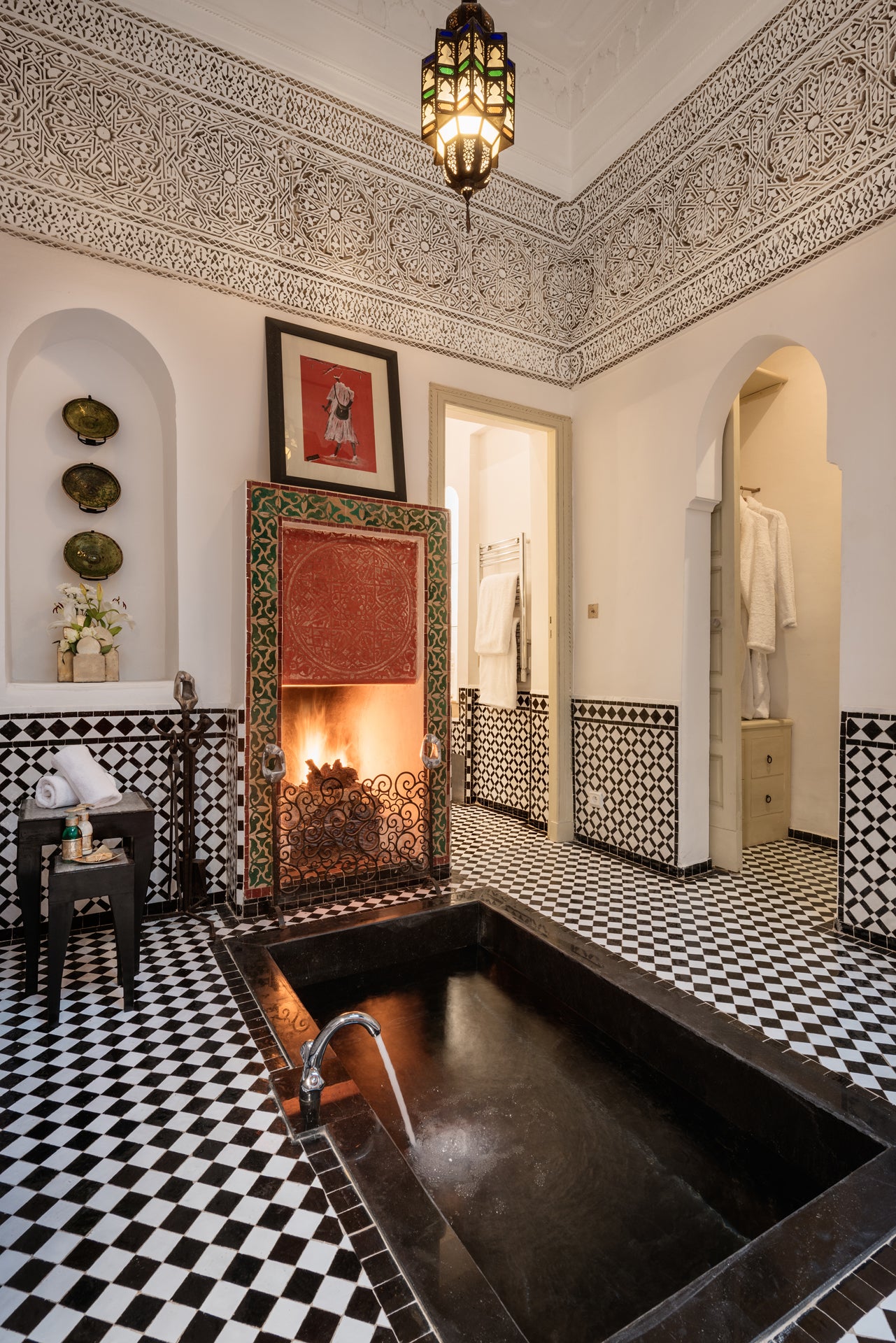
A sunken black tiled bath occupies the room's far corner, positioned beneath a tiled fireplace so the two can be used together on cooler evenings, chequered floor tiles running underfoot in a pattern that recurs, in different colourways, throughout the property.
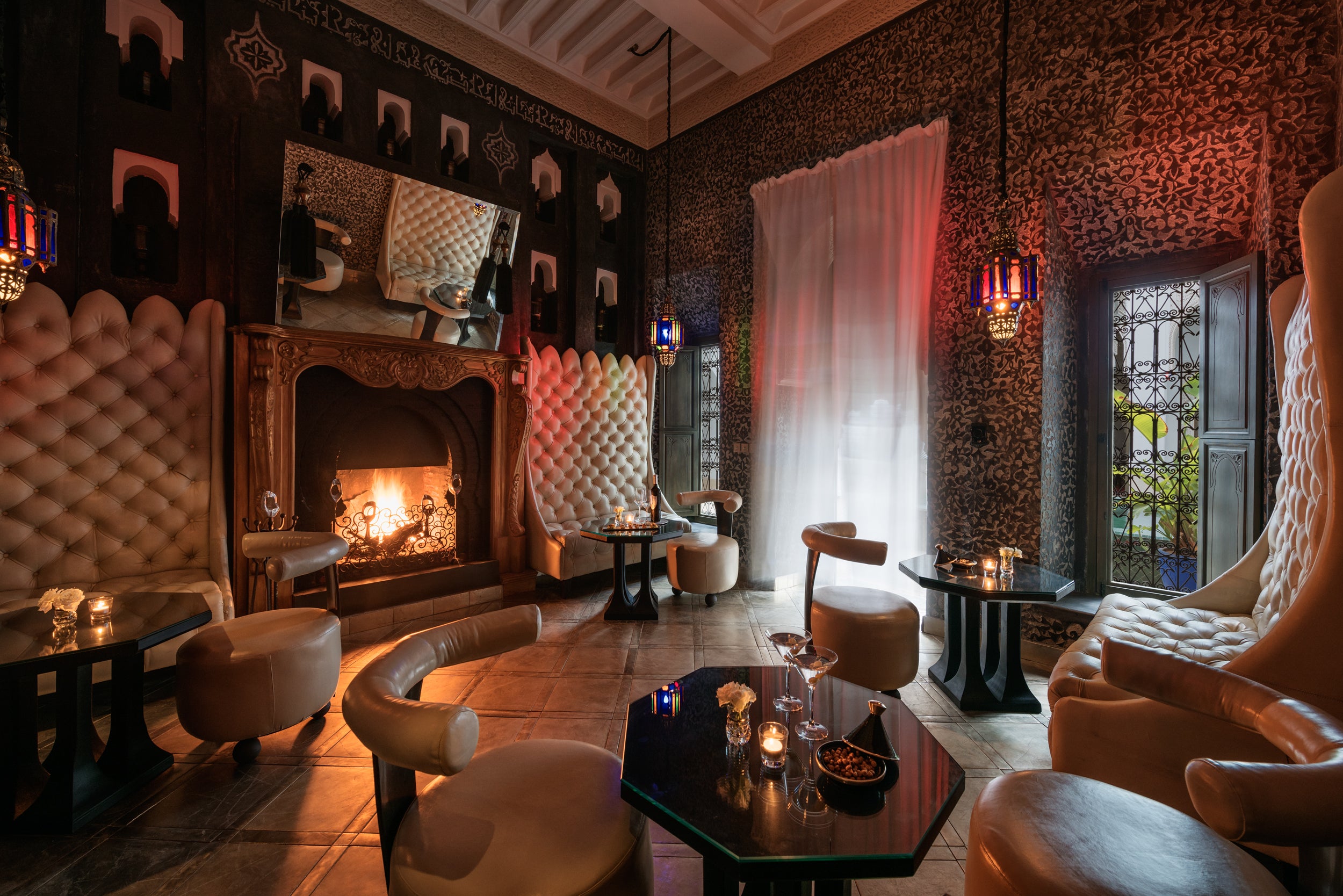
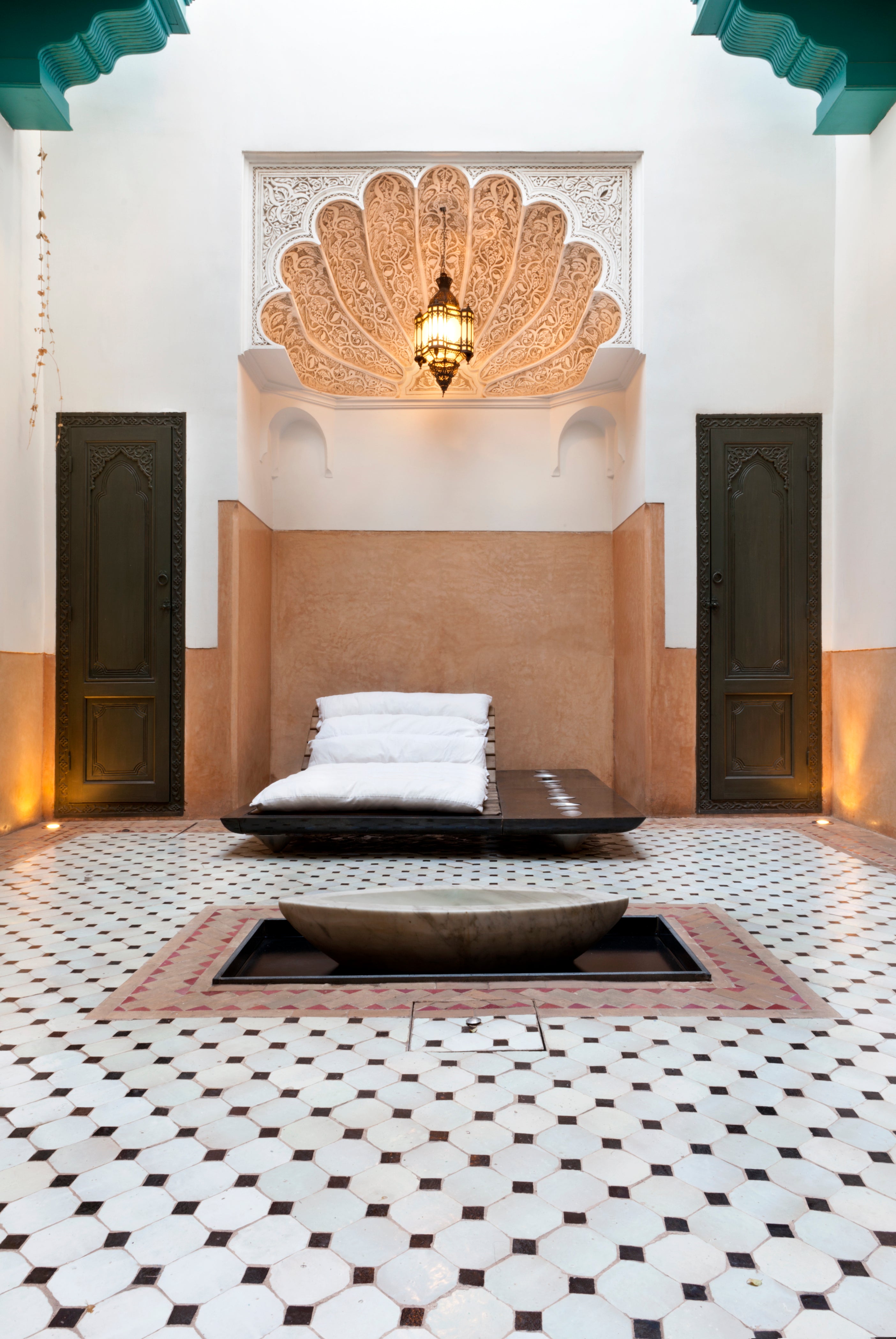
The hammam takes the material palette somewhere quieter. A stone basin, carved and slightly asymmetric, sits at the centre of a floor laid in small black and white octagonal tiles, a low daybed dressed in white cushions built into a shell shaped plaster alcove behind it, lit by a single hanging lantern. Nearby, a fountain set into an arched recess sends water arcing from a red medallion tile, its calligraphy worn soft with age, into a pool tiled in deep green.

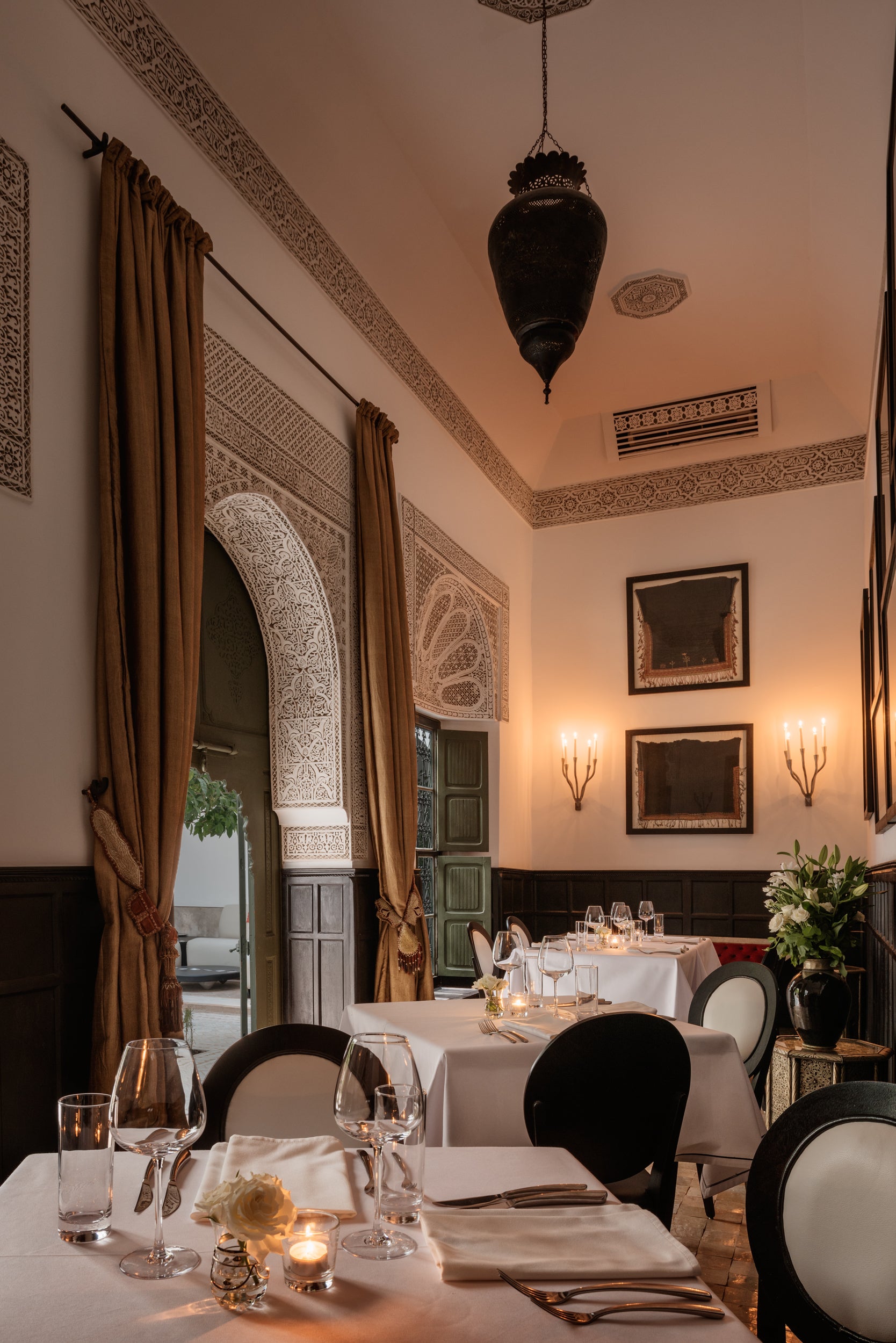
Dinner happens in a room lit almost entirely by candlelight, tables dressed in white linen beneath a carved plaster archway hung with heavy curtains, framed textiles on the walls either side of wall mounted candelabra. Restaurant Le Trou au Mur serves Moroccan recipes rarely found outside private homes, treated with the same patience given to the architecture around them.
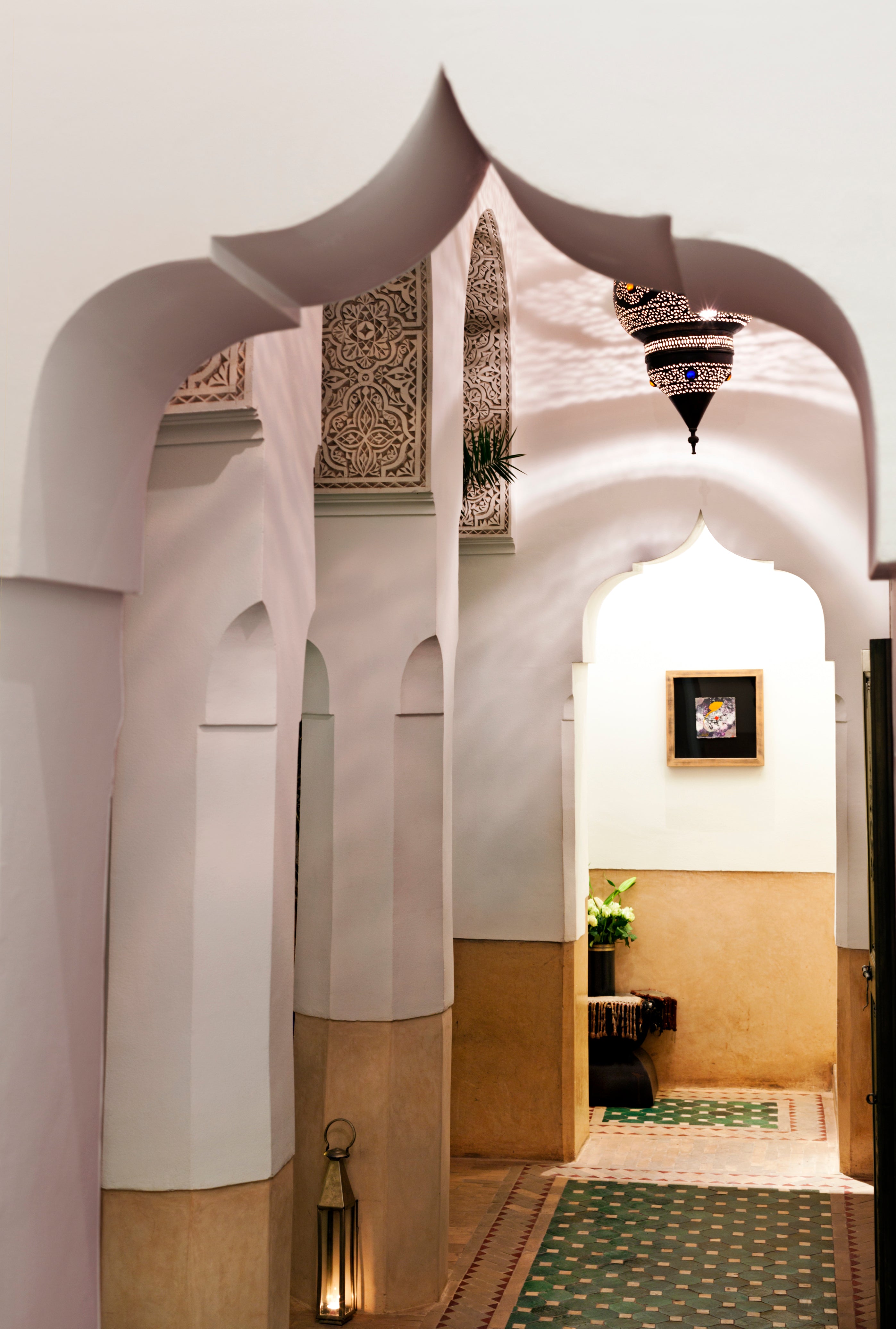
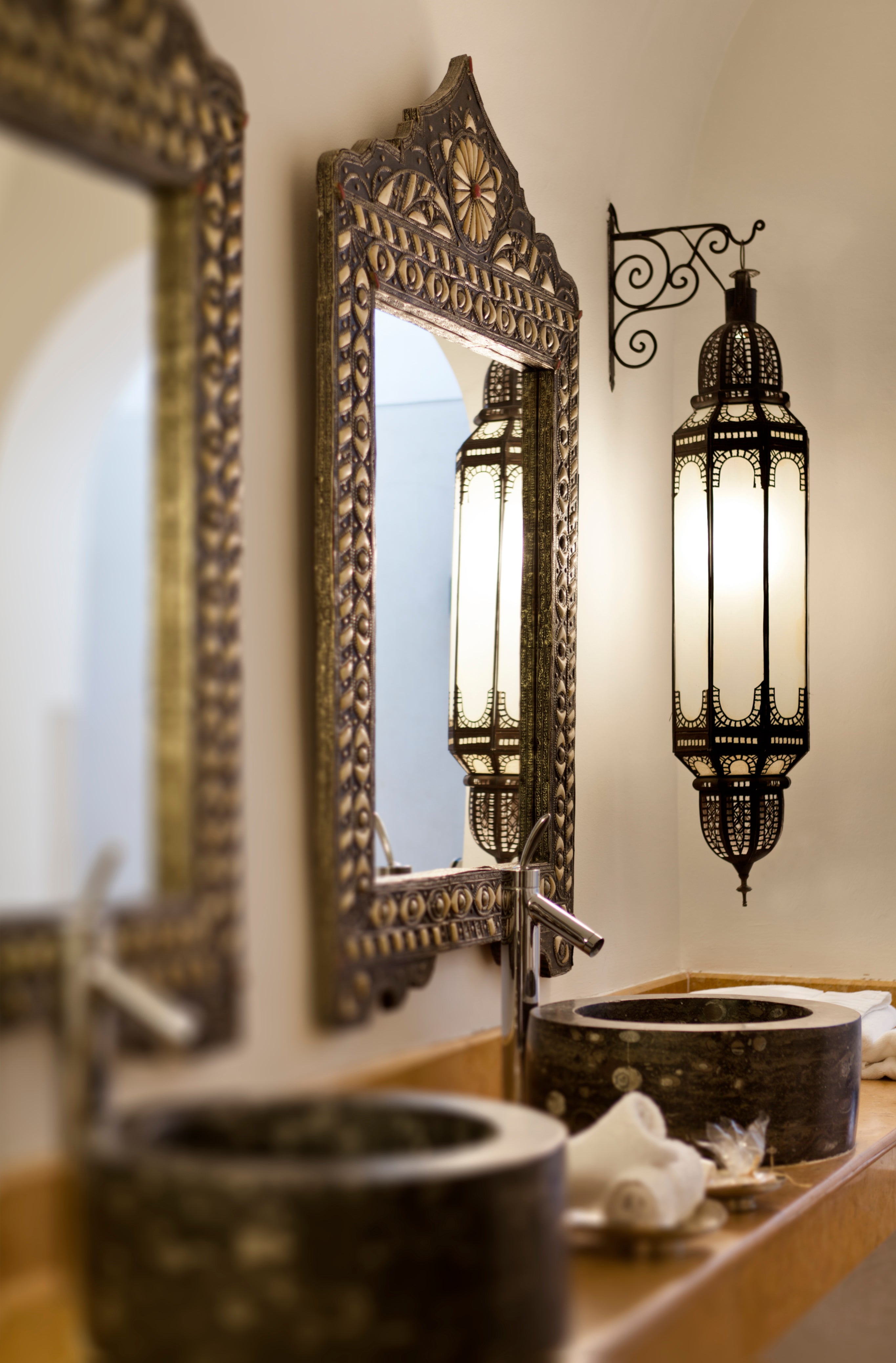
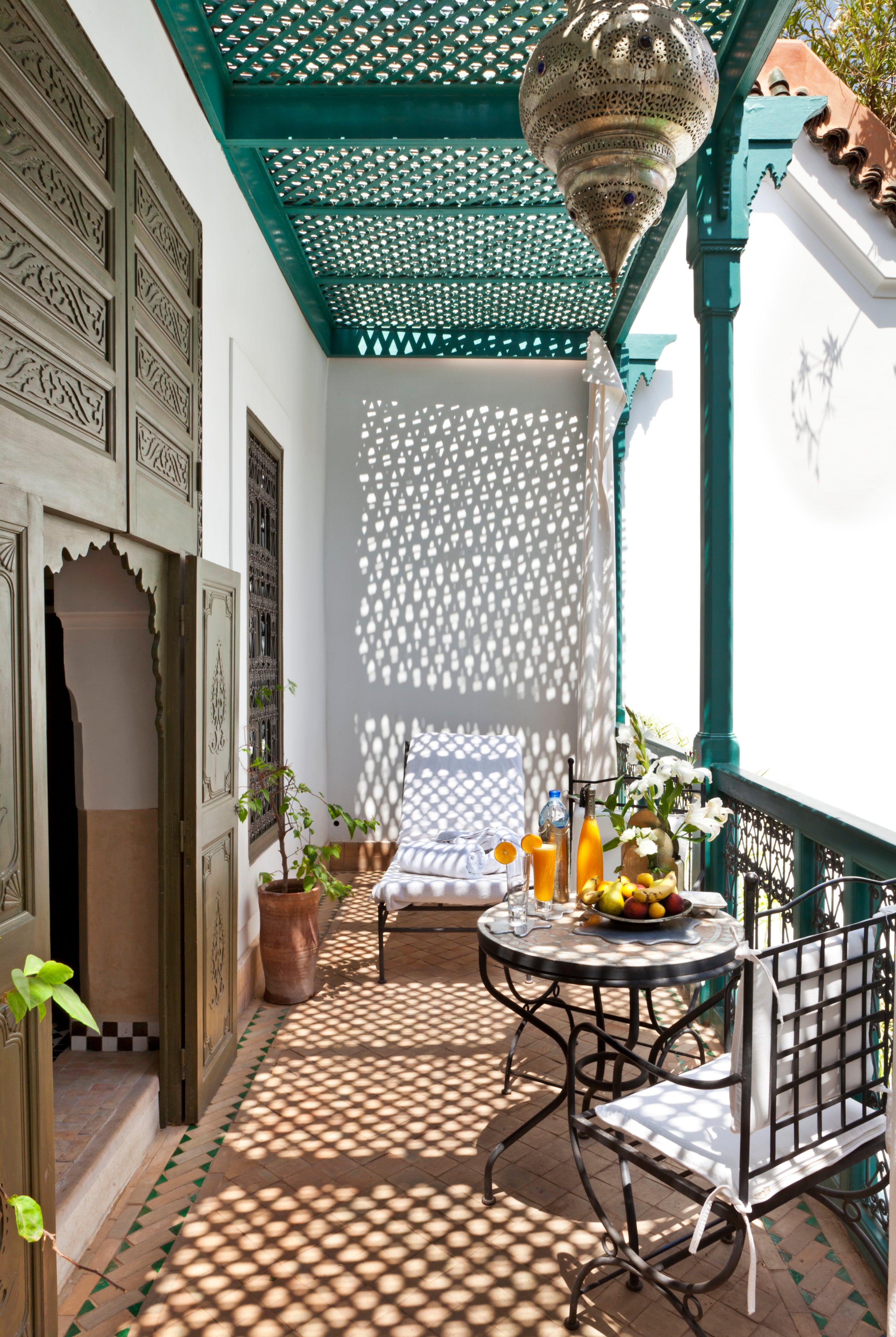
Every surface here has been worked by hand. Zellige tiles, cedar ceilings, tadelakt walls polished to a soft sheen, plasterwork carved rather than moulded. Founded by hotelier Jonathan Wix and now led by his son James, the property has kept much of its original staff for well over a decade, some for closer to two, and that continuity shows in how the place is run, unhurried.
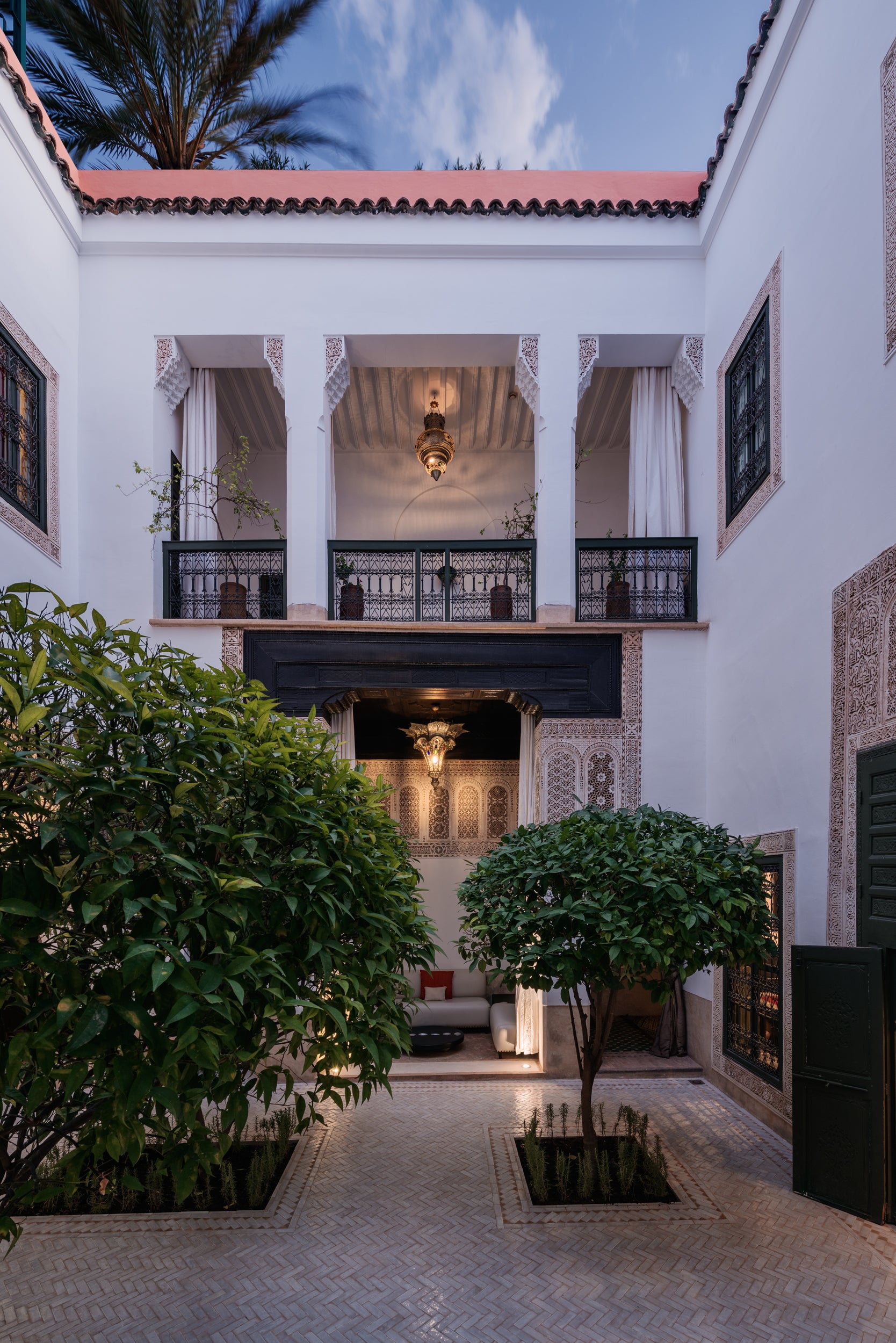
Marrakech is known for colour and noise pressing in from every direction. Le Farnatchi sits apart from that entirely – a door that closes, a room that holds its own quiet and craftsmanship that rewards only those who take time to look closely.


