


Photography by Germán Saiz
Framed in Flow by EstudioReciente
RESIDENTIAL PROJECTS
Set within Madrid's Chamberí district, this apartment, originally designed by architect Luís Martínez Feduchi in 1953, has been reimagined by Estudio Reciente as a fluid, interconnected landscape of living. The renovation strips away the rigid compartmentalisation of the original plan, replacing it with a sequence of spaces that unfold into one another, an architectural choreography that feels both deliberate and instinctive.
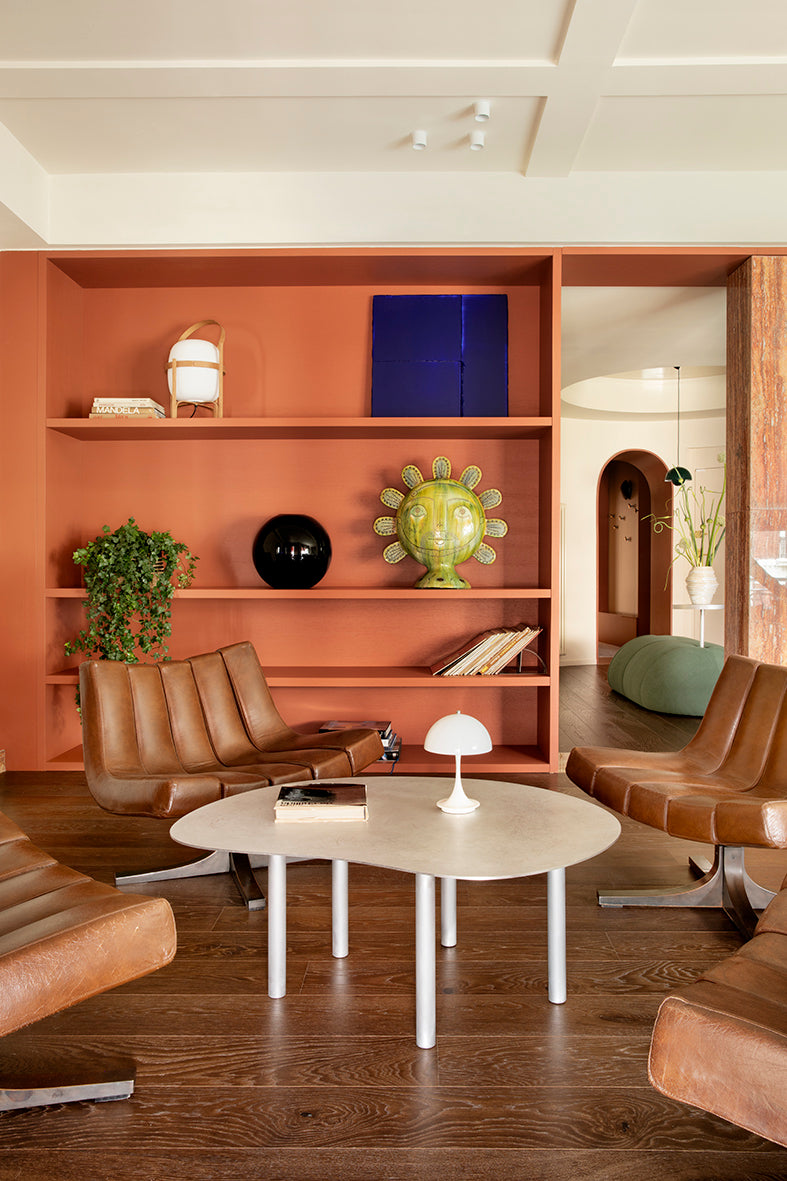
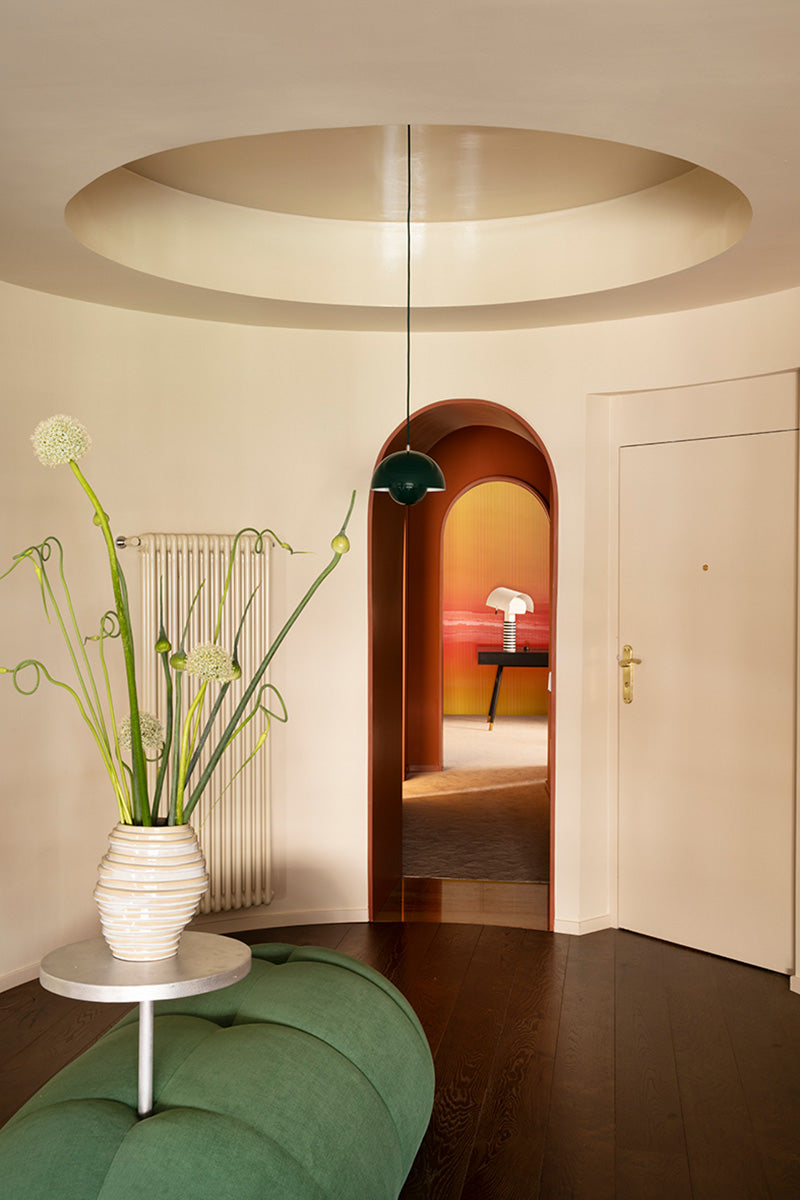
At the heart of the project lies a clear idea, connection. Not just between rooms, but between moments, materials, and perspectives. The home no longer operates as a series of enclosed functions. Instead, it becomes a continuous interior terrain where sightlines stretch, overlap, and invite movement. Arched openings define this experience, acting less as thresholds and more as frames, guiding the eye, shaping views, and softening transitions.
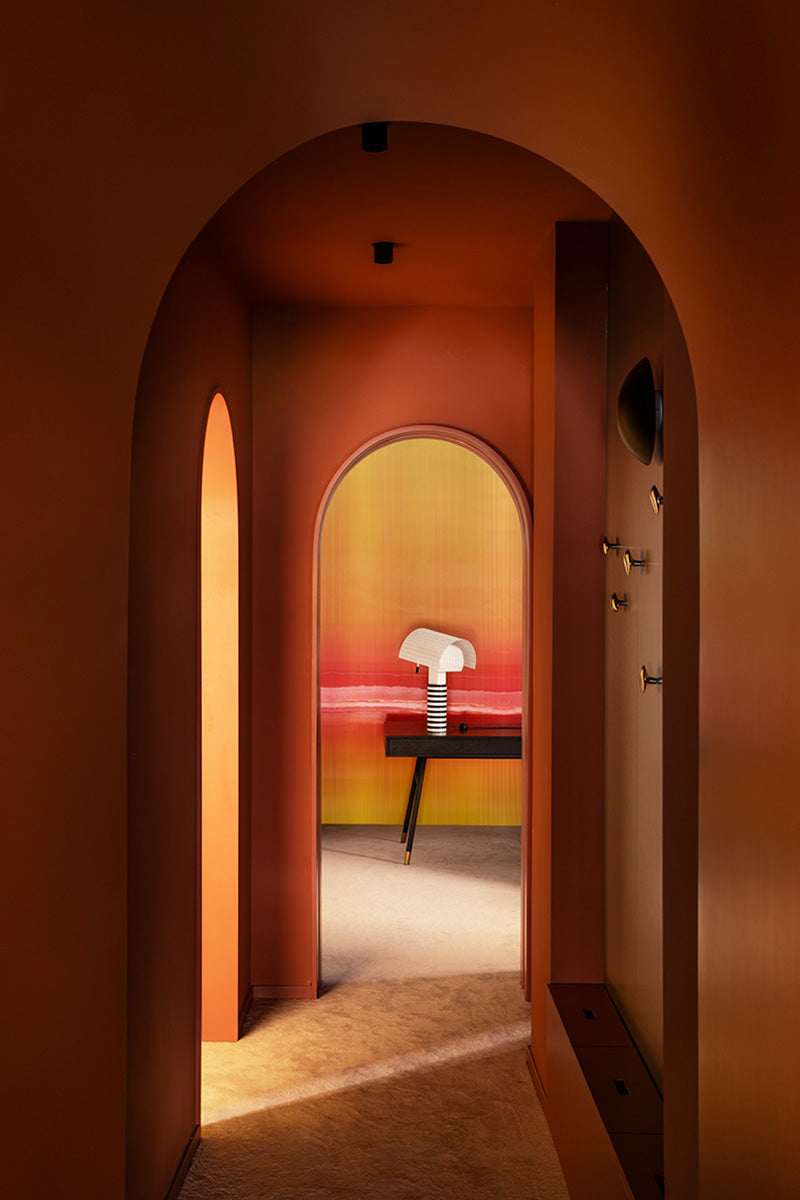
The entry sets the tone. A circular ceiling recess draws the gaze upward, echoing the curvature of the arched doorway ahead. Beyond it, a corridor washed in terracotta leads the eye towards a glowing room beyond, where warm gradients blur the boundary between surface and light. The experience feels layered and unfolding, where each space reveals itself gradually through colour, form, and perspective.
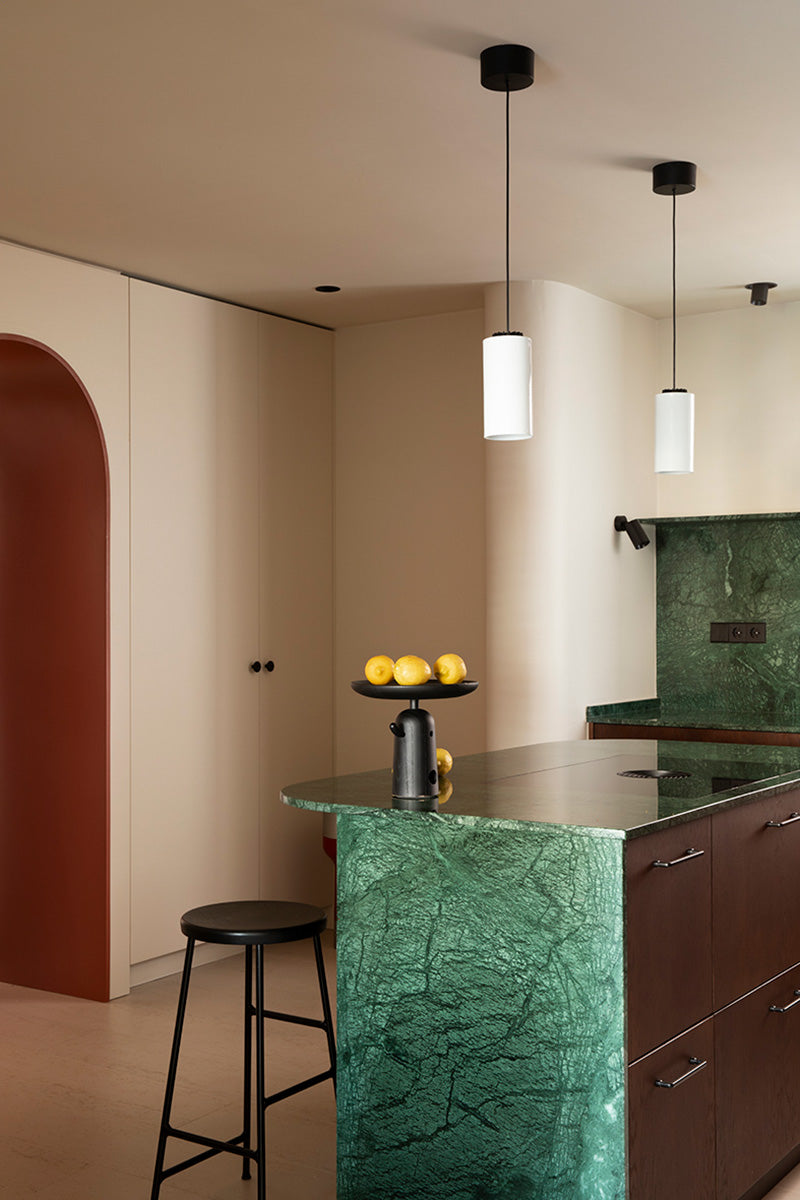
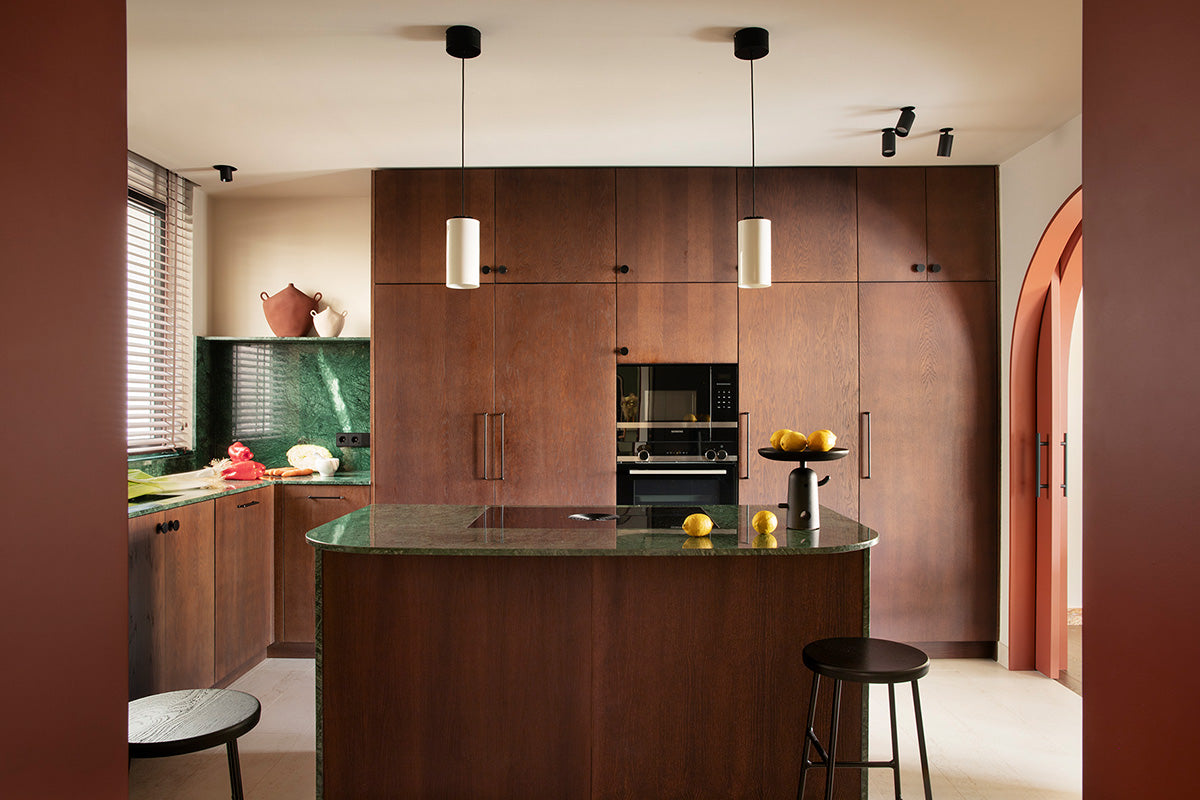
This sense of visual continuity is reinforced through a carefully orchestrated palette. A calm beige base runs throughout the home, grounding the more expressive moments that punctuate it. Terracotta hues define the transitional spaces, intensifying the feeling of movement, while deep greens anchor more intimate zones such as the kitchen and bathroom. These shifts are subtle and fluid, dissolving into one another to maintain a cohesive whole.
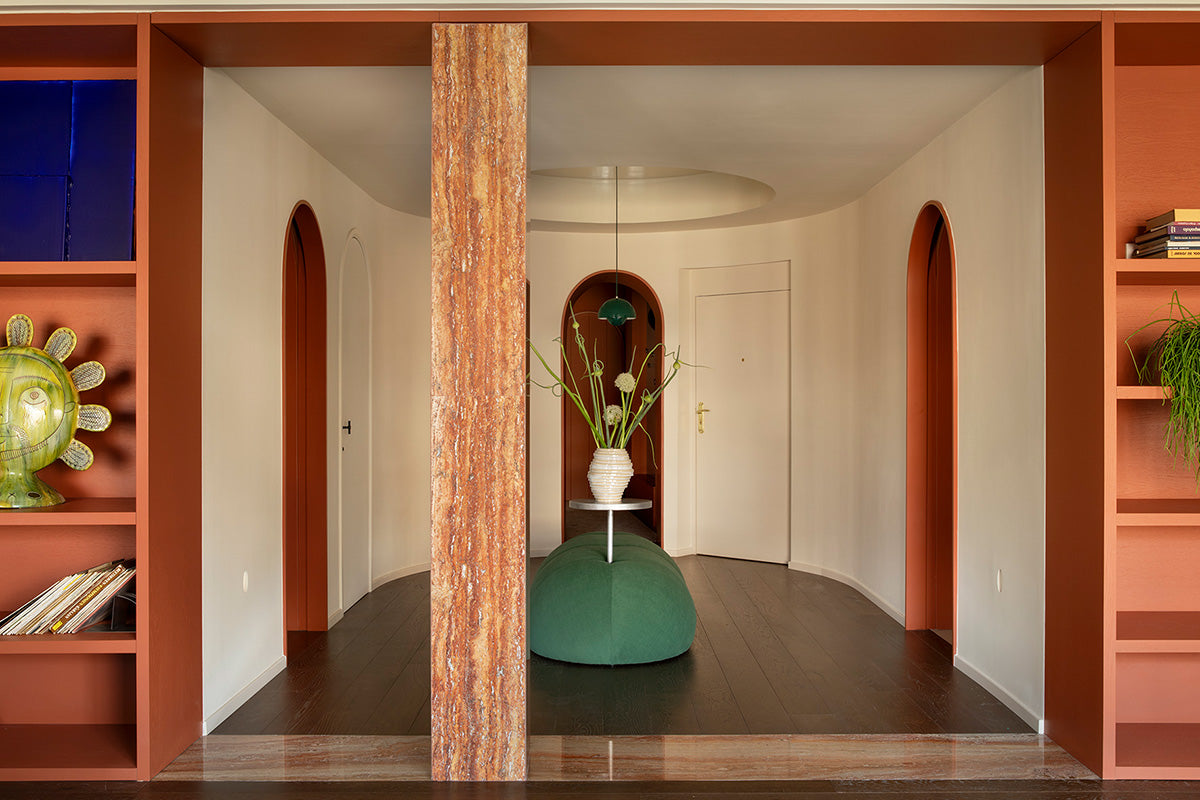
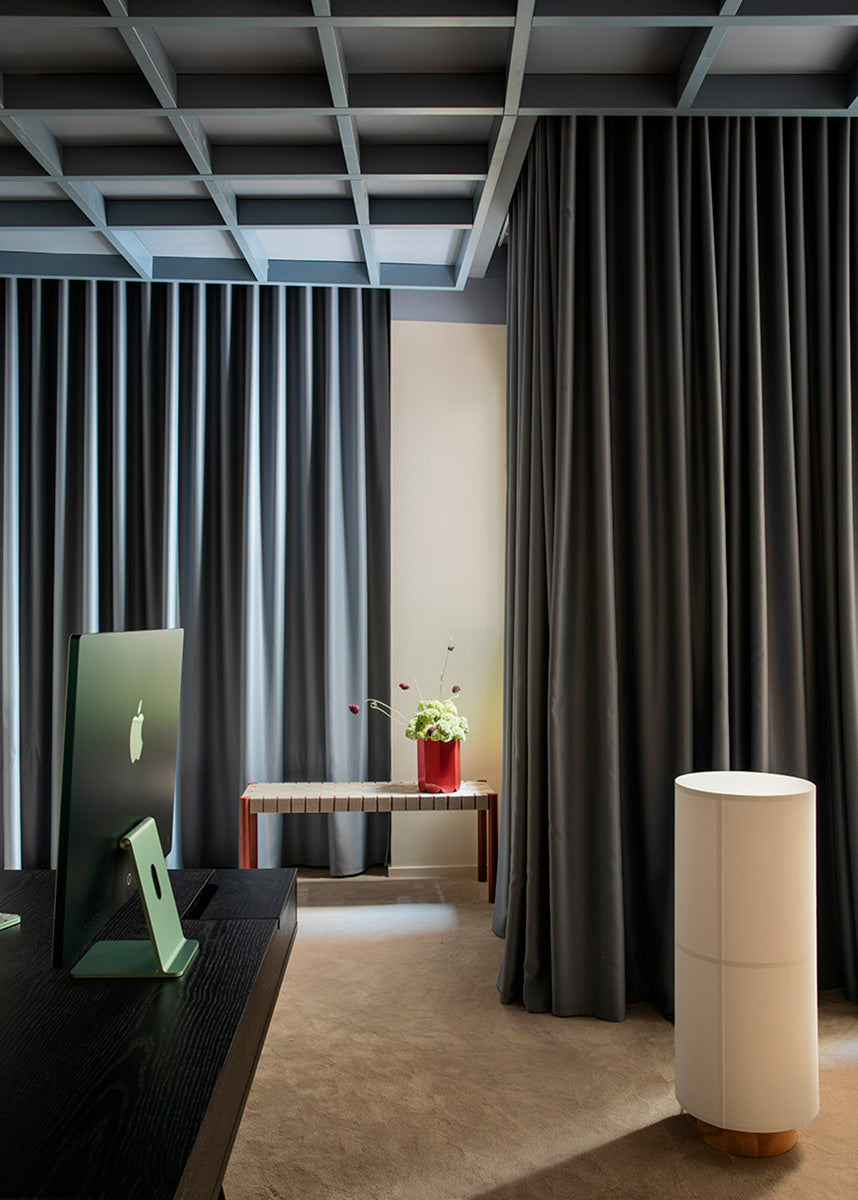
Materiality plays an equally important role. Walnut flooring flows seamlessly through the main living areas, its richness lending warmth and depth. In contrast, soft grey carpet introduces moments of pause, gently zoning the space without interrupting its openness. In the kitchen, green marble surfaces catch the light, adding a tactile, almost sculptural quality that elevates the everyday.
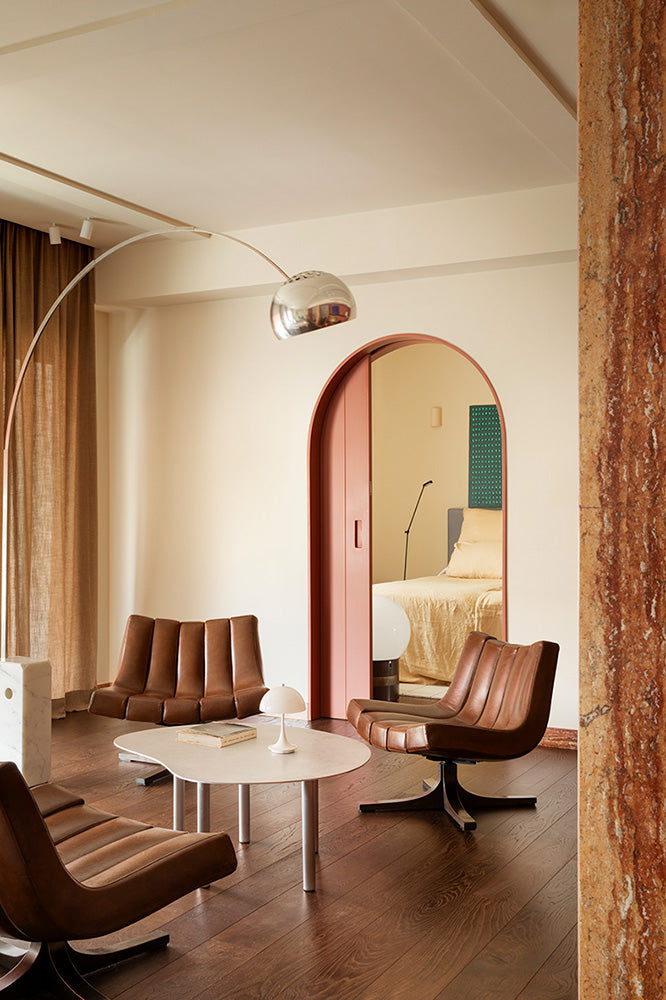
The living area captures the essence of the project’s spatial thinking. Four low leather chairs gather around a central table, positioned within a generous opening that frames a view into the bedroom beyond. This layered composition creates depth and extends the perceived boundaries of the room. The home becomes a sequence of visual experiences, constantly shifting depending on where you stand.

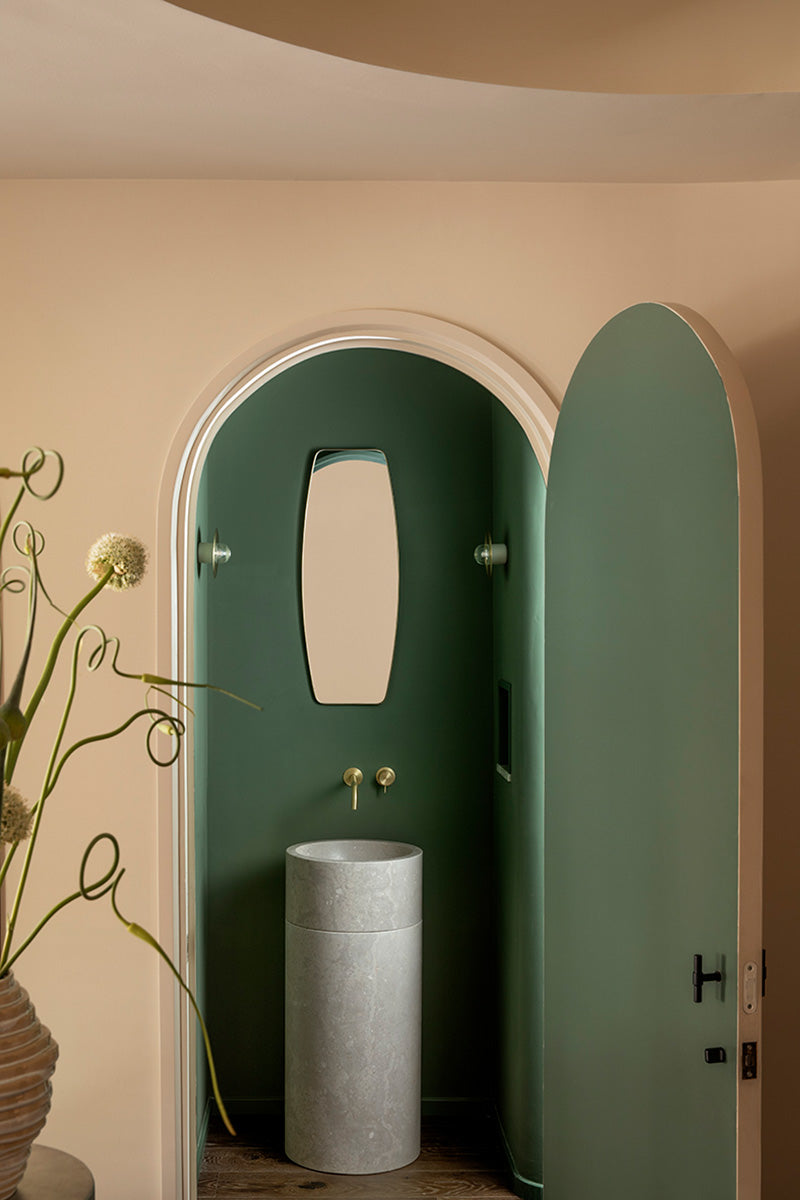
Even the most private spaces participate in this dialogue. A compact bathroom, enclosed in deep green, feels both cocooned and connected, its arched doorway maintaining a visual link to the rest of the home. Elsewhere, shelving niches and built-in elements echo the architectural language, reinforcing the rhythm of curves and voids.
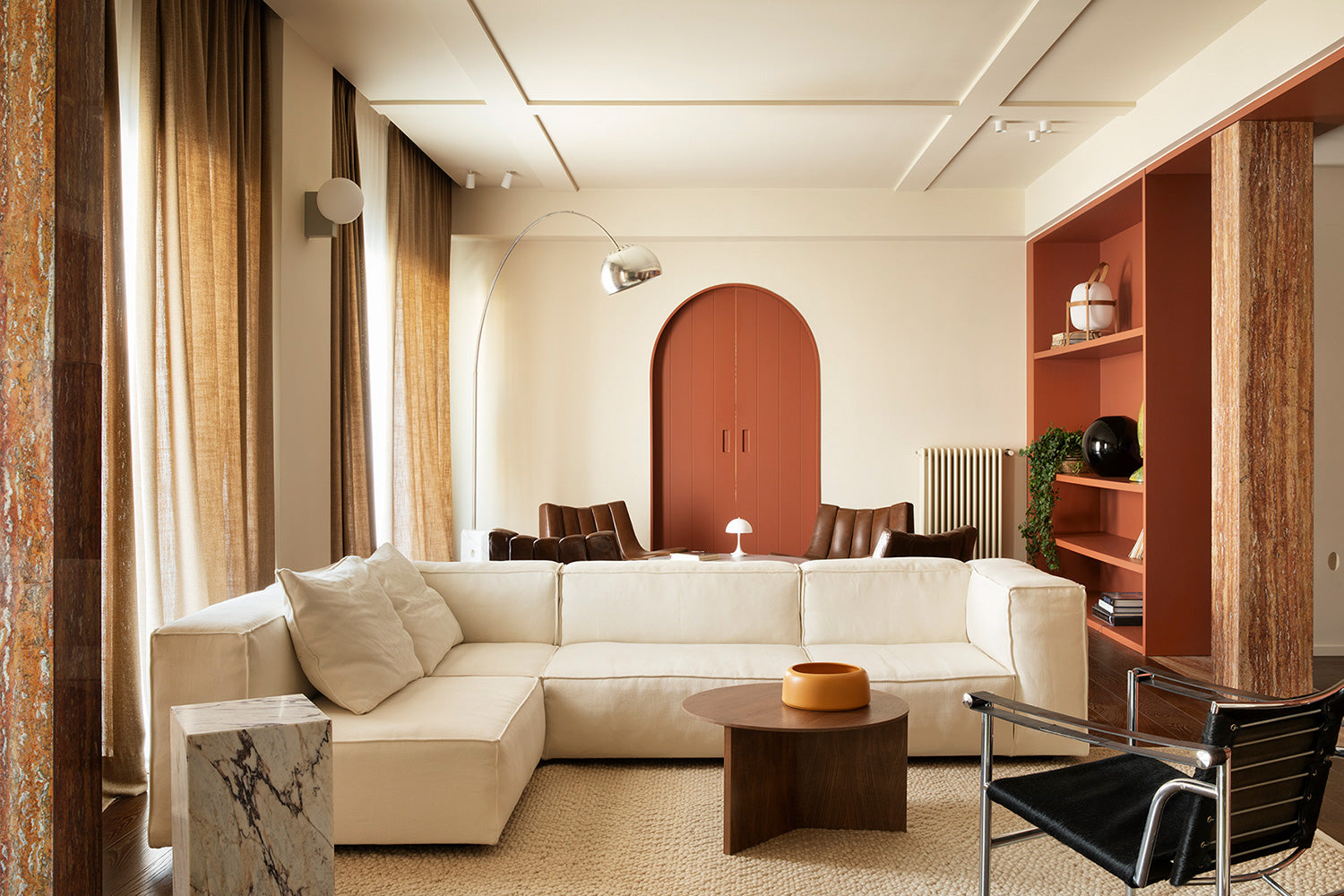
Here, the relationship between spaces is what defines the project. Boundaries soften, perspectives open up, and movement becomes intuitive. The result is an environment that feels expansive yet intimate, structured yet fluid, a home that reveals itself, one view at a time.


