

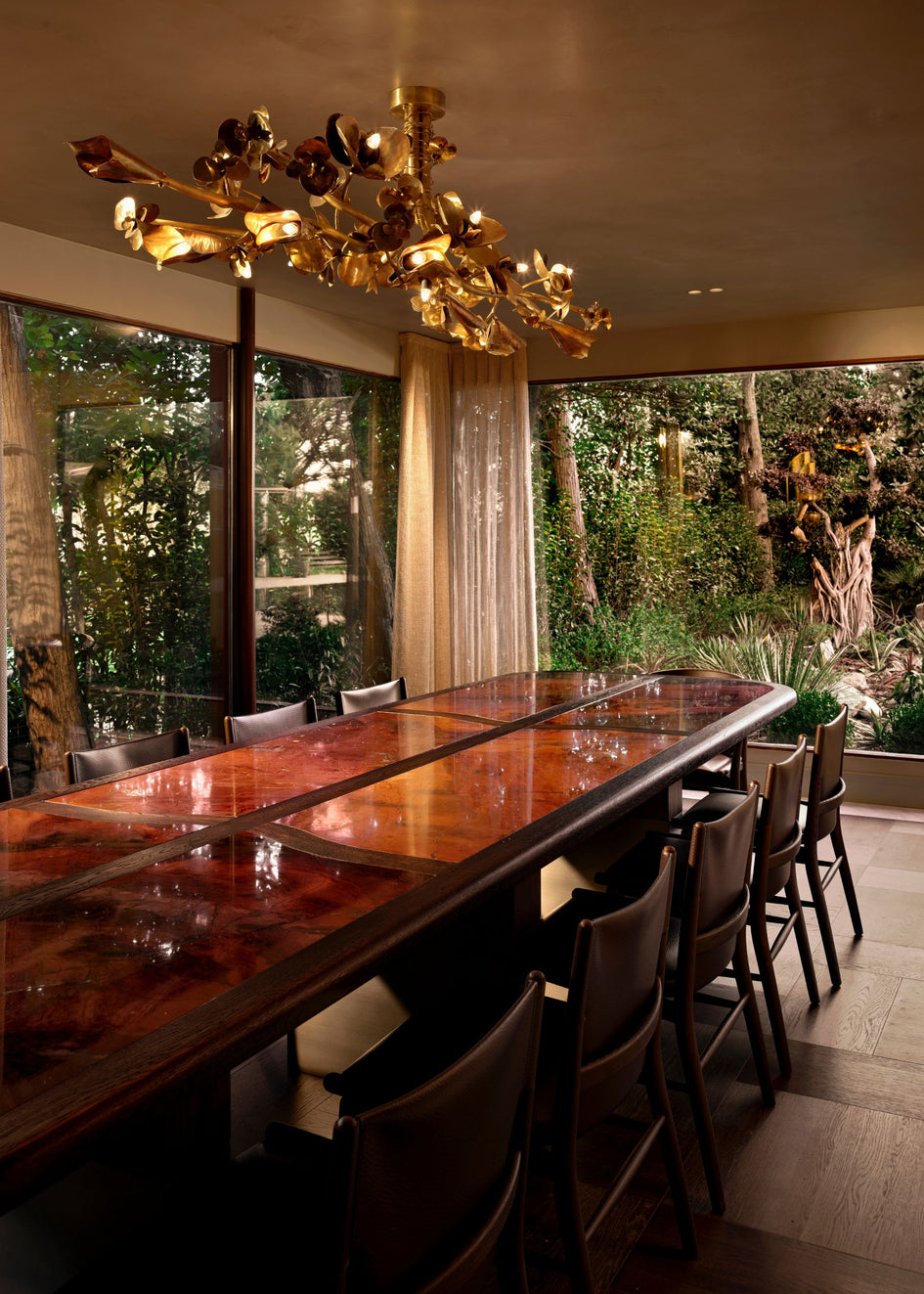

Starling Hotel Atlanta, Photo by Brandon Barré
Flower Power
TRENDS
Flowers have always had a place in interiors. They are no longer confined to soft furnishings or occasional decorative gestures. Today, florals are immersive, expressive, and deeply intentional. They are used to create atmosphere, evoke memory, and transform rooms into emotional landscapes.

In hospitality settings, floral design often becomes more dramatic. At Fairmont Breakers in Long Beach, designed by RVD Associates and HBA, botanical imagery expands into a cinematic backdrop. Oversized blooms unfold across walls, creating a moody, immersive environment that blurs the line between interior and art installation. Combined with deep green seating, marble tables, and low lighting, the space feels sensual and atmospheric. It is an example of how florals can anchor luxury through storytelling rather than excess.
Photo by Brandon Barré

The Starling Hotel in Atlanta offers yet another interpretation. Here, florals appear overhead, blooming across ceilings in richly saturated tones. Suspended above a sleek bar and lounge setting, the oversized floral installation introduces softness and romance into a highly structured environment. It draws the eye upward, shifting perception and creating a sense of escape. Nature, in this context, becomes a form of theatre.
Photo by Brandon Barré

At MiMi Mei Fair restaurant in Dubai, designed by Fabled Studio, florals become part of the architecture itself. Hand-painted wall panels weave branches, blossoms, and birds into richly layered interiors. Set against blush tones and ornate plasterwork, the botanical motifs feel theatrical yet intimate. Dining here becomes a sensory experience, framed by colour, craftsmanship, and narrative. It is romance with structure, fantasy held in balance by discipline.

In Kensington, Rebecca Hughes Interiors brings florals into the domestic sphere with confidence and precision. Her townhouse bedroom layers richly patterned wallpaper with velvet upholstery, antique furniture, and curated artwork. Here, florals act as narrative. They reference tradition while feeling unmistakably contemporary. The room feels collected rather than styled, shaped by memory, texture, and feeling.


A more painterly interpretation appears in the Whispering Wisteria wallcovering, created through a Fromental x Harris Reed collaboration Cascading blossoms drift across warm ochre walls, appearing almost suspended in motion. The hand-painted mural feels poetic and personal, paired with tailored furniture and restrained lighting. It demonstrates how florals can feel deeply emotional without overpowering a space.

In this bedroom by Elicyon, florals are used with remarkable restraint. Rather than dominating the space, the pattern appears quietly within the upholstered headboard, woven into a refined, textured fabric. The floral motif is subtle, almost atmospheric, revealing itself slowly rather than demanding attention. Set against layered neutrals, warm timber panelling, and softly tailored bedding, it becomes part of the room’s emotional language.

A tactile expression of florals appears in In Bloom, the new wall-hanging series by Holmes Bespoke. Hand-tufted in wool and silk, the poppy-inspired triptych translates botanical form into textile and relief. Layered tones, subtle carving, and visible texture give each piece depth and presence. Rather than functioning as decoration, the works sit somewhere between artwork and architecture, engaging both eye and touch. They reflect a wider shift toward florals that are felt as much as they are seen—objects that bring softness, emotion, and materiality back to the wall.
What unites these spaces is not style, scale, or location, but intent. Each designer uses florals to shape emotion. To slow the pace. To create intimacy. To offer moments of visual comfort in a fast-moving world.
Through the lens of the New Romantic design, flowers have become a language of feeling. They soften architecture. They humanise luxury. They invite nostalgia without sentimentality. Whether hand-painted, printed, sculpted, or digitally rendered, florals now operate as emotional anchors. As interiors move away from minimal restraint and towards richer, more expressive environments, flowers will continue to flourish. Not as ornament, but as experience. A reminder that the most memorable spaces are often those that allow beauty, imperfection, and imagination to coexist.


