



Photography by Ludovic Balay
ENGADINE VALLEY BY HUMBERT & POYET
PROJECTS
In the Engadine valley, Humbert & Poyet have built a house that keeps its distance from the chalet cliché below it, trading exposed pine and cowhide for something closer to a sculpted, art deco lodge.
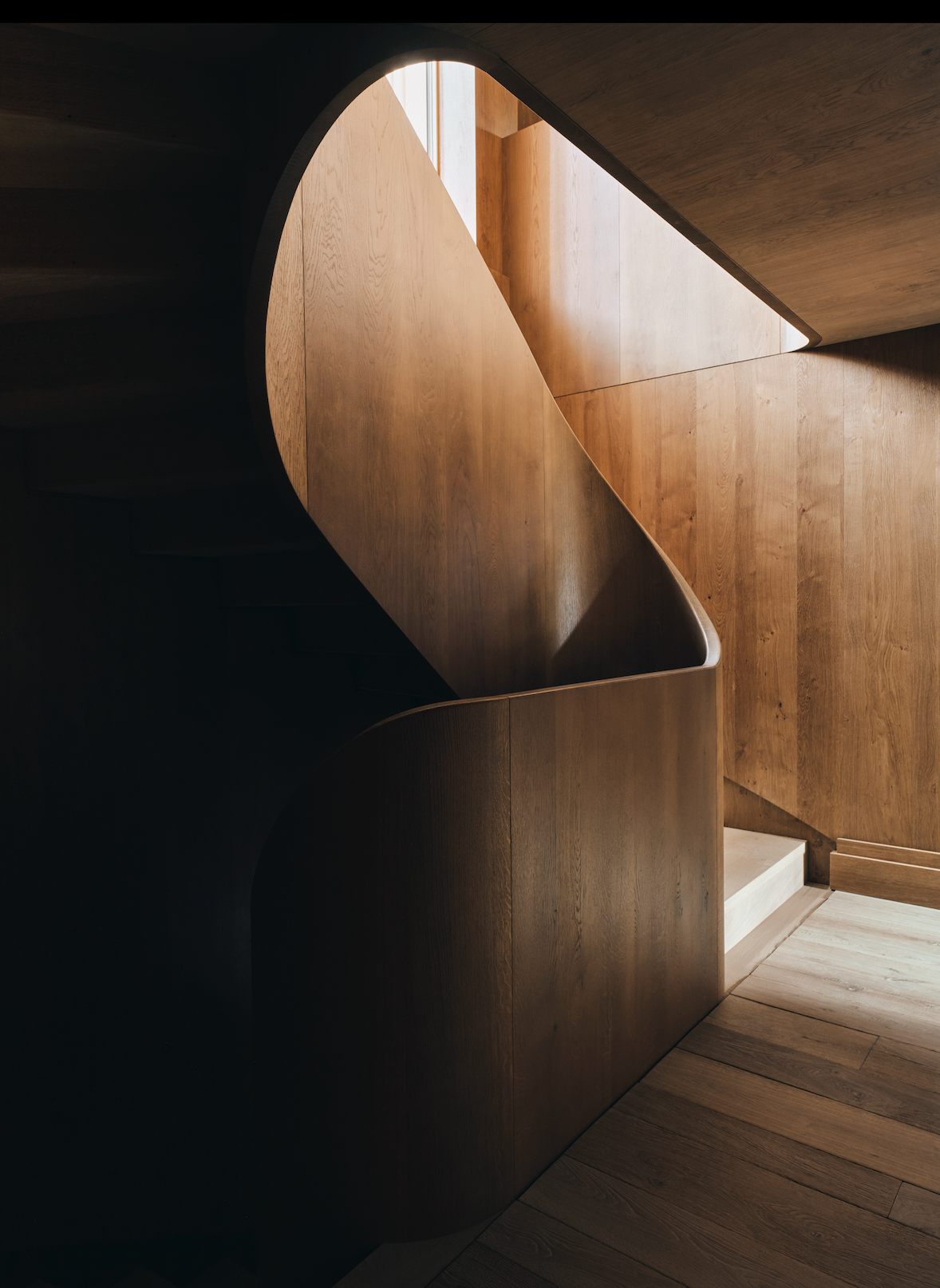
The staircase makes the point immediately: rather than a run of timber treads and a turned banister, a single curved wall of oak spirals upward as one continuous surface, more monolith than staircase, catching daylight along its edge as it turns.
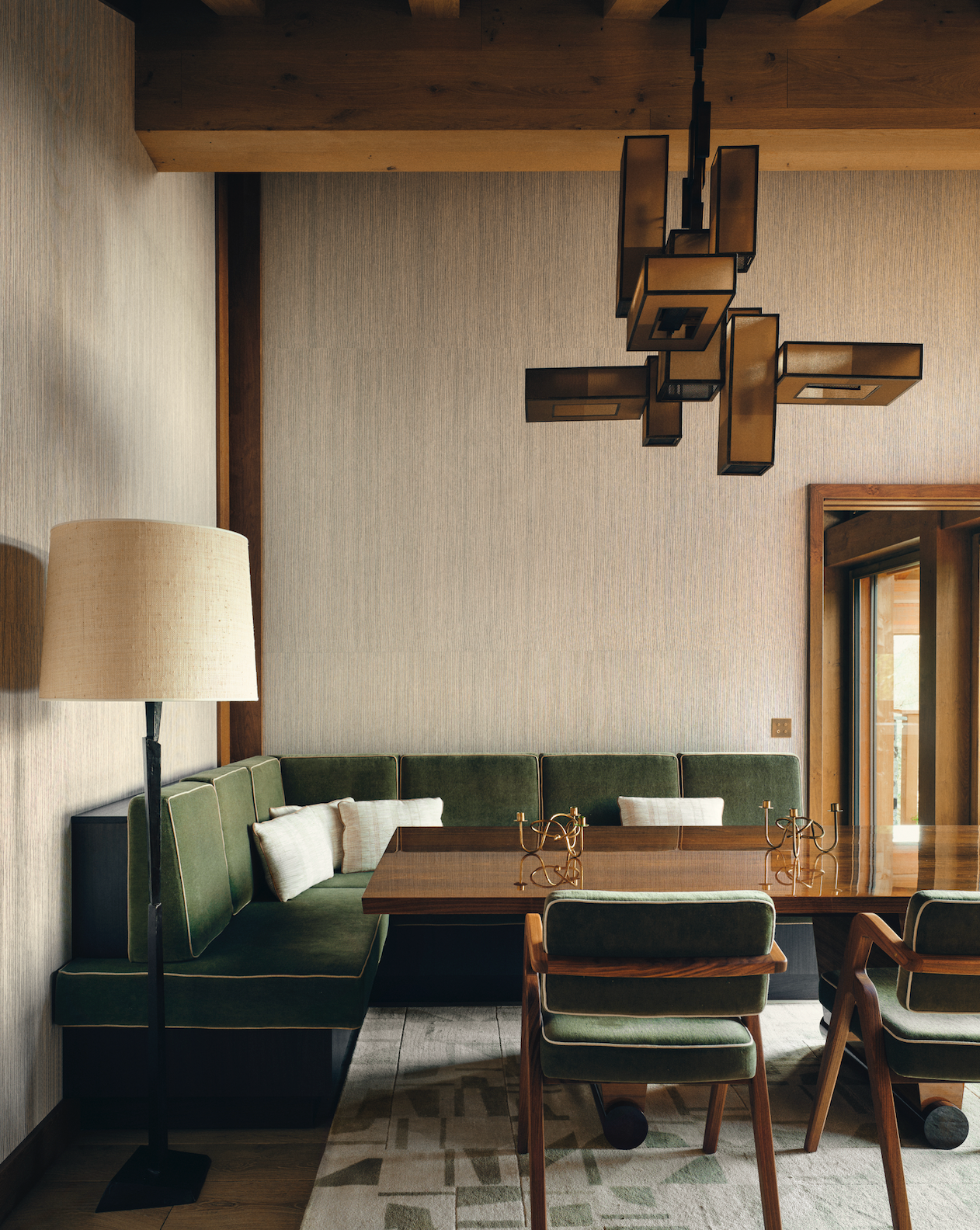
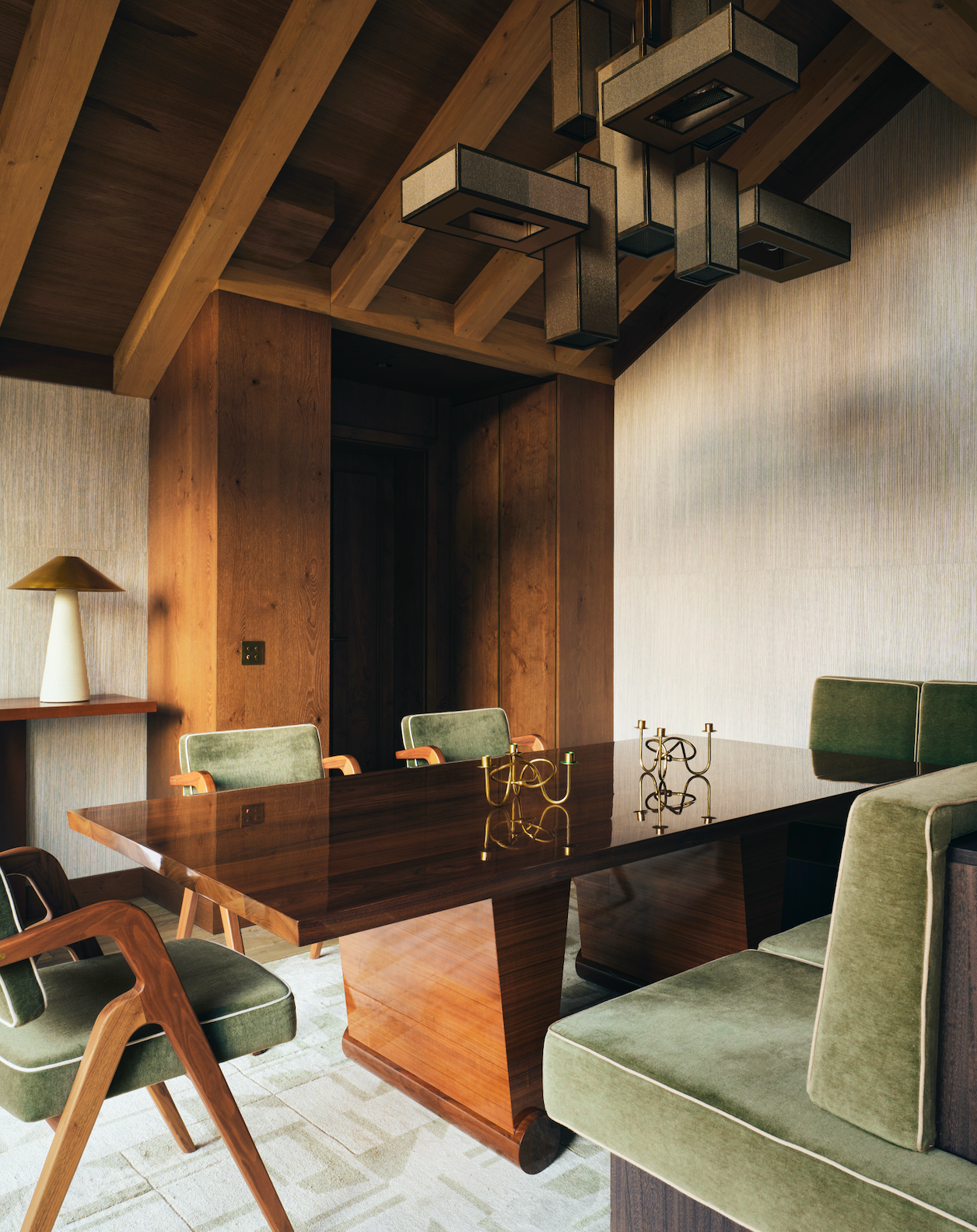
In the dining room, the vaulted timber ceiling nods to the region without repeating it, its exposed beams offset by a cluster of angular brass pendant lights that look more like jewellery than lanterns. A dark, high-shine wood table on a sculptural stepped base is ringed by armchairs in sage velvet and walnut, with a low banquette in the same green tucked into the corner. Nothing about the room asks to be recognised as alpine; it borrows the material, oak, plaster, aged metal, and discards the rest of the vocabulary.
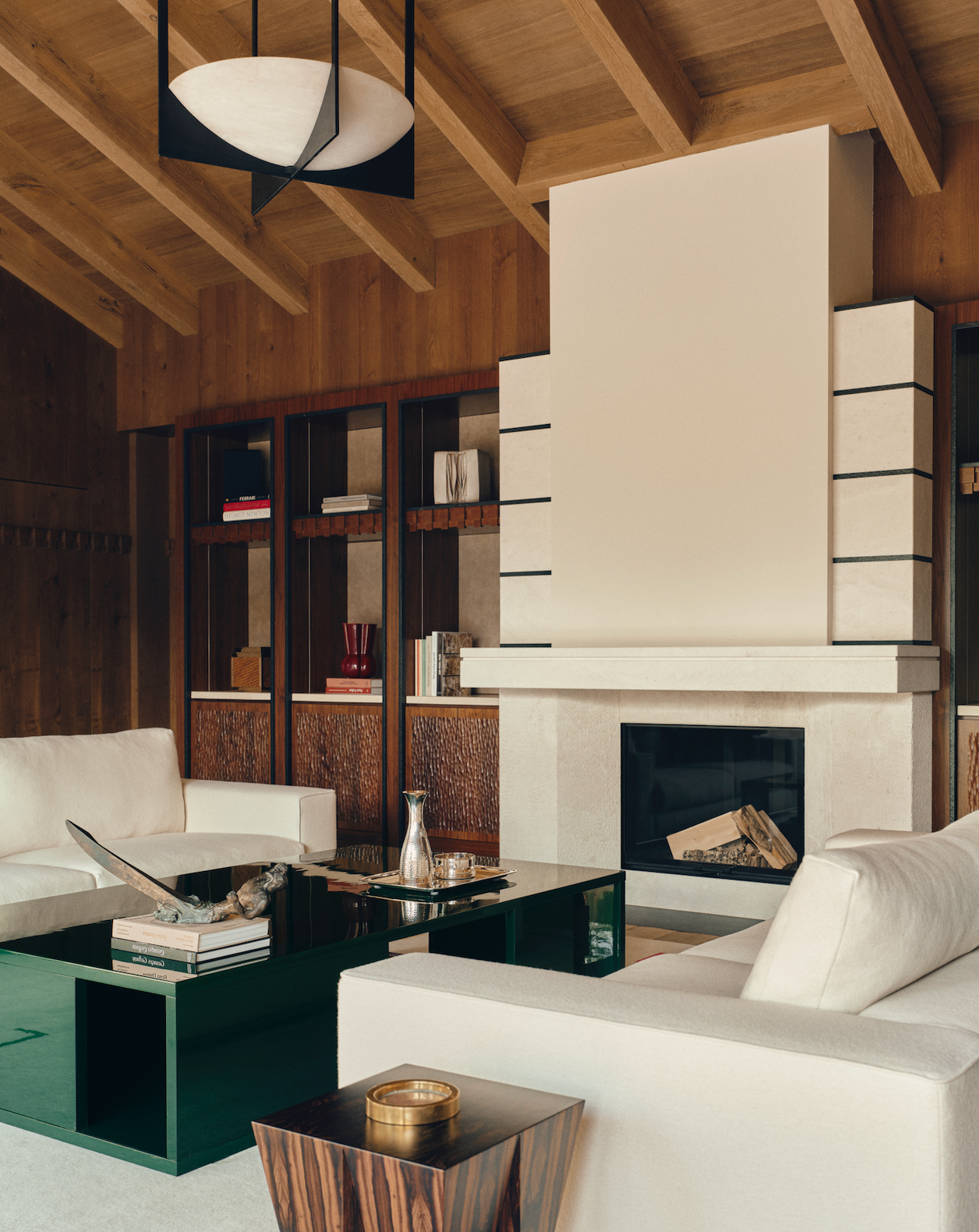
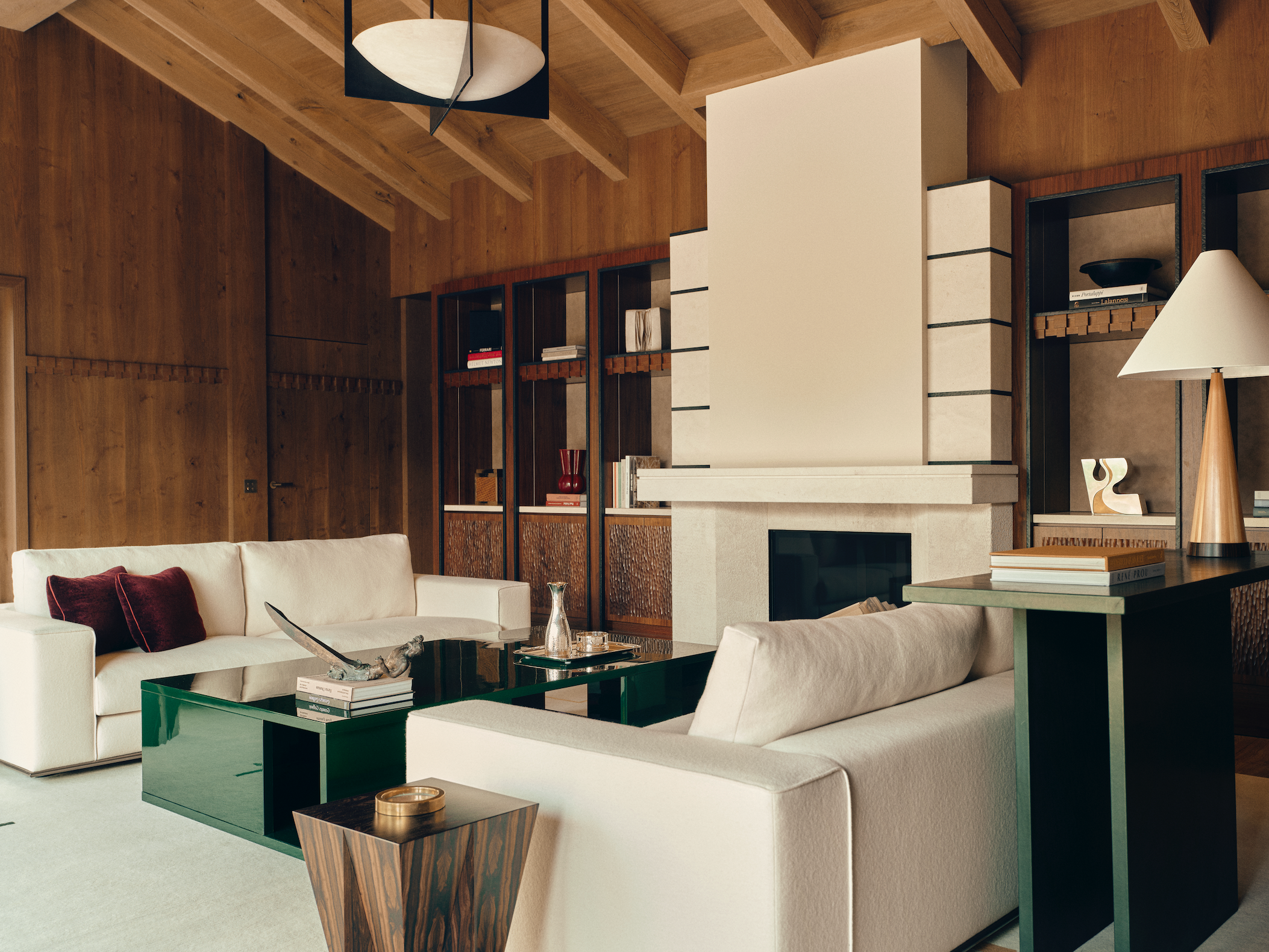
The living room carries the same logic. A pale stone chimney breast rises floor to ceiling, its dark inlay reading more sculpture than fireplace surround, flanked by joinery lined in bronze mesh and leather instead of open shelving.

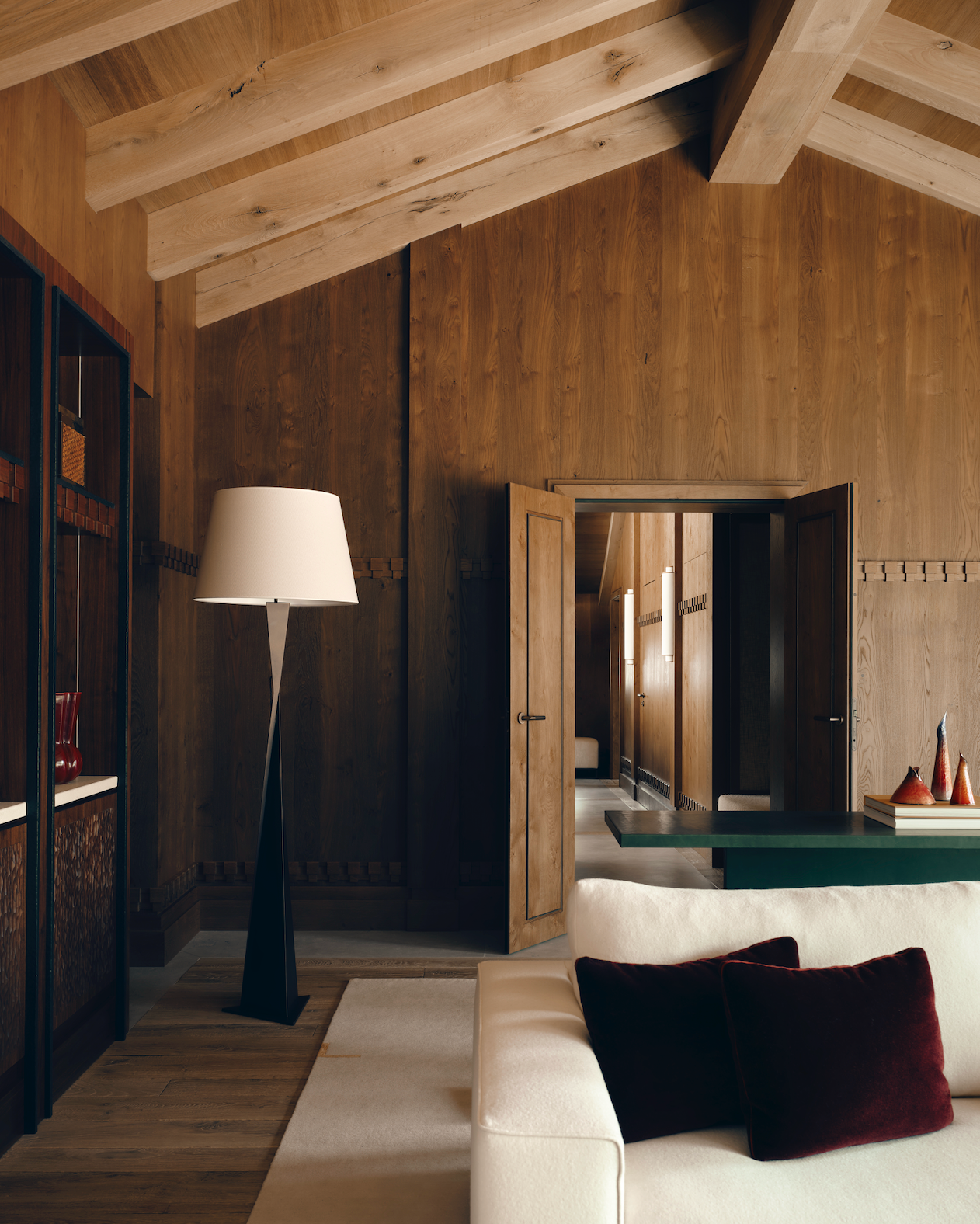
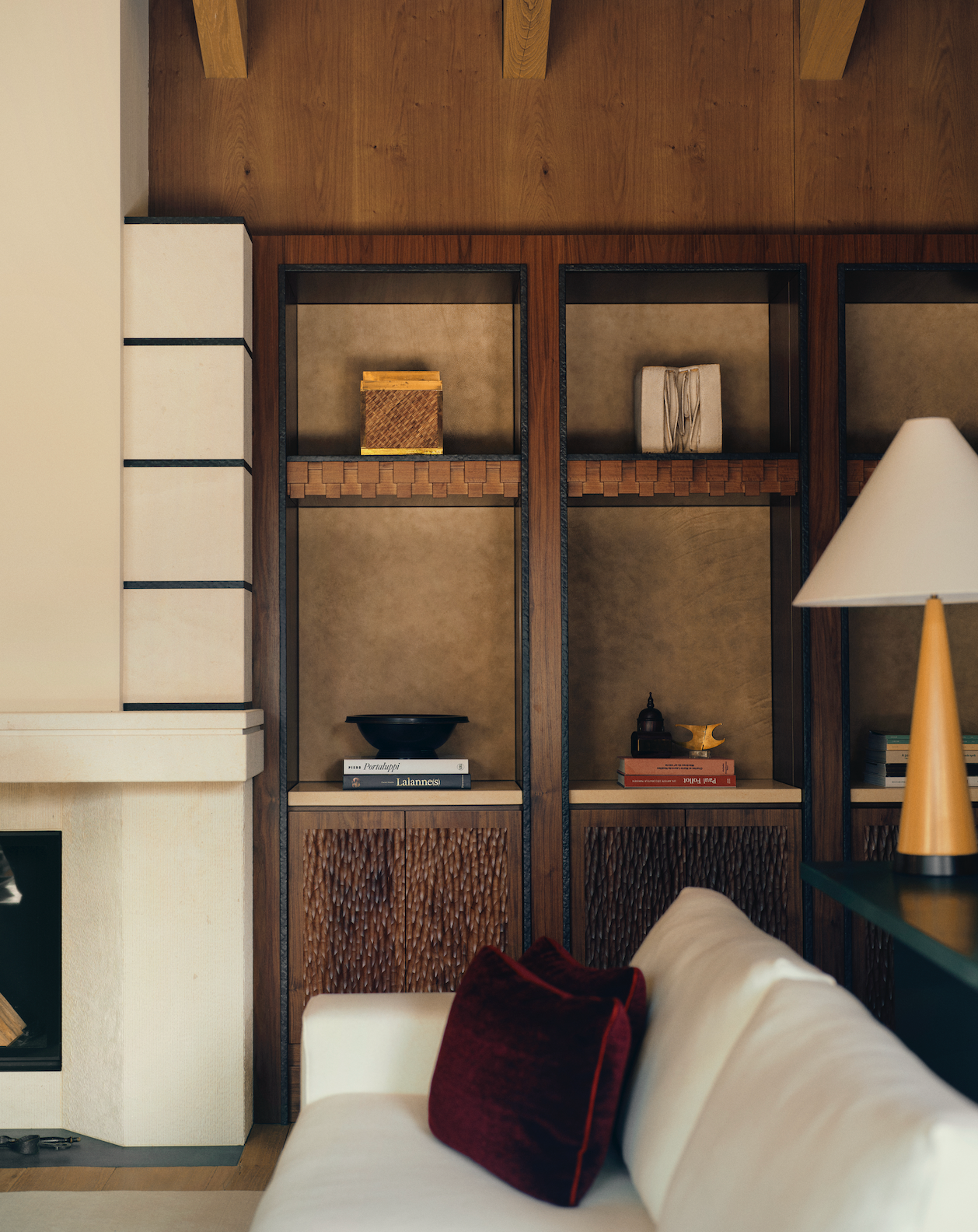
Cream bouclé sofas sit low around a lacquered coffee table in bottle green, the colour doing work no cowhide or antler ever could. The room's single brass lamp, fluted and slender, is its only nod to altitude, and even that looks bought in Milan, not carved locally.
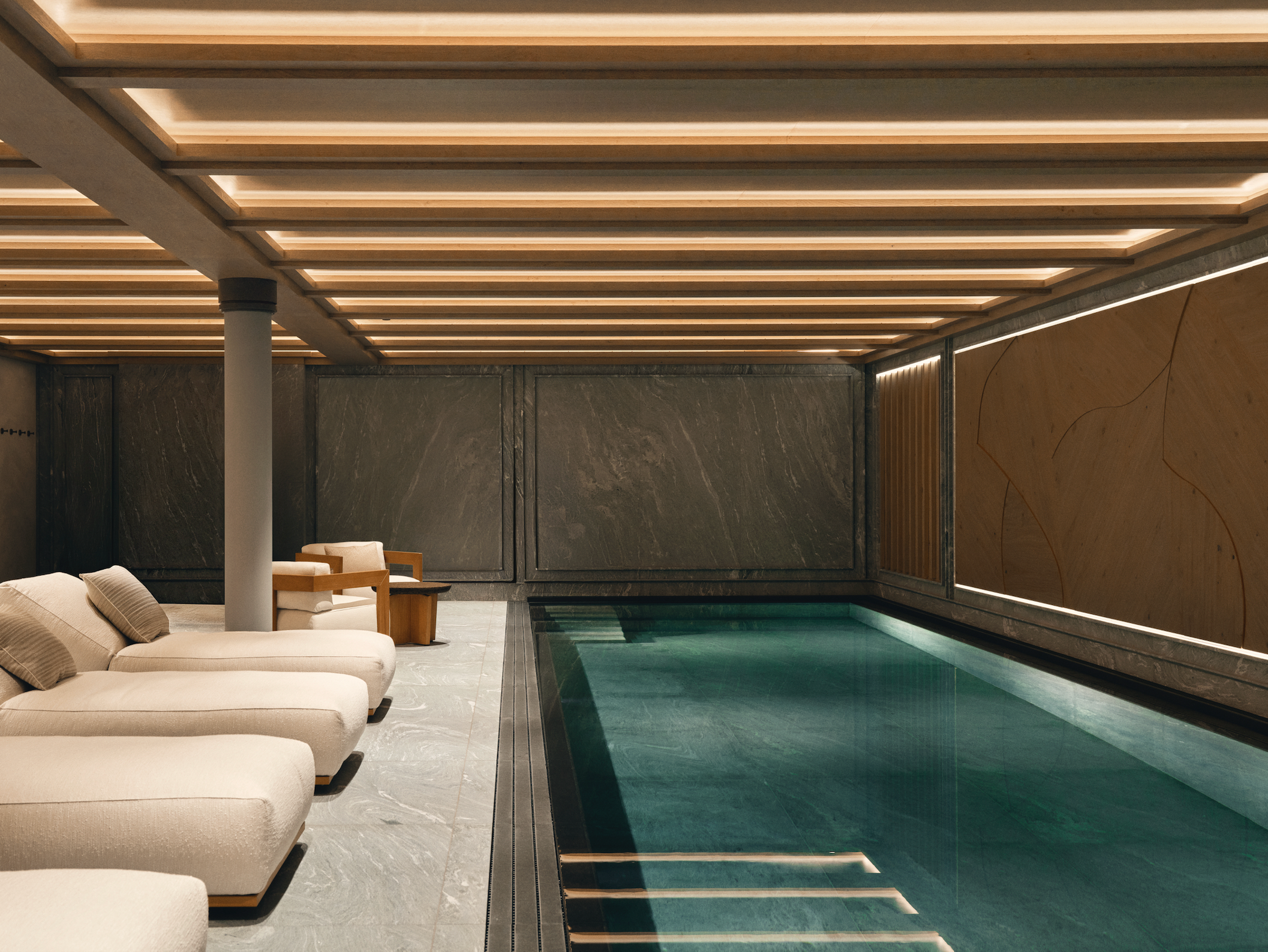
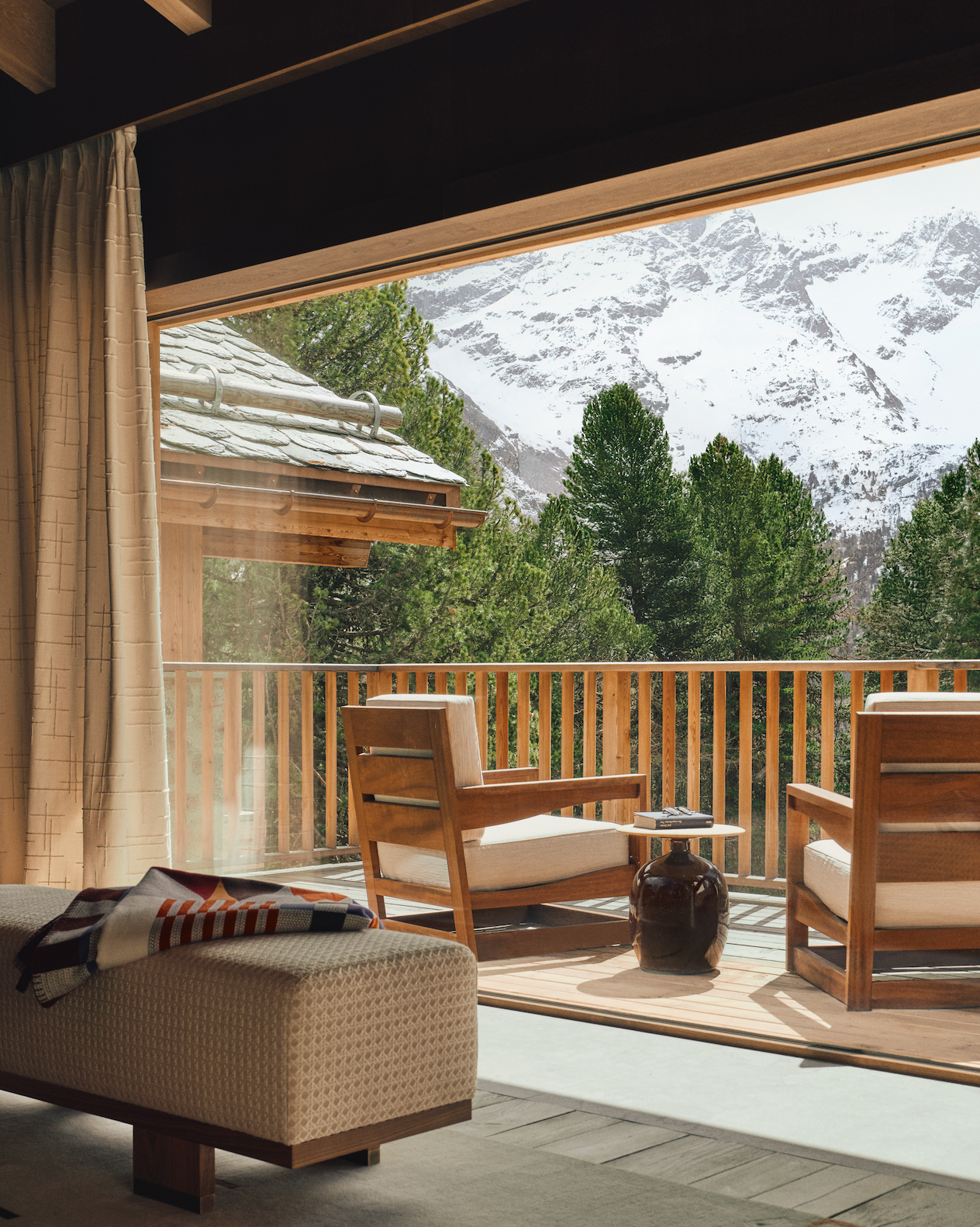
That refusal is the point. Engadine is not interested in looking like every other house at altitude. Its privacy comes from being unplaceable at a glance, a house that gives nothing away about what era or region shaped it, built instead for the people who already know.


