

CLOSED DOORS
TRENDS
London built the private members club, and for a long time it built it for one particular kind of member. Wood panelling, leather chairs, an unspoken dress code and an even more unspoken guest list defined the genre for well over a century, spaces designed to keep the world out rather than draw a wider one in.

What has shifted, particularly over the last decade, is who that world is for. Membership has moved from inherited privilege toward curated community, arts, culture, hospitality and creative industry replacing old money as the entry point, and the interiors have had to catch up. We have picked five clubs, in London, the Middle East, New York and Los Angeles, to look at purely through the interiors, each one arguing for a different version of what a private world can look like now.
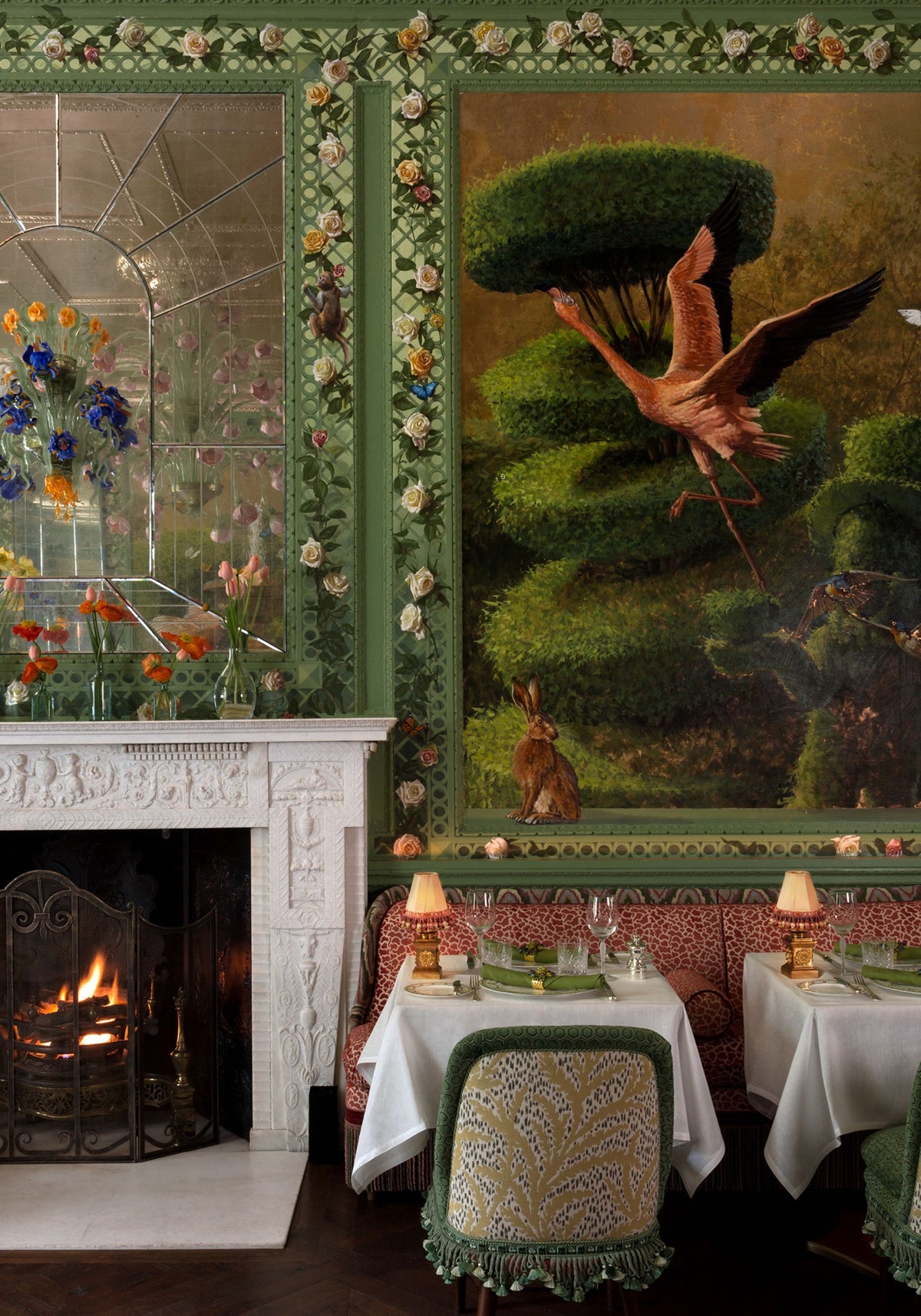
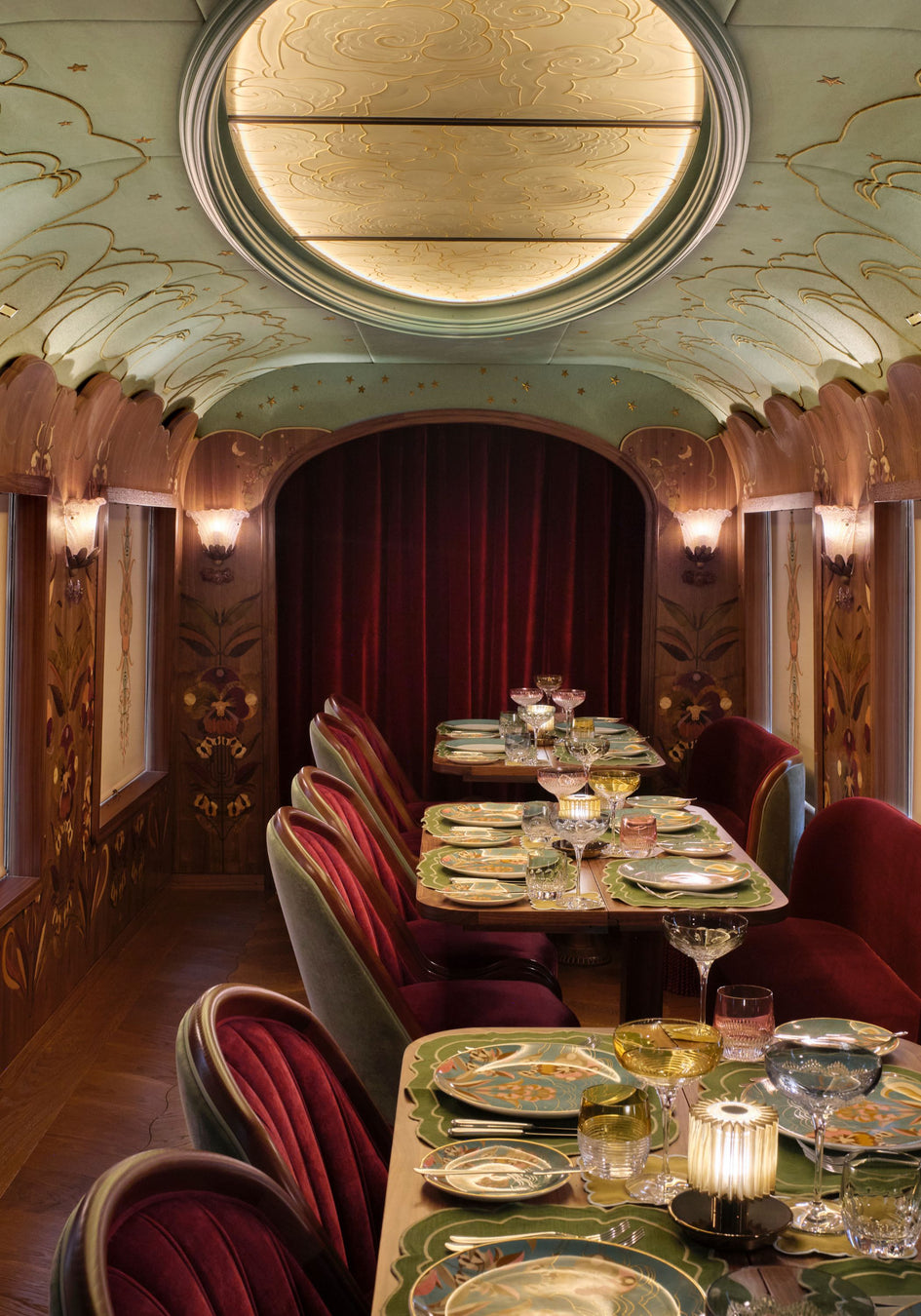
In Mayfair, Annabel's occupies a Grade I listed Georgian townhouse on Berkeley Square, and Martin Brudnizki Design Studio built each of its four floors around a different garden pulled from history rather than a single decorative idea repeated throughout.
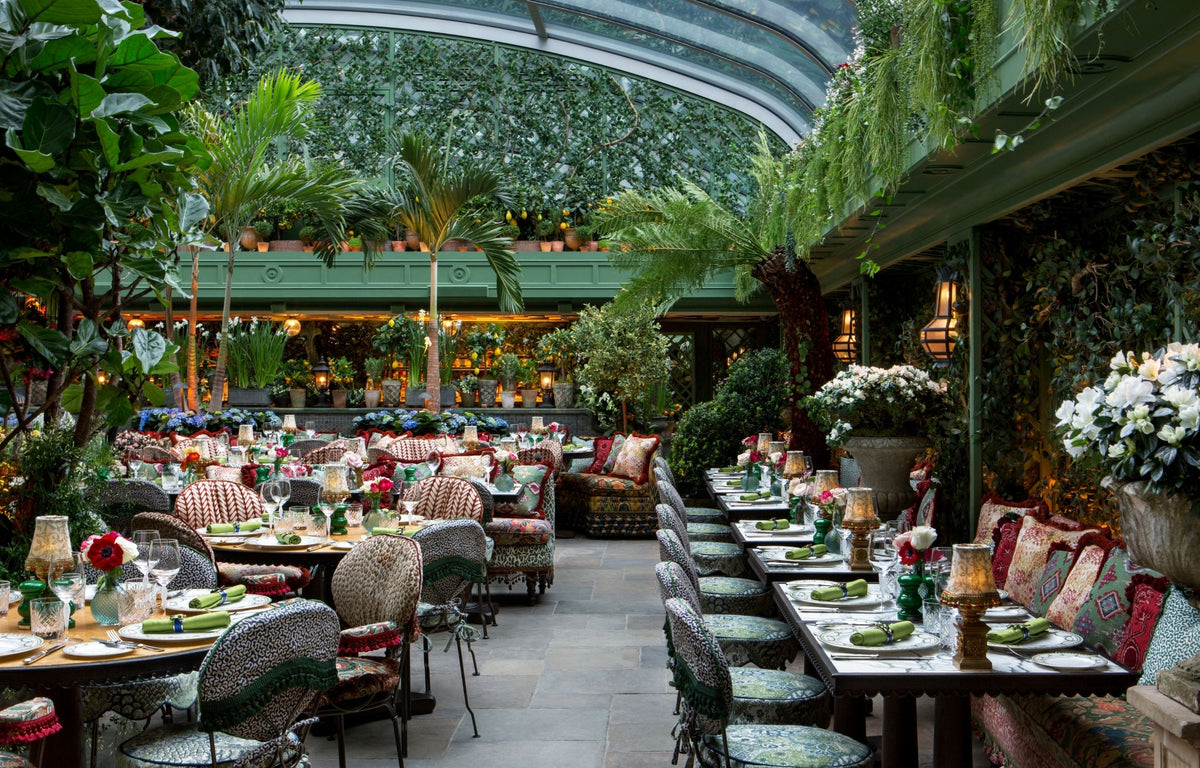
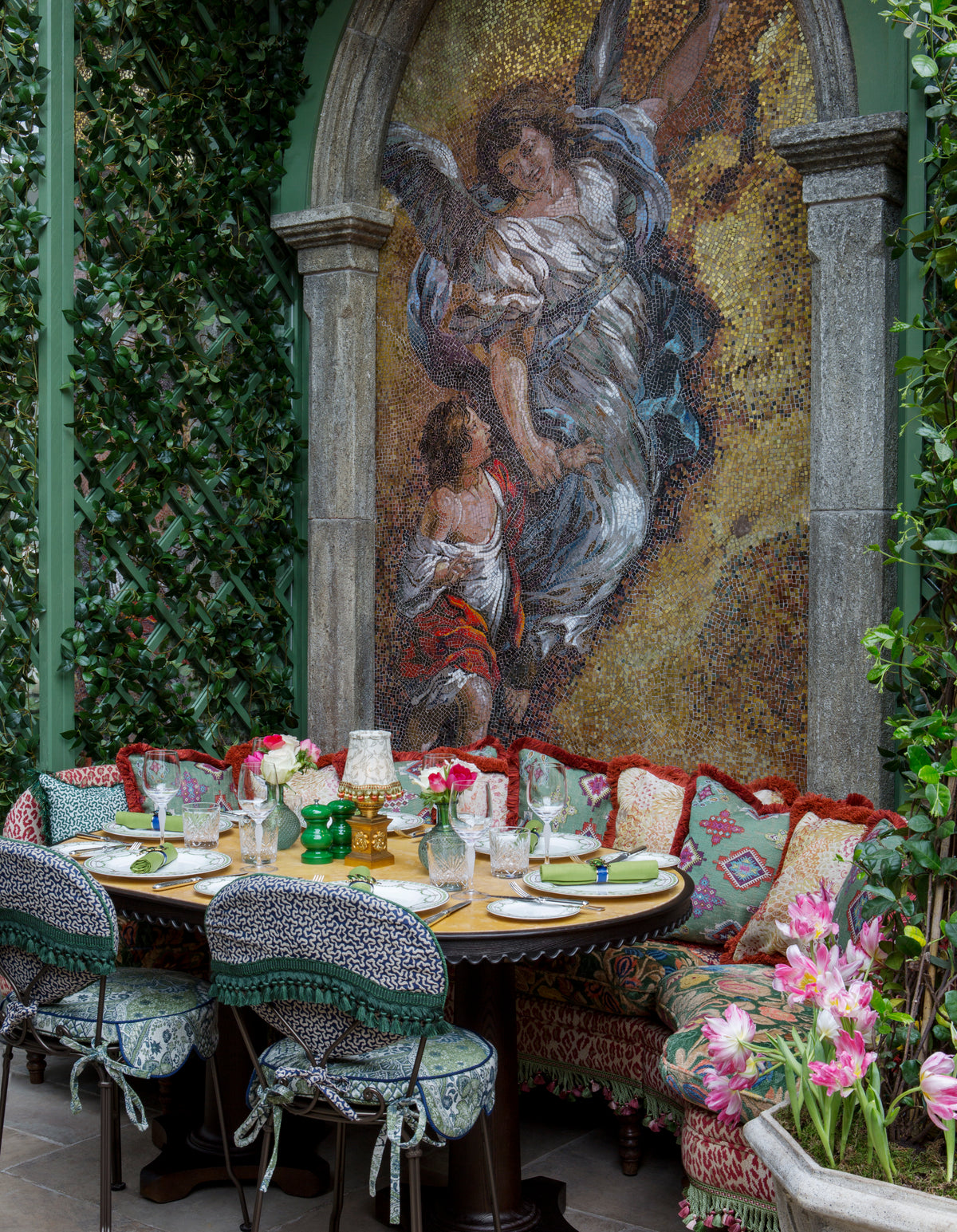
The Garden Room anchors the ground floor, its glazed roof drawing daylight onto banquettes upholstered in clashing chintz and leopard print, ranged around marble topped tables and a hand painted mural of a flamingo mid flight over a hare that has clearly noticed it. Antique statuary stands half hidden in the planting on the terrace beyond, a stone angel set into a mosaic niche above cushions in faded rose and jade.


Upstairs, the ladies' powder room commits fully to fantasy: a sunburst ceiling pleated in dusty pink fabric, walls of veined mirror, a chandelier trailing glass flowers, and a tiger print stool pulled up to a marble vanity lined with amber glass bottles. Nothing about the club whispers. It is built for members who came for the theatre as much as the table, and Brudnizki gives them a different set piece on every landing.

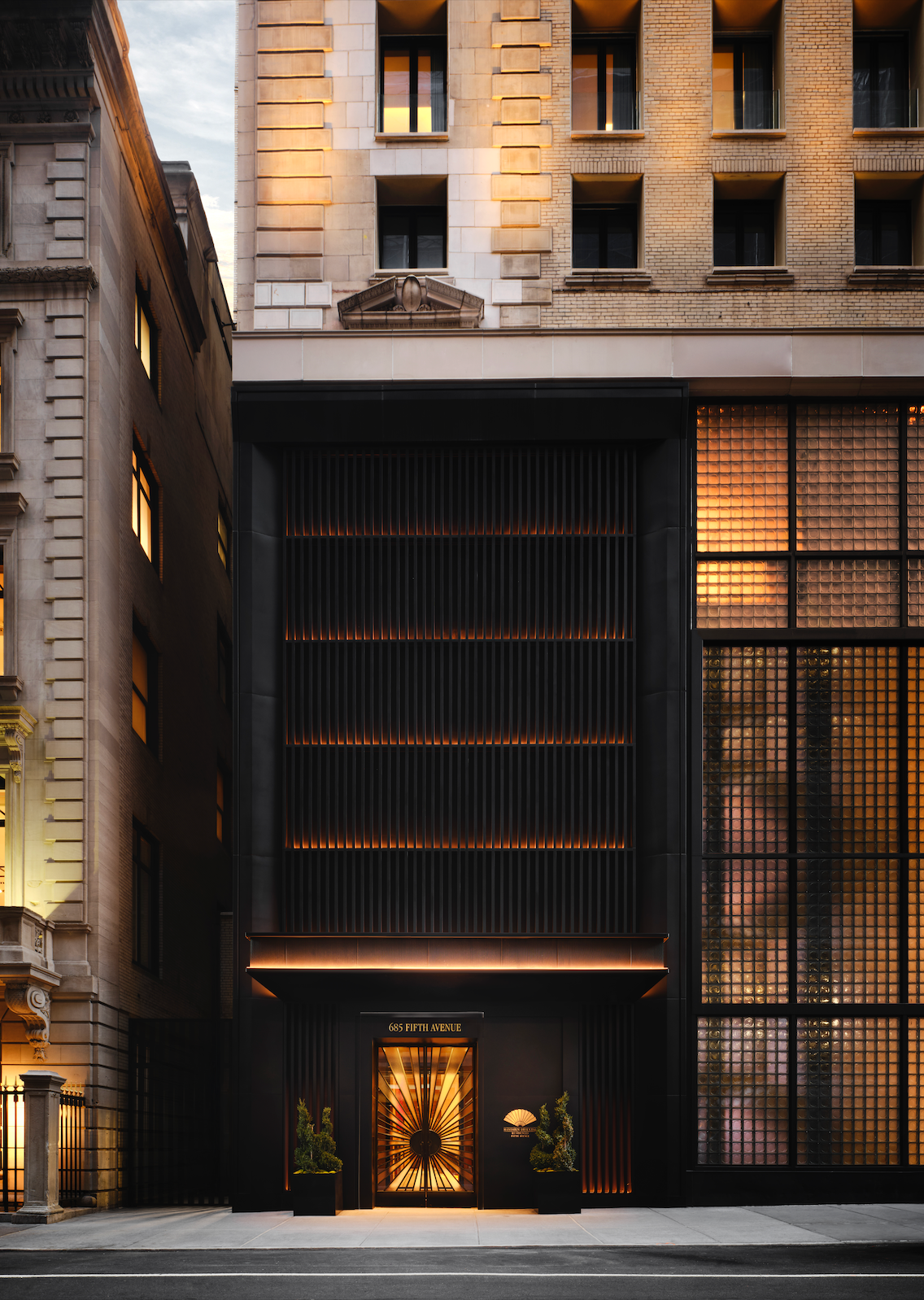
MAWD's own portfolio takes a completely different tone, favouring restraint over spectacle across four very different briefs. Boulud Privé rethinks the concept entirely, folding it into where its members already live. Set on the amenity floor of the Mandarin Oriental Residences Fifth Avenue, this Michelin-starred restaurant by chef Daniel Boulud flows into a residents only lounge, bar and rooftop terrace with uninterrupted views over Central Park.
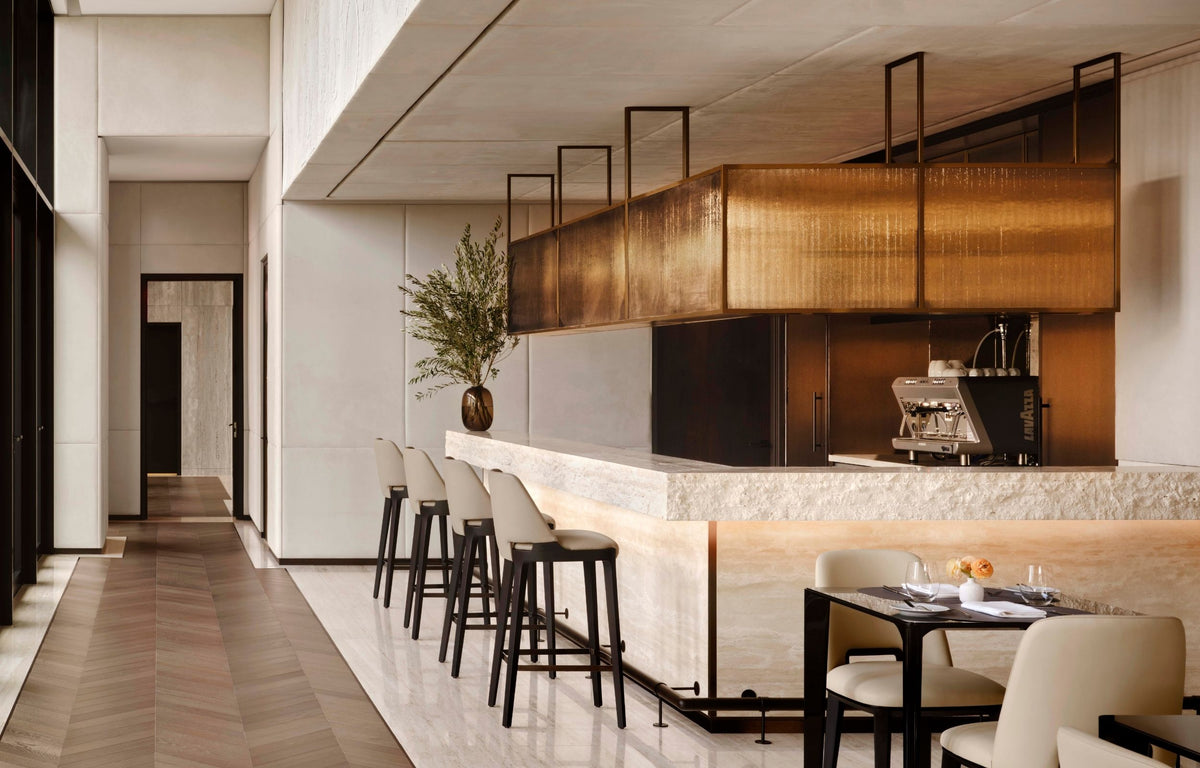
MAWD wrapped the space in leather panelling and ribbed glass, part of a wider material language of stone, bronze and warm wood that runs through the whole building, so the club feels less like a destination and more like an extension of the residence upstairs, membership granted simply by holding the keys.
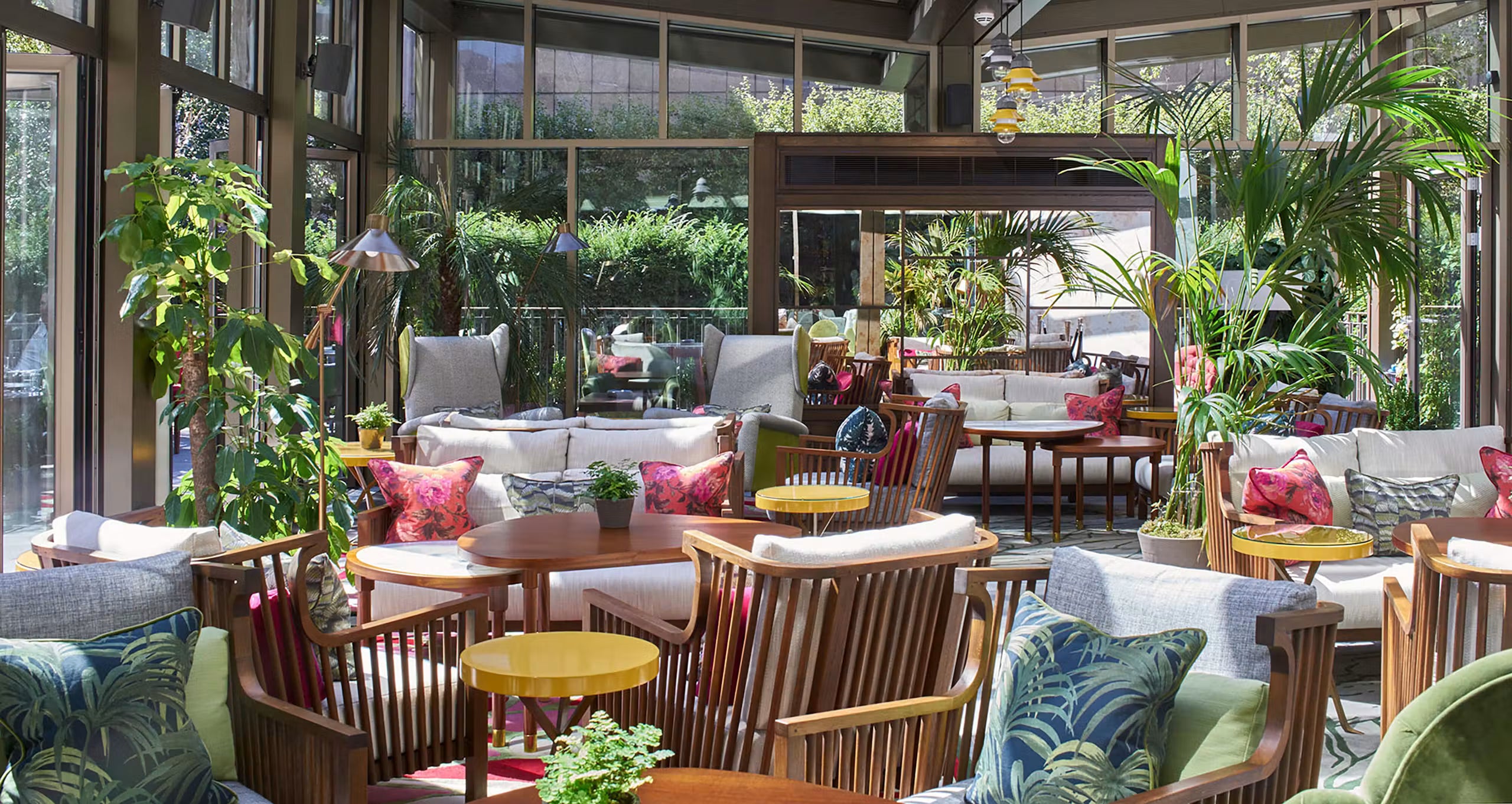
The Devonshire Club draws on its own history instead. Originally a City warehouse for silks and fabrics, MAWD turned that past into a fashion led, mid century interior, working with a textiles house to translate vintage fabrics into colour and pattern throughout. A stone wrapped stair and custom handrail lighting anchor the entrance, while Murano glass chandeliers from Seguso, blue resin reception panels by Based Upon and a flamingo shaped floor lamp with a wink of humour carry that Fifties glamour through sixty eight bedrooms, three bars and a private gymnasium.
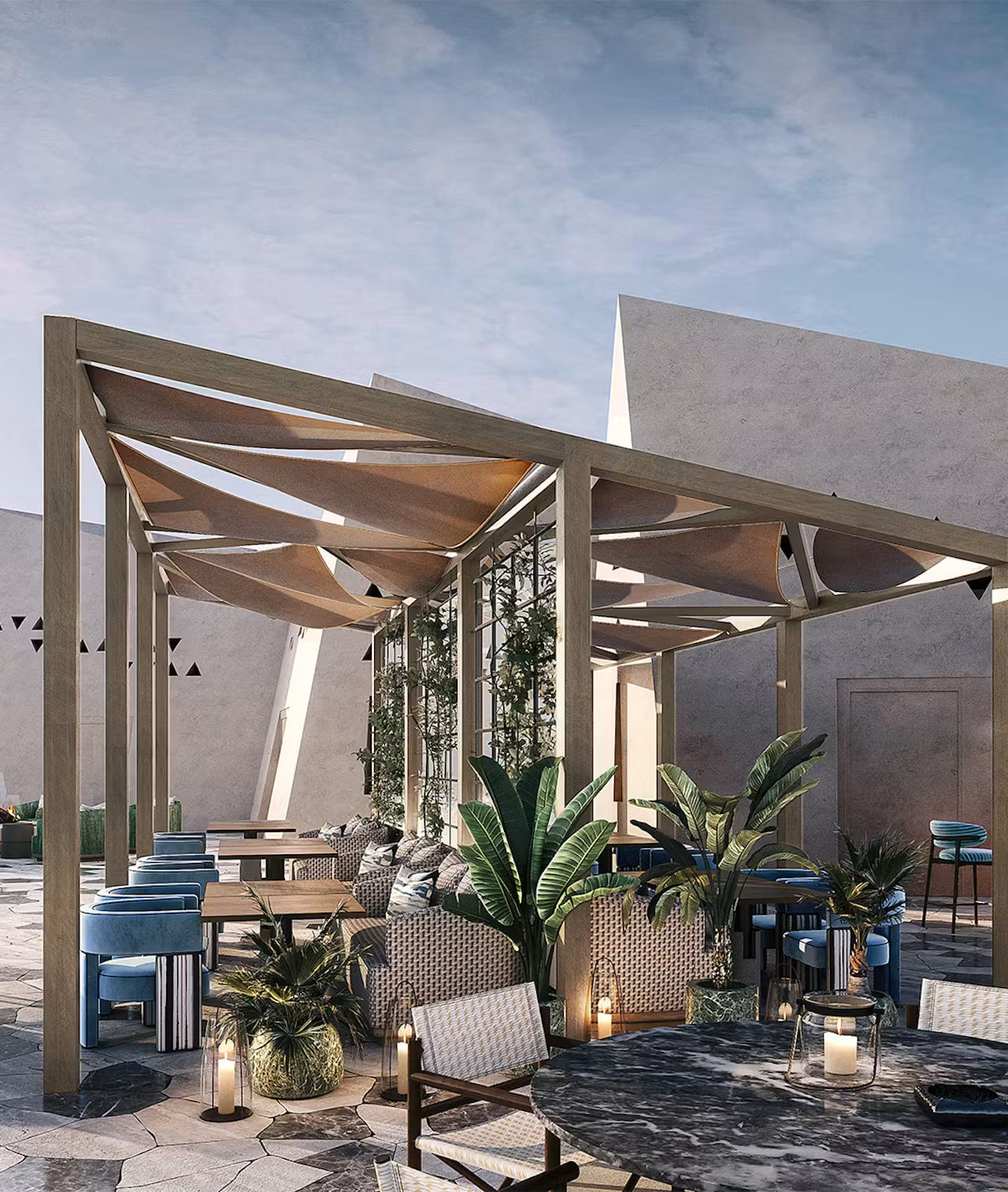
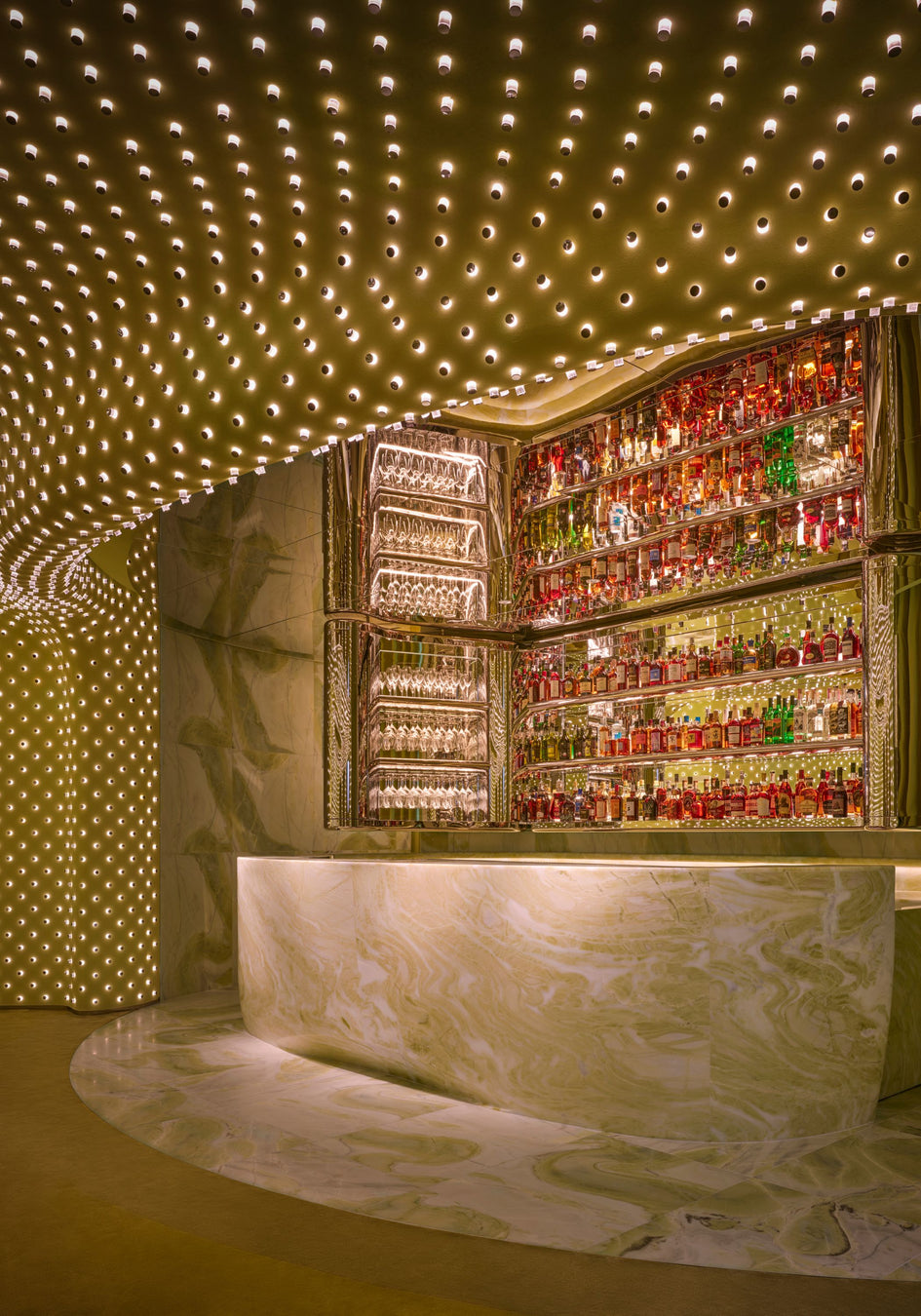
The Club, a confidential hotel and members concept in the Middle East, works from a more sculptural instinct. Textured panelling and sculptural ceilings run through its restaurant and bar, while statement art and sculpture greet arrivals, all built around a brief for flexibility between private and public space without losing any sense of exclusivity.
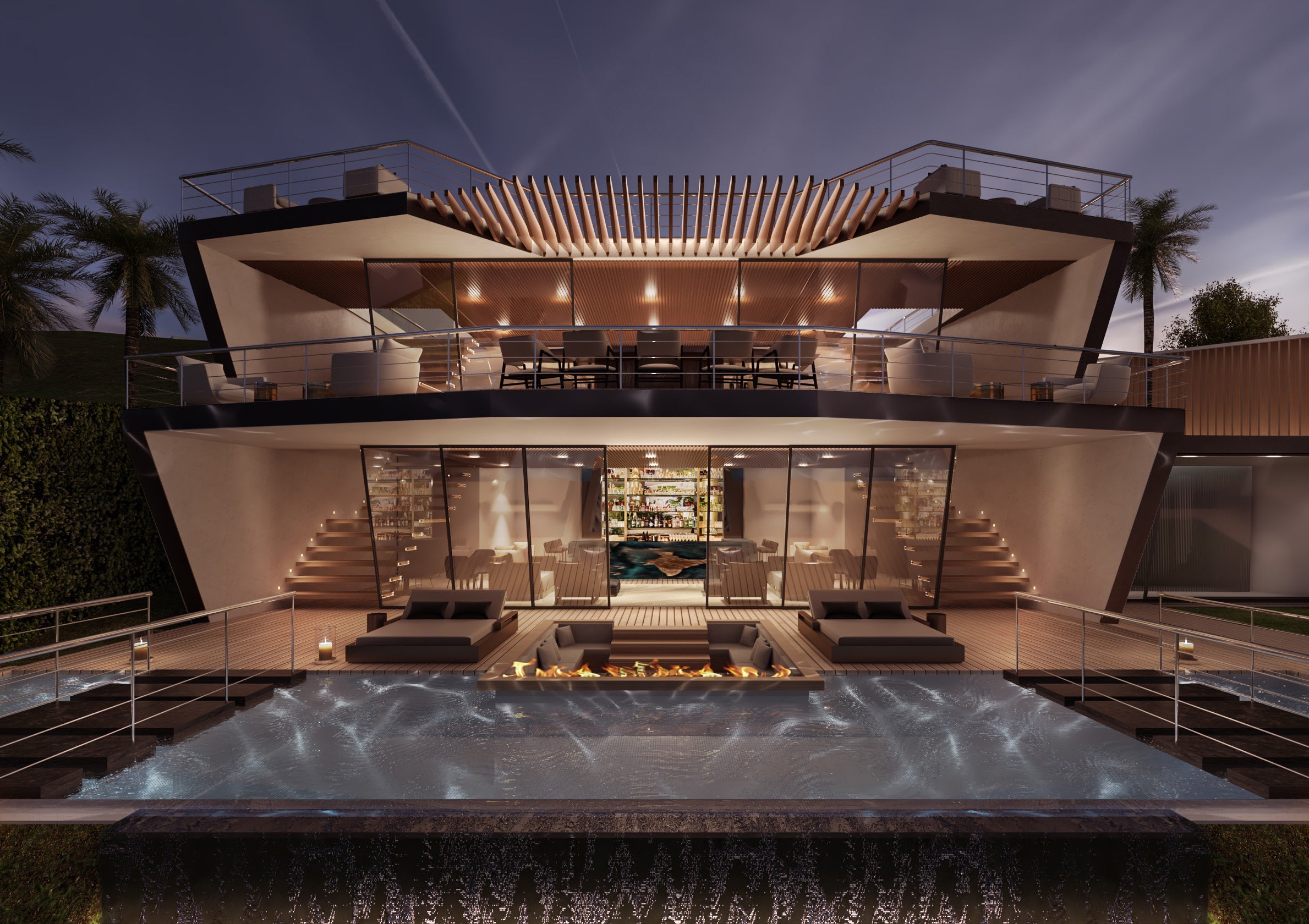
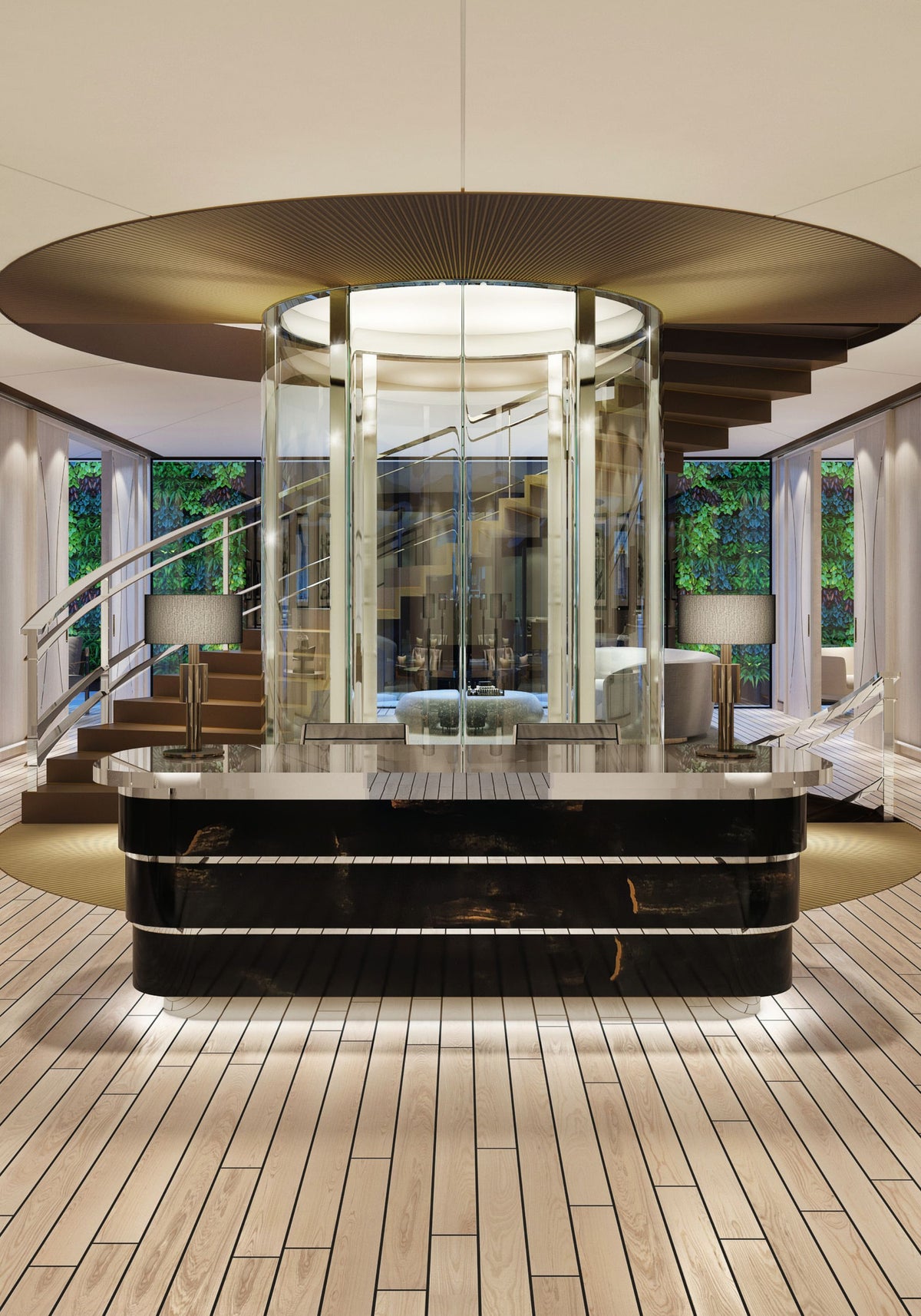
Then, on Sunset Boulevard, comes something genuinely different. This one is concept only, designed by MAWD co-founder Elliot March. It fuses a historic art deco building with a new structure to its rear, connected by what MAWD calls an instagrammable stair in warm materials and polished metal. A rooftop deck, arranged like the levels of a yacht, would host a central bar and DJ booth over LA, exclusive apartments wrapping a garden and pool behind. It is a rare and genuine sneak peek at where the members club could head next.
What both designers make clear is that the members club is not standing still. For most of its history the model relied on scarcity itself as the draw, a waiting list as proof of worth, a locked door as the whole point. That equation is starting to look dated to a generation who have grown up sceptical of gatekeeping for its own sake, and who read exclusivity not as glamour but as exclusion. The clubs that endure from here will likely be the ones that understand privacy and exclusivity are not the same thing at all.

A private world does not need a velvet rope to feel special, it needs to feel considered, personal, built around the people actually inside it rather than the ones kept outside. Annabel's maximalism points to a more flamboyant version of the same idea, that spectacle itself can be a form of intimacy when it is staged for members rather than performed for an audience of passers by. Sunset Boulevard's yacht inspired decks and Boulud Privé's residents only dining make the same argument from the opposite direction, restrained rather than staged. Between them, the conclusion is the same: the next great members club will sell belonging before it sells scarcity, and will feel more like being let into someone's world than being kept out of somebody else's.
Photography: James McDonald (Annabel's); courtesy of Serhant and Mandarin Oriental (Boulud Privé at the Mandarin Oriental Residences Fifth Avenue)


