



Photography by Ben Pipe & Alex Devins
Chelsea Waterfront by BAYA Interiors
RESIDENTIAL PROJECTS
High above the Thames at Chelsea Waterfront, BAYA Interiors has shaped two distinct residences that share a common starting point: light. Not simply as an atmospheric quality, but as a defining force, something that informs layout, materiality, and the emotional tone of each space. Here, the skyline is not a backdrop, it is an active presence, shifting constantly, drawing the interiors into an ongoing dialogue with the city beyond.
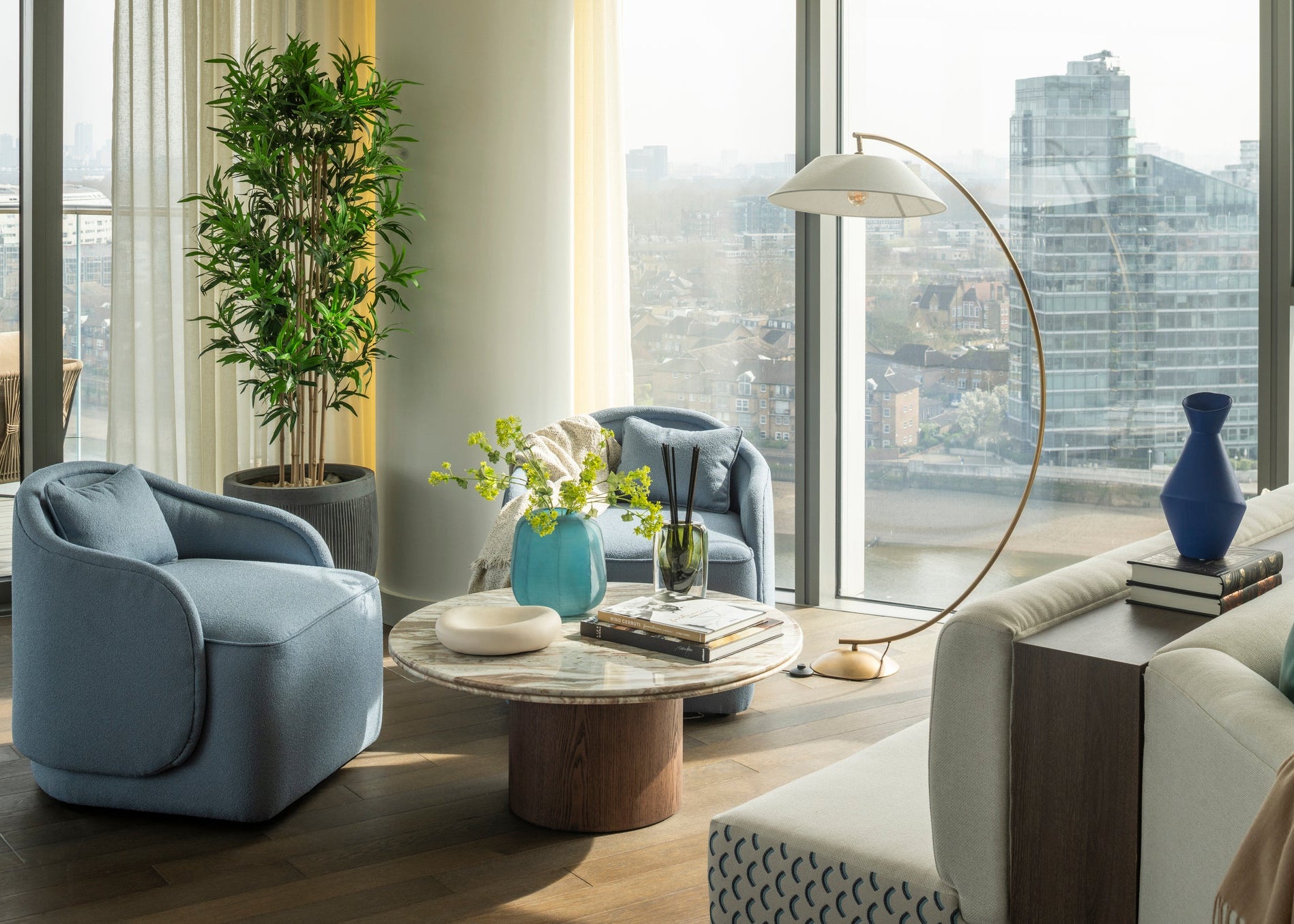
In the smaller apartment, this relationship feels immediate yet intimate. Expansive glazing frames wide views across London, capturing the movement of the Thames and the changing skies beyond. Light enters softly, diffused across surfaces, shifting in tone and intensity throughout the day. It creates a quiet sense of rhythm, one that gently shapes how the space is experienced from morning through to evening.
BAYA responds with a palette drawn directly from the river itself. Deep blues, softened teals, and pale sky tones sit against a grounding base of warm neutrals, creating a layered interior that feels both expressive and composed. Colour is never applied for effect; instead, it feels absorbed into the architecture, evolving naturally as the light changes. The result is a space that feels alive but never overwhelming.
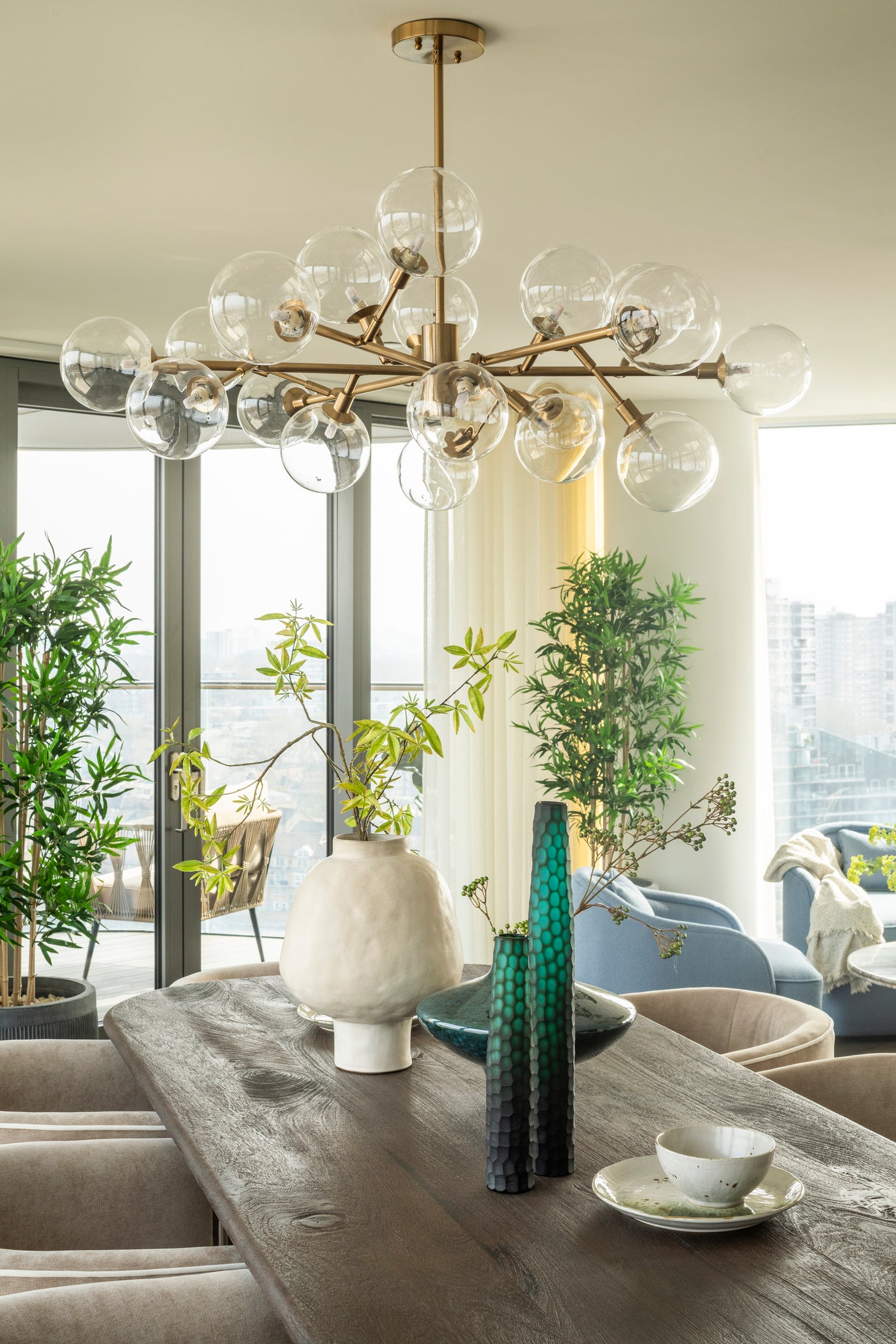
The plan unfolds as a continuous sequence of connected zones. Living, dining, and kitchen areas flow seamlessly, anchored by sculptural furniture and bespoke joinery that integrates storage and display. Curved seating softens the geometry of the room, while carefully positioned pieces encourage both gathering and quieter moments of retreat. Even within an open plan, there is a clear sense of intimacy, of spaces designed to support how people actually live.
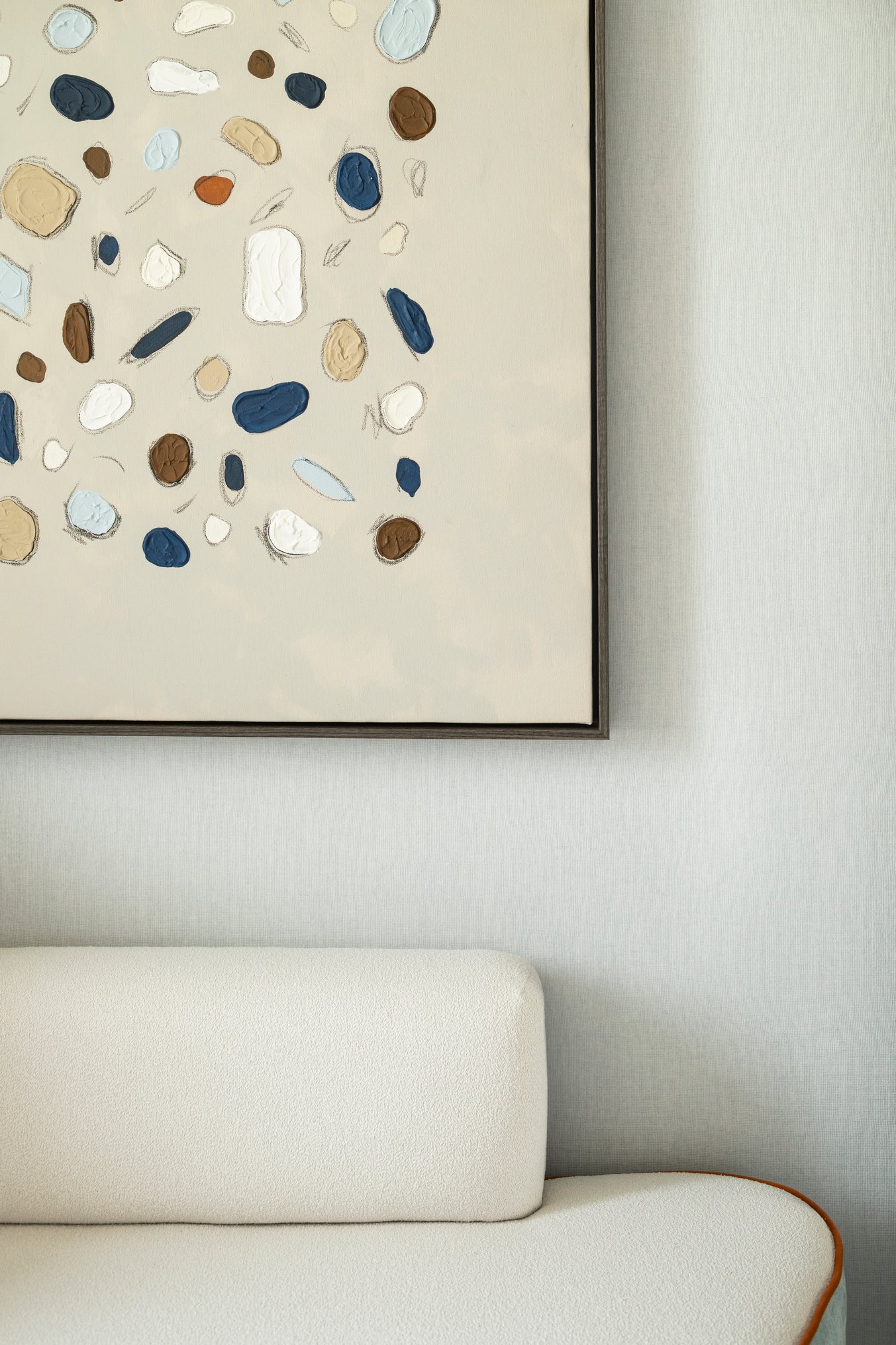
As in the penthouse, the building’s irregular geometry is not concealed but embraced. Angled walls and structural elements become opportunities, forming integrated seating niches and subtle architectural features that give the apartment depth and character. The result is a home that feels intuitive, where every detail has been considered without ever feeling overworked.

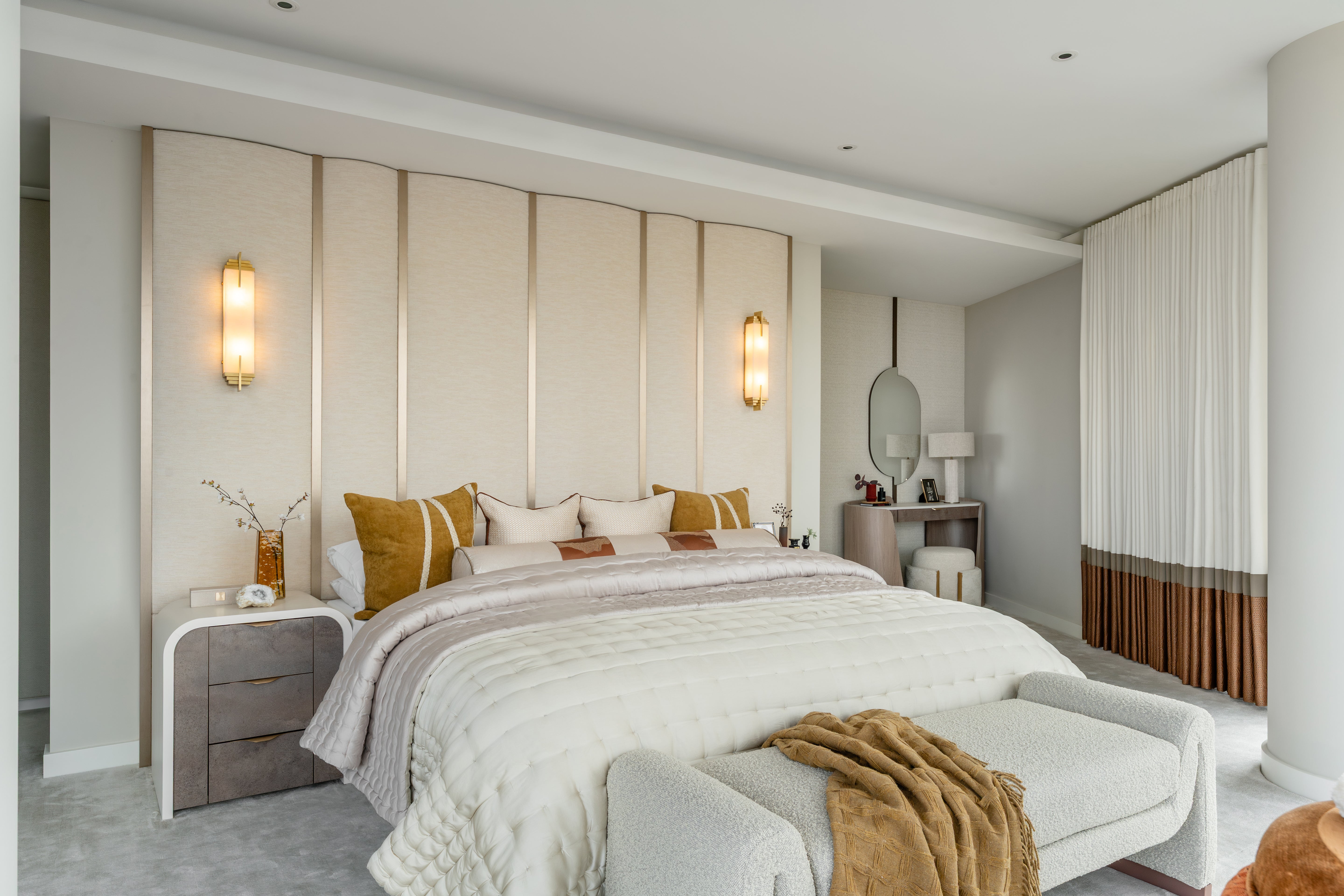
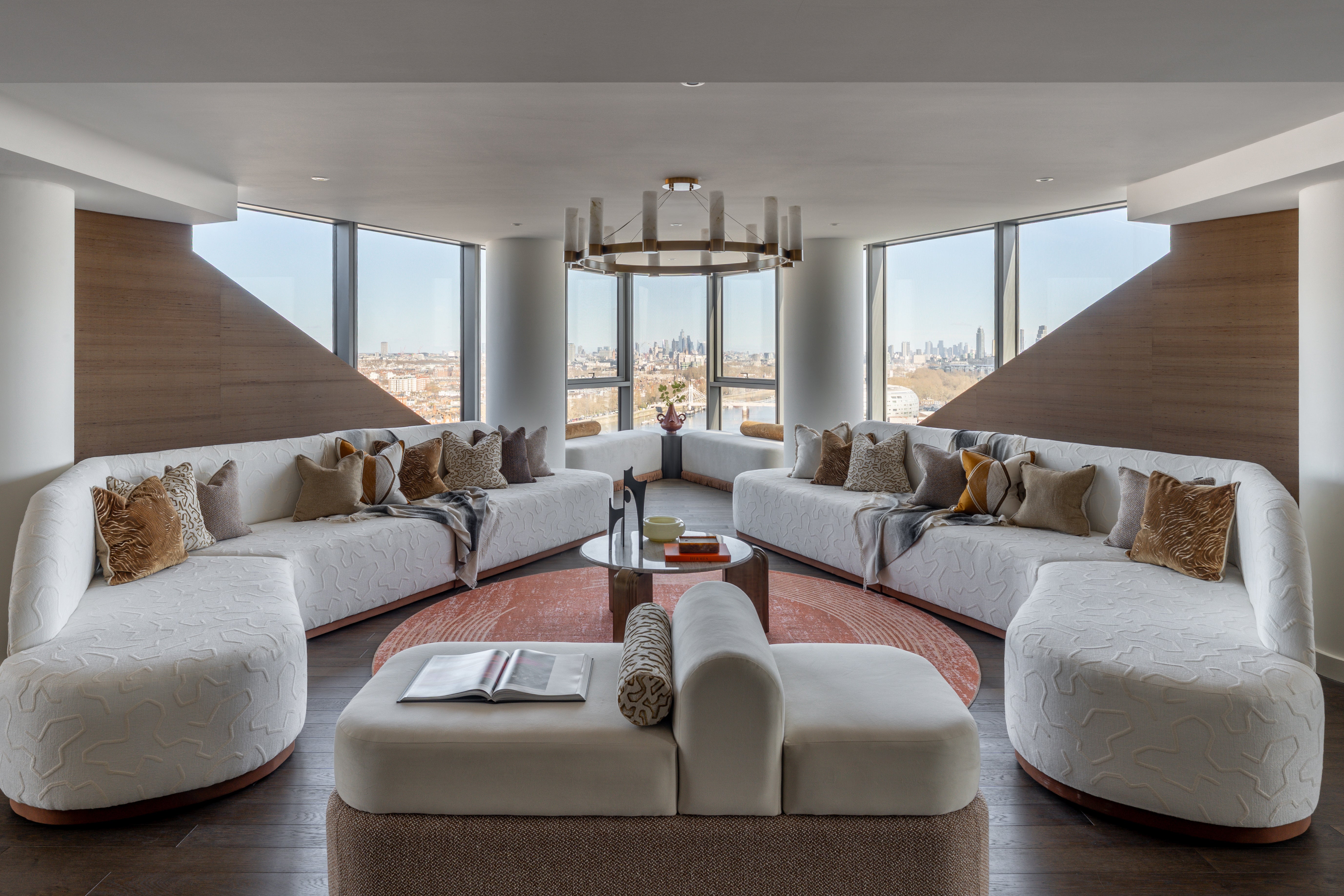
In the penthouse, this dialogue with the outside expands dramatically. A 360-degree panorama wraps the apartment, dissolving the sense of enclosure and replacing it with something far more fluid. Morning light arrives softly, while by afternoon it sharpens, tracing the geometry of the space in shadow and reflection. As evening falls, the city begins to glow, transforming the interior into a calm vantage point above it all.
Rather than compete with this ever-changing spectacle, BAYA responds with restraint. A palette of warm neutrals and soft gold undertones allows light to move freely, subtly shifting the mood of the interiors throughout the day. Surfaces absorb and reflect in equal measure, creating a gentle rhythm that feels both calming and dynamic.
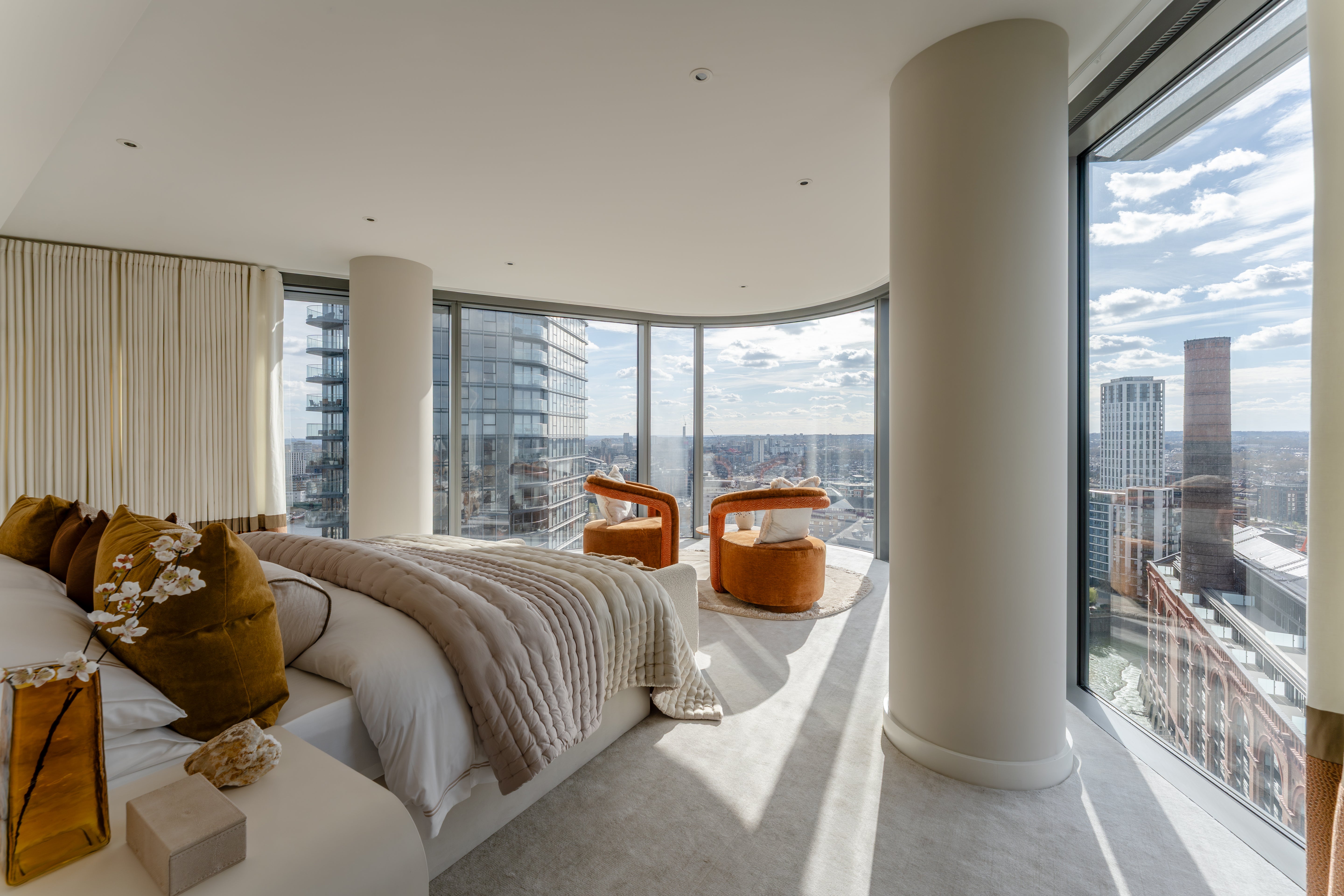
The architecture plays a defining role. The building’s faceted plan introduces angled walls and structural columns that could feel imposing, yet here they are carefully integrated. Curved seating follows the line of the glazing, softening the edges, while bespoke joinery transforms constraints into sculptural moments. Movement through the space feels natural, unfolding from one zone to the next with quiet clarity.
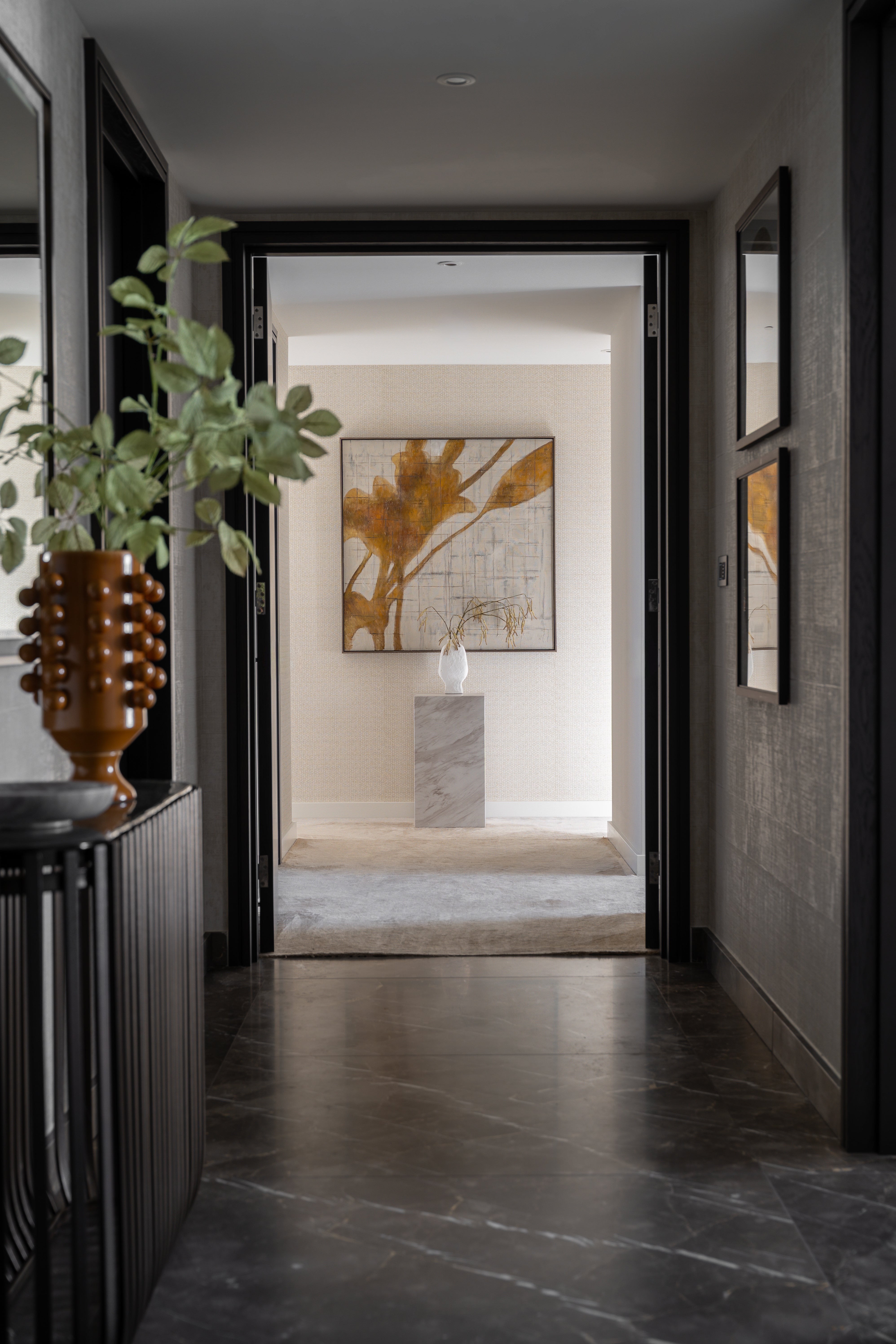
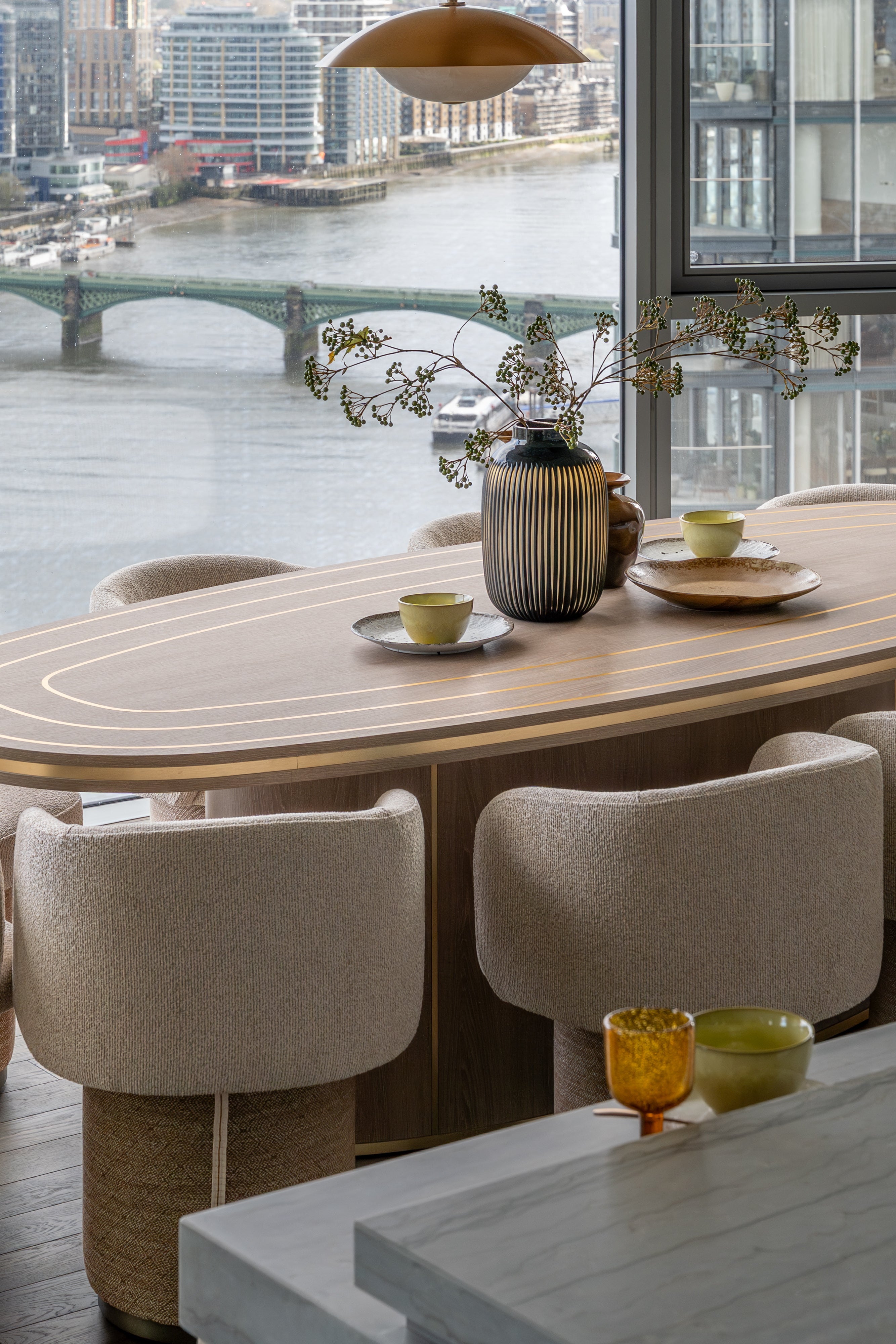
This sense of flow continues into the kitchen and dining areas, where an elongated island anchors the plan without interrupting the view. Positioned alongside the glazing, the dining space becomes a place not only for gathering, but for observing, the river, the sky, the constant shifts in light that define the apartment’s atmosphere.
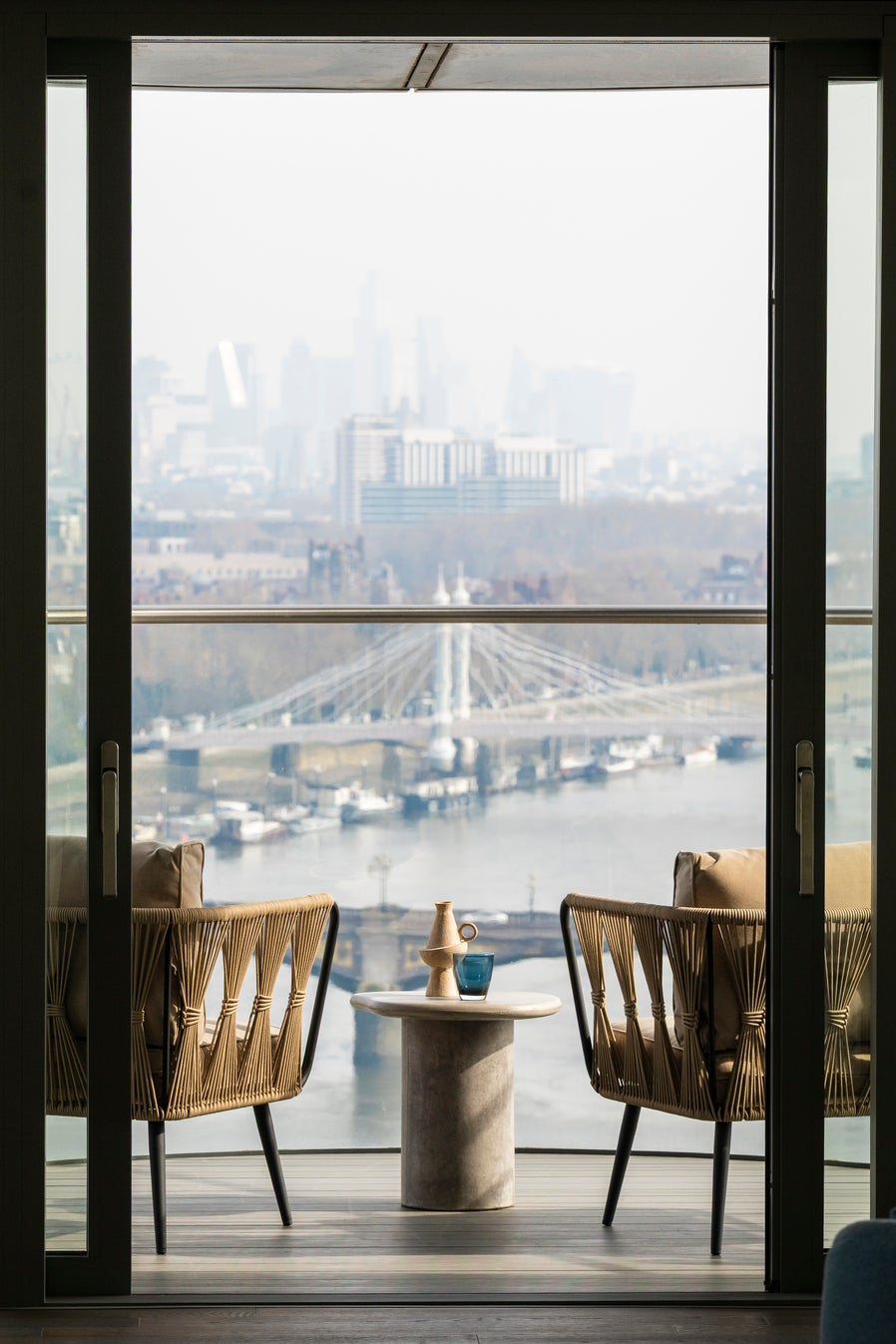
Across both residences, BAYA demonstrates a nuanced understanding of contemporary living. These are not spaces defined by excess, but by clarity, by how they feel to inhabit over time. The connection between inside and outside is constant, yet never overstated, a quiet alignment between architecture, light, and the rhythms of everyday life.
What emerges is a pair of homes deeply attuned to their setting, where the city, the river, and the sky are not simply viewed, but experienced as part of the interior itself.


