



Photos by Ema Peter Photography
Cedar’s Kin by Omar Gandhi
RESIDENTIAL PROJECTS
Set gently into the wooded slopes above Lake Huron, Cedar’s Kin by Omar Gandhi Architects is less a house and more a carefully composed sequence of experiences. It doesn’t sit on the land so much as move through it, unfolding gradually, responding to trees, light and terrain with quiet precision.
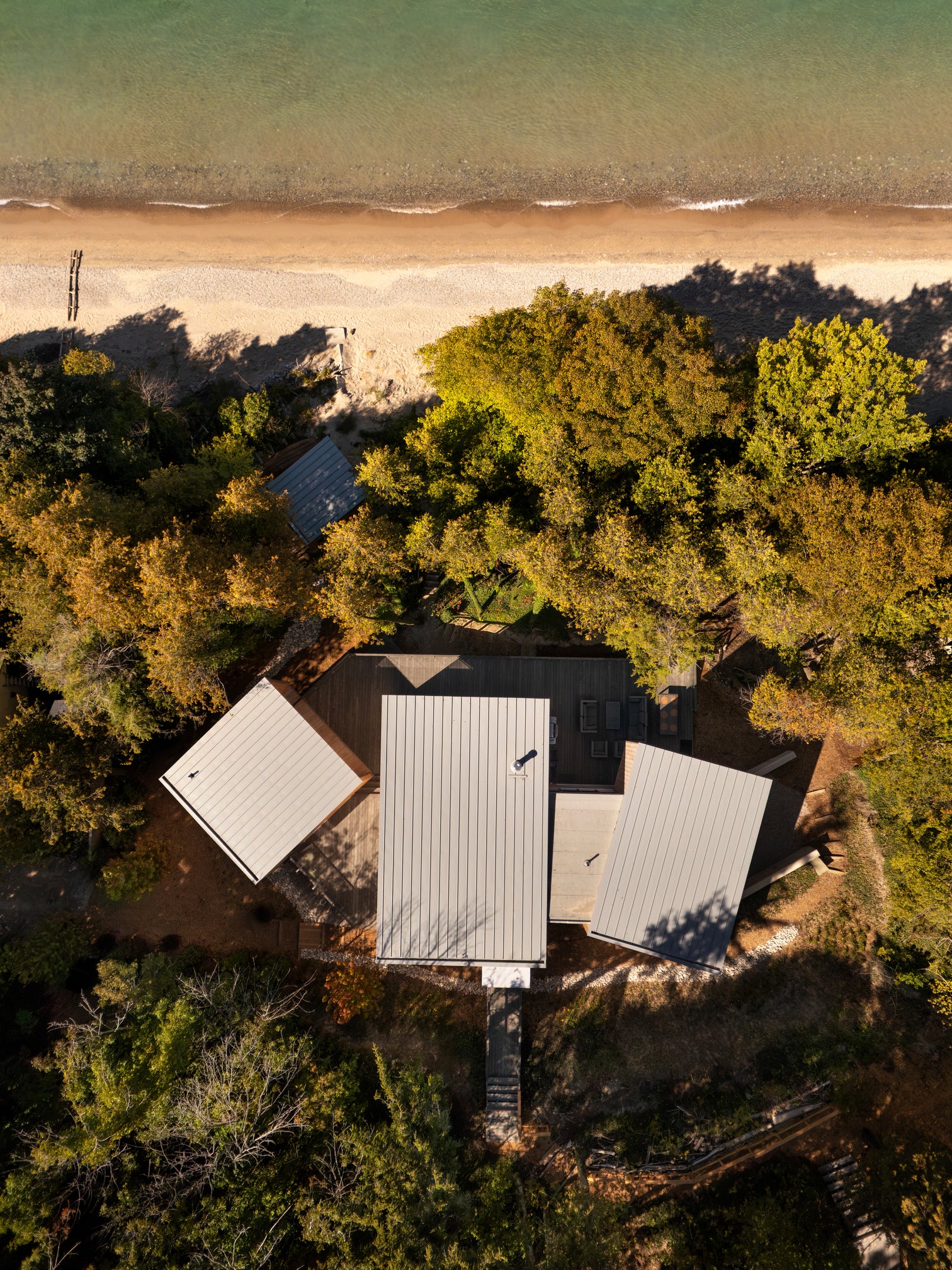
From above, the architecture reads as a constellation of volumes rather than a single structure. A main house is joined by smaller outbuildings, each subtly rotated to align with openings in the forest canopy. This fragmentation is deliberate. It allows the home to weave itself into the site, preserving the rhythm of the trees while creating framed views toward the water beyond.
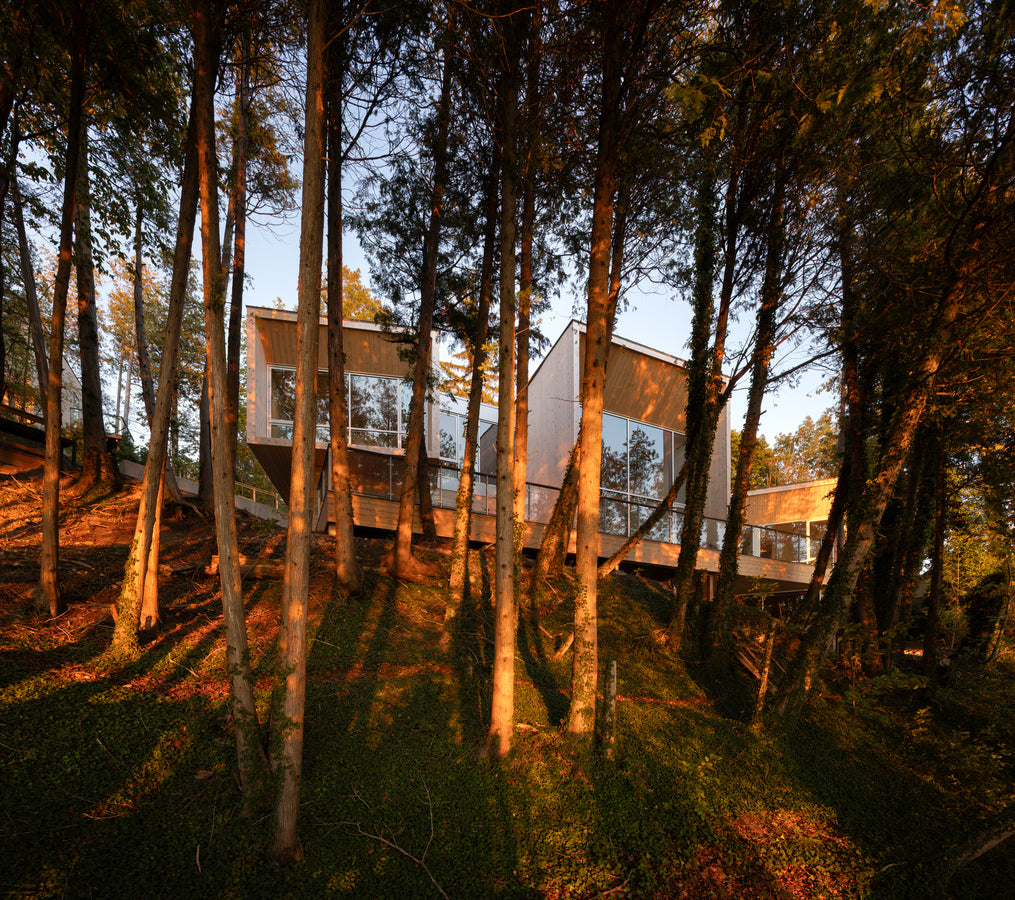
Arrival begins at the highest point of the site, where the architecture reveals little of what lies ahead. From here, the journey becomes spatial and sensory. The house descends with the slope, each level opening to a new perspective, a shift in light, a closer connection to the landscape. Movement through the home mirrors a walk through the forest, gradual, layered, immersive.
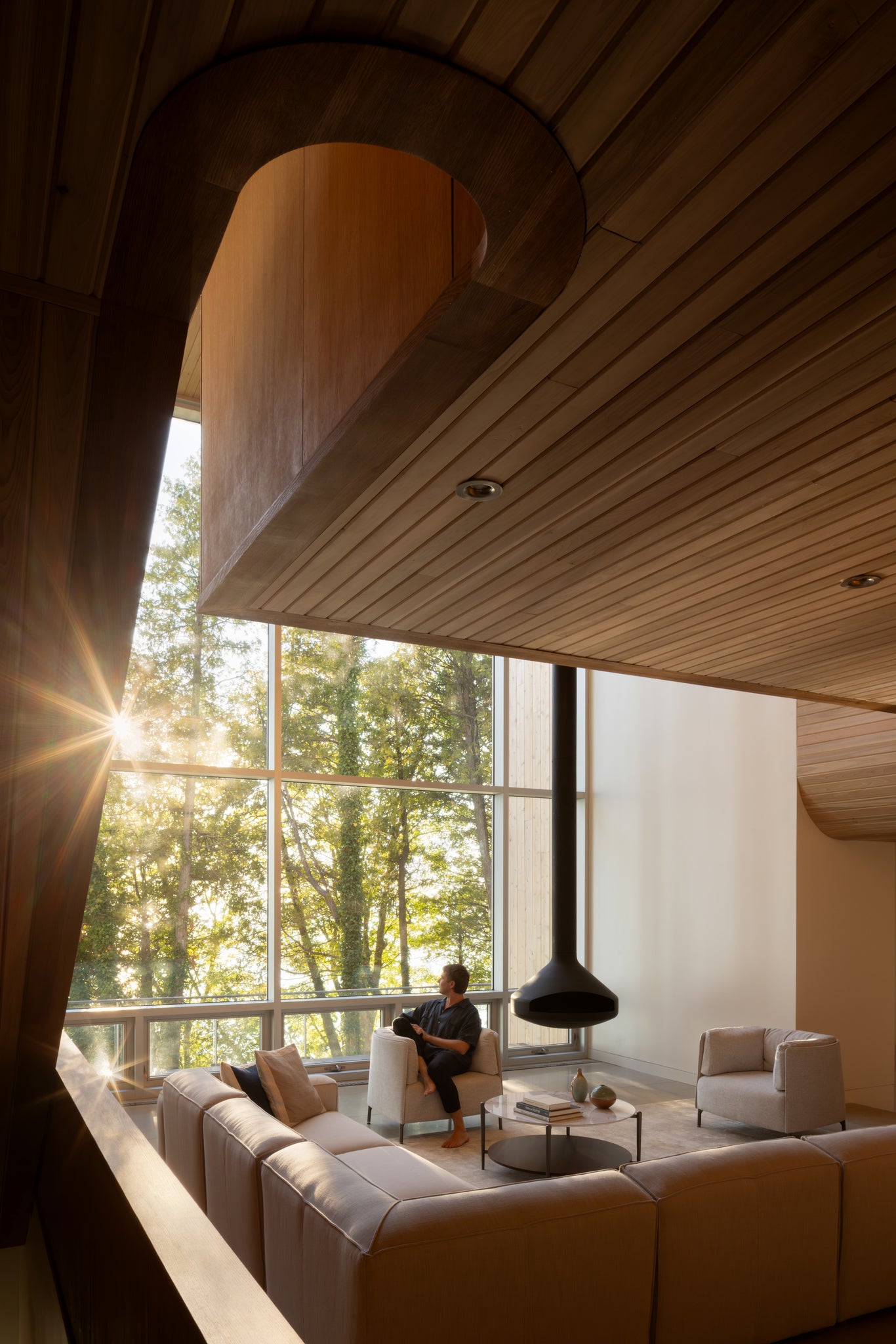
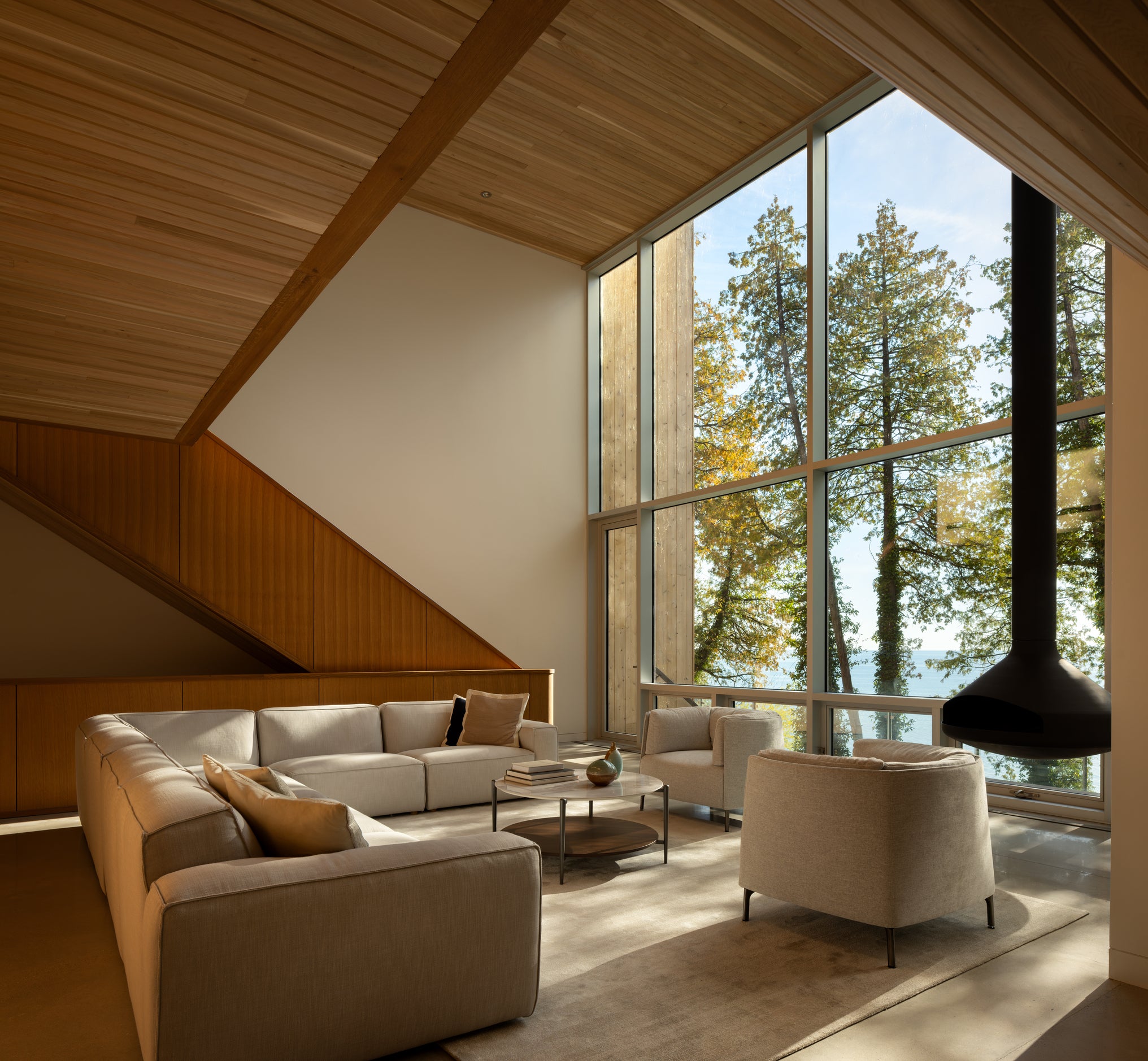
Inside, materiality becomes the bridge between architecture and nature. Eastern white cedar wraps the exterior and continues seamlessly indoors, where ceilings and soffits extend in uninterrupted planes. Oak millwork grounds the interiors, introducing warmth and a sense of continuity that carries from one space to the next. The effect is enveloping, as though the house itself has been carved from the surrounding woodland.
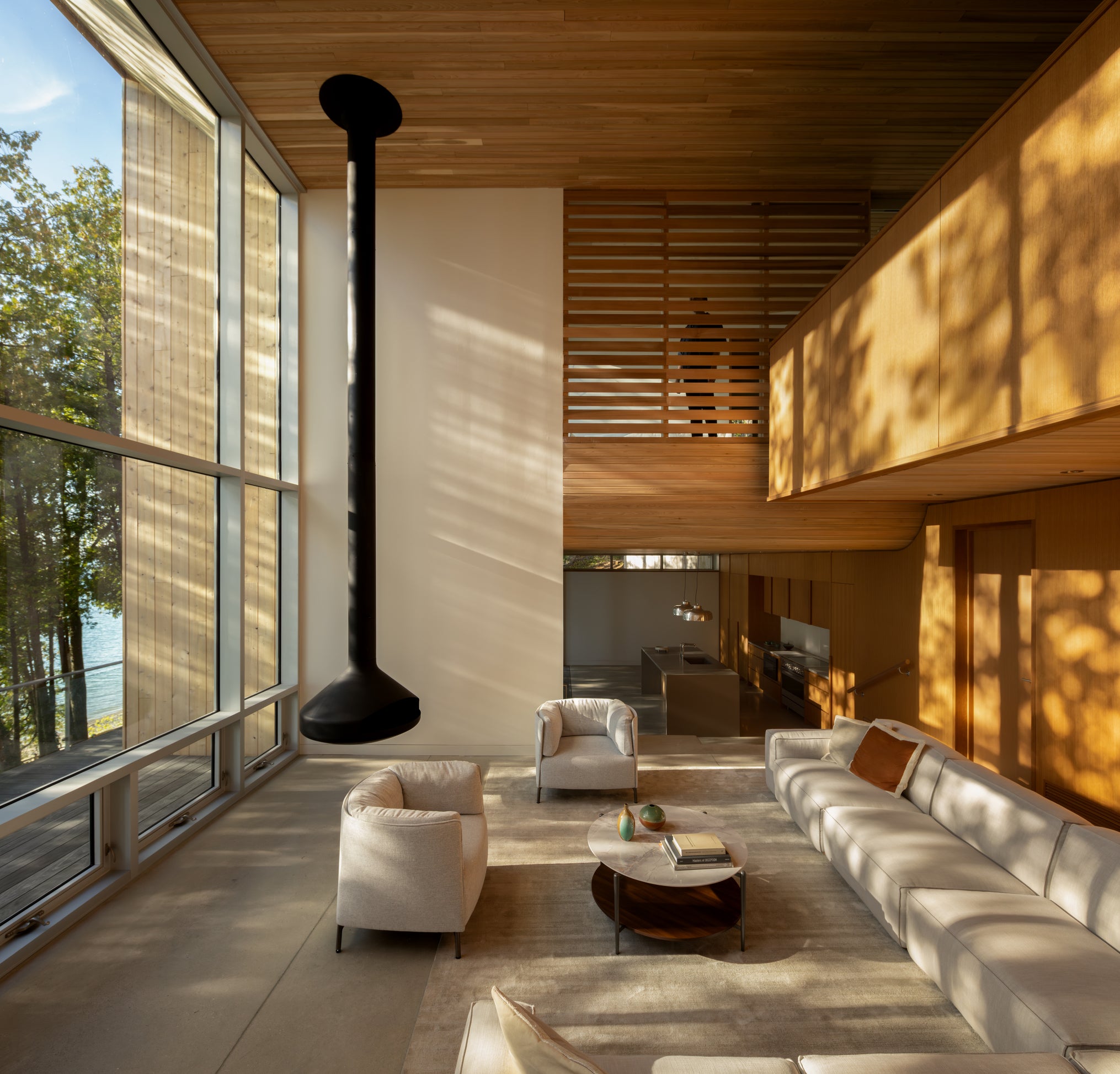
Light plays a defining role in shaping the experience. Large expanses of glazing dissolve the boundary between inside and out, capturing filtered views through branches as well as expansive glimpses of the lake. Throughout the day, shadows from the trees move gently across walls and floors, bringing the exterior landscape into the interior in subtle, ever-changing ways.

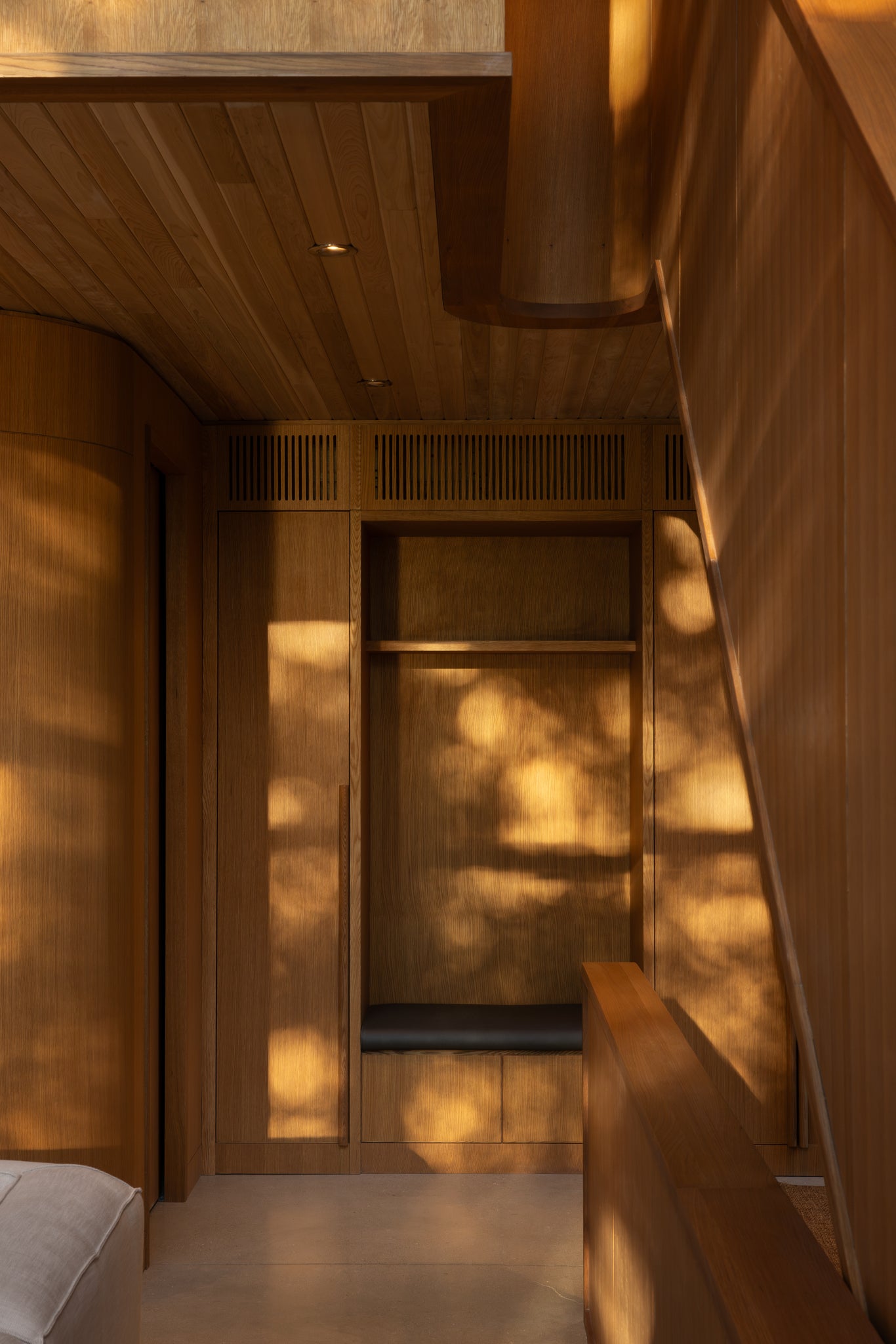
The central living space is particularly striking. A double-height volume anchored by a sculptural fireplace opens toward the forest, while a cedar-lined ceiling draws the eye upward. There is a quiet drama here, not through excess, but through proportion, light and restraint. Furnishings remain soft and neutral, allowing the architecture and its relationship to the landscape to take precedence.
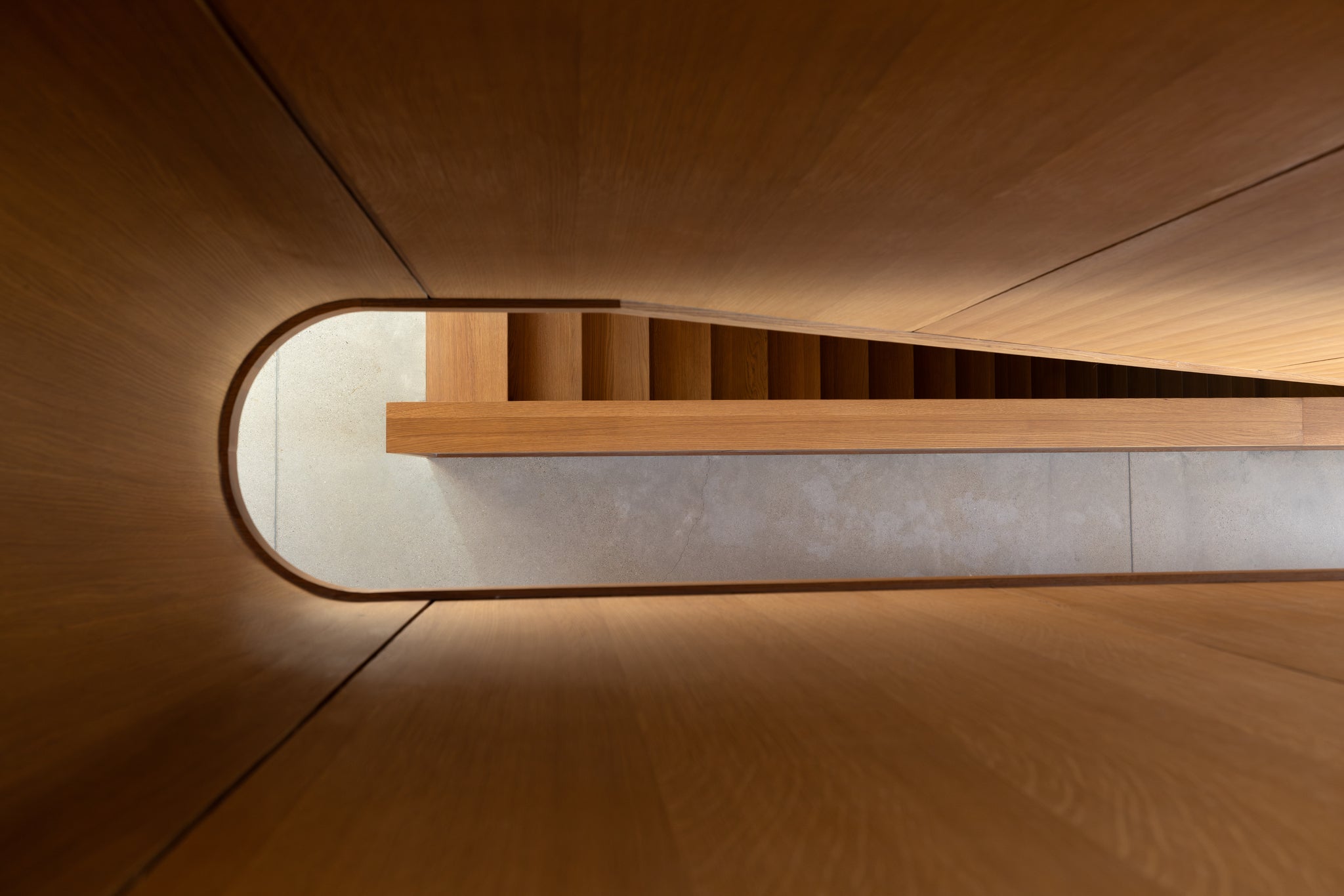
Between the volumes, terraces extend outward, projecting into the tree line. These spaces blur the distinction between room and landscape, offering moments to pause, to sit within the canopy rather than simply observe it. It is here that the project’s philosophy becomes most tangible, where architecture recedes and nature takes the lead.
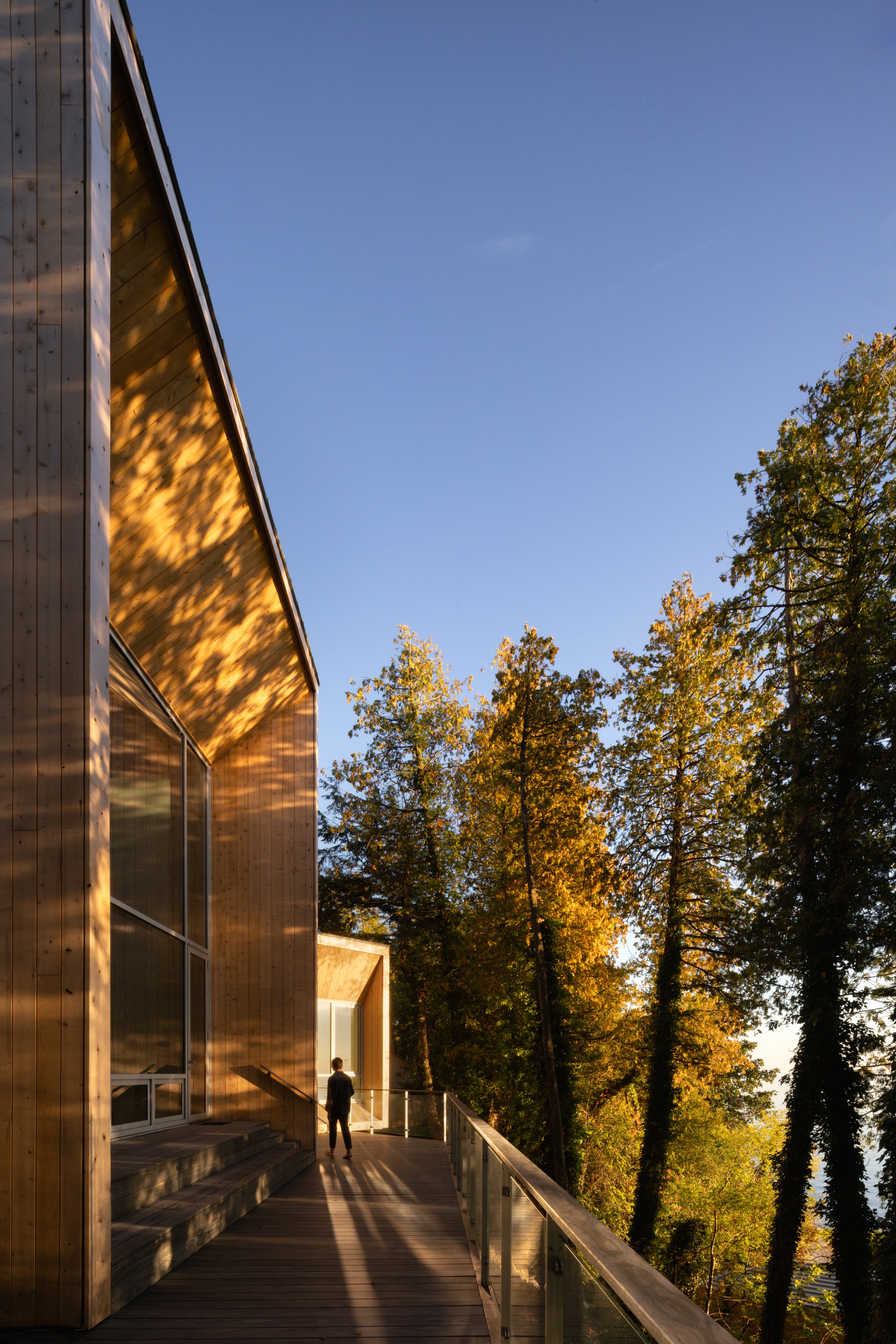
Cedar’s Kin is ultimately a study in balance. It demonstrates how a home can be both precise and deeply intuitive, structured yet responsive, contemporary yet rooted in place.


