


Brasserie 1869: A New Social Heart at The Hurlingham Club
HOSPITALITY PROJECTS
Hamish Kilburn gains rare access to The Hurlingham Club, exploring Brasserie 1869’s sunlit, refined interiors by Jestico + Whiles – and delicate nods to the Club’s sporting heritage, and an insider’s view of one of London’s most storied private institutions…
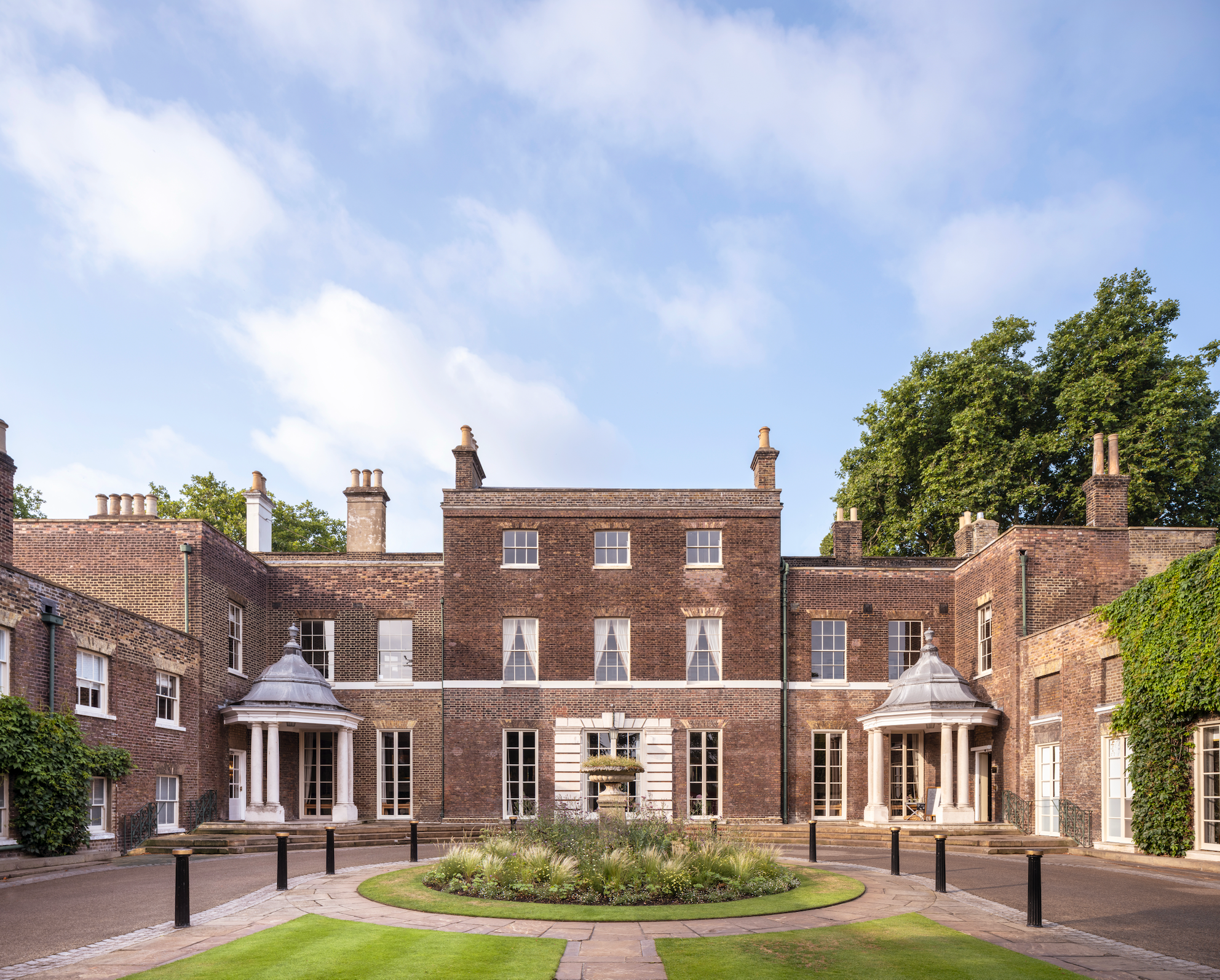
Tucked into 42 acres of landscaped grounds along the Thames in Fulham, The Hurlingham Club has long held a reputation as one of London’s most distinguished private members’ clubs – with a waiting list of 25 years, its doors are pretty much sealed to all but those connected by blood. With its origins stretching back to 1869, the Club is steeped in history: Georgian architecture by Edwin Lutyens, manicured croquet and tennis lawns, and the very grounds where the rules of polo were first codified.
Yet, it is the Club’s first new restaurant in decades, Brasserie 1869, that offers a fresh lens on this venerable institution, and the result is as unexpected as it is delightful.
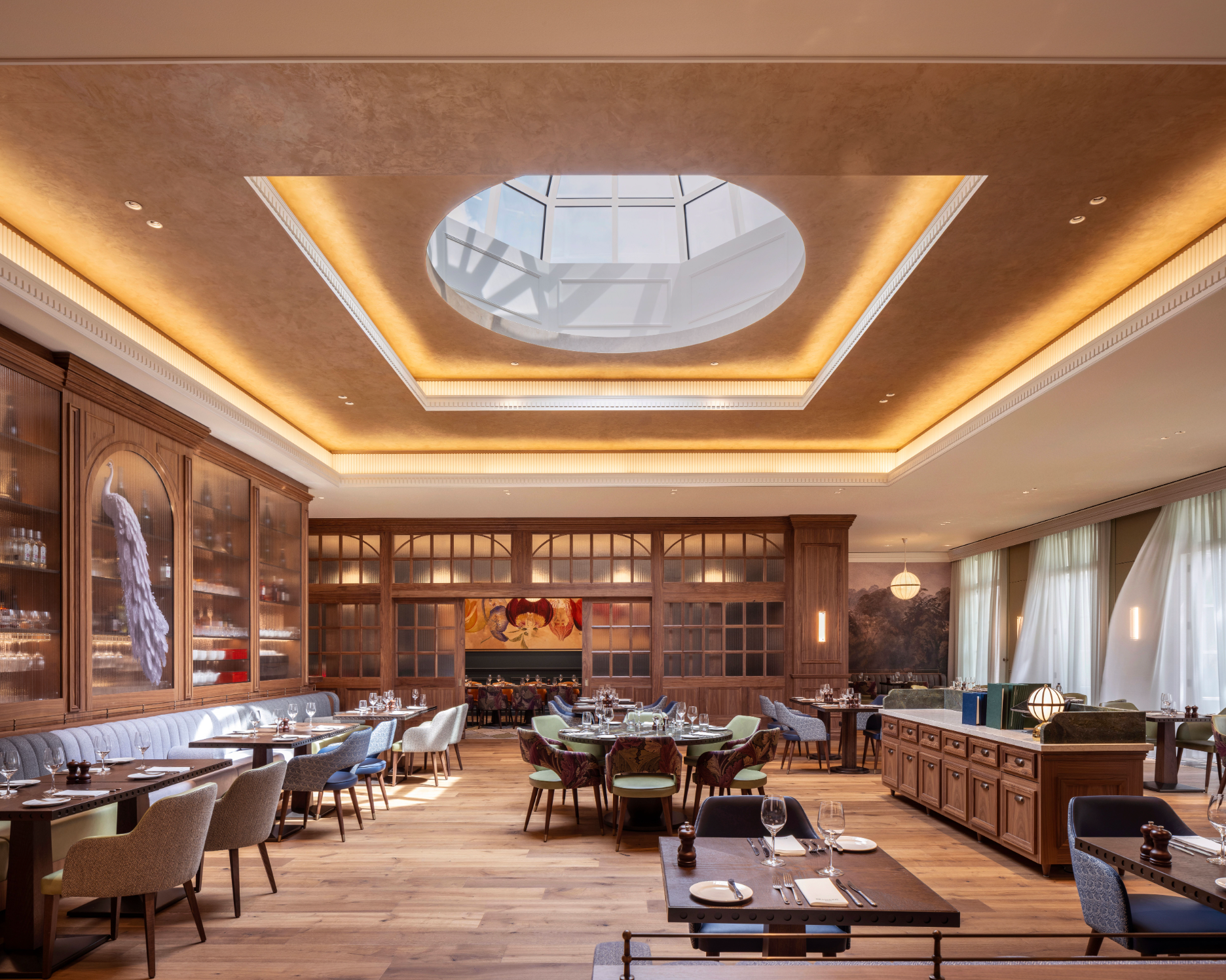
Designed by the award-winning interior design and architecture studio Jestico + Whiles after winning the commission following a competitive design process, Brasserie 1869 occupies the Club’s East Wing, transforming what was once a quiet corner of the estate into a lively social hub.
The brief was ambitious: create a contemporary restaurant that celebrates The Hurlingham Club’s classical heritage for all generations, while forging an intimate connection with its extraordinary grounds. “Our aim was to craft a space where members would feel the a sense of comfortable occasion,” says James Dilley, Director at Jestico + Whiles.
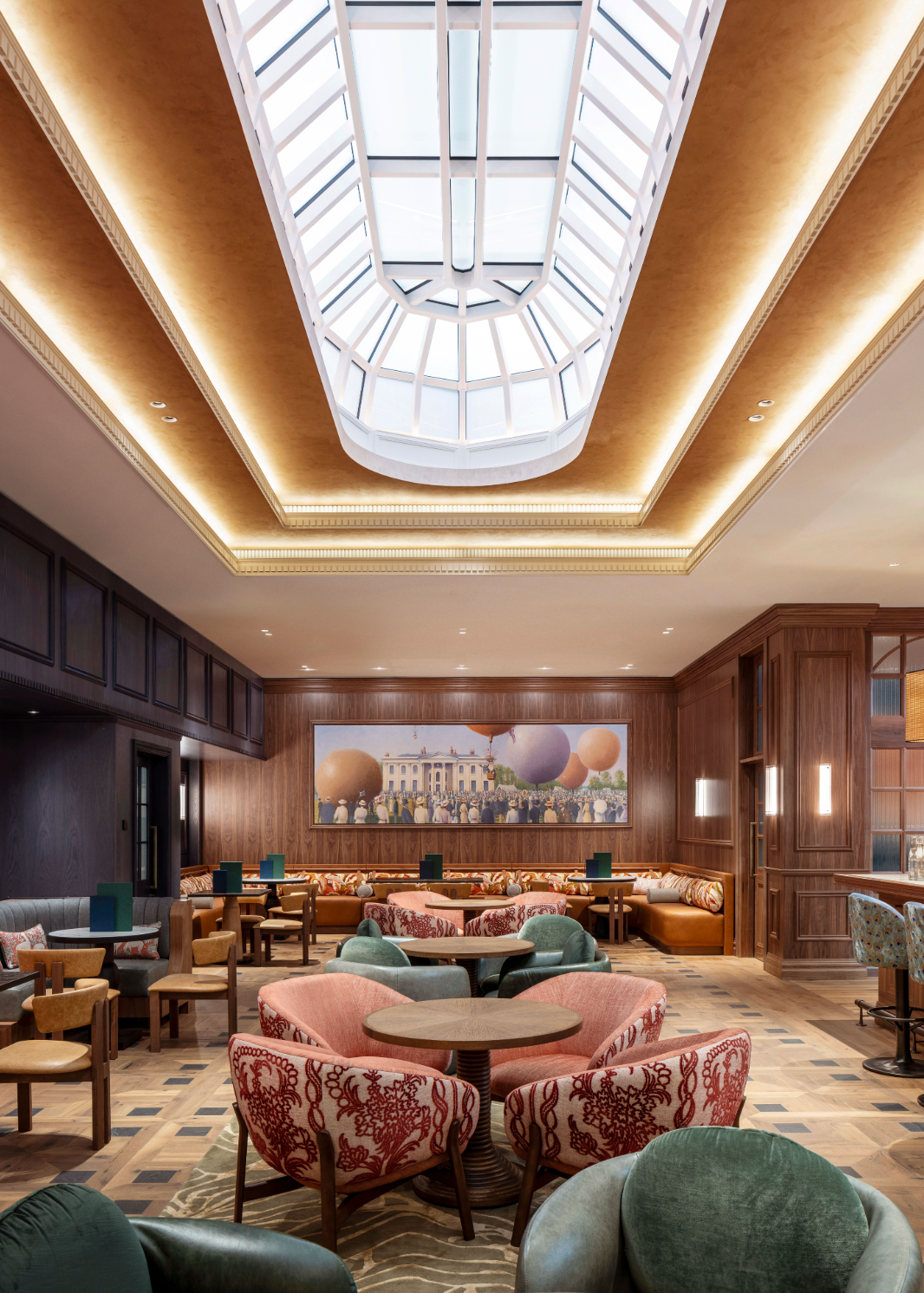
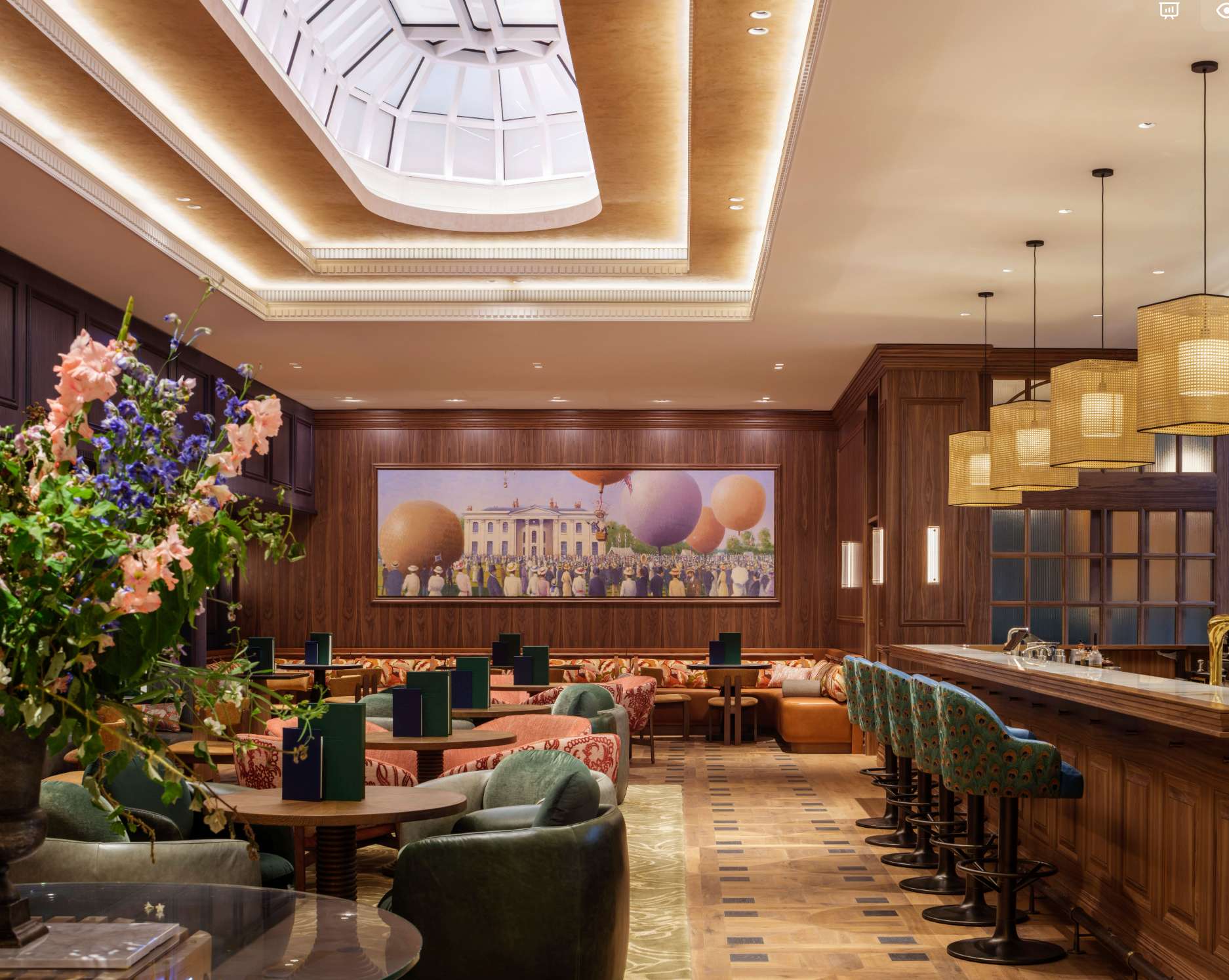
From the moment you arrive, the brasserie exudes warmth. The entry opens to an informal lounge beneath a linear skylight, furnished with leather club chairs and oak-and-marble tables. The space reveals clever connections to nature, such as a circular entrance table, crafted from a fallen tree and treated to become a one-of-a-kind piece of furniture.
The walls are clad in raised American walnut panels, echoing the black-and-white stone of the historic vestibule. Here, a large-scale watercolour of a hot air balloon race, once a Hurlingham pastime, adds a whimsical, historical touch, while the lighting is subtly designed to reflect the shapes of the balloons and their baskets, tying the décor to the site’s playful sporting history.
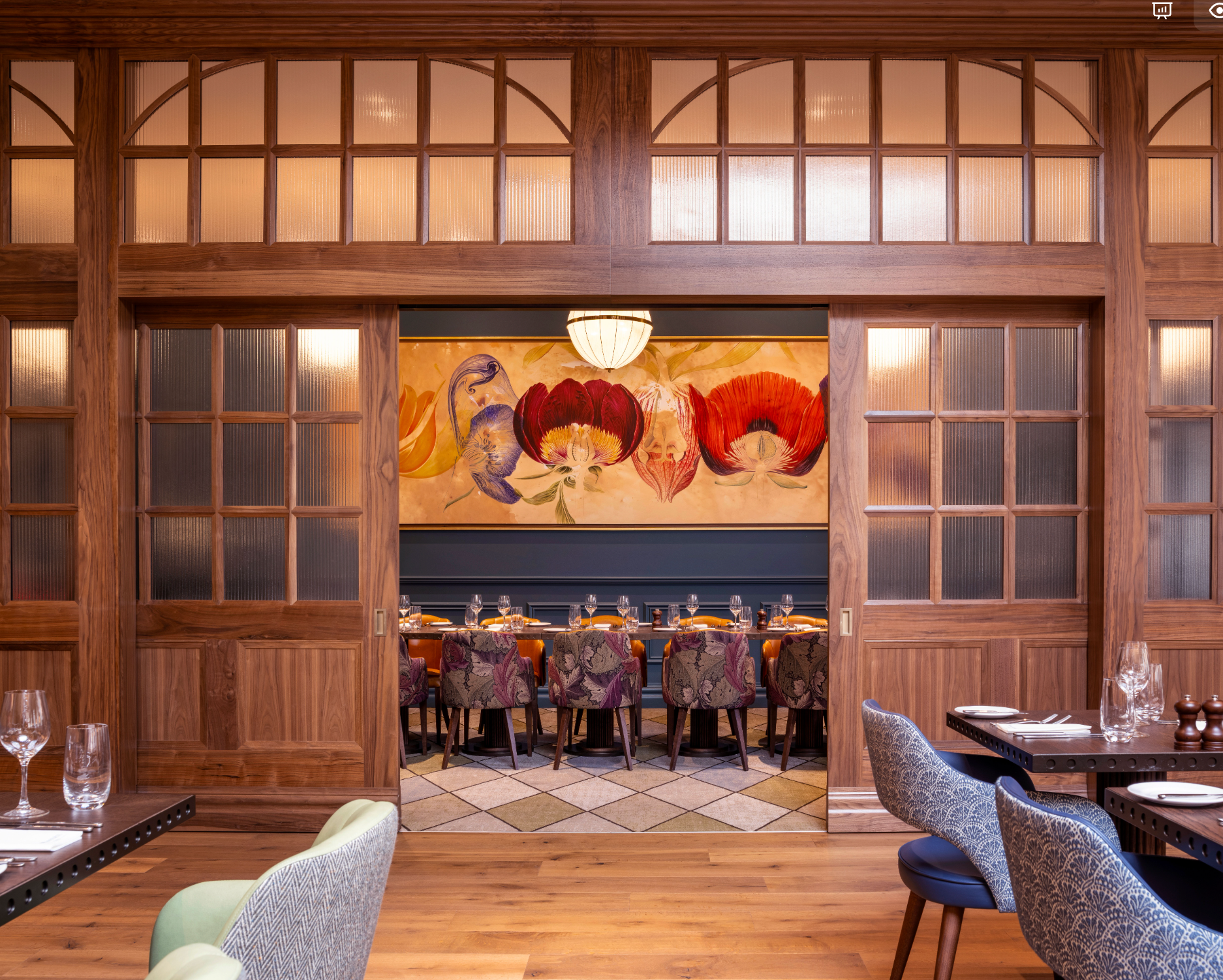
The design is inherently theatrical without being ostentatious. Timber-lined anterooms and “rooms within a room” offer moments of intimacy, while full-height reeded glass screens allow spaces to be reconfigured for private dining. A domed skylight floods the main dining room with natural light, its geometry playing beautifully against the glazed ceiling of the adjacent Palm Court. “It was essential that we fought for the light in this project,” explains Howard Pye, Associate Prinicpal at Jestico + Whiles. “It frames the connection to the gardens outside, which are such a key part of the Club’s spirit, but it also just softens the overall atmosphere.”
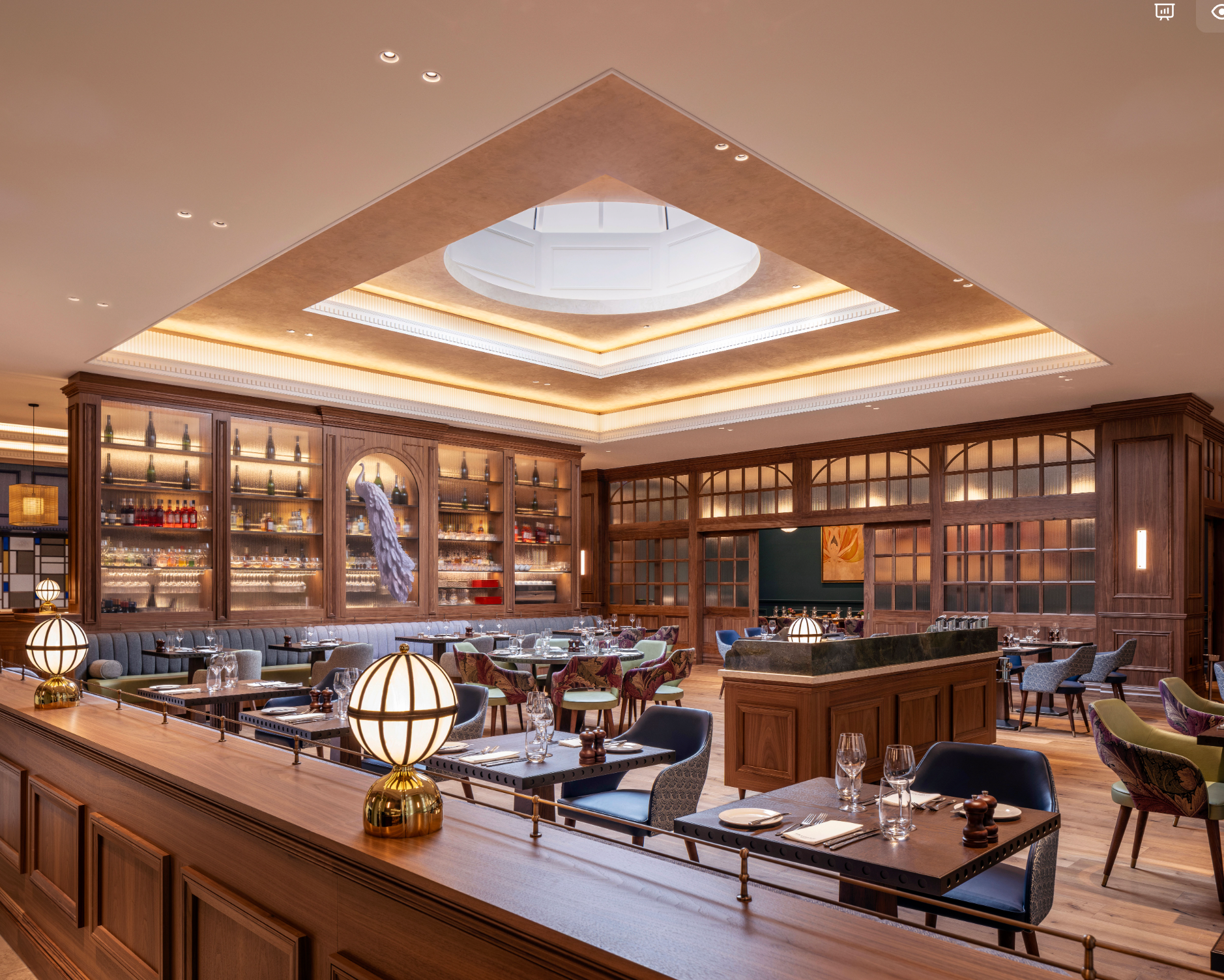
Central to the brasserie’s energy is an open kitchen that pulses with movement. Chefs prepare dishes in full view, creating a dynamic backdrop to the relaxed, elegant dining. The bar, a 25-foot expanse of white honed marble, doubles as a dining counter and cocktail station, with etched peacock motifs on the back of the bar stools – a nod to the real-life birds that wander the grounds.
“Building personal relationships is especially important in working successfully with a private members’ club, as the normal rules, applicable to commercial ventures, are less relevant,” explains Joanna Grotowska Hall, Associate, Interior Design Lead. “We were extremely happy that our design has made a contribution to the latest chapter in the evolution of the club over its 150 years and we are absolutely delighted it has been received with such excitement.”

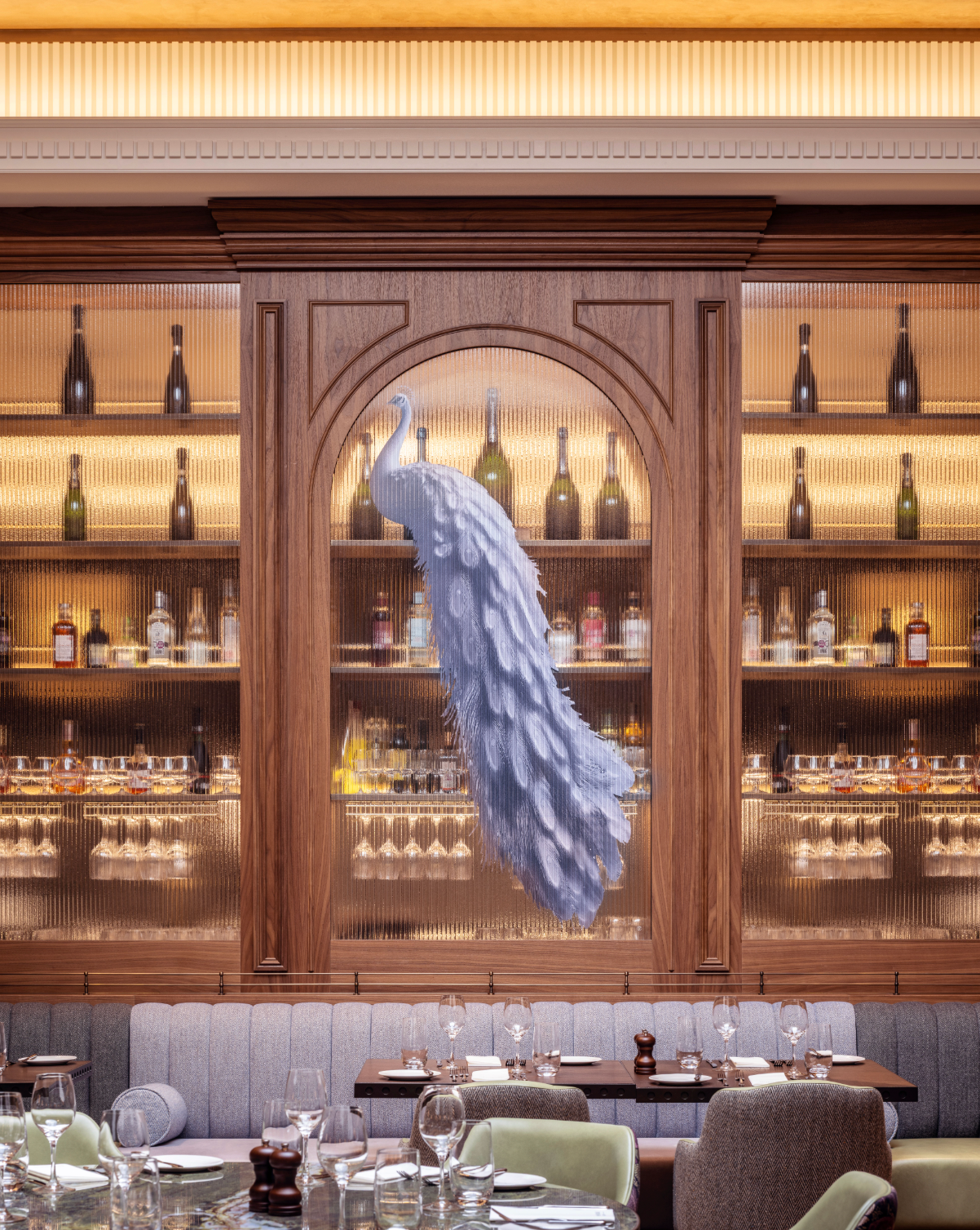
The interiors cleverly balance flexibility with formality. Banquettes in natural leather and tweed allow the main restaurant to accommodate couples, families and larger groups seamlessly. Framed botanical sketches and a signature treetop painting provide cohesion across the space. As Dilley notes, “It was important that each element of the interior tells part of Hurlingham’s story. The artwork and the materials, together with the lighting had to share the same dialogue to the Club’s past.”
Despite the brasserie’s elegance, the dining experience is anything but stuffy. Seasonal adaptations are seamless: folding screens and adjustable lighting allow the brasserie to shift effortlessly between summer terrace dining and cozy winter evenings under the domed skylights.
Outside, the terrace under towering London plane trees provides yet another layer to the Hurlingham experience. Forty alfresco covers overlook the manicured lawns, offering a verdant oasis rarely found in London. It’s the kind of space where the line between city and countryside dissolves, and you momentarily forget you are still in Fulham.
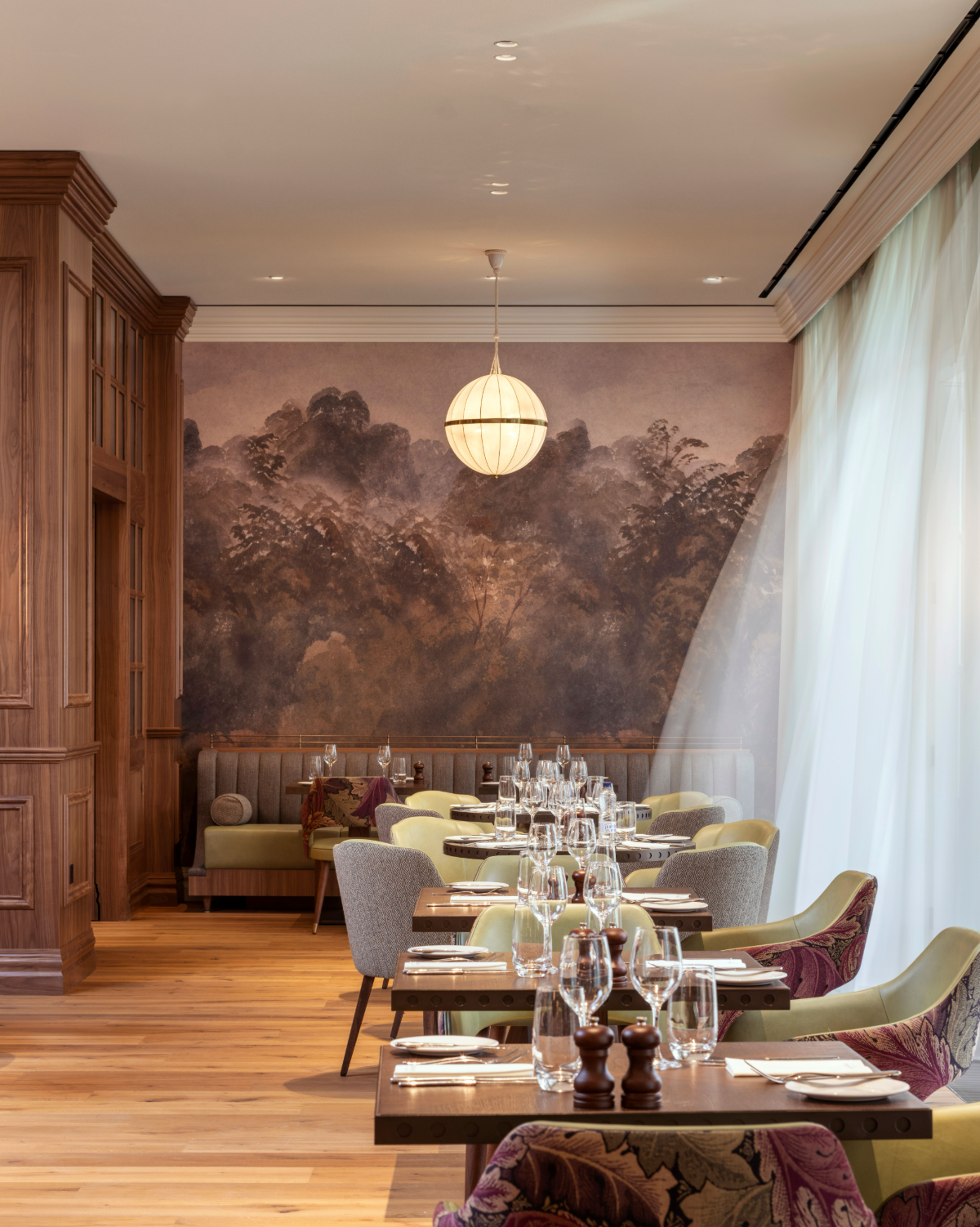
Michael O’Dwyer, CEO of The Hurlingham Club, sums it up neatly: “The Club’s golden thread has been weaved into every detail of the brasserie. Members have responded with excitement and delight, which is the highest compliment.” And for diners, the experience is a harmonious blend of old and new: the gravitas of a 19th-century institution, enlivened by contemporary design, thoughtful materials and a layout that encourages conviviality.
In many ways, Brasserie 1869 is a microcosm of Hurlingham itself: historic yet forward-looking, formal yet relaxed, private yet welcoming. This visit feels like discovering a favourite corner of a much-loved country house – but one that sits squarely in the heart of London.
For members who were longing for a dining experience that honours heritage while embracing modern hospitality, Brasserie 1869 answers with a rare triumph: a restaurant where architecture, landscape and cuisine converse effortlessly, and where every detail is a celebration of The Hurlingham Club’s singular character.


