

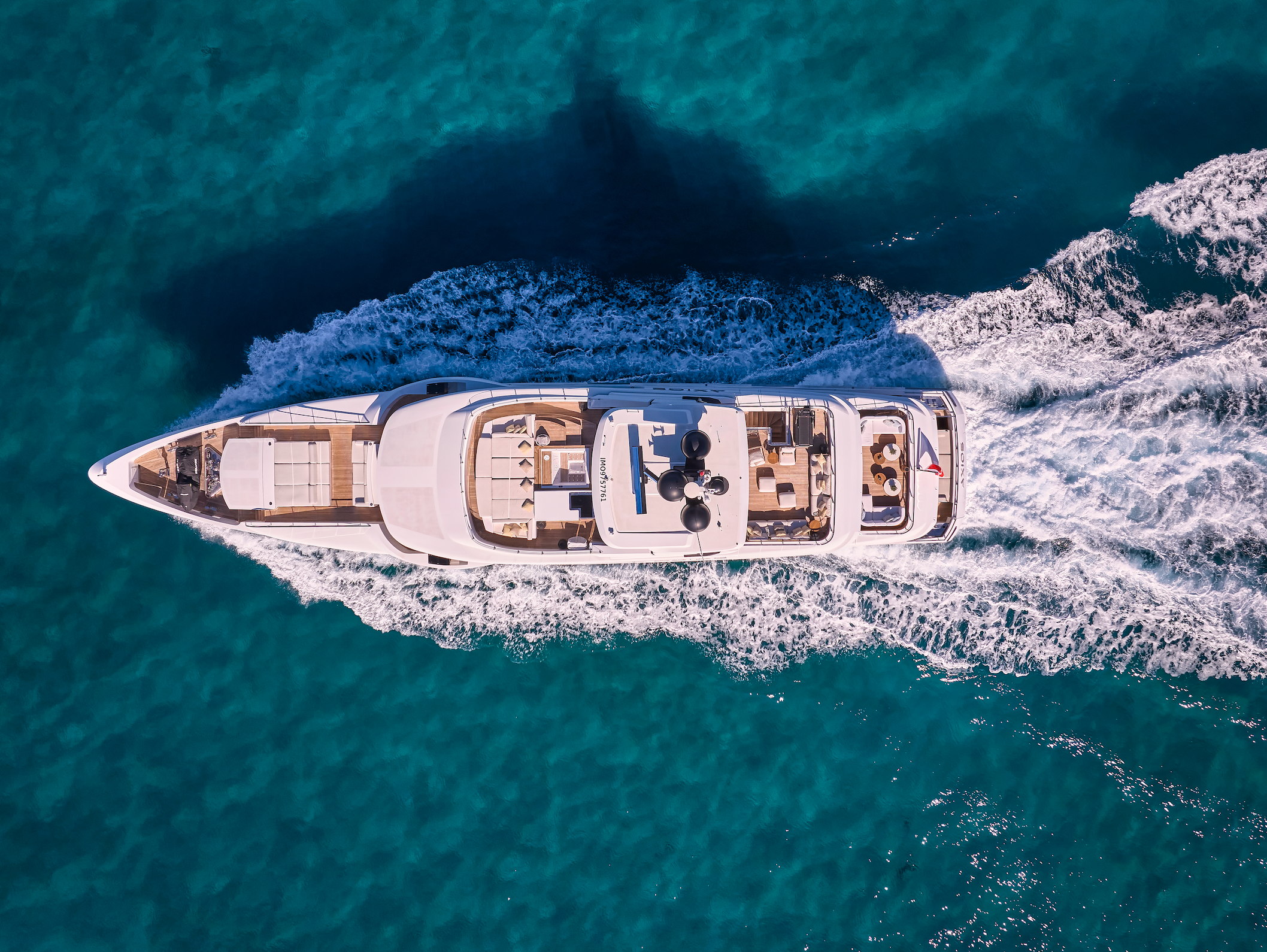
Axios by Bergman Design House
LIFE BETWEEN TIDES
TRENDS
There is a particular kind of luxury in waking up somewhere different every morning without ever leaving home. A yacht offers exactly that, a private world that moves, carrying its owner from one coastline to the next while everything inside it, the art, the fabrics, the light, stays exactly as they left it. It is perhaps the purest expression of a private world this edition has covered, privacy that travels with you rather than staying fixed to an address.
Designing for that world is a different discipline entirely from designing a house. Every material on board has to survive salt air, constant vibration, humidity and direct sun without fading, warping or corroding, while meeting fire safety and classification society regulations that a residential interior never has to consider. Furniture must be fixed or ballasted against motion at sea, staircases and balustrades built to handle a listing deck rather than a level floor, and every finish chosen for weight as much as looks, since excess mass affects fuel efficiency and stability alike. None of this is meant to show. The best yacht interiors read as effortlessly residential, and achieving that takes considerably more engineering than the equivalent room on land.
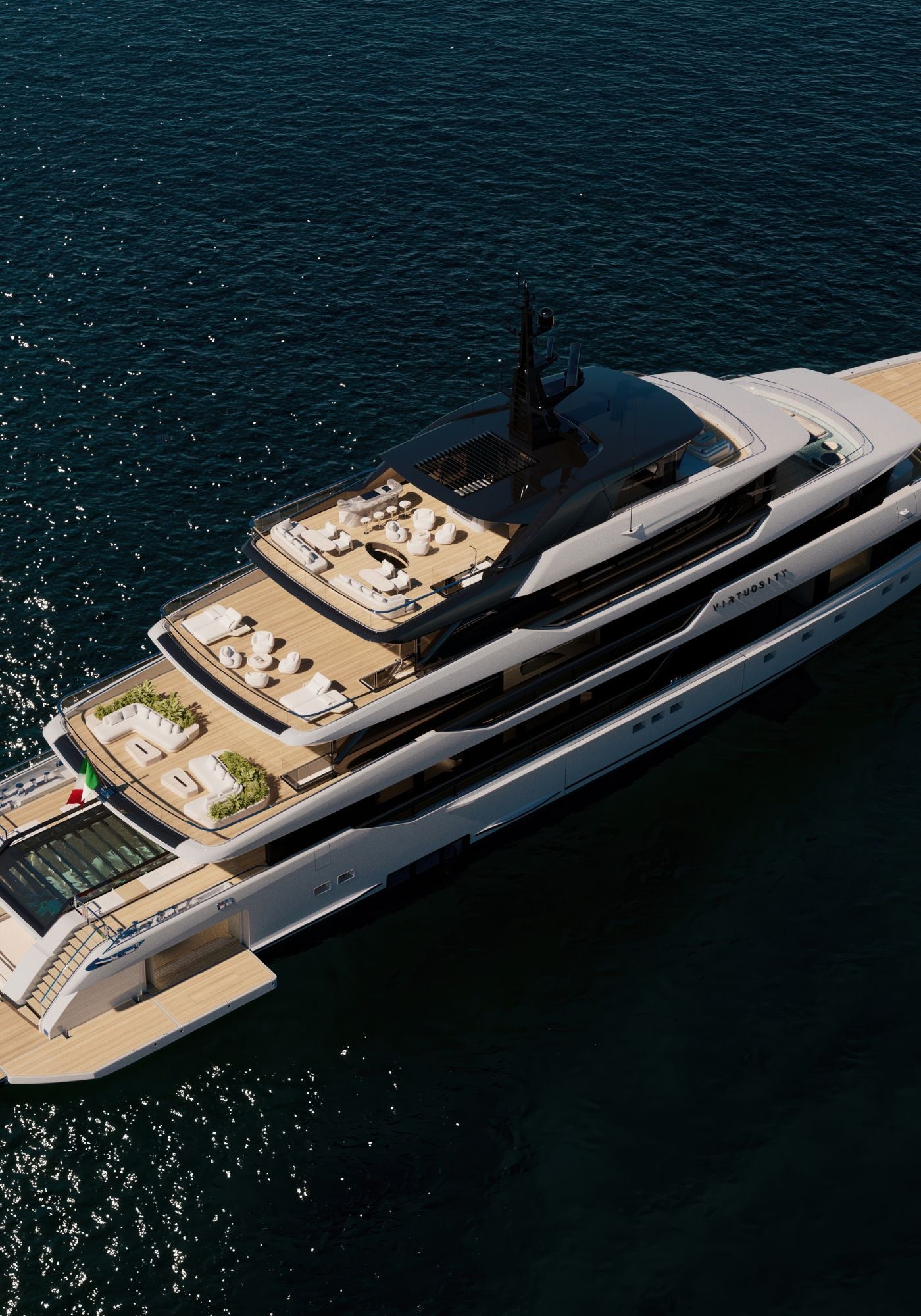
Virtuosity by Sanlorenzo
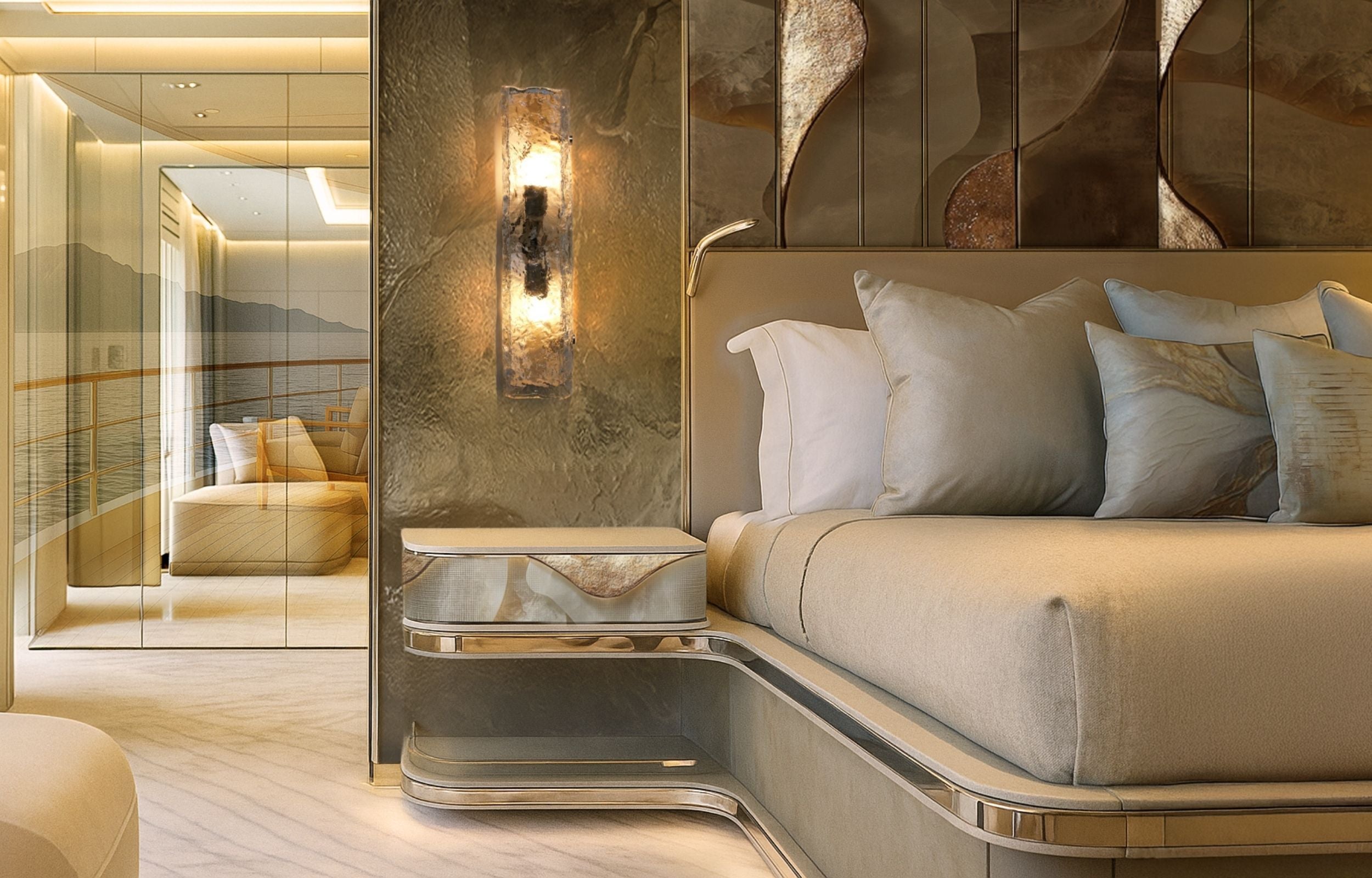
Martin Kemp Design's work across two superyachts shows two very different answers to that brief. On one, set against a strikingly warm hull, the studio leaned into colour and contrast, with a master suite headboard wall worked in warm bronze toned panelling with an organic, almost topographic texture, paired with an onyx and mirrored bedside table and a hammered glass wall light that glows against the metal.
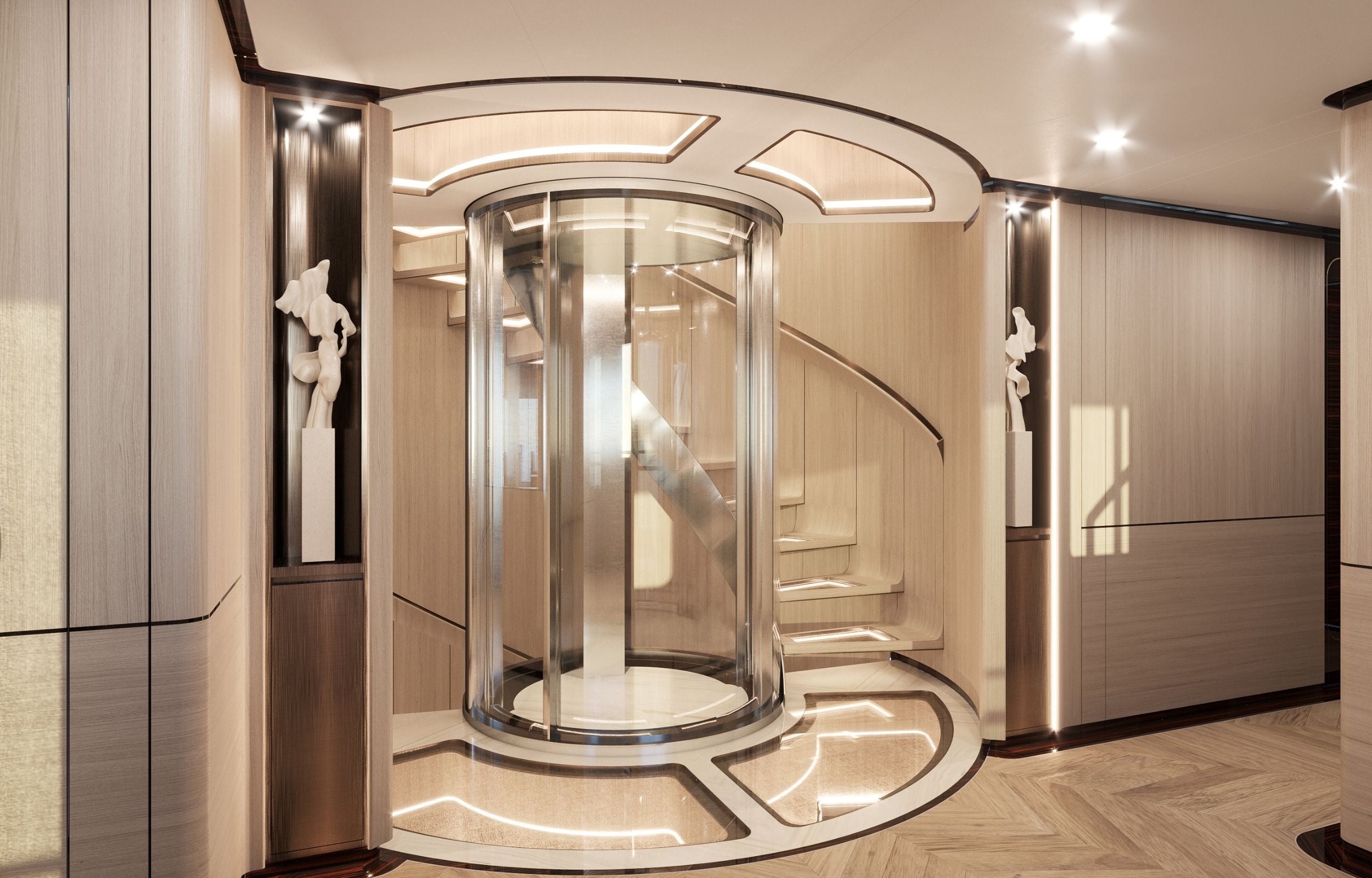
On the Logica yacht, a 64 metre yacht designed in collaboration with Acube, the mood turns quieter. A staircase rises in glowing alabaster treads, lit from within, its bronze balusters strung with faceted crystal pendants that catch the light like drops suspended mid fall, proof that restraint can be just as dramatic as colour at sea.
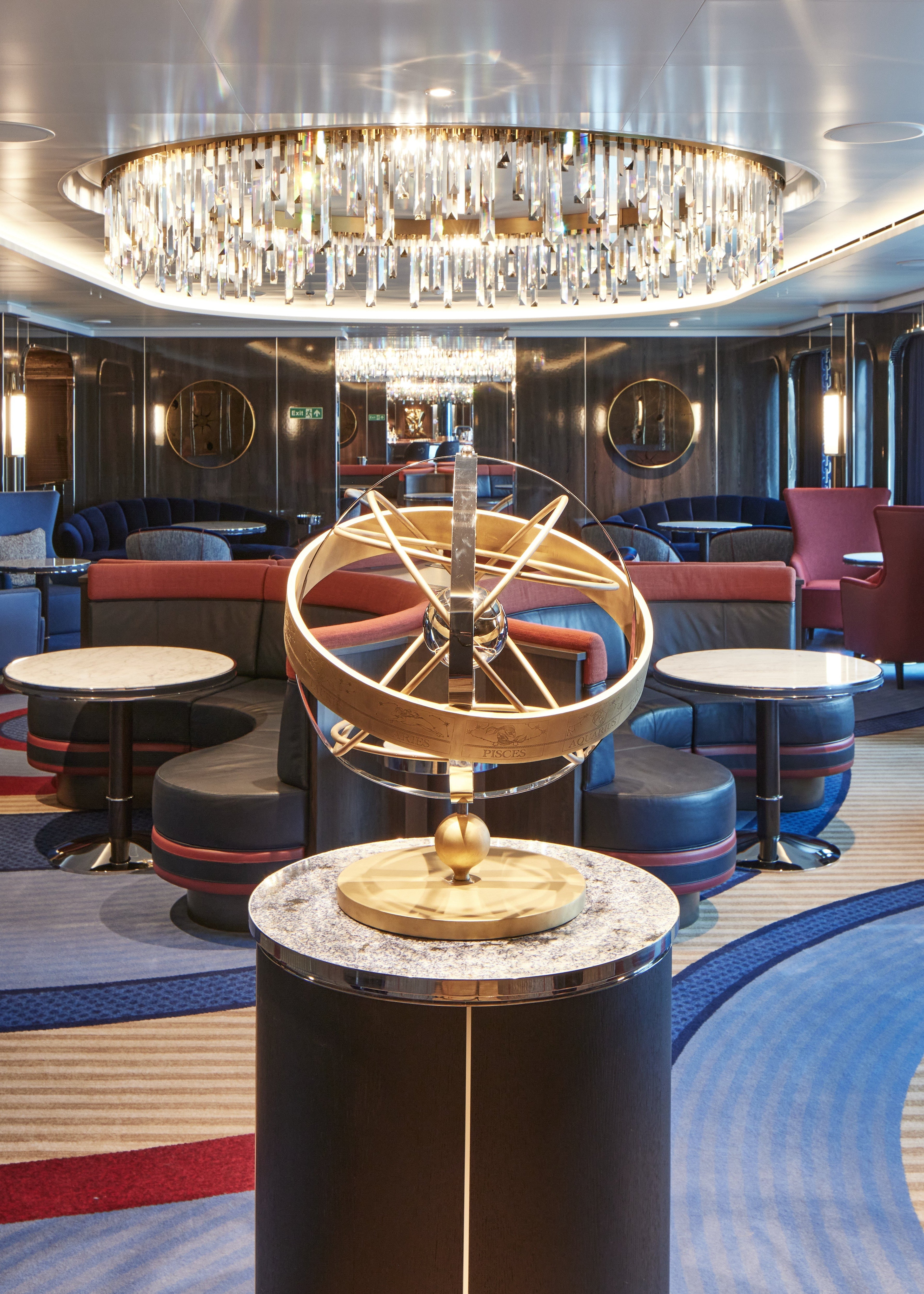
For David Collins Studio, the challenge was different again. Queen Anne, Cunard's 3,000 passenger ocean liner, marked the studio's first maritime project, one of three practices appointed to design her interiors, with DCS responsible for eighteen spaces across public areas, dining, entertainment and guest cabins.
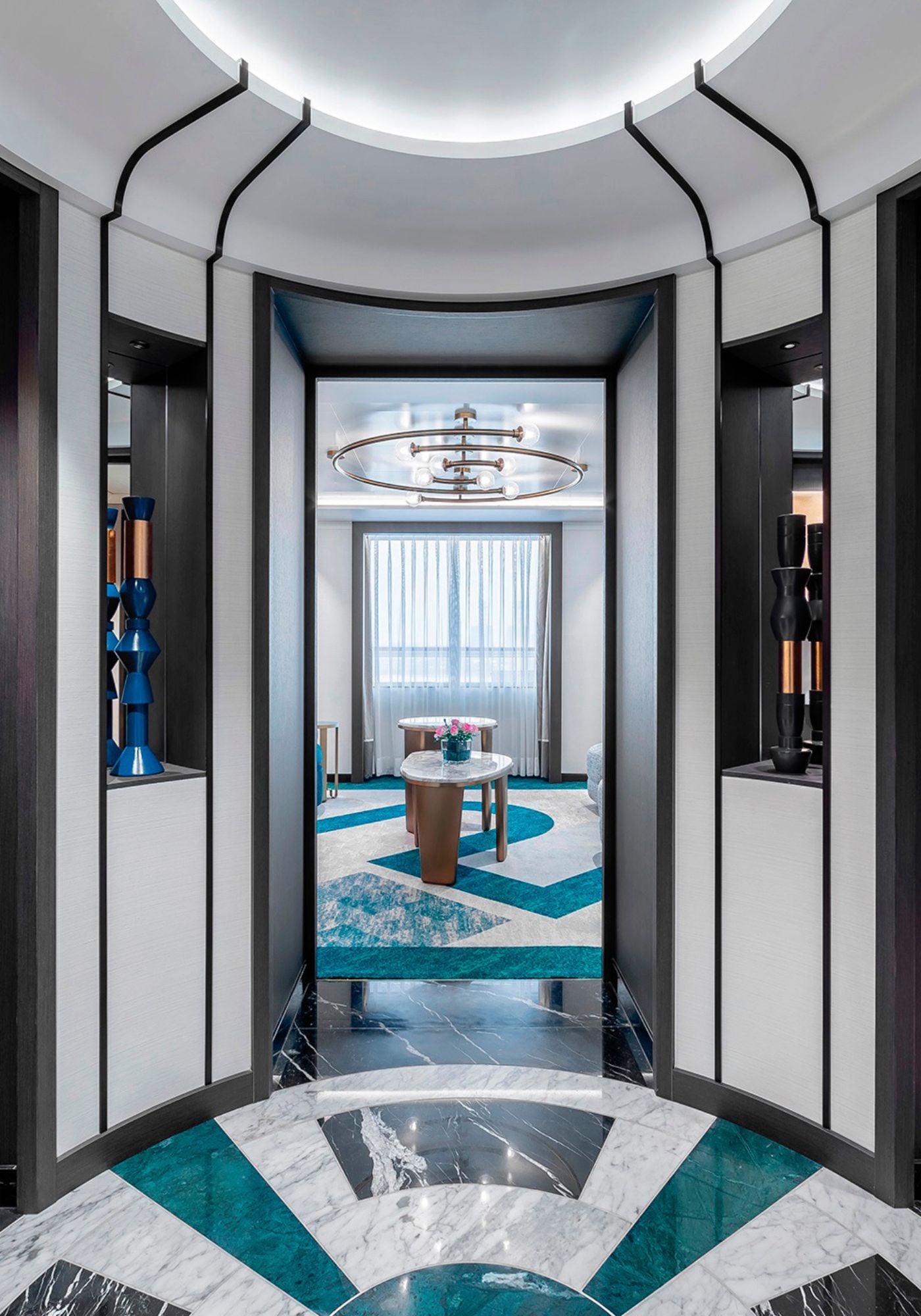
A corridor leading into one of the suites shows the studio's instinct clearly, black marble underfoot giving way to a fan pattern in teal and white, opening into a room dressed in the same teal against soft grey panelling, a brass ring chandelier and sculptural cobalt vessels adding warmth. It is hospitality design scaled up to genuinely vast proportions without losing any sense of the individual room.
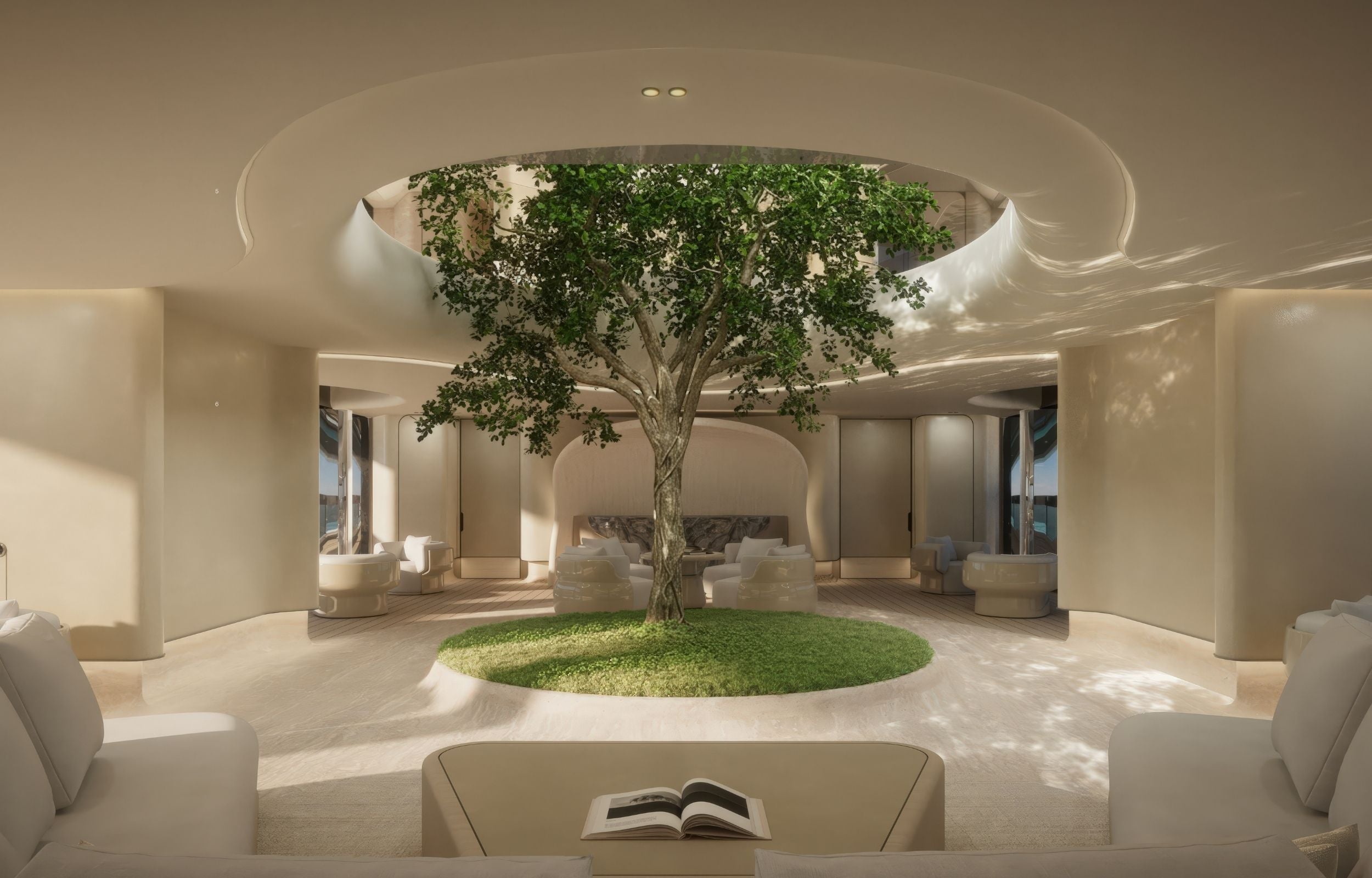
Sanlorenzo's 74Steel, named Virtuosity, takes the opposite approach, treating the yacht almost as a piece of architecture in motion. Inside, curved plaster walls wrap around a central atrium where a full sized tree grows from a circle of real grass, sunlight falling through a matching circular skylight above. Pale, sculptural furniture curves to match the architecture rather than sitting against it, turning what could have been a hard, futuristic shell into something closer to a courtyard than a cabin.

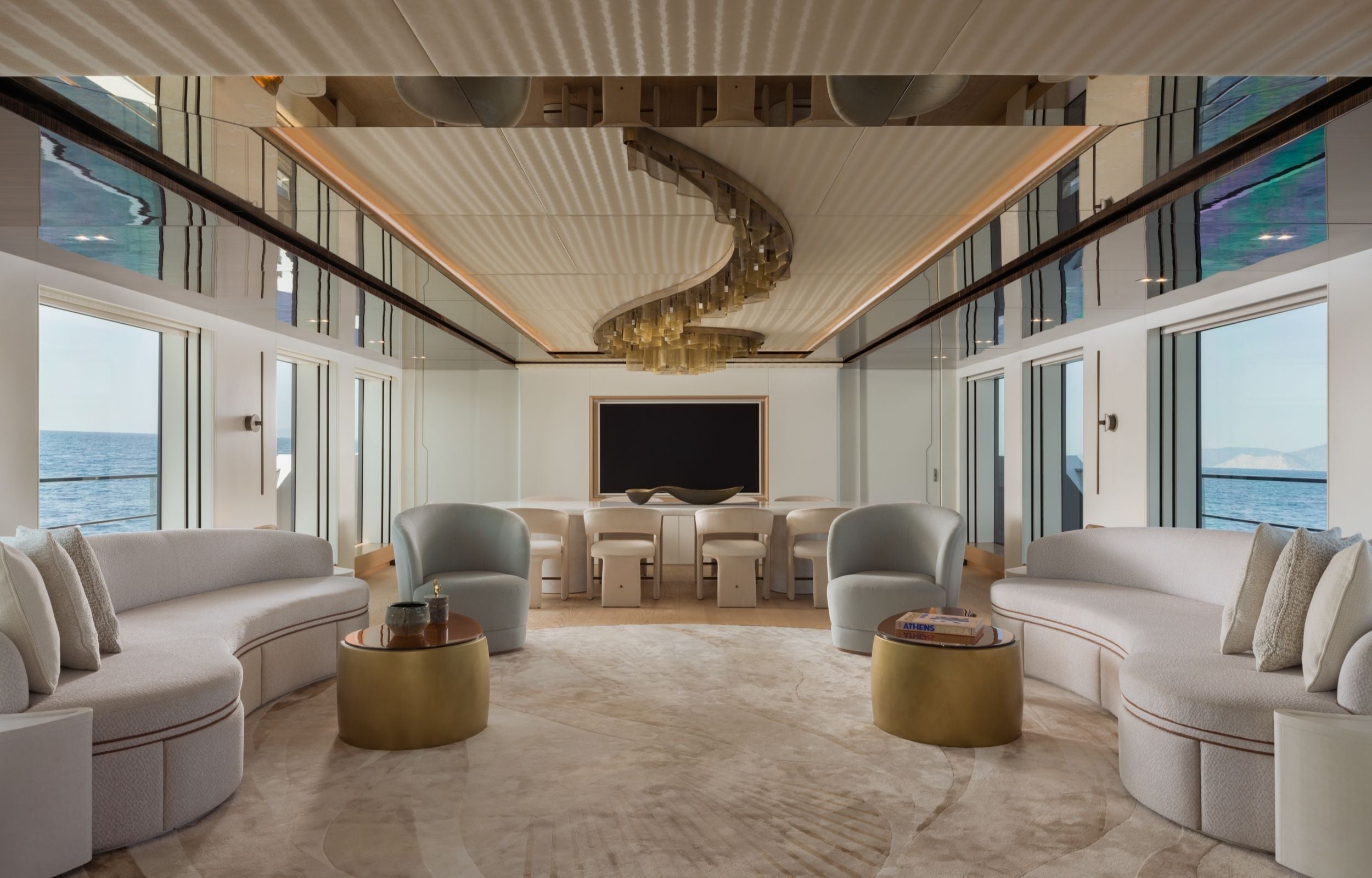
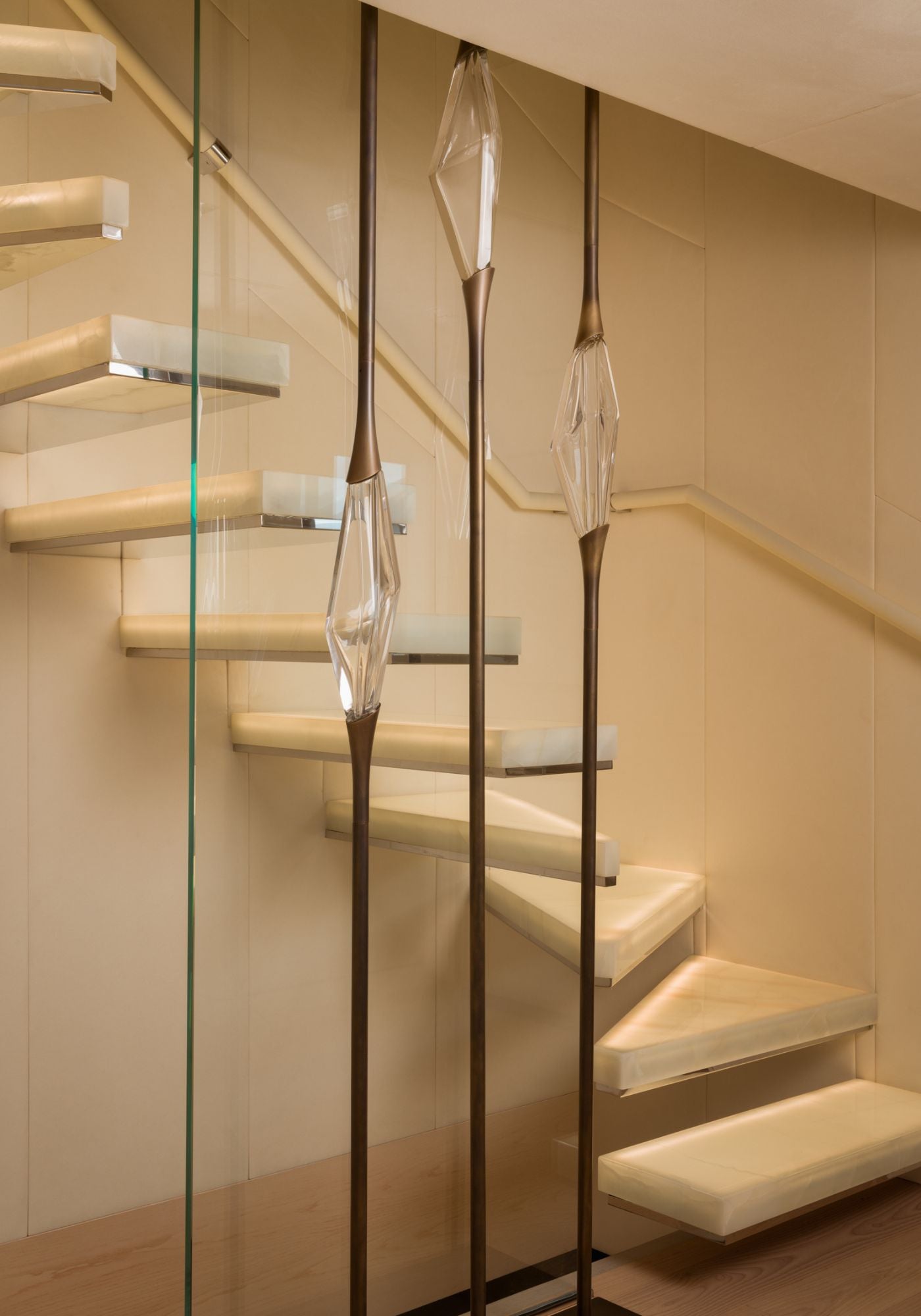
Bergman Design House's M/Y Axios pairs that same appetite for sculpture with a warmer, more classical hand. A staircase strung with bronze rods and cut crystal pendants brings quiet drama to the vertical circulation between decks, while the main salon opens into a soft palette of pale blue and cream seating gathered beneath a ceiling sculpture of rippling bronze scales that catches the light like something alive. Full height windows keep the sea constantly present, the room's real subject never quite out of view.
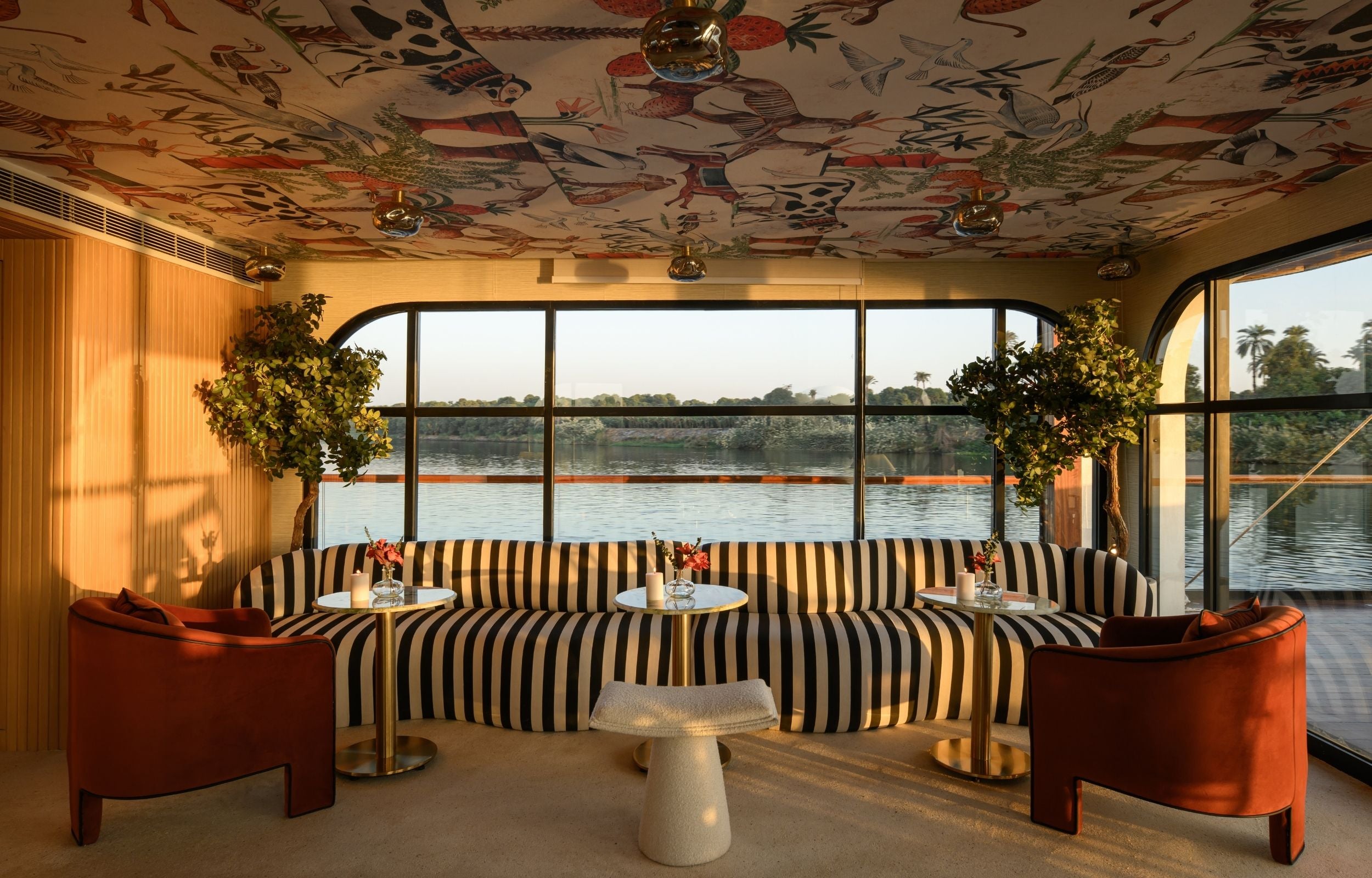
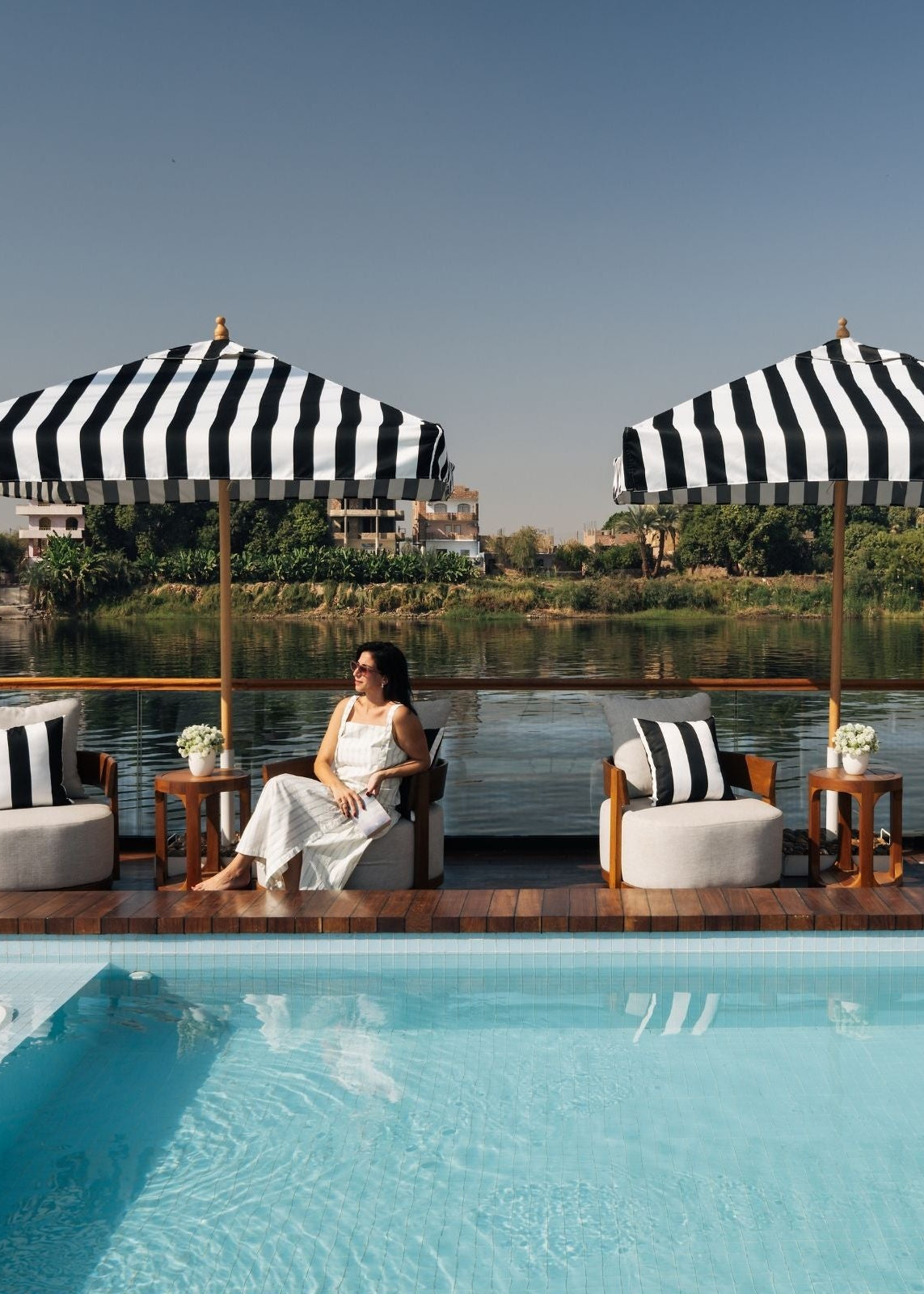
Further along the spectrum sits Al Mourad, a traditional dahabiya sailing the Nile under her original lateen rig rather than an engine. Her decks carry a rooftop pool framed in monochrome striped umbrellas and teak sun loungers, while below deck a lounge ceiling is hand painted with a menagerie of birds and animals in warm terracotta tones, striped banquettes and burnt orange armchairs gathered beneath it. It is proof that a private world at sea does not need to be modern to feel considered, only specific to the water it sails on.
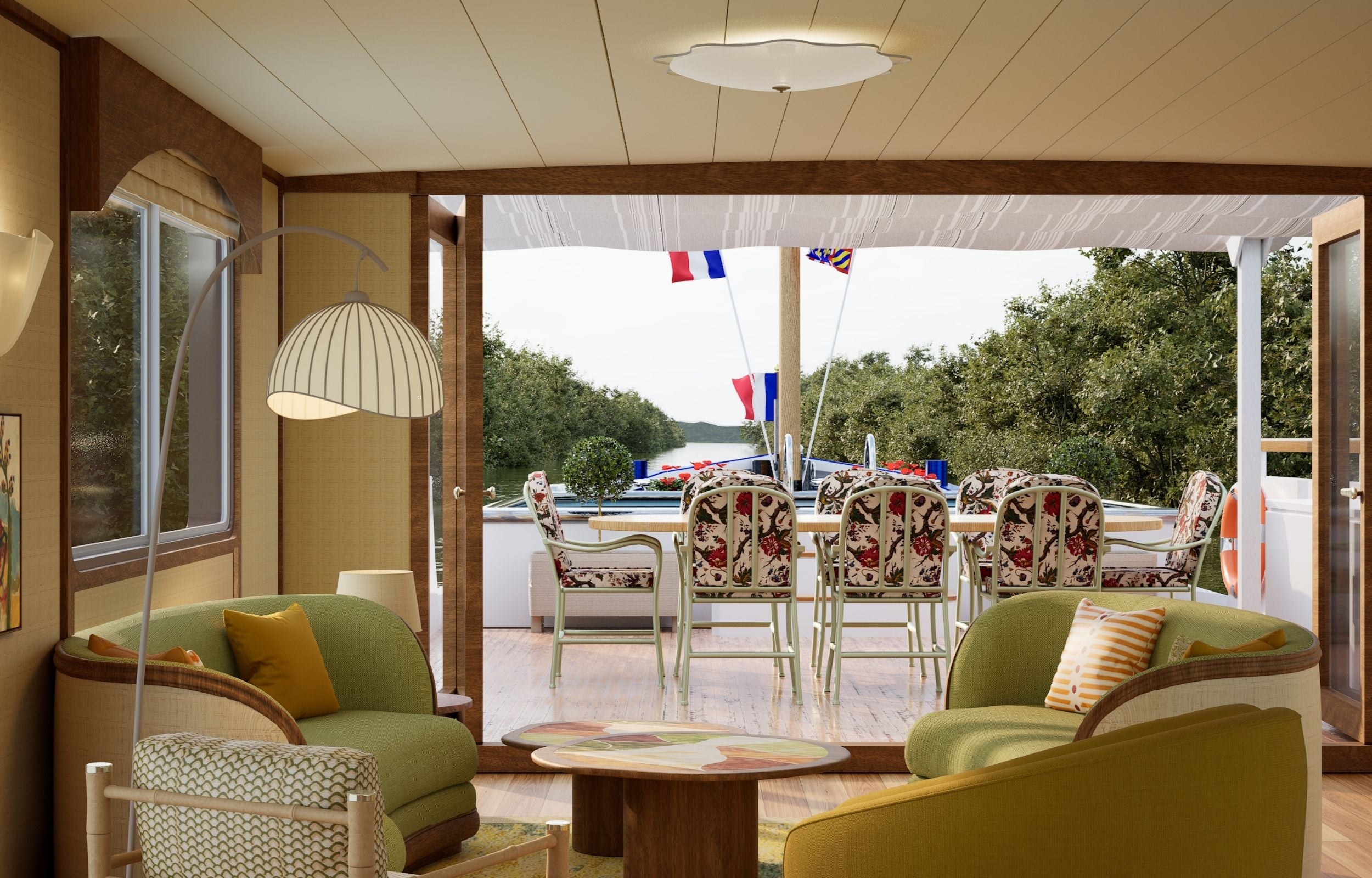
Marguerite, A Belmond Boat, Burgundy takes that same instinct and applies it to the canals of Burgundy rather than open water. Her interiors lean cottage rather than yacht, mustard and olive velvet armchairs gathered around a painted occasional table, floral chintz dining chairs lined up on deck beneath fluttering French flags. It is a reminder that a home on water can be as intimate as a slow afternoon on a towpath, not only as grand as an ocean liner.
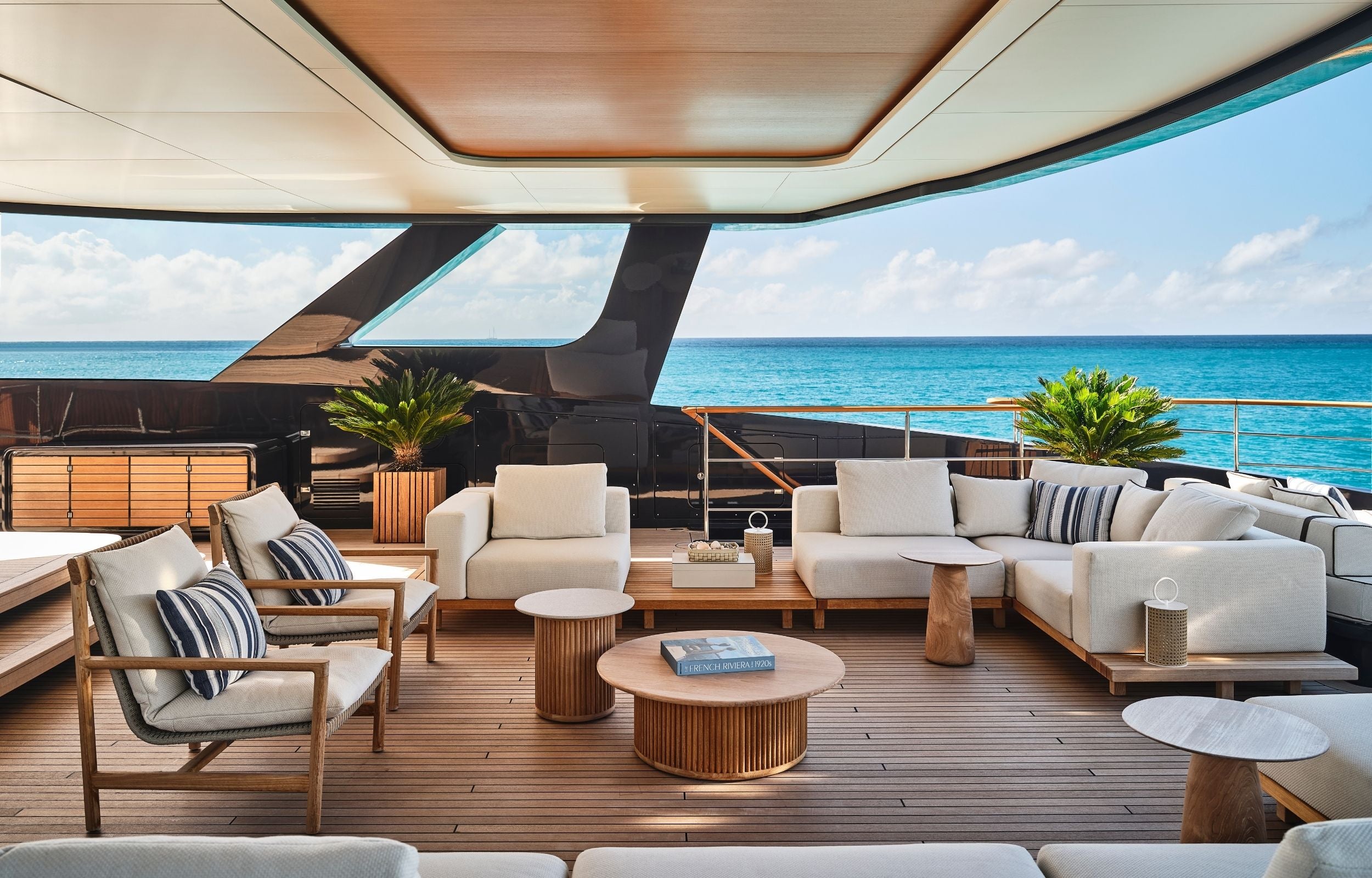
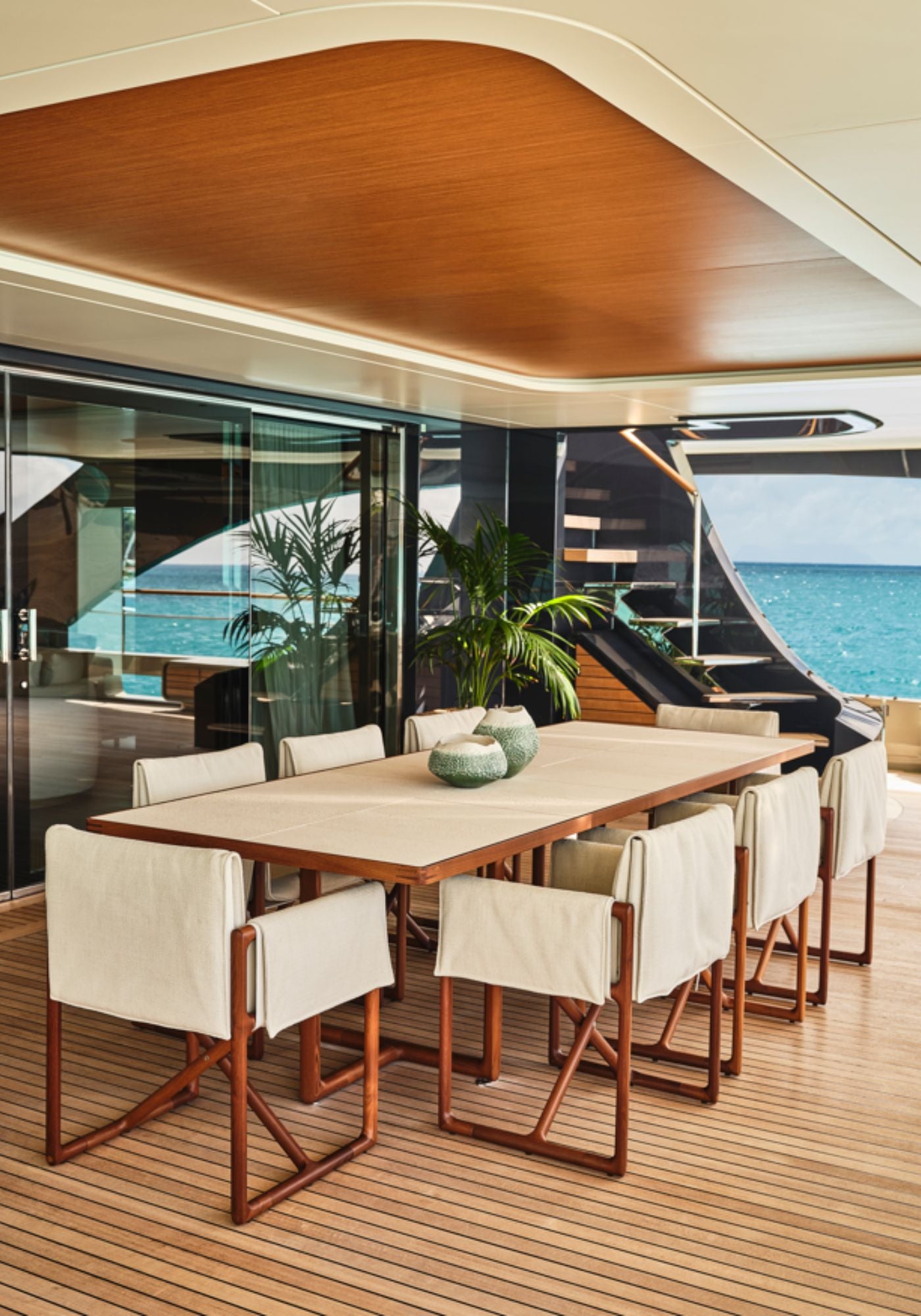
Meyer Davis's Seawolf X closes the piece on where yacht design is heading next. Built in collaboration with Rossinavi, this 140 foot catamaran runs on full hybrid electric BluE technology, capable of a full day at sea in electric mode alone. That commitment to sustainability shaped every material choice, wire brushed wood panelling, woven raffia wall coverings and recycled wool rugs standing in for anything less considered, while the interiors carry a warm, Scandinavian inflected residential feel through to an outdoor cinema and beach club built for entertaining.
Seawolf X also features in Meyer Davis's new book, The Language of Home, launching September 22nd.
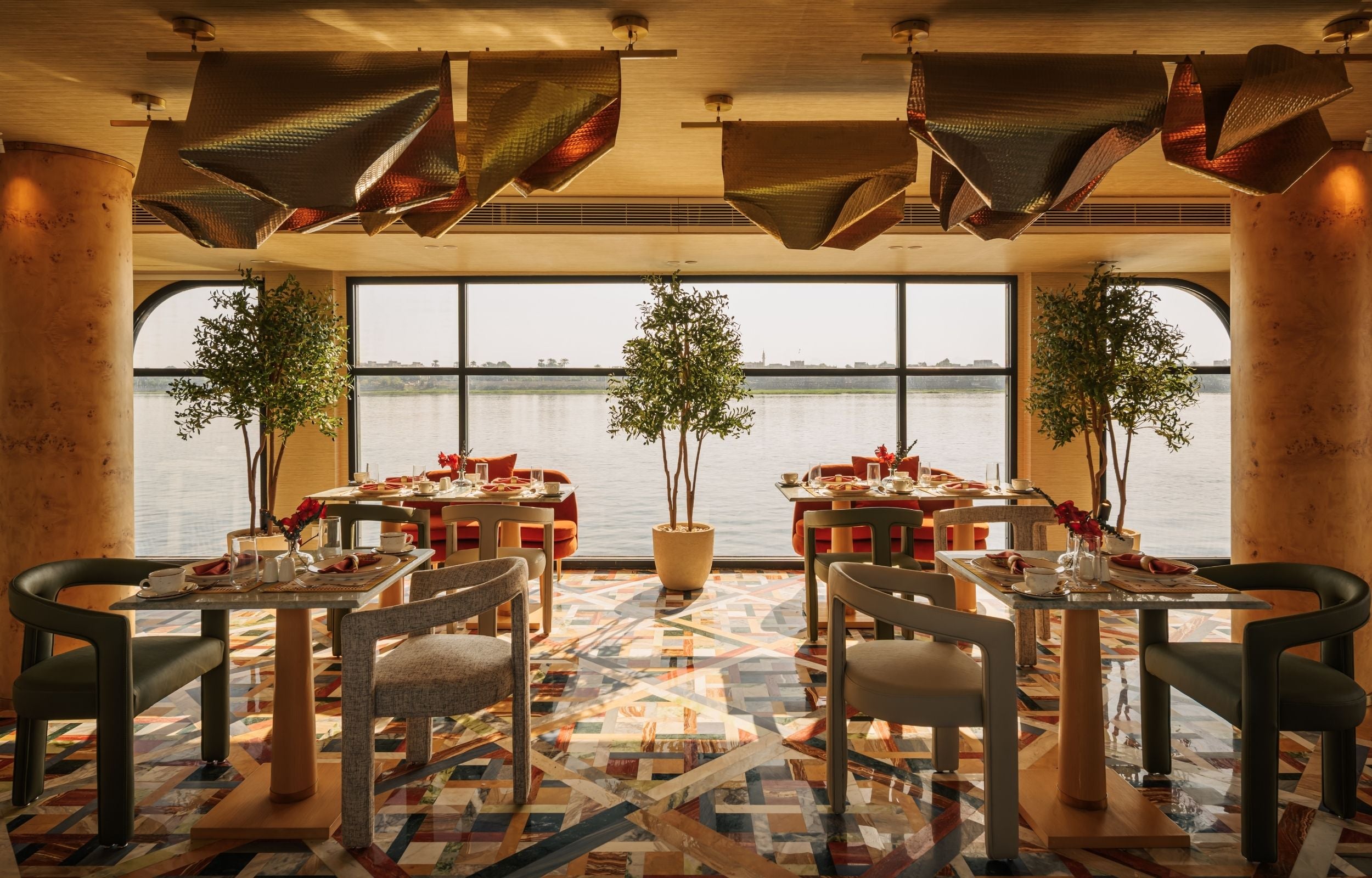
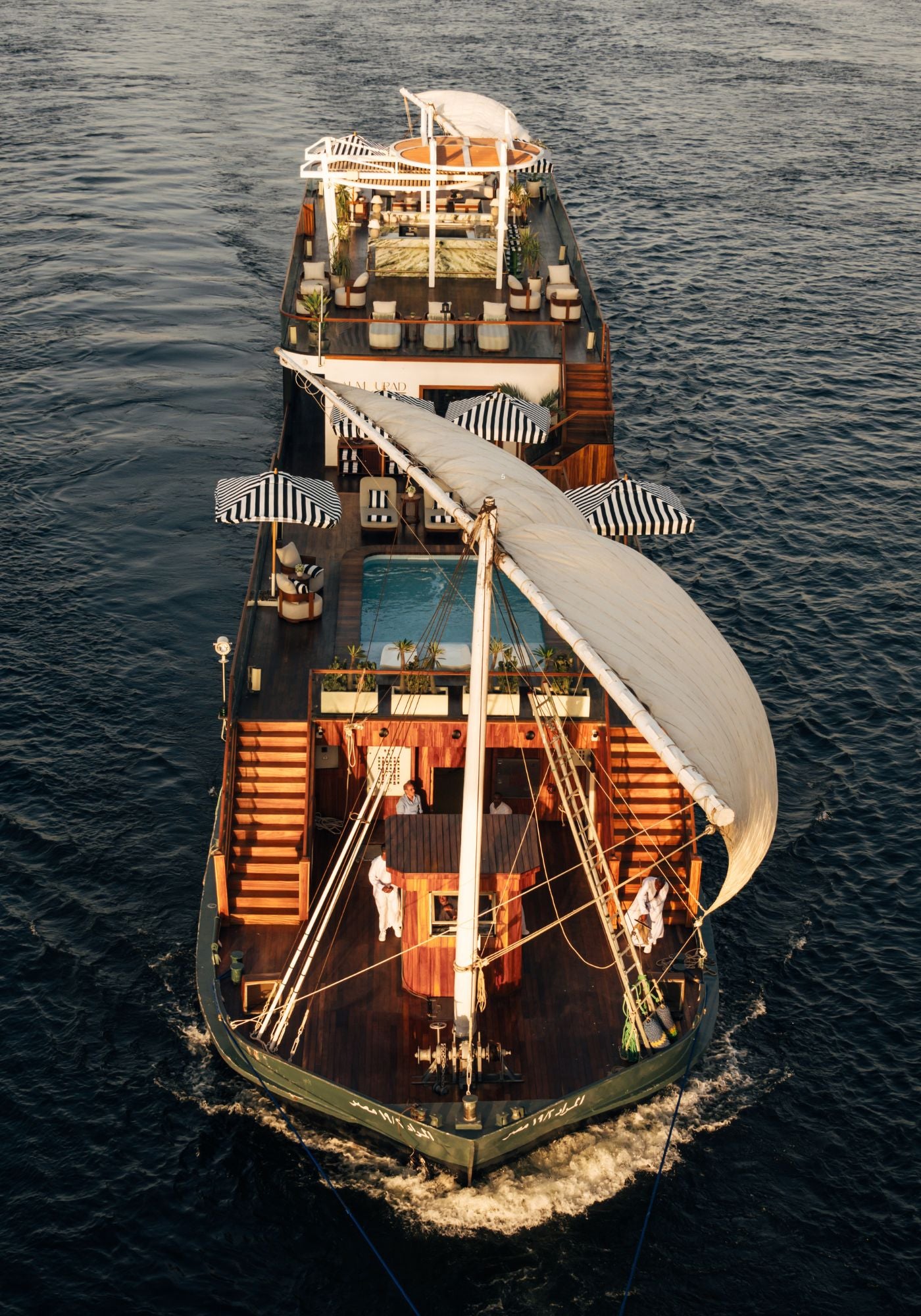
Across all eight, the brief never really changes. A yacht has to survive the sea while forgetting to remind anyone on board that it is at sea at all. Whether the answer is glowing alabaster stairs, a tree growing under glass, or a hand painted ceiling of birds drifting above the Nile, the best of these interiors all arrive at the same quiet trick, turning an engineering challenge into somewhere that simply feels like home, wherever the water happens to be taking it.
Photography courtesy of Belmond (Marguerite, A Belmond Boat, Burgundy), Al Mourad, Bergman Design House (Axios), David Collins Studio (Queen Anne), Martin Kemp Design, Meyer Davis (Seawolf X, photography by The Ingalls), and Sanlorenzo (74Steel, Virtuosity)
\


